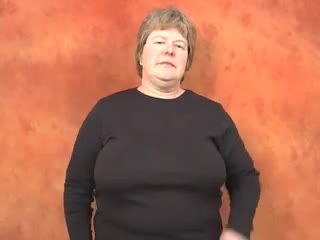
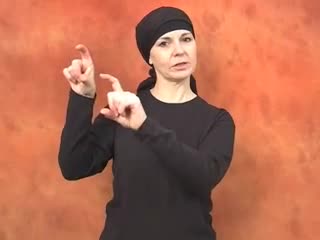
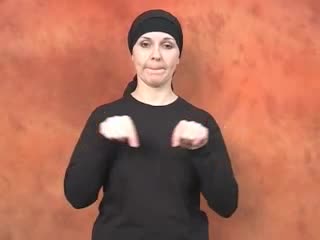
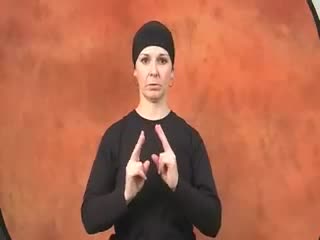
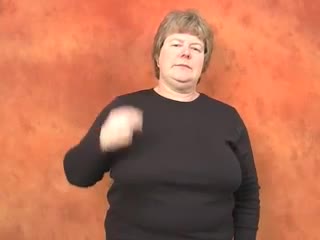
What Is the BSL Sign for "oak"?
The majestic oak tree, a symbol of strength and endurance across the British Isles, possesses a distinct and evocative representation within British Sign Language. Mastering the BSL sign for oak allows you to eloquently communicate about these magnificent trees, whether discussing ancient woodlands, furniture crafted from its robust timber, or simply appreciating nature. This specific sign uniquely captures an essence of the tree's form and resilience, making it a memorable addition to your British Sign Language oak vocabulary. Grasping this particular sign helps learners articulate a fundamental aspect of the natural world, fostering deeper connections with both the environment and the Deaf community.
How to Sign "oak" in British Sign Language - Step-by-Step
Replicating the visual characteristics of this iconic tree, the sign for "oak" involves a precise combination of handshape, location, and movement, embodying the tree's substantial presence.
Step 1: Handshape
For the BSL sign representing "oak," your dominant hand should form a flat "O" handshape. This means all fingers are brought together, touching the thumb to create a closed, rounded form, much like holding a small, smooth stone or a tightly closed bud. Ensure the fingers are not spread, but gently curved and contained, forming a compact shape that is firm yet relaxed.
Step 2: Hand Placement and Location
Position your dominant hand, maintaining the "O" handshape, in a neutral signing space directly in front of your body. Specifically, place it roughly at shoulder height, slightly to the side of your dominant hand's corresponding shoulder. The initial placement is not directly on the body but in the air, creating a clear visual focal point for the subsequent action.
Step 3: Movement
From its initial position, the dominant hand executes a deliberate upward and outward arc. Begin with the "O" handshape, then gently sweep the hand upwards, simultaneously opening the fingers and thumb into a spread five-handshape, as if depicting branches expanding. This outward fanning motion should be smooth and controlled, culminating with the fingers fully extended and slightly separated, suggesting the growth and breadth of an oak tree's canopy. The movement concludes with the hand elevated slightly higher than its starting point.
Step 4: Facial Expression and Mouthing
While signing "oak," maintaining a neutral and engaged facial expression is appropriate, conveying the straightforward nature of the noun. Simultaneously, mouth the word "oak" silently or subtly. This mouthing, a crucial non-manual feature in British Sign Language, provides phonetic information that aids clarity and distinguishes homophonous signs, ensuring the specific tree is understood without ambiguity. It acts as a visual cue, reinforcing the lexical meaning.
Step 5: Palm Orientation
Throughout the initial stages of the sign for "oak," your palm will generally face inwards towards your body. As the movement progresses and your hand arcs upwards and outwards, the palm orientation naturally shifts to face more forward or slightly upwards, mirroring the upward expansion of branches. This change in palm direction is integral to conveying the visual metaphor of the tree's development and spreading canopy, adding dynamism to the sign's overall form.
"oak" in BSL - Quick Reference Snapshot
- **Handshape:** Dominant hand forms a closed "O" (fingers and thumb together).
- **Location:** Neutral signing space, in front of the dominant shoulder at shoulder height.
- **Movement:** Upward and outward arc, opening into a spread five-handshape.
- **Facial Expression:** Neutral, engaged, conveying the noun's direct meaning.
- **Dominant Hand:** Always the dominant hand performs the action.
- **Palm Orientation:** Starts facing inwards, shifts to face forward/upwards during movement.
5 Memorisation Tricks for the BSL Sign "oak"
- **Visual Mnemonic (Acorn to Tree):** Imagine your initial "O" handshape represents a small, compact acorn, the seed from which an oak grows. As you perform the upward and outward sweeping motion, visualise this acorn sprouting and its branches majestically spreading into a mature, expansive tree. This vivid mental image connects the sign's form directly to the lifecycle of the oak.
- **Muscle-Memory Drill (Branching Out):** Practice the movement repeatedly, focusing on the transition from the closed "O" to the open, spread hand. Perform this action ten times, concentrating on the feeling of your fingers extending and spreading, mimicking the physical act of branches reaching for the sky. This repetitive motion solidifies the motor pattern in your memory.
- **Meaning Connection (Strength and Growth):** Link the sign's upward and outward motion to the inherent qualities of an oak – its robust growth and enduring strength. Every time you sign it, consciously recall that you are depicting the powerful expansion of one of nature's most resilient creations. This semantic connection deepens your understanding and recall.
- **Common-Confusion Tip (Distinguish from "Seed"):** Be mindful that while the initial "O" handshape might resemble a small object, the crucial difference lies in the expansive outward movement. The sign for "seed" often involves a smaller, more contained movement, perhaps a gentle tap. The "oak" sign's broad, upward sweep is what truly defines it and prevents confusion.
- **Daily-Life Practice (Nature Observation):** Whenever you see an oak tree, whether in a park, forest, or even a picture, perform the sign. Make a habit of identifying and signing the word whenever the opportunity arises, reinforcing the connection between the visual stimulus and its BSL representation. Integrating it into your natural environment strengthens recall.
Real-Life Situations to Use the BSL Sign for "oak"
- Discussing a favourite hiking trail that winds through a forest featuring many ancient oak trees. You might sign, "WALK, FOREST, MANY OAK, BEAUTIFUL" (WALK, FOREST, OAK [repeated], BEAUTIFUL).
- Asking about the type of wood used for a piece of furniture, perhaps a sturdy dining table or a beautifully crafted cabinet. You could inquire, "TABLE, WOOD, WHAT-KIND? OAK?" (TABLE, WOOD, WHAT-KIND? OAK [raised eyebrows for question]).
- Describing the specific characteristics of an oak tree you saw, such as its distinctive leaves or the acorns it produces. For instance, "TREE, THAT-ONE, LEAVES [show shape], ACORN, OAK" (TREE, THAT-ONE, LEAVES [shape], ACORN, OAK).
- Mentioning a plan to plant a new tree in a garden or community space, specifically choosing an oak for its longevity and ecological benefits. You might communicate, "PLAN, GARDEN, PLANT TREE, OAK, GOOD FOR FUTURE" (PLAN, GARDEN, PLANT TREE, OAK, GOOD FUTURE).
Top 3 Mistakes Learners Make Signing "oak" in BSL
- **Incorrect Initial Handshape:** A common error involves forming the initial handshape as a loose "C" or a partial "O" with fingers slightly apart, rather than the tight, closed "O" where all fingertips meet the thumb. This mistake can alter the visual representation significantly. The precise correction is to ensure all fingers are tightly curled and touching the thumb, creating a truly spherical, compact form before any movement begins.
- **Insufficient Upward and Outward Movement:** Learners sometimes perform the movement too small, too fast, or without the full upward and outward arc and expansion of the fingers. This diminishes the iconic representation of a growing tree. To rectify this, consciously extend the movement, making it a deliberate sweep upwards and outwards, allowing the fingers to fully spread, conveying the grandeur of a branching canopy.
- **Neglecting Facial Expression or Mouthing:** Omitting the subtle mouthing of "oak" or maintaining a completely blank facial expression can lead to ambiguity, as non-manual features are vital for clarity in British Sign Language. The precise correction is to always accompany the manual sign with the appropriate mouthing, even if subtle, which reinforces the intended word and prevents misunderstanding.
Fascinating Facts About the BSL Sign for "oak"
- The iconic nature of the BSL sign for "oak" is deeply rooted in its visual representation; it directly mimics the process of a tree growing from a compact seed or bud into a sprawling, mature form, making it highly intuitive.
- Historically, many signs for natural elements in British Sign Language developed from observations of the physical world, and the "oak" sign is a prime example of an iconic sign, visually depicting the subject it represents.
- While the core handshape and movement for "oak" are widely understood across the BSL-using community, minor regional variations might exist in the exact height or breadth of the movement, reflecting local nuances in signing styles.
- The sign's transition from a closed handshape to an open, spread hand is a classic example of how BSL signs often convey growth, change, or expansion through dynamic movement, adding a layer of meaning beyond a static representation.
- The "O" handshape used at the beginning of the sign is not directly related to the manual alphabet letter 'O' in BSL, but rather serves a specific iconic purpose here, representing the initial, contained form of the tree.
"oak" in Deaf Culture - Community and Identity
The oak, with its deep roots and enduring presence, resonates within Deaf culture as a symbol of strength, resilience, and connection to heritage. Just as an oak tree stands firm through generations, the Deaf community has maintained its vibrant language and culture despite historical challenges. Conversations often touch upon nature, and the ability to articulate specific trees like the oak allows for rich descriptions of shared experiences, from walks in ancient forests to discussions about natural beauty. It facilitates a deeper engagement with the environment and provides a means to share stories and memories associated with these powerful natural landmarks. The sign for "oak" therefore isn't just a word; it's a gateway to discussing shared landscapes and the enduring spirit of community.
Example Conversations Using "oak" in BSL
English: We saw a huge oak tree in the park today. - BSL structure: TOPIC-COMMENT: PARK, TODAY, SEE, OAK, HUGE.
English: Is this table made from oak wood? - BSL structure: QUESTION: TABLE, WOOD, OAK, YES/NO? [eyebrows raised for question].
English: The old oak in my garden provides excellent shade. - BSL structure: TOPIC-COMMENT: GARDEN, MY, OAK, OLD, SHADE, GOOD.
English: I love walking under the branches of an oak tree. - BSL structure: EMOTION-TOPIC-COMMENT: LOVE, WALK, UNDER, OAK, BRANCHES.
English: Acorns fall from oak trees in autumn. - BSL structure: TOPIC-COMMENT-TIME: AUTUMN, OAK, ACORN, FALL.
Frequently Asked Questions: The BSL Sign for "oak"
Is there a different BSL sign for "oak" in Scotland or other regions?
While the fundamental handshape and movement for the BSL sign "oak" are largely consistent throughout British Sign Language-speaking regions, some subtle variations in the exact height or breadth of the movement might be observed. These regional differences are generally minor and unlikely to impede understanding, as the core iconic representation remains clear and universally recognised. Learners should focus on the widely accepted standard form first.
Are there any BSL signs easily confused with "oak"?
Learners might initially confuse "oak" with other signs that involve an upward movement or hand opening, particularly those related to growth or other plant life. However, the distinct initial "O" handshape and the specific arc of the movement for "oak" differentiate it. Practicing the precise handshape and the full, expansive gesture helps avoid confusion with similar-looking but distinct signs.
Is "oak" a good sign for beginners to learn in British Sign Language?
Absolutely, "oak" is an excellent sign for beginners learning British Sign Language. Its iconic nature, visually representing the tree's growth, makes it highly memorable and relatively easy to grasp. Mastering this sign provides a foundational understanding of how BSL often uses visual metaphors, which is a valuable concept for new learners.
Can children easily learn the BSL sign for "oak"?
Yes, children typically find the BSL sign for "oak" very engaging and straightforward to learn. Its connection to nature and the clear, expansive movement are appealing to young learners. Encouraging children to associate the sign with actual oak trees they see, or with stories featuring trees, can make the learning process fun and effective.
How does the British Sign Language sign for "oak" compare to equivalents in other sign languages?
Across different sign languages globally, the representation of "oak" can vary significantly, reflecting diverse linguistic and cultural approaches to depicting natural phenomena. While some may use iconic movements similar to growth, others might employ entirely different handshapes, locations, or movements. This highlights the independent development and unique characteristics of each sign language.
Signs That Pair Naturally with "oak" in BSL
- **TREE:** Understanding the general sign for TREE provides a broader context for specific tree types like oak, linking the general to the specific.
- **ACORN:** Since acorns are the fruit of the oak, learning this sign naturally connects to the life cycle and characteristics of the oak tree.
- **WOOD:** Discussing "oak" often leads to conversations about "wood" as a material, making this a practical pairing for vocabulary expansion.
- **FOREST:** Oaks are commonly found in forests, so knowing the sign for FOREST helps place the oak within its natural environment.
- **STRONG:** The oak is renowned for its strength, making the sign for STRONG a natural descriptor to use in conjunction with "oak."
- **NATURE:** As a prominent part of the natural world, "oak" fits perfectly into discussions about NATURE, enhancing descriptive abilities.
Building Fluency: How to Practise "oak" in BSL
To truly embed the BSL sign for "oak" into your expressive vocabulary, consistent and varied practice is essential. Stand in front of a mirror and meticulously observe your handshape, movement, and facial expression, ensuring they accurately match the steps outlined, focusing on the smooth transition from closed to open. Integrate the sign into short, imagined British Sign Language conversations about parks, furniture, or the environment, actively constructing sentences around it. Consider filming yourself signing "oak" and then reviewing the footage to identify areas for refinement, paying close attention to the fluidity of the motion. The most effective way to achieve fluency involves engaging with Deaf individuals; seek opportunities to use the sign in real conversations, gaining invaluable feedback and natural exposure. Finally, spaced repetition over several days will solidify the sign in your muscle memory, ensuring it becomes a natural and effortless part of your BSL communication.