What Is the BSL Sign for "timber"?
Have you ever considered how we talk about the raw materials that build our world? When it comes to structures, forests, and the very wood that shapes so much around us, understanding the BSL sign for timber becomes incredibly useful. This particular sign brings to life the essence of wood, whether you're discussing forestry, construction, or even just a rustic cabin. It's a visually evocative sign in British Sign Language timber, reflecting the inherent strength and foundational quality of the material itself. You'll find mastering this sign helps you convey ideas related to woodworking, natural resources, and architectural components with precision and clarity within the Deaf community.
How to Sign "timber" in British Sign Language - Step-by-Step
Mastering the sign for "timber" involves a blend of specific hand movements and thoughtful placement that paints a clear picture of its meaning.
Step 1: Handshape
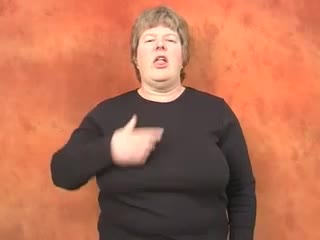
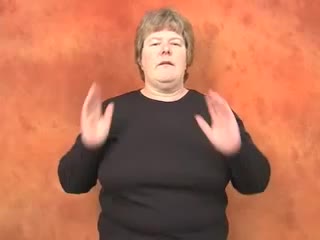
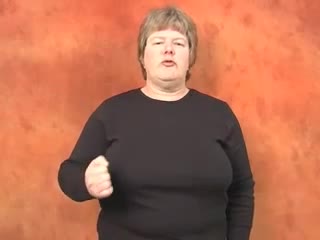
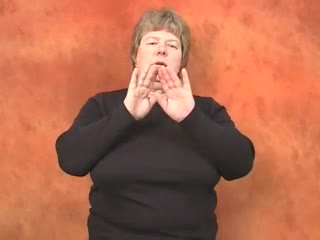
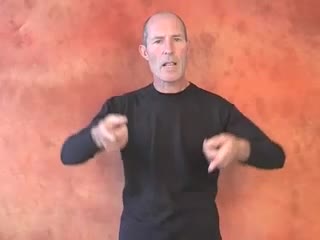
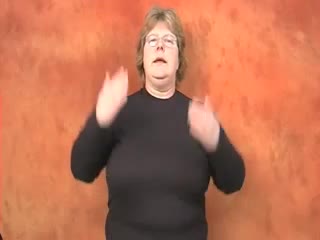
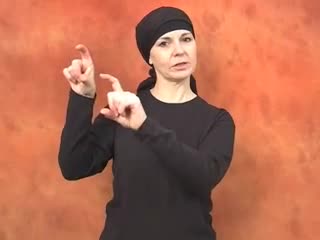
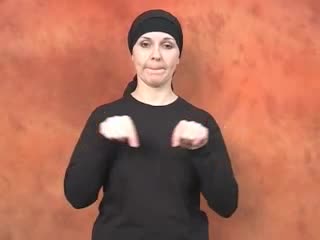
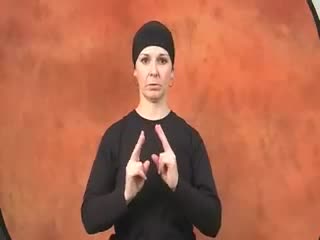
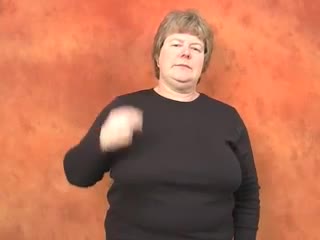
For this sign, your dominant hand forms a strong, closed 'S' handshape, which means you'll make a fist with your thumb resting over your fingers. Simultaneously, your non-dominant hand adopts an open 'C' handshape; your fingers will be slightly curved, and your thumb extended, creating a shape reminiscent of holding a cylindrical object. Ensure your non-dominant hand maintains a relaxed yet firm structure, ready to interact with the dominant hand's action.
Step 2: Hand Placement and Location
You'll begin with your non-dominant hand positioned in front of your body, roughly at waist height, with the palm facing upwards. This hand will serve as the 'log' or 'beam' being worked on. Your dominant hand, in its 'S' handshape, starts just above and slightly behind your non-dominant hand, poised as if holding an implement. The starting point for the dominant hand should allow for a natural, uninhibited motion downwards towards the non-dominant hand.
Step 3: Movement
The movement for the BSL timber sign is direct and impactful. From its starting position, your dominant hand, still in the 'S' handshape, performs a sharp, controlled downward chopping motion. You'll bring your dominant hand down to make a firm, decisive contact with the open palm of your non-dominant hand. This action is typically executed once, conveying a single, strong strike or cut, much like felling a tree or shaping a piece of wood. The force behind the movement should visually communicate the action of working with sturdy material.
Step 4: Facial Expression and Mouthing
Non-manual features are absolutely crucial in BSL, and for "timber," a neutral or slightly focused facial expression is generally appropriate, mirroring the concentration often involved in working with wood. There isn't a specific exaggerated facial expression required for this sign, but maintaining eye contact and an engaged look enhances the communicative act. Crucially, you'll mouth the word "timber" silently as you perform the sign. Mouthing the English equivalent helps clarify the lexical item and is an integral part of BSL grammar, providing additional context and aiding comprehension for both Deaf and hearing signers.
Step 5: Palm Orientation
Throughout the sign, your non-dominant hand's palm remains facing upwards, presenting a stable surface for the dominant hand's action. Your dominant hand, initially with its knuckles facing slightly forward, rotates its palm to face downwards as it strikes the non-dominant hand. This shift in palm orientation from inward-facing to downward-facing during the movement is vital; it accurately represents the direction of an axe swing or saw cut into a piece of wood, ensuring the sign visually conveys the action of processing timber. Without this precise orientation, the sign's meaning could become less clear or even misinterpreted.
"timber" in BSL - Quick Reference Snapshot
- Handshape: Dominant hand forms a closed 'S' handshape (fist); non-dominant hand forms an open 'C' handshape.
- Location: Non-dominant hand positioned at waist height in front of the body; dominant hand starts just above and behind it.
- Movement: Dominant hand performs a sharp, downward chopping motion, striking the non-dominant palm once.
- Facial Expression: Neutral or slightly focused expression.
- Dominant Hand: Performs the main action, representing the tool or action.
- Palm Orientation: Non-dominant palm faces upwards; dominant palm rotates from slightly inward to downwards upon contact.
5 Memorisation Tricks for the BSL Sign "timber"
Here are some clever ways to really make the BSL sign for "timber" stick in your mind, helping you recall it confidently when you need it.
- Visualise the Axe & Log: Picture your dominant hand as a sturdy axe, its 'S' handshape tightly gripping the handle, ready to strike. Your non-dominant 'C' hand forms the rounded shape of a log, perfectly positioned for the cut. This vivid image directly links the sign's form to the action of felling or processing wood.
- Embody the Carpenter's Strike: Engage your muscle memory by imagining you're a skilled carpenter, delivering a powerful, precise blow to a piece of wood. Feel the weight and intention behind the dominant hand's downward movement, and the steady resilience of the non-dominant hand receiving the impact. Practising this with genuine intent can really cement the motion.
- Connect to the Material's Strength: Think about the inherent toughness and resilience of timber itself. The firm 'S' handshape and the decisive strike convey this strength, highlighting the solid nature of wood. This conceptual link helps you understand *why* the sign looks and feels the way it does, rather than just memorising an arbitrary movement.
- Distinguish from "Chop": A common point of confusion can be signs related to general "chopping" or "cutting." Remember that for "timber," the specific 'S' handshape for the dominant hand and the 'C' hand as the 'log' are key identifiers, differentiating it from more generic cutting actions. Focus on the *material* being worked on.
- Spot "Timber" in Your Daily Environment: Every time you see wood in your home, a park, or a building site, take a moment to perform the sign for "timber." This constant, real-world reinforcement helps integrate the sign into your active vocabulary. You'll be surprised how many opportunities you find to practice!
Real-Life Situations to Use the BSL Sign for "timber"
Knowing how to use a sign in context is where true communication flourishes. Here are some situations where you'd naturally employ the BSL sign for "timber."
- Imagine you're discussing building materials with a friend: you might sign, "NEW HOUSE, NEED TIMBER, STRONG" to indicate you require sturdy wood for construction. The sign for "timber" here directly identifies the material.
- Perhaps you're at a forest park and want to comment on the logging operations. You could sign, "FOREST, MANY TREE, TIMBER CUT" to describe the process of harvesting wood. Here, "timber" acts as a noun within a topic-comment structure.
- If you're asking a question about wood quality, you might sign, "THIS TABLE, TIMBER GOOD?" using a raised eyebrow and leaning forward to denote the interrogative. The sign for "timber" becomes the object of inquiry, modified by the question's non-manual features.
- When pointing out a specific wooden beam, you'd gesture towards it and sign, "THAT TIMBER, OLD, BEAUTIFUL" using spatial referencing to highlight the particular piece of wood. The sign serves to categorise the object you're indicating.
Top 3 Mistakes Learners Make Signing "timber" in BSL
It's perfectly normal to make a few slip-ups when you're learning something new, but knowing the common pitfalls can help you avoid them.
-
Confusing the Handshapes: Many beginners accidentally use an open palm or a flat handshape instead of the specific 'S' (fist) for the dominant hand or a fully closed 'C' for the non-dominant. This happens because "chopping" actions can feel intuitive with other handshapes. The fix is to consciously ensure your dominant hand forms a tight fist and your non-dominant hand maintains that specific slightly curved 'C' shape, as these precise forms are crucial for conveying "timber" specifically.
-
Incorrect Movement or Contact: Sometimes learners perform a weak, hesitant, or even multiple-strike movement, rather than the single, strong, decisive chop required. This often stems from a lack of confidence or misunderstanding the impact of the material. The correction is to practice a singular, firm downward strike that makes clear contact, embodying the strength and finality of felling or cutting a solid piece of wood.
-
Missing the Palm Orientation Shift: A subtle but critical error involves failing to rotate the dominant hand's palm downwards as it makes contact. Learners might keep the palm facing inward throughout. This oversight can make the sign look like a general "hit" rather than a precise "cut" into wood. To correct this, focus on that subtle yet important inward-to-downward rotation of the dominant hand, making sure the palm directly faces the non-dominant hand at the moment of impact.
Fascinating Facts About the BSL Sign for "timber"
Delving into the unique aspects of a sign can reveal a deeper appreciation for BSL's ingenuity and history.
- The BSL sign for "timber" is highly iconic, meaning its form directly mimics the action it represents: the felling or shaping of wood. This visual connection makes it relatively intuitive to grasp once you understand the underlying concept.
- While the core handshapes and movement for "timber" are quite consistent across the BSL-using community, you might occasionally observe slight regional variations in the exact force or speed of the strike, much like accents in spoken language.
- Unlike some abstract concepts, this sign doesn't derive directly from the manual alphabet but rather from a direct visual representation of the word's meaning, which is a common characteristic of many BSL lexical signs.
- The clear distinction between the dominant hand as the 'action' (axe/saw) and the non-dominant hand as the 'object' (log/beam) highlights a fundamental linguistic feature of BSL: the use of space and both hands to represent agents and patients in an action.
- The sign's simplicity and directness make it an excellent example of how BSL efficiently communicates complex ideas through concise, visually driven movements, capturing the essence of the material without needing to spell it out.
"timber" in Deaf Culture - Community and Identity
For the Deaf community, signs like "timber" are more than just words; they're threads in the rich tapestry of shared experience and cultural identity. While "timber" itself might not hold a deep historical narrative in Deaf culture, its practical application connects to broader themes of craftsmanship, building, and self-sufficiency often valued within the community. Imagine Deaf artisans or carpenters, communicating their trade entirely through signs, discussing the quality of wood, the progress of a project, or the tools needed. This sign facilitates those vital conversations, enabling full participation in trades and hobbies that rely on this fundamental material. It underscores how BSL empowers individuals to engage fully with all aspects of life, from the abstract to the tangible, fostering connection and shared understanding around practical concepts.
Example Conversations Using "timber" in BSL
Let's put "timber" into some practical sentences so you can see how it works in real BSL communication.
English: We need strong timber for the new roof. - BSL structure: TOPIC (NEW ROOF) COMMENT (WE NEED TIMBER STRONG)
English: Is that timber old or new? - BSL structure: THAT TIMBER OLD OR NEW? (question with raised eyebrows)
English: The timber in this forest is very tall. - BSL structure: THIS FOREST TIMBER VERY TALL
English: My father used to cut timber for a living. - BSL structure: MY FATHER BEFORE WORK CUT TIMBER (sign "cut" then "timber")
English: Look at the beautiful grain in this timber. - BSL structure: LOOK (point) THIS TIMBER GRAIN BEAUTIFUL
Frequently Asked Questions: The BSL Sign for "timber"
Is there a different BSL sign for "timber" in specific regions of the UK?
While the core sign for "timber" is generally consistent across the UK, you might encounter very minor regional stylistic differences, perhaps in the precise angle of the dominant hand's strike or the exact contact point. These variations are usually subtle and won't impede understanding, as the fundamental handshapes and movement remain the same.
Are there any similar signs that I should be careful not to confuse with "timber" in BSL?
Yes, learners sometimes confuse "timber" with general signs for "cut" or "chop." The key distinction for "timber" lies in the specific 'S' handshape of the dominant hand (representing the tool/action) and the 'C' hand of the non-dominant hand (representing the material). General "cut" signs often use a 'V' handshape or a flat hand slicing motion, so pay close attention to those specific handshapes.
Is "timber" a suitable sign for beginners to learn early in their BSL journey?
Absolutely, "timber" is a great sign for beginners! Its iconic nature, where the sign visually resembles the action of working with wood, makes it relatively easy to remember and understand. It also introduces you to a clear two-handed sign with distinct roles for each hand, which is a common feature in BSL.
Can children easily learn and use the BSL sign for "timber"?
Children often pick up iconic signs very quickly, and "timber" is no exception. Its clear visual representation of chopping or cutting wood resonates well with their understanding of the world. Encouraging them to physically act out the chopping motion while signing can further aid their learning and retention.
How does the BSL sign for "timber" compare to a similar concept in other sign languages?
When looking at other sign languages, you'll often find that while the concept of "timber" exists, the specific sign forms can vary greatly. For instance, in some sign languages, the sign might focus more on the tree itself, or on the process of sawing. BSL's sign for "timber" is distinctive in its direct iconic representation of a tool striking a piece of wood, which might differ from a sign in a language with a different cultural or historical emphasis on woodworking.
Signs That Pair Naturally with "timber" in BSL
Building your vocabulary strategically means learning signs that naturally go together. Here are some BSL signs that complement "timber" beautifully.
- WOOD: This sign, often a simple tap on the dominant hand's fist, is a natural partner, distinguishing the raw material from the processed "timber." They often appear together in discussions about materials.
- TREE: The sign for "tree" (dominant hand forearm upright, fingers wiggling) helps establish the source of timber, linking the natural world to construction.
- BUILD: Signing "build" (stacking motions with flat hands) after "timber" immediately places the wood in a construction context, showing its purpose.
- FOREST: The sign for "forest" (multiple "tree" signs) provides the landscape where timber originates, setting a broader scene.
- CUT: While distinct, the general sign for "cut" (often a 'V' hand across the non-dominant palm) can be used in conjunction with "timber" to specify the action performed on the wood.
- HOUSE: If "timber" is for building, then "house" (outline roof shape) is a clear next logical sign, showing the end product.
Building Fluency: How to Practise "timber" in BSL
You've got the steps down, now it's about making "timber" a natural part of your BSL flow. Here's how to truly embed it into your signing.
Start by standing in front of a mirror and performing the sign for "timber," meticulously checking your handshapes, placement, and that crucial downward rotation of the dominant hand. Really focus on making that single, firm strike; it's the heart of the sign's meaning and clarity. Then, integrate it into your everyday BSL conversations: practice signing about wooden furniture, trees you see on a walk, or even imagining building something new. A fantastic technique involves filming yourself signing "timber" in various short sentences, then watching it back with a critical eye to spot any areas for refinement. Don't shy away from finding a Deaf conversation partner or joining a local BSL practice group; they'll provide invaluable feedback and context, which is the fastest way to gain confidence. Remember, consistent, spaced repetition over several days will solidify this sign in your muscle memory and make it truly yours. Keep at it, you're doing brilliantly!