Speed
0
Practice reps times watched

Create a free account to keep your watch history and review plan.

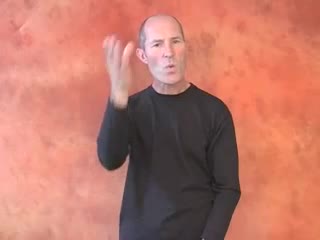
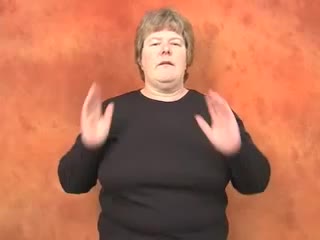
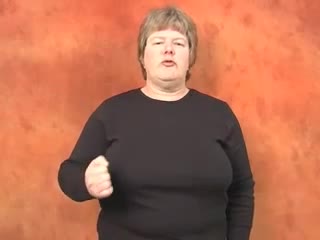
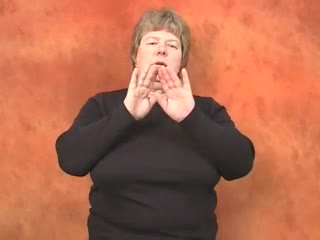
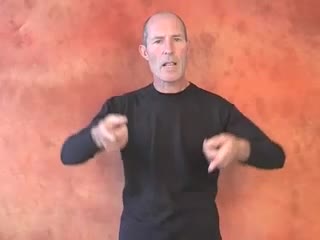
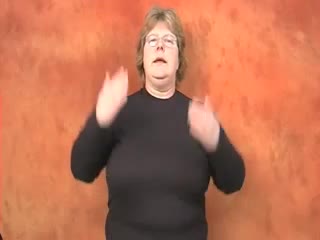
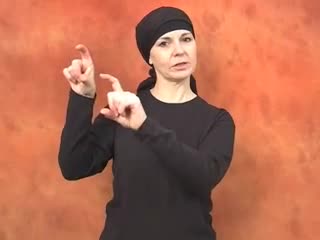
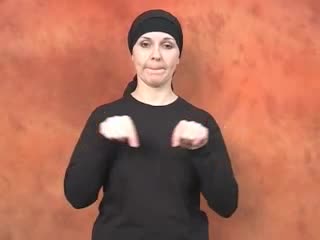
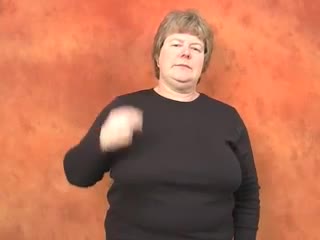
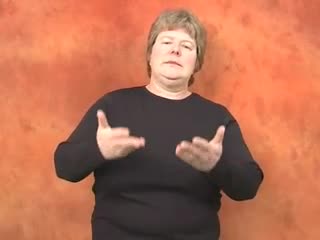
Best practice Use mirror mode, then watch the frame breakdown below to catch the start, movement, and finish cleanly.
Video via SpreadTheSign  - Free educational resource BSL
Updated April 27, 2026
British Sign Language (BSL) 🟢 Beginner 📊 A2 ⚡ Very Common Noun

interpreter

A person who facilitates communication between a Deaf person and a hearing person by translating between signed and spoken language

Source-linked video Step-by-step guide Context and safety notes
Synonyms
translator mediator
Antonyms
None
Difficulty
Not rated yet

Create a free account to save this sign, keep your watch history, and unlock a one-note journal preview.

How to sign it
Handshape
Dominant hand forms a G-hand (index finger extended, other fingers curled, thumb rests on side)
Location
Near the mouth or chin area
Movement
Index finger moves repeatedly up and down or side to side
Palm Orientation
Palm often faces slightly side-on or slightly forward
Facial Expression
Neutral facial expression
🔁 Spaced Review Try it free

How well do you know this sign?

INTERPRETER
Your Progress Live
🌱
Level 1 · BSL Beginner +0 XP today
This sign Not learned yet
0 watches
Mastery 0%
Confidence
How well do you know this sign?
0 🔥 Streak
0 Signs seen
0 Learned
0 Watches
📖 Vocabulary health 🔒 Log in to see score
0 Mastered
0 Confident
0 Practicing
0 Just seen

Create a free account to keep your vocabulary score between sessions

7-day activity 0 of 7 active

Register free to sync activity across devices

Watch signs to see your history here

Tracking locally for now. Create a free account to save your progress and sync across devices.
Free gets you started. Paid adds the repeat-learning layer: review queues, deeper notes, compare mode, and better comeback tools.
My Sign Journal
Personal notes, saved to your account forever
Locked

Write memory tricks, usage examples, and cultural reminders beside each sign. Create a free account to unlock your first saved note preview on this page.

Create free account Already have an account? Log in

What This Sign Means in BSL

The BSL sign for interpreter is one of those wonderfully visual signs that perfectly encapsulates its function. It’s a noun, referring to the person who facilitates communication between deaf and hearing individuals by translating spoken language into sign language and vice-versa. At its heart, this sign represents the flow of information, almost like a verbal bridge being built and rebuilt in real-time. It’s a core vocabulary sign that you’ll encounter frequently in any BSL conversation involving communication access.

What makes this sign particularly distinctive is how it places the action of interpreting right at the source of communication – the mouth and speech. By using the G-handshape near the mouth, we're not just indicating a person; we're gesturing towards their crucial role in mediating understanding. It's a respectful and direct sign, acknowledging the skilled individual who ensures that everyone at the table, regardless of their primary language, can participate fully.

This isn't a sign you'd typically use informally or jokingly; it carries a certain weight of professionalism and importance. Learning it early on helps you articulate your needs for communication support, or to refer to the professionals who provide it, with clarity and respect. It's a foundational sign for anyone looking to engage with the Deaf community and understand the infrastructure of inclusive communication.

When This Sign Feels Natural

You'll find yourself reaching for the BSL sign for interpreter in very specific and important contexts. It’s the go-to sign when you’re talking about the person themselves – a BSL/English interpreter at a conference, a medical appointment, or even when requesting one for an event. If you need to say, "The interpreter will arrive soon," or "Do we have an interpreter for this meeting?", this is the sign you'll use.

Consider the register: this sign is appropriate in nearly all settings, from formal parliamentary discussions to more relaxed community events, because the role of an interpreter is consistently vital. It doesn't change based on how casual your conversation is. However, be mindful of using it precisely. If you're talking about the *process* of translating or interpreting, you might use a different sign like TRANSLATE or even simply EXPLAIN, depending on the nuance. This sign specifically points to the professional.

Therefore, when you want to clearly identify or refer to the individual whose job it is to bridge the language gap between BSL and spoken English, this sign fits perfectly. It’s about the human element of communication access. If you're planning an event and discussing accessibility provisions, or if you're a Deaf person discussing who interpreted for them, this sign is indispensable and always feels natural.

What Learners Usually Miss

One common oversight for new learners is the precise handshape and movement. Many might initially use a flattened hand or a different finger, but it’s crucial to form that distinct G-handshape (index finger extended, other fingers curled, thumb resting on the side) with your dominant hand. The elegance of the sign comes from the clear, focused movement of just that index finger, rather than a whole-hand wiggle. The index finger should move with a repeated, almost rhythmic quality, either up and down or side to side, near the mouth or chin.

Another subtle but important detail often missed is the quality of the movement. It’s not a frantic movement, nor is it completely static. Think of it as a steady, focused action, much like the interpreter's work itself – precise, ongoing, and intentional. Learners sometimes make the movement too small and hesitant, or too broad and exaggerated. Aim for a confident, clear movement that shows the index finger articulating distinctly, but without unnecessary tension. The movement represents the back-and-forth nature of communication, so ensuring it's smooth and sustained adds to the sign's clarity.

Finally, the location is key. The sign needs to be clearly near the mouth or chin area, reinforcing the idea of spoken language being processed and relayed. Some learners place it too far out, or too low on the chest. Keeping it close to the mouth instantly connects the sign to its function. Remember, while BSL is visual, precision in location, handshape, and movement makes all the difference in conveying meaning accurately and being understood clearly within the Deaf community.

A Simple Way to Remember It

Imagine your extended index finger (the G-handshape) is like a tiny, nimble tongue or a pen, constantly working to translate words. The movement near your mouth then represents the two-way flow of communication – from spoken word to sign, and back again. It's as if your finger is 'speaking' or 'writing' the translated words, moving continuously to keep up with the conversation.

  • The "G" for "Guide": Think of the G-handshape as a "G" for "Guide," guiding understanding between two languages.
  • Mouth as the "Source": The location near the mouth reminds us that interpretation deals with spoken words and signed language, both originating from human expression.
  • Wagging Finger, Working Mind: The repeated movement of the index finger can be remembered as the constant, agile work an interpreter does, switching rapidly between languages.

Short Practice Situations

  • "I need to book a BSL interpreter for my doctor's appointment next week."
  • "The interpreter for the conference will be providing access throughout the day."
  • "Could you please ask the interpreter to repeat that last sentence?"
  • "It's important that we always ensure a qualified interpreter is present for formal meetings."

Signs to Learn Next

  • DEAF: Learning the sign for "Deaf" is naturally connected, as interpreters primarily facilitate communication for Deaf individuals.
  • HEARING: Understanding how to sign "hearing" helps complete the picture of the two language user groups an interpreter bridges.
  • COMMUNICATE: This sign broadens your vocabulary around the act of sharing information, which is the core purpose of an interpreter.
  • EXPLAIN: While different from "interpret," "explain" shares a similar function of clarifying information and can often be used in contexts where an interpreter might be simplifying concepts.
  • SIGN LANGUAGE: As BSL interpreters work with sign language, knowing this sign allows you to discuss the very medium they use.

🤖 AI Learning Guide for "interpreter"

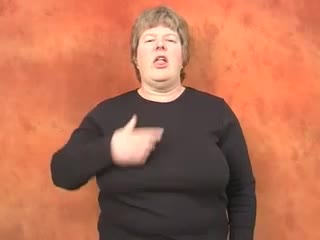
This sign represents a person who interprets between spoken and signed languages. The G-hand near the mouth signifies the act of 'speaking for' or mediating communication

🎯 Practice Challenge

Practice forming a clean G-handshape and making the small, repeated up/down or side-to-side movement close to the mouth

⚠️ Most Common Mistake

Ensure the index finger is extended and the movement is concise, not broad. Keep the hand close to the mouth area

👐 How to Sign "interpreter" in British Sign Language (BSL) (Quick Answer)

Follow these steps to sign interpreter correctly in British Sign Language (BSL):

  1. 1 Form a G-hand with dominant hand (index finger extended)
  2. 2 Position G-hand near your mouth, palm often facing side-on
  3. 3 Move the index finger repeatedly up and down or side to side in short motions

Tip: Watch the video above while following these steps for best results.

🤚 Sign Profile

🤚
Handshape
Dominant hand forms a G-hand (index finger extended, other fingers curled, thumb rests on side)
🔣
Handshape Code
G-hand
Dominant Hand
Either
🙌
Hand Count
One-handed
📍
Location
Near the mouth or chin area
↗️
Movement
Index finger moves repeatedly up and down or side to side
🔄
Movement Type
Repeated
👆
Contact
Air
👋
Palm Orientation
Palm often faces slightly side-on or slightly forward

😊 Non-Manual Features

Facial expressions and body language are grammatically essential in British Sign Language (BSL) - not optional!

😊
Facial Expression
Neutral facial expression
🙆
Eyebrows
Neutral
👁️
Eye Gaze
Forward
🙂
Head Movement
None
👄
Mouth Morpheme
Often a neutral mouth, sometimes a slight 'mm' or 'chatting' shape
🕴️
Body Shift
None

📖 Grammar & Linguistics

Part of Speech Agent marker (implied by the action)
Inflection No
Classifier Usage None
Role Shift No

🎓 Learning Context

📌 When to Use: Used when discussing communication access or the role of a language professional
⚠️ Common Mistake: Incorrect handshape (e.g., B-hand) or making the movement too large/far from the mouth
🚫 When NOT to Use: Do not use for a written translator; use a different sign for written translation
Context Tags
Professional communication accessibility Deaf community

🧪 Practice Lab

Use these tiny checks right after watching the video. Fast feedback is what turns recognition into recall.

Meaning check

Which word matches the sign you just watched?

Usage check

Where would this sign fit most naturally?

Confidence check

How do you feel about interpreter right now?

Pick one so SignDeaf can shape the rest of your session around how this sign actually feels.

🧭 Scenario Drill

One sign gets remembered faster when you attach it to real situations. Try these quick scene prompts.

Work

Stretch practice

Use this sign in a short workplace sentence or meeting exchange.

Family

Stretch practice

Try signing this while talking about family life or something at home.

School

Stretch practice

Imagine teaching this sign to a classmate or using it in a lesson.

Doctor

Stretch practice

Practise it in a healthcare conversation where clarity matters.

Travel

Stretch practice

Use it in a travel scenario like asking for help or directions.

💬 Example Usage

1.[en] We need an interpreter. / BSL:[NEED INTERPRETER] | 2.[en] She is a BSL interpreter. / BSL:[SHE BSL INTERPRETER] | 3.[en] Thank you, interpreter. / BSL:[THANK-YOU INTERPRETER]

1.[en] We need an interpreter. / BSL:[NEED INTERPRETER] | 2.[en] She is a BSL interpreter. / BSL:[SHE BSL INTERPRETER] | 3.[en] Thank you, interpreter. / BSL:[THANK-YOU INTERPRETER]

When to use it

Used when discussing communication access or the role of a language professional

When not to use it

Do not use for a written translator; use a different sign for written translation

Register

Neutral

🌍 Cultural Context

Interpreters play a vital role in ensuring access and inclusion for the Deaf community

🗺️ Regional Variations

Minor variations in the exact movement path can occur regionally

⚖️ Similar Signs - What's the Difference?

This sign interpreter
VS
Similar signs Look closely
The sign for INTERPRETER uses a G-hand (index finger) repeatedly moving near the mouth. This distinguishes it from general signs like SPEAK or TALK, which often use a B-hand or 5-hand and a larger movement outwards. It's also different from TRANSLATE (written), which usually involves two hands mimicking writing or shifting text. INTERPRETER specifically denotes the person facilitating live communication

📝 Usage Notes

The repeated movement represents 'speaking for' or 'facilitating speech' between parties

Frequently Asked Questions

Common questions about the British Sign Language (BSL) sign for "interpreter".

💡
Did you know?
BSL uses a two-handed manual alphabet - different from ASL which is one-handed.

📚 Explore More British Sign Language (BSL) Signs

Keep building your British Sign Language (BSL) vocabulary - explore signs by category or browse the full dictionary.