What Is the BSL Sign for "wood"?
Have you ever stopped to consider how many things around us are crafted from wood? From the sturdy furniture in your home to the trees lining our streets, it’s a fundamental material in our lives, and naturally, it holds a significant place in British Sign Language. Unlocking the BSL sign for wood means you're adding a truly versatile and descriptive element to your signing vocabulary. This particular sign helps you express concepts ranging from raw timber to finished wooden objects, offering a gateway to discussing nature, craftsmanship, and the built environment within your conversations in British Sign Language.
How to Sign "wood" in British Sign Language - Step-by-Step
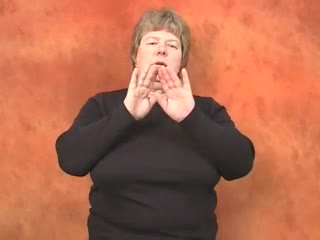
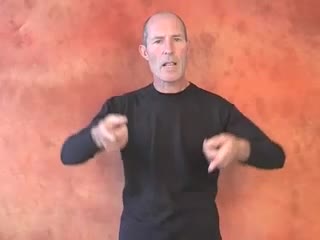
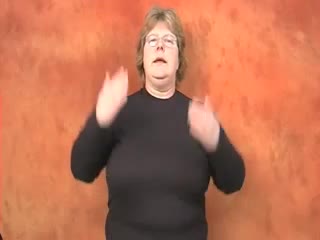
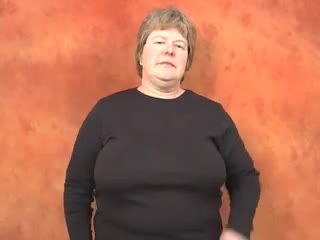
Mastering this sign involves a precise combination of handshape, placement, and movement, forming a clear visual representation for "wood."
Step 1: Handshape
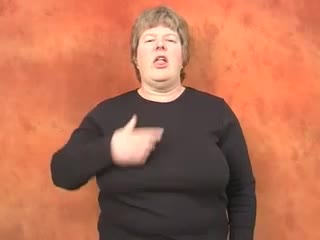
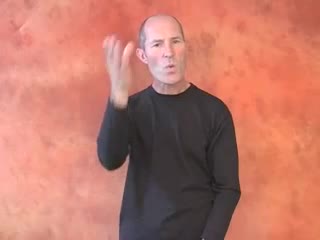
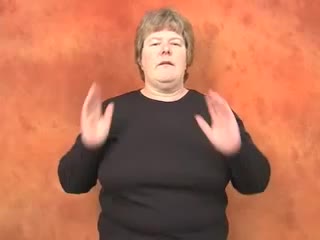
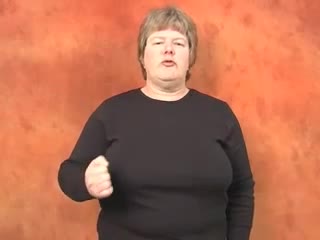
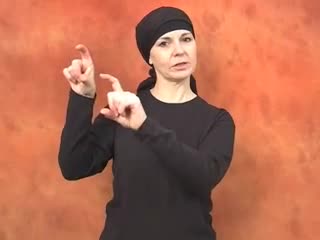
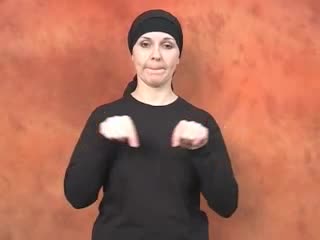
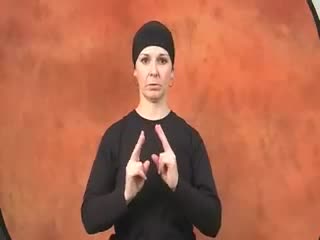
To form the correct handshape for "wood," begin with your dominant hand. You'll want to extend your index and middle fingers straight upwards, keeping them slightly separated. At the same time, gently curl your ring and little fingers down into your palm, securing them with your thumb. Essentially, you're creating a 'V' shape with your two extended fingers. Ensure your extended fingers are held firm and straight, not relaxed or bent at the knuckles.
Step 2: Hand Placement and Location
Position your dominant hand, now in the 'V' handshape, in front of your body. The starting point for this sign is typically in the neutral signing space, which is the area directly in front of your chest and shoulders. Hold your hand so that your palm faces inwards, towards your chest, and your two extended fingers point generally upwards. You don't need to touch any part of your body to initiate this sign.
Step 3: Movement
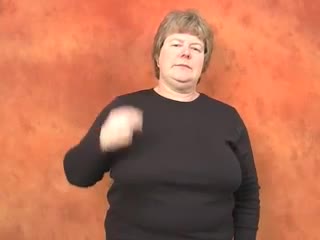
Once your hand is in position, perform a distinct, short, and sharp downward movement. Your dominant hand, maintaining the 'V' shape, should move downwards quickly by approximately 5-10 centimetres. This motion is often described as a single, decisive flick of the wrist. The movement should be quick and clear, not a slow or sweeping gesture, conveying a sense of impact or defining the material.
Step 4: Facial Expression and Mouthing
For the BSL sign "wood," a neutral facial expression is typically appropriate, as the sign itself carries the core meaning. However, you'll naturally mouth the word "wood" as you sign it. This mouthing, a crucial non-manual feature in British Sign Language, provides clarity and reinforces the lexical item, particularly for homophones or signs that might be similar in form. Always remember that mouthing complements the manual signs, adding an essential layer of linguistic information.
Step 5: Palm Orientation
Throughout the sign for "wood," your palm orientation remains consistent. It should consistently face inwards, towards your chest. This specific orientation is vital because if your palm were to face outwards or upwards, it would significantly alter the visual form and could potentially be confused with other signs or lose its intended meaning entirely. Maintaining the inward-facing palm ensures the 'V' handshape is clearly visible and correctly interpreted within the BSL communicative space.
"wood" in BSL - Quick Reference Snapshot
- Handshape: Index and middle fingers extended, forming a 'V'.
- Location: Neutral signing space in front of the chest.
- Movement: Single, sharp downward flick of the wrist.
- Facial Expression: Neutral, accompanied by mouthing "wood."
- Dominant Hand: Performs the sign, non-dominant hand is usually relaxed.
- Palm Orientation: Facing inwards towards the body throughout.
5 Memorisation Tricks for the BSL Sign "wood"
- Visualise the Grain: Imagine your two extended fingers as the distinct lines of wood grain, and the downward flick is like running your fingers along a textured wooden surface, feeling its unique pattern. This visual connection helps cement the handshape and movement.
- Chop it Down: Think of the downward movement as a small, symbolic chop, like an axe hitting a piece of wood, or a chisel shaping it. This mnemonic ties the action directly to the material, making the sign's motion more intuitive to recall.
- "W" for Wood (Kind Of): While not a direct letter sign, the two extended fingers can subtly remind you of the two 'V' shapes often found within the letter 'W', which starts "wood." This slight connection might offer a helpful mental nudge to the initial handshape.
- Avoid "Tree" Confusion: Many learners initially confuse "wood" with "tree" or "forest." Remember that "wood" has a singular, sharp downward motion, whereas "tree" typically involves a stronger upward movement from the elbow to depict growth, or a tapping motion. Keep these movements distinct in your mind.
- Everyday Object Drill: Point to various wooden items around your home or office – a wooden table, a door, a pencil – and practise the sign for "wood" each time. Repeating this simple gesture in context reinforces the sign's meaning and builds muscle memory through practical application.
Real-Life Situations to Use the BSL Sign for "wood"
Here are some practical scenarios where you'll find yourself reaching for the sign "wood" in your BSL conversations.
- When describing materials: "This table, it's WOOD." (BSL structure often places the descriptive sign after the noun, or the topic first: TABLE WOOD).
- Asking about composition: "That chair, WOOD?" (In BSL, questions are often marked by facial expression – raised eyebrows – and topic-comment structure, so 'CHAIR WOOD?' is perfectly clear).
- Discussing nature or construction: "We need more WOOD for the fire." (Here, WOOD serves as a direct object, similar to English, but BSL might structure it as FIRE WOOD NEED.)
- Negating a material: "No, not WOOD, PLASTIC." (Negation in BSL often uses a headshake accompanying the negative sign or phrase, or a specific negative sign like NOT).
Top 3 Mistakes Learners Make Signing "wood" in BSL
- Incorrect Handshape Consistency: A common error occurs when learners relax their ring and little fingers, allowing them to drift upwards, or don't keep the index and middle fingers straight. This changes the distinct 'V' shape, making the sign less clear. The precise correction is to consciously curl your ring and little fingers tightly into your palm with your thumb holding them down, maintaining firm, straight extended fingers throughout the sign.
- Lack of Decisive Movement: Some learners perform the movement too slowly, or they make it a gentle wiggle rather than a sharp flick. This dilutes the sign's impact and can make it appear hesitant. To rectify this, focus on a single, quick, and confident downward flick of the wrist, ensuring the movement is swift and definite, conveying the solidity of wood.
- Misplaced Palm Orientation: It's easy for the palm to inadvertently rotate outwards or upwards during the movement, especially when focusing on the handshape or flick. This subtle shift can change the visual dynamic of the sign and lead to misinterpretation. The correct approach is to consistently keep your palm facing inwards towards your body, ensuring the 'V' handshape is presented clearly and consistently to your conversation partner.
Fascinating Facts About the BSL Sign for "wood"
- The sign for "wood" is generally considered iconic, meaning its form visually represents an aspect of its meaning. Many believe the 'V' handshape combined with the downward flick evokes the action of shaping wood, perhaps splitting a log or carving with tools.
- Across different regions where British Sign Language is used, the core elements of the "wood" sign – the 'V' handshape and downward movement – remain remarkably consistent, showcasing a strong unified form within the BSL community. While some minor variations in the exact speed or amplitude of the flick might occur, the fundamental structure is very stable.
- Interestingly, the 'V' handshape used in "wood" is also a component of several other BSL signs, but the combination of its specific placement and dynamic movement makes "wood" unique. This demonstrates how BSL, like spoken languages, reuses basic building blocks to construct a diverse lexicon.
- The clarity of this sign also helps differentiate it from related concepts like "tree" (which often involves a handshape representing a trunk or branches) or "forest" (which typically combines the sign for "tree" with a sweeping movement to indicate many). This linguistic precision is a hallmark of BSL's comprehensive vocabulary.
- This sign is a great example of a one-handed BSL sign, making it efficient and easy to incorporate into rapid conversation. Many signs in BSL leverage the dominant hand for primary communication, particularly for common nouns like this.
"wood" in Deaf Culture - Community and Identity
Wood, as a material, holds a universal significance, but within Deaf culture, its practical applications often intersect with community life and identity in unique ways. Think of the craftsmanship involved in creating beautiful wooden objects – tables for community gatherings, hand-carved gifts exchanged between friends, or even the wooden structures of Deaf clubs themselves. These items become part of the fabric of shared spaces, silent testaments to gathering, connection, and the building of lasting relationships. The very act of shaping and working with wood can be seen as a metaphor for building a strong, resilient community, where each piece contributes to a larger, supportive whole. It represents solidity, reliability, and the foundational elements upon which strong bonds are forged within the Deaf community.
Example Conversations Using "wood" in BSL
English: Is this chair made of wood? - BSL structure: CHAIR THIS WOOD? (Eyebrows raised for question, topic-comment order)
English: I prefer wooden furniture. - BSL structure: FURNITURE WOOD I PREFER. (Direct statement, clear preference indicated)
English: We need to cut more wood for the fireplace. - BSL structure: FIREPLACE WOOD MORE CUT NEED. (Action-oriented, prioritising the object and quantity)
English: That old house has beautiful wooden beams. - BSL structure: HOUSE OLD BEAMS WOOD BEAUTIFUL. (Descriptive, placing adjectives after the noun in BSL typically)
English: Be careful, this wood is very rough. - BSL structure: CAREFUL WOOD THIS ROUGH VERY. (Adverbial emphasis on 'very', conveying intensity of the rough texture)
Frequently Asked Questions: The BSL Sign for "wood"
Are there regional variations for the BSL sign for "wood"?
Generally, the sign for "wood" is quite consistent across regions where British Sign Language is used. While you might observe very minor differences in the exact speed or 'snap' of the movement, the core handshape, palm orientation, and overall motion remain the same, making it widely understood throughout the BSL community. It's a fairly stable and universally recognised sign within BSL.
Are there any similar BSL signs to "wood" that beginners should avoid confusing?
Yes, learners sometimes initially confuse "wood" with signs like "tree" or "forest," as they are semantically related. Remember that "wood" involves a sharp, single downward flick with two extended fingers, whereas "tree" typically uses a different handshape and a more upward or tapping movement, and "forest" often uses multiple hands or a sweeping motion to represent many trees. Paying close attention to the specific movement and handshape will help you distinguish them.
Is "wood" a good beginner sign to learn in BSL?
Absolutely, "wood" is an excellent sign for beginners! It’s a one-handed sign with a clear, iconic handshape and a simple, distinct movement, making it relatively easy to grasp and replicate correctly. Learning foundational nouns like "wood" provides a solid building block for more complex sentence structures and descriptive conversations, quickly expanding your practical vocabulary.
How can I teach the BSL sign for "wood" to children?
When teaching "wood" to children, focus on making it interactive and visual. You could point to wooden toys, furniture, or even outdoor trees, signing "wood" each time. Encourage them to feel the texture of different wooden items. You can also play a game where they identify things made of wood and practise the sign, reinforcing the connection through touch and sight.
Does the BSL sign for "wood" relate to the sign for "tree"?
While both signs relate to the same material, the BSL sign for "wood" and "tree" are distinct. "Wood" typically refers to the material itself, often in a processed or cut form, and uses the specific two-finger flick. "Tree," however, usually represents the living plant, often with a handshape that mimics a trunk and branches, and a movement that suggests growth or standing. They are related concepts but have different manual signs.
Signs That Pair Naturally with "wood" in BSL
To truly build your BSL vocabulary, consider these signs that naturally complement "wood," helping you describe more complex ideas and environments.
- TREE: Essential for discussing the source of wood and natural landscapes.
- FURNITURE: Many items of furniture are made from wood, making this a logical pairing.
- FOREST: A place where many trees, and thus much wood, can be found.
- HOUSE: Often constructed with or containing many wooden elements.
- PLASTIC: A contrasting material, useful for distinguishing between different compositions.
- BUILD: The action often performed using wood as a primary material.
Building Fluency: How to Practise "wood" in BSL
To really make the sign for "wood" feel natural and part of your active BSL vocabulary, consistent practice is key. First, try signing it in front of a mirror, focusing intently on your handshape and the precision of that downward flick; ensure your two fingers remain straight and the movement is sharp. Next, integrate "wood" into your daily BSL conversation practice by consciously looking for wooden objects around you and signing their material. You could even film yourself signing short sentences that include "wood," then watch it back to identify any areas for refinement, perhaps a slightly less definite flick, or a hand that isn't quite firm. Most importantly, seek out opportunities to engage with Deaf individuals or BSL users; authentic interaction is the absolute best way to refine your signing and build confidence. Practise this sign several times a day over the coming week, and you'll find it quickly becomes second nature.