What Is the BSL Sign for "forest"?
Venturing into the natural world through British Sign Language opens up a rich vocabulary, and understanding the BSL sign for "forest" is a key step for any learner. This visually evocative sign beautifully captures the essence of a sprawling woodland, representing not just a single tree but an entire expanse of them. Mastering the British Sign Language forest sign allows for detailed communication about environments, adventures, and the beauty of nature within the Deaf community. This specific gesture provides a clear, universally understood depiction of a natural wooded area, essential for descriptive conversations.
How to Sign "forest" in British Sign Language - Step-by-Step
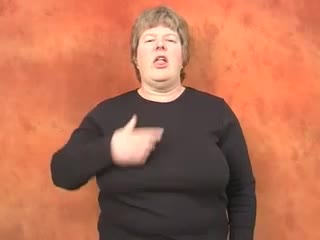
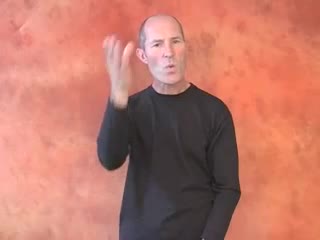
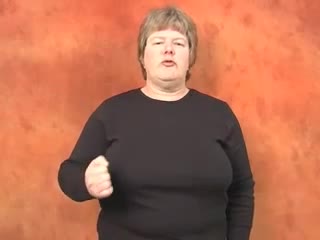
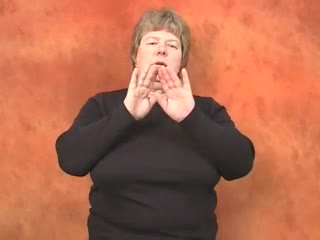
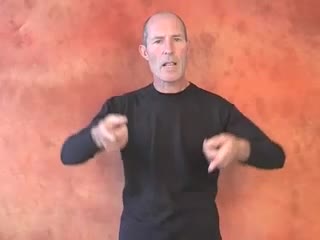
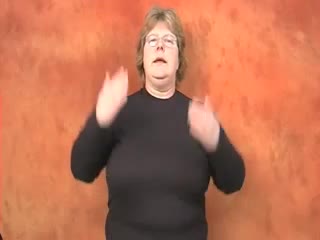
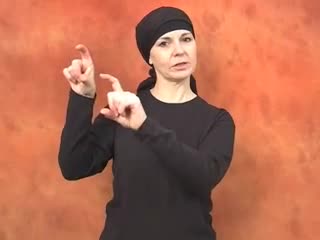
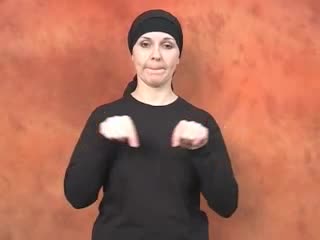
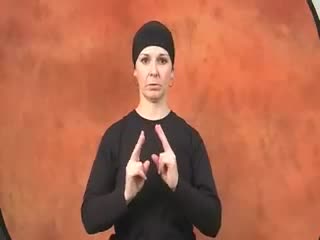
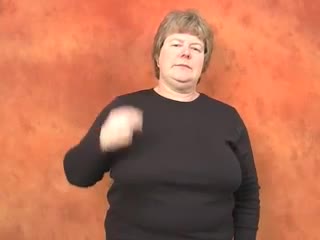
Replicating the visual imagery of numerous trees, the BSL sign for "forest" involves a clear sequence of handshapes and movements that are both intuitive and precise.
Step 1: Handshape
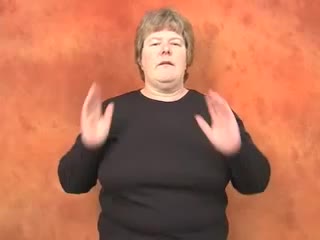
Begin by forming both of your hands into a '5' handshape. This means all five fingers on each hand are extended upwards, straight, and slightly spread apart, resembling the branches and leaves of a tree. The thumbs are also extended, positioned away from the palm, maintaining the open, splayed appearance. Ensure your fingers are relaxed but distinct, avoiding a stiff or rigid posture.
Step 2: Hand Placement and Location
Position both hands in the neutral signing space directly in front of your chest, roughly shoulder-width apart. Your dominant hand will typically start slightly to one side, perhaps to the right for right-handed individuals, with your non-dominant hand mirroring its position on the opposite side. Both hands should be held at a comfortable height, neither too high near the face nor too low towards the waist, allowing for unrestricted movement.
Step 3: Movement
From their initial positions, move both hands simultaneously in a sweeping, outward arc. Your dominant hand moves away from the centre towards your dominant side, while your non-dominant hand moves outwards towards your non-dominant side. This motion should be smooth and deliberate, spanning a moderate distance to represent an expanse. As the hands sweep, they can maintain their '5' handshape, conveying the presence of multiple trees spreading across an area. The movement concludes with both hands reaching a slightly wider distance than their starting point, indicating the breadth of a forest.
Step 4: Facial Expression and Mouthing
A neutral facial expression is generally appropriate when signing "forest," reflecting the objective nature of the noun. However, if describing a particularly dense, beautiful, or mysterious forest, your facial expression can subtly convey these nuances. Critically, mouthing the word "forest" without vocalisation is an integral part of this sign in BSL. This non-manual feature provides crucial phonetic information, disambiguating the sign from others that might share similar manual components, and reinforces the specific lexical item being communicated. The clear mouthing ensures complete understanding and is a fundamental grammatical aspect of BSL.
Step 5: Palm Orientation
Initially, the palms of both hands typically face each other, or slightly forward, with the fingertips pointing upwards, embodying the verticality of trees. As the hands execute their outward sweeping movement, the palm orientation can subtly shift, perhaps rotating slightly outwards to further enhance the visual representation of an expanding area. Maintaining an upward finger direction throughout the sign is important, as it consistently represents the upright form of trees within the forest context, solidifying the sign's meaning.
"forest" in BSL - Quick Reference Snapshot
- Handshape: Both hands in '5' shape (fingers extended, spread).
- Location: Neutral signing space, in front of the chest.
- Movement: Both hands sweep outwards in an arc simultaneously.
- Facial Expression: Neutral, with mouthing of "forest".
- Dominant Hand: Both hands used symmetrically.
- Palm Orientation: Initially facing each other or slightly forward, then subtly shifting outwards.
5 Memorisation Tricks for the BSL Sign "forest"
- **Visual Mnemonic:** Imagine your spread '5' handshapes as individual trees with branches reaching outwards. When you sweep your hands apart, visualise these many trees spreading across a vast landscape, forming a natural boundary. This mental image directly connects the physical sign with the concept of an expansive woodland.
- **Muscle-Memory Drill:** Stand in front of a mirror and repeatedly perform the outward sweeping motion with both '5' handshapes, focusing on the smooth, symmetrical arc. Concentrate on the sensation of your hands moving away from your body, building a strong kinesthetic memory for the expansive gesture that defines the BSL forest sign.
- **Connection to Word's Meaning:** The sign's iconic nature directly represents multiple trees. Think of each finger as a distinct tree, and the movement as showing how these trees collectively create a large wooded area. This intrinsic link between the sign's form and its meaning makes it highly intuitive to recall.
- **Common-Confusion Tip:** Be careful not to confuse this sign with "tree" (which is often a single '5' handshape moving upwards, or a flat hand moving up the forearm) or "bush" (which might involve hands cupped and moving upwards). The key differentiator for "forest" is the simultaneous, outward sweeping motion of *both* '5' handshapes, indicating plurality and expanse.
- **Daily-Life Practice Idea:** Whenever you encounter the word "forest" in conversation, a book, or on television, pause and mentally or physically practice the sign. Picture a local forest or a famous one, then execute the BSL sign for forest, integrating it into your daily thoughts and observations.
Real-Life Situations to Use the BSL Sign for "forest"
- Planning a nature walk: You might sign, "TOMORROW WE GO WALK IN BSL forest sign?" (BSL structure: Time-Topic-Action-Location, with "WALK" and "forest" used sequentially). This clearly communicates your intention to visit a wooded area.
- Describing a holiday destination: Someone could explain, "HOLIDAY LAST YEAR, WE STAY NEAR BSL forest. VERY BEAUTIFUL." (BSL structure: Time-Topic-Location-Adjective, where "forest" provides the setting). This contextualises their experience with a specific type of landscape.
- Talking about wildlife: You might express, "MANY DEER LIVE BSL forest. CAREFUL!" (BSL structure: Quantity-Animal-Location-Warning, using "forest" as the habitat). This highlights the presence of animals within a wooded environment.
- Asking about local geography: A question like, "IS THERE BSL forest NEAR HERE?" (BSL structure: Location-Question Particle-Existence, with "forest" as the object of inquiry). This seeks information about nearby natural features.
Top 3 Mistakes Learners Make Signing "forest" in BSL
- **Using Only One Hand:** A frequent error involves signing "forest" with just one '5' handshape, which actually signifies "tree." The correction is to always employ *both* hands in the '5' handshape, moving them outwards simultaneously. This dual-hand approach is crucial for conveying the plurality and expanse inherent in the concept of a forest.
- **Incorrect Movement or Direction:** Learners sometimes perform an upward or circular movement instead of the specific outward sweep. This can confuse the meaning, potentially suggesting growth or a general area rather than a dense woodland. The precise correction is to ensure both hands arc *outwards* from the centre of the body, creating a clear visual of spreading trees.
- **Neglecting Mouthing:** Omitting the mouthing of "forest" is a common oversight. While the manual sign is strong, BSL relies heavily on non-manual features for clarity and grammatical integrity. The exact correction is to consistently mouth "forest" as you perform the sign, providing vital phonetic information that helps distinguish it and ensures complete understanding in a BSL conversation.
Fascinating Facts About the BSL Sign for "forest"
- The BSL sign for "forest" is highly iconic, meaning its form visually resembles what it represents. It directly mimics the appearance of many trees spread out, making it quite intuitive for new learners to grasp.
- While the core elements of the sign (two '5' handshapes, outward movement) are widely consistent across the BSL-using community, subtle regional variations in the exact sweep or extent of the movement can sometimes be observed, reflecting local signing preferences.
- This sign's structure, involving both hands moving symmetrically, highlights BSL's frequent use of two-handed signs to convey concepts of plurality, expanse, or intensity, demonstrating a key linguistic feature.
- The sign for "forest" is distinct from "wood" or "woods," which in BSL often uses a more specific handshape or movement to denote a smaller, perhaps more managed, wooded area, showcasing the language's precision in describing natural environments.
- Its clear visual representation makes the BSL forest sign a foundational vocabulary item, often introduced early in BSL education due to its direct connection to the physical world and ease of comprehension.
"forest" in Deaf Culture - Community and Identity
The concept of a "forest" holds a special resonance within Deaf culture, often linked to shared experiences of outdoor activities, environmental appreciation, and visual storytelling. Many Deaf individuals and families enjoy excursions into nature, where the visual richness of a forest provides ample opportunity for descriptive signing and shared observations. Discussions about camping trips, scenic walks, or even environmental advocacy often incorporate the BSL sign for "forest," becoming a natural part of communal narratives. The beauty of a dense woodland, with its myriad textures and wildlife, offers a perfect canvas for highly visual communication, allowing Deaf people to convey intricate details and personal connections to these natural spaces with vivid clarity and shared understanding.
Example Conversations Using "forest" in BSL
English: We plan to explore the forest this weekend. - BSL structure: TIME (THIS WEEKEND) WE PLAN EXPLORE BSL forest sign.
English: Is that a very old forest near the village? - BSL structure: VILLAGE NEAR THAT BSL forest sign, OLD VERY? (Question particle implied by facial expression)
English: I saw a beautiful bird deep in the forest. - BSL structure: I SEE BIRD BEAUTIFUL BSL forest sign DEEP INSIDE.
English: The forest provides shelter for many animals. - BSL structure: BSL forest sign GIVE SHELTER ANIMAL MANY.
English: Let's take a peaceful walk through the forest. - BSL structure: WALK PEACEFUL THROUGH BSL forest sign, WE GO.
Frequently Asked Questions: The BSL Sign for "forest"
Is there a specific regional variation for the BSL sign for "forest"?
While the core components of two '5' handshapes sweeping outwards remain consistent, minor regional differences in the breadth or speed of the movement might exist across the UK. However, the fundamental visual representation of many trees is universally understood, ensuring clear communication regardless of slight local nuances.
Are there any similar signs I should avoid confusing with the BSL sign for "forest"?
Yes, learners should be careful not to confuse "forest" with "tree" (a single hand often moving upwards) or "bush" (which typically involves a different handshape or smaller, more contained movement). The distinguishing feature of the BSL forest sign is the symmetrical, expansive outward sweep of *both* '5' handshapes.
Is the BSL sign for "forest" suitable for beginners to learn early?
Absolutely, the BSL sign for "forest" is an excellent sign for beginners. Its iconic nature makes it easy to remember, and it uses a common handshape ('5') and a straightforward movement. It's a useful vocabulary item for discussing nature and the environment, making it a great early addition to any learner's repertoire.
Can children easily learn and use the BSL sign for "forest"?
Yes, children pick up the BSL sign for "forest" very quickly. Its visual representation of many trees is highly accessible and engaging for young learners. Encouraging children to use this sign when talking about nature stories, outdoor play, or drawing pictures of landscapes helps reinforce their BSL vocabulary.
How does the BSL sign for "forest" compare to another sign language's equivalent?
While many sign languages have an iconic sign for "forest," the specific handshapes, placement, and movement can vary significantly. For instance, another sign language might use different hand configurations or a vertical stacking motion to represent height and density, whereas BSL typically emphasises the horizontal expanse with its outward sweep.
Signs That Pair Naturally with "forest" in BSL
- **TREE:** Understanding "tree" (often a single '5' handshape moving upwards) naturally complements "forest," as a forest is composed of many trees.
- **WALK:** The concept of "walking" (index fingers 'walking' across the palm) frequently occurs in scenarios involving forests, like "walking in the forest."
- **NATURE:** The sign for "nature" (dominant 'N' handshape circling upwards from non-dominant hand) is a broader category that "forest" falls under, making them conceptually linked.
- **MOUNTAIN:** When discussing landscapes, "mountain" (two flat hands forming a peak) often appears alongside "forest," as many forests are found in mountainous regions.
- **CAMP:** The sign for "camp" (often two 'C' handshapes coming together to form a tent) is a common activity associated with visiting a forest, creating a natural pairing.
- **BEAUTIFUL:** Describing a forest often involves the adjective "beautiful" (dominant '5' handshape sweeping across the face), making it a useful companion sign for expressing appreciation.
Building Fluency: How to Practise "forest" in BSL
To truly embed the BSL sign for "forest" into your active vocabulary, consistent and varied practice is essential. Begin by utilising the mirror technique; stand before a mirror and meticulously observe your handshapes, ensuring both hands maintain the correct '5' configuration and execute the symmetrical outward sweep with precision. Integrate this sign into your daily BSL conversation by consciously looking for opportunities to describe natural scenery or discuss outdoor plans with fellow learners or Deaf friends. A highly effective method involves filming yourself signing "forest" in different sentence contexts, allowing you to review your movements and non-manual features objectively, refining your clarity and expression. Furthermore, actively seek out opportunities to engage with a Deaf conversation partner; their feedback will be invaluable for perfecting your technique and understanding cultural nuances. Finally, spaced repetition, practising the sign for "forest" over several days rather than all at once, will significantly enhance your long-term retention and build genuine fluency.