Speed
0
Practice reps times watched

Create a free account to keep your watch history and review plan.

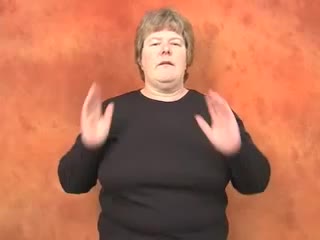
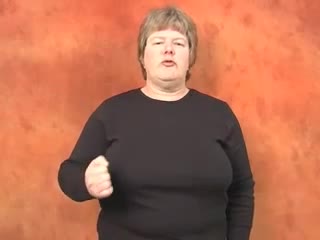
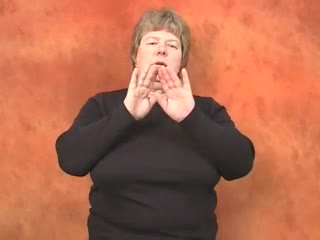
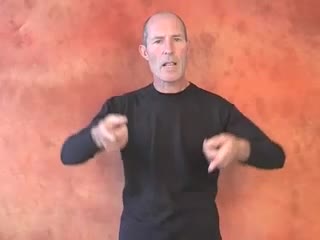
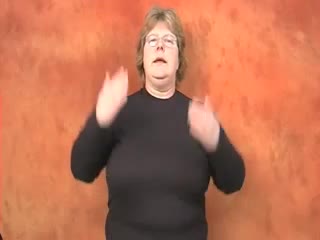
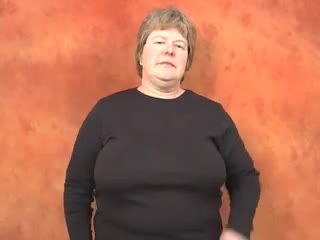
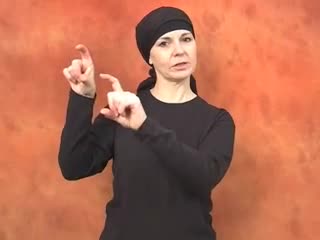
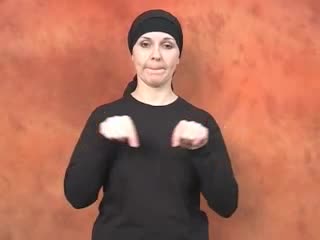
Best practice Use mirror mode, then watch the frame breakdown below to catch the start, movement, and finish cleanly.
Video via SpreadTheSign  - Free educational resource BSL
Updated April 27, 2026
British Sign Language (BSL) 🟢 Beginner 📊 A1 ⚡ Common Noun

lesson

A period of instruction or learning

Source-linked video Step-by-step guide Context and safety notes
Synonyms
Class teaching instruction
Antonyms
Break recess
Difficulty
Not rated yet

Create a free account to save this sign, keep your watch history, and unlock a one-note journal preview.

How to sign it
Handshape
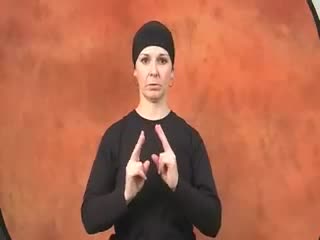
Both hands form a 'G' handshape (index finger extended, thumb alongside)
Location
In front of the body, around chest height
Movement
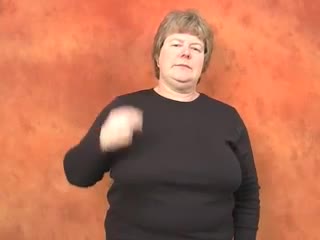
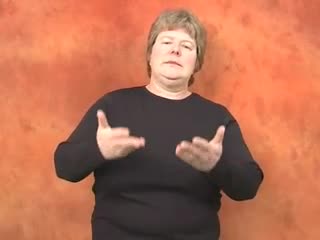
Dominant index finger taps non-dominant, then moves slightly forward, often repeated
Palm Orientation
Non-dominant palm up/in, dominant palm down/in
Facial Expression
Neutral facial expression, focus
🔁 Spaced Review Try it free

How well do you know this sign?

LESSON
Your Progress Live
🌱
Level 1 · BSL Beginner +0 XP today
This sign Not learned yet
0 watches
Mastery 0%
Confidence
How well do you know this sign?
0 🔥 Streak
0 Signs seen
0 Learned
0 Watches
📖 Vocabulary health 🔒 Log in to see score
0 Mastered
0 Confident
0 Practicing
0 Just seen

Create a free account to keep your vocabulary score between sessions

7-day activity 0 of 7 active

Register free to sync activity across devices

Watch signs to see your history here

Tracking locally for now. Create a free account to save your progress and sync across devices.
Free gets you started. Paid adds the repeat-learning layer: review queues, deeper notes, compare mode, and better comeback tools.
My Sign Journal
Personal notes, saved to your account forever
Locked

Write memory tricks, usage examples, and cultural reminders beside each sign. Create a free account to unlock your first saved note preview on this page.

Create free account Already have an account? Log in

What This Sign Means in BSL

The BSL sign for lesson clearly communicates the concept of a structured period of instruction or learning. It's the noun form, specifically referring to the event or session where knowledge is imparted and received. Think of it as a defined block of time dedicated to a particular subject or skill. When you use this sign, you're pinpointing that specific educational experience, whether it’s formal or informal.

What’s particularly striking about this sign is its active, almost demonstrative quality. With both hands forming a 'G' handshape – an extended index finger and thumb alongside – the dominant index finger taps the non-dominant one, then moves slightly forward. This isn't a static sign; it has a clear direction and purpose. It effectively conveys the idea of information being conveyed, perhaps like a teacher 'pointing out' or 'delivering' key points during a teaching session.

This sign is a versatile one, fitting comfortably whether you're discussing formal education, like school or university lectures, or more informal learning opportunities, such as a private tutorial or an online workshop. It consistently represents a distinct period of learning, making it fundamental for anyone discussing educational schedules, content, or experiences in BSL. It's about the segment of time dedicated to specific teaching and learning.

When This Sign Feels Natural

You’ll find yourself reaching for this sign whenever you need to talk about a specific scheduled learning session. For instance, if you're planning your week and want to mention your upcoming BSL tutorial, this sign fits perfectly. It's natural to use it when referring to a class on a timetable: "I have a maths lesson at 10 AM," or "The driving lesson went really well today." It clearly marks out an individual, defined learning slot.

This sign works across various registers, from a casual chat with friends about school to a more formal discussion about curriculum planning. It’s neither overly formal nor too relaxed, making it a robust choice for most contexts. You might also use it when reflecting on past learning: "That history lesson really opened my eyes." It anchors the conversation around a distinct unit of learning experience, making it useful for both current schedules and past recollections.

However, it's worth noting when a different sign might be more appropriate. If you're talking about the act of learning generally, you'd likely use the sign for "learn" (the verb). Similarly, if you mean the process of studying, the sign for "study" would be more fitting. This sign for "lesson" specifically highlights the container or segment of learning – the specific teaching event – not the general activity itself or the group of people in a class.

What Learners Usually Miss

One common pitfall for new learners is confusing "lesson" (the noun) with "learn" (the verb) or "teach." While all are related, their signs are distinct. "Lesson" focuses on the structured event itself. Learners sometimes make the tapping motion too isolated, missing the subtle but important slight forward movement of the dominant hand. This forward motion isn't just decoration; it subtly suggests the progression of knowledge or the act of delivering information from one point (the teacher) to another (the learner or the next topic point).

The precision of the 'G' handshape is also crucial for clarity. Ensure your index finger is extended clearly, with the thumb alongside, not tucked in or extended in a way that might make it look like a '1' or 'D' handshape. The non-dominant hand should also maintain its 'G' shape steadily as the dominant hand interacts with it. A loose or incorrect handshape can make the sign less clear or even lead to misinterpretation, especially in faster, more fluid conversations.

Finally, pay attention to the rhythm and repetition. While the movement is often repeated, it's not always a rapid-fire series of taps. The rhythm can be deliberate, reflecting the measured pace of a lesson, or quicker if referring to multiple, short lessons. Avoid a stiff, robotic execution. Allow for a natural flow that mirrors the conversational context. And remember, while facial expressions are vital in BSL, for a standard "lesson," a neutral to mildly interested expression is typical, unless you're specifically conveying the type of lesson (e.g., "difficult lesson" might warrant a more furrowed brow).

A Simple Way to Remember It

To help this sign stick in your memory, try to visualise the components working together to represent the concept of instruction. It’s a very visual and active sign that lends itself well to mental connections about how learning progresses.

  • The 'G' Handshape: Think of the extended index finger as a pointer, like a teacher pointing out key information during a lesson. Or, imagine the 'G' standing for 'Guidance' or 'Grasp' – the act of understanding new material being presented.
  • The Tapping Movement: This can be seen as the repeated, focused delivery of information, step-by-step, or the way a teacher might tap on a blackboard or a desk to emphasize a key point. It signifies the direct imparting of knowledge, bit by bit.
  • The Slight Forward Motion: This subtle movement powerfully conveys progression. A lesson moves you forward in your understanding, taking you from one point of knowledge to the next. It’s about advancing your learning and moving through the curriculum.

Short Practice Situations

  • I have a BSL lesson every Tuesday evening, and I always look forward to it.
  • The history lesson today was incredibly engaging; I learned so much about ancient civilisations.
  • How many lessons do you have scheduled for your driving course next month?
  • We definitely need to review everything from that last chemistry lesson before the exam.
  • My favourite part of the school week is the drama lesson; it's always so creative and fun.

Signs to Learn Next

  • LEARN: This is a crucial verb to pair with "lesson." You attend a lesson to learn new things. Understanding both helps differentiate between the event and the action of acquiring knowledge.
  • TEACH: Someone typically teaches a lesson. Knowing the verb "teach" allows you to express who is delivering the instruction, completing the teaching-learning dynamic that defines a lesson.
  • SCHOOL: Lessons are a fundamental part of the school experience. This sign provides the broader context for many lessons you might discuss, especially when talking about children's education.
  • UNIVERSITY: Similar to school, university is another key setting where lessons, often called lectures or seminars, take place. It expands your educational vocabulary for higher learning contexts.
  • STUDY: After a lesson, you often need to study the material to consolidate your understanding. Connecting "lesson" with "study" helps you talk about the full cycle of engaging with educational content.

🤖 AI Learning Guide for "lesson"

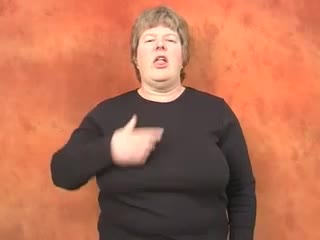
Both G-hands represent instruction. Dominant index taps non-dominant, then moves forward, symbolizing knowledge transfer during a class

🎯 Practice Challenge

Practice signing 'lesson' in sentences like 'My BSL lesson is fun.'

⚠️ Most Common Mistake

Ensure the G-handshape is maintained on both hands, and the tapping movement is clear

👐 How to Sign "lesson" in British Sign Language (BSL) (Quick Answer)

Follow these steps to sign lesson correctly in British Sign Language (BSL):

  1. 1 Form G-handshape on both hands
  2. 2 Non-dominant G-hand faces slightly up/in
  3. 3 Dominant G-hand taps non-dominant index finger
  4. 4 Move dominant hand slightly forward
  5. 5 Repeat tap and forward movement once

Tip: Watch the video above while following these steps for best results.

🤚 Sign Profile

🤚
Handshape
Both hands form a 'G' handshape (index finger extended, thumb alongside)
🔣
Handshape Code
G_ext_idx_thumb_side
Dominant Hand
Right
🙌
Hand Count
Two-handed
📍
Location
In front of the body, around chest height
↗️
Movement
Dominant index finger taps non-dominant, then moves slightly forward, often repeated
🔄
Movement Type
Repeated, Linear
👆
Contact
Tap
👋
Palm Orientation
Non-dominant palm up/in, dominant palm down/in
⚖️
Symmetry
Asymmetric

😊 Non-Manual Features

Facial expressions and body language are grammatically essential in British Sign Language (BSL) - not optional!

😊
Facial Expression
Neutral facial expression, focus
🙆
Eyebrows
Neutral
👁️
Eye Gaze
Forward
🙂
Head Movement
None
👄
Mouth Morpheme
Mouthing 'lesson' or 'class'
🕴️
Body Shift
None

📖 Grammar & Linguistics

Part of Speech Noun
Inflection No
Classifier Usage N/A
Role Shift No

🎓 Learning Context

📌 When to Use: Educational settings, scheduling discussions, general conversation about learning
⚠️ Common Mistake: Confusing with 'teach' or 'learn'
🚫 When NOT to Use: When referring to a specific subject (e.g., 'maths'), use the subject sign
Context Tags
Education academic school teaching

🧪 Practice Lab

Use these tiny checks right after watching the video. Fast feedback is what turns recognition into recall.

Meaning check

Which word matches the sign you just watched?

Usage check

Where would this sign fit most naturally?

Confidence check

How do you feel about lesson right now?

Pick one so SignDeaf can shape the rest of your session around how this sign actually feels.

🧭 Scenario Drill

One sign gets remembered faster when you attach it to real situations. Try these quick scene prompts.

Work

Stretch practice

Use this sign in a short workplace sentence or meeting exchange.

Family

Stretch practice

Try signing this while talking about family life or something at home.

School

Strong fit

Imagine teaching this sign to a classmate or using it in a lesson.

Doctor

Stretch practice

Practise it in a healthcare conversation where clarity matters.

Travel

Stretch practice

Use it in a travel scenario like asking for help or directions.

💬 Example Usage

1.[en] I have a BSL lesson. / BSL:[ME HAVE BSL LESSON] | 2.[en] The lesson was interesting. / BSL:[LESSON INTERESTING] | 3.[en] What time is your lesson? / BSL:[YOUR LESSON TIME WHAT?]

1.[en] I have a BSL lesson. / BSL:[ME HAVE BSL LESSON] | 2.[en] The lesson was interesting. / BSL:[LESSON INTERESTING] | 3.[en] What time is your lesson? / BSL:[YOUR LESSON TIME WHAT?]

When to use it

Educational settings, scheduling discussions, general conversation about learning

When not to use it

When referring to a specific subject (e.g., 'maths'), use the subject sign

Register

Neutral

🌍 Cultural Context

Often paired with signs for specific subjects like 'BSL' or 'Maths'

🗺️ Regional Variations

Slight variations in movement path or hand placement exist

⚖️ Similar Signs - What's the Difference?

This sign lesson
VS
Similar signs Look closely
The sign 'lesson' (dominant G-hand taps non-dominant G-hand, then forward, signifying a period of instruction) is distinct from 'teach' (dominant G-hand moves from temple to non-dominant G-hand, meaning to impart knowledge). It also differs from 'learn' (non-dominant G-hand taps dominant G-hand, then moves to temple, meaning to acquire knowledge). Lesson is the noun for the instructional period
webcam sign thumbnail

webcam

Beginner

A device for recording video, often connected to a computer for online communication

Compare with webcam

📝 Usage Notes

Can refer to a single class period or instruction

Frequently Asked Questions

Common questions about the British Sign Language (BSL) sign for "lesson".

🏷️ Tags

Handshape

Keywords

💡
Did you know?
SpreadTheSign has 600,000+ sign language videos across 40+ sign languages - all free to view.

📚 Explore More British Sign Language (BSL) Signs

Keep building your British Sign Language (BSL) vocabulary - explore signs by category or browse the full dictionary.