What Is the BSL Sign for "screw"?
Welcome to SignDeaf.com, your ultimate resource for mastering British Sign Language! Today, we're diving deep into the BSL sign for "screw" – a versatile and practical sign crucial for everyday communication, whether you're talking about DIY, mechanics, or simply describing an object. Understanding **how to sign screw in BSL** is a fundamental step for anyone learning to communicate effectively within the Deaf community. This comprehensive guide will ensure you not only learn the **BSL sign for screw** but also grasp its nuances, helping you communicate with confidence and clarity. Whether you are Deaf yourself, a hearing ally, or a keen learner, we’re delighted to have you here to explore the fascinating world of **British Sign Language screw**.
How to Sign "screw" in British Sign Language - Step-by-Step Guide
Let's break down the **BSL screw sign** into its core components, ensuring you learn it correctly from the start.
Step 1: Handshape
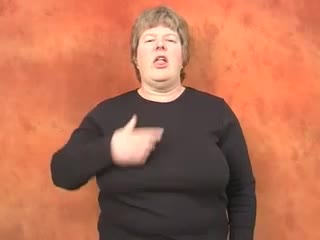
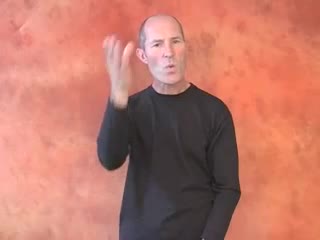
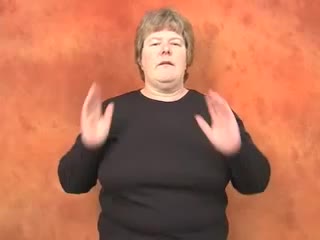
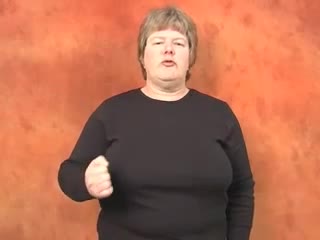
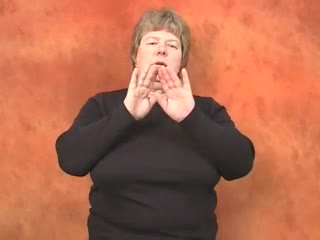
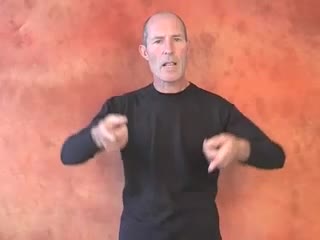
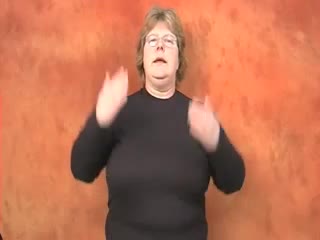
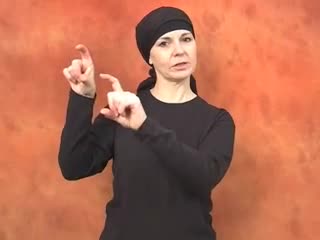
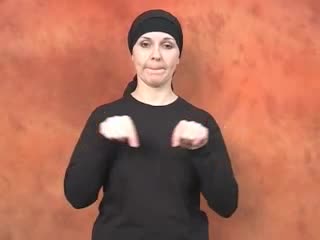
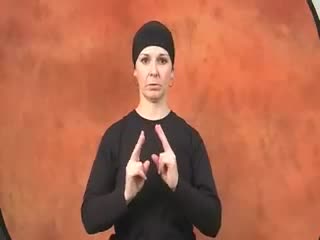
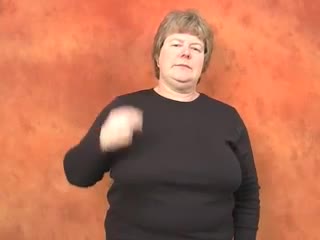
To form the handshape for the BSL sign for "screw," you will primarily use your dominant hand. Begin by forming a clenched fist, much like you would if you were loosely holding a small cylindrical object such as the handle of a screwdriver or a small screw itself. Your fingers should be curled tightly into your palm, and your thumb should rest across the front of your curled fingers, or alongside your index finger, ensuring a firm but relaxed grip. This specific handshape is often referred to as an 'S' handshape or a modified 'A' handshape in BSL linguistics, reflecting the action of gripping. The key is to convey the physical act of grasping the head of a screw or the tool used to turn it, making the **British Sign Language screw** sign highly iconic. Practice forming this firm, closed fist until it feels natural and comfortable in your dominant hand, ready for the next steps in learning **screw sign language**.
Step 2: Hand Position and Location
Once you have perfected the handshape, the next crucial element is its position and location in your signing space. For the **BSL sign for screw**, your dominant hand, in the described 'S' or modified 'A' handshape, is typically positioned in the neutral signing space directly in front of your body. This means it should be roughly around chest or waist height, comfortably extended away from your torso, allowing for clear visibility and ease of movement. There is no specific contact point with the body for this sign; instead, it is performed in the air, embodying the action of a tool. The location in neutral space signifies that you are describing an object or a general action rather than something directly related to your body or a specific person. Maintaining this central, accessible location ensures that your **learn screw BSL** efforts are accurately understood by those you are communicating with, regardless of their position relative to you.
Step 3: Movement
The movement component is where the **BSL sign for screw** truly comes to life, mimicking the action of turning a screw. With your dominant hand in the 'S' or modified 'A' handshape and positioned in the neutral space, you will perform a distinct twisting or rotating motion with your wrist. Imagine you are turning a screwdriver, driving a screw into a surface. The movement should be a circular or semi-circular rotation of the wrist, typically in a clockwise direction, although a counter-clockwise motion can also be understood depending on context. This twisting motion is usually repeated two or three times in quick succession, indicating a continuous action. The speed should be natural and consistent, not rushed, allowing the sign to be clearly observed. The wrist is the primary joint involved in this movement, with the forearm remaining relatively stable. This precise, repetitive twisting is what conveys the meaning of "screw" as a fastener or the act of fastening. Mastering this dynamic movement is essential for accurately demonstrating **how to sign screw in BSL**.
Step 4: Non-Manual Features (Facial Expression & Mouthing)
Non-manual features (NMFs) are an indispensable part of BSL grammar and communication, providing crucial contextual information, grammatical markers, and emotional tone. For the **BSL sign for screw** (the noun, referring to the fastener), the accompanying non-manual features are generally neutral. Your facial expression should reflect the factual nature of describing an object, so a relaxed, neutral face is appropriate. There is no inherent emotional content to the sign itself when used as a noun. However, context can always influence this; for example, if you are expressing frustration about a broken screw, your facial expression would naturally shift.
Mouthing is also a common and helpful non-manual feature. For "screw," it is very common and recommended to mouth the English word "screw" as you perform the sign. This visual cue helps to clarify the specific word you are conveying, especially for beginners or in situations where the sign might be confused with similar-looking signs. Mouthing "screw" provides an additional layer of information that enhances the clarity of your communication. Remember, NMFs are not optional embellishments; they are integral to the grammatical structure and meaning in BSL, making them vital for accurate and expressive communication when you **learn screw BSL**.
Step 5: Palm Orientation
Palm orientation refers to the direction your palm faces during the execution of a sign, and it can significantly alter a sign's meaning. For the **BSL sign for screw**, your palm orientation typically remains consistent throughout the twisting movement, or undergoes only slight, natural variations as part of the rotation. Generally, as you perform the twisting motion, your palm will be oriented downwards or slightly towards the non-dominant side, mimicking the natural grip and turning action of holding a screwdriver. The exact orientation can be flexible, as long as it allows for the clear execution of the wrist rotation and conveys the intended action. It's less about a static palm direction and more about the dynamic orientation that naturally occurs when turning an imagined object. The knuckles of your dominant hand will primarily be facing forward or slightly upwards during the movement. This consistent and natural palm orientation is key to clearly conveying the **British Sign Language screw** sign.
Quick Reference: "screw" BSL Sign at a Glance
- Handshape: Dominant hand in a clenched fist (S or modified A handshape), thumb across fingers.
- Location: Neutral signing space, typically in front of the chest or waist.
- Movement: Repeated twisting/rotating motion of the wrist (clockwise), two to three repetitions.
- Facial Expression: Neutral, relaxed expression.
- Dominant Hand: Performed with the dominant hand.
5 Tips to Learn the BSL Sign for "screw" Quickly
- Visualise the Action: Connect the sign directly to the physical act of using a screwdriver or turning a screw. Imagine yourself holding a small screw or a screwdriver handle and performing the precise twisting motion. This strong visual and kinesthetic link will help solidify the **BSL sign for screw** in your memory.
- Practice with Purposeful Repetition: Don't just repeat the sign mindlessly. Each time you practice **how to sign screw in BSL**, consciously think about the handshape, location, and movement described. Repeat it 5-10 times, focusing on accuracy, then take a short break and repeat again later in the day.
- Use Mouthing as a Memory Aid: While you're learning, consistently mouth the English word "screw" as you sign. This connection between the visual sign and the spoken word can strengthen your recall and help you remember the specific meaning of the **screw sign language** gesture.
- Incorporate into Simple Sentences: Start using the **BSL screw sign** in very basic, self-created sentences. Even if it's just "I see screw" or "need screw," practicing it within a sentence context helps you transition from isolated sign practice to functional communication. This makes the learning of **British Sign Language screw** more natural.
- Teach Someone Else: One of the most effective ways to truly learn something is to teach it to someone else. Explain the steps for the **BSL screw sign** to a friend or family member. The act of articulating the instructions will reinforce your own understanding and highlight any areas where your knowledge might be less firm.
When and How to Use the BSL Sign for "screw"
The **BSL sign for screw** is primarily used to refer to the physical fastener – the threaded metal object used to join materials. Its application is quite straightforward when discussing tangible items. However, understanding its context is key to fluent BSL communication.
- Describing Objects: You would use this sign when pointing out or discussing a physical screw in a building, furniture, or a mechanical device. For example, you might sign "TABLE, BROKEN, SCREW LOOSE" if you notice a wobbly table.
- DIY and Repairs: In discussions about home improvements, repairs, or construction, the sign is indispensable. If you're explaining how to fix something, you might sign "NEED SCREW, TO FIX," indicating the necessity of the fastener.
- Shopping and Hardware: When asking for or identifying screws in a shop, this sign is perfectly appropriate. You could sign "WHERE SCREW?" when looking for the hardware aisle, or "SHOW ME BIG SCREW" to specify your need.
- Grammatical Considerations: In BSL, the sign for "screw" typically acts as a noun. It doesn't change based on number (e.g., one screw vs. many screws; context and number signs clarify this). It will often appear after the topic in topic-comment structures, for instance, "TABLE, SCREW LOOSE" (Table, screw is loose). Its form remains consistent whether it's part of a statement or a question; facial expression and head tilt differentiate question types.
Understanding these contexts will help you naturally incorporate the **learn screw BSL** sign into your conversations.
Common Mistakes When Signing "screw" in BSL - And How to Fix Them
Learning any new sign can present challenges, and the **BSL sign for screw** is no exception. Being aware of common pitfalls can significantly speed up your learning process and improve your accuracy. Don't worry, these are easily fixable!
-
Mistake 1: Incorrect Handshape. Many beginners might use an open hand, a flat hand, or a loose, floppy fist instead of the firm, clenched 'S' or modified 'A' handshape. This can make the sign unclear or even lead to confusion with other signs.
How to Fix: Focus on forming a solid, closed fist where your fingers are tightly curled into your palm and your thumb rests across the front. Imagine you are truly gripping a small, cylindrical object. Practice this specific handshape repeatedly in isolation before adding movement. Remember, precision in handshape is fundamental to accurate **screw sign language**.
-
Mistake 2: Missing or Incorrect Movement. Some learners might forget the twisting motion entirely, or perform a generic waving or circular motion that doesn't convey the specific action of turning a screw. A weak or absent twisting motion will obscure the meaning.
How to Fix: Emphasise the wrist rotation. The movement should be a clear, repeated twist of the wrist, as if you are operating a screwdriver. Practice the motion slowly at first, ensuring the rotation is distinct and controlled, then gradually increase to a natural speed. Visualise the action of tightening a screw, as this iconic movement is key to **how to sign screw in BSL** effectively.
-
Mistake 3: Neglecting Non-Manual Features (Mouthing). While the sign itself is iconic, forgetting to mouth "screw" can sometimes lead to slight ambiguity, especially for those who are still developing their BSL fluency. In some contexts, other signs might have similar handshapes or movements.
How to Fix: Make a conscious effort to mouth the English word "screw" clearly and naturally as you perform the sign. This provides an important additional layer of clarity, especially when you are communicating with individuals who may not be fully fluent or if there's a chance of misinterpretation. Integrating mouthing enhances the overall communication of the **BSL screw sign** and helps reinforce its meaning.
"screw" in BSL - Fun Facts and History
The **BSL sign for screw** holds some fascinating aspects, reflecting the evolution and structure of British Sign Language itself.
- Iconic Representation: This sign is highly iconic, meaning it visually represents the concept it describes. The handshape and movement directly mimic the action of turning a screw with a tool, making it relatively intuitive to understand, even for those new to **screw sign language**. This iconic nature is common in BSL, connecting signs to real-world actions.
- Potential Historical Origin: While precise historical records for every BSL sign are scarce, many iconic signs like "screw" likely developed from natural gestures observed in daily life. As tools and fasteners became common, the gestural representation would have naturally evolved into a formal sign within the developing BSL lexicon.
- Regional Variations: While the core handshape and twisting movement for the **BSL sign for screw** are widely understood across the UK, minor regional variations might exist, particularly in the exact palm orientation or the number of repetitions. For instance, a signer in London might have a slightly different emphasis than one in Glasgow, though the core meaning remains clear. This is why continuous exposure to different signers helps to **learn screw BSL** comprehensively.
- Distinction from "Bolt": It's interesting to note the distinction between "screw" and "bolt" in BSL. While "screw" involves a twisting motion, the sign for "bolt" often involves a more forceful, linear pushing or sliding motion, or a slightly different handshape, reflecting the different ways these fasteners are applied. This highlights BSL's precision in distinguishing similar concepts.
- Evolution of Meanings: While this guide focuses on "screw" as a noun (the fastener), signs can evolve or have related meanings. For example, a similar twisting motion near the temple might signify "crazy" or "screwy" (idiomatic) in some contexts, but the specific handshape, location, and non-manuals differentiate this from the noun "screw." This demonstrates the rich semantic potential within **British Sign Language screw** and other signs.
"screw" in Deaf Culture and BSL Community
In the vibrant Deaf culture and BSL community across the UK, the concept of "screw" often appears in practical, everyday contexts, much like in the hearing community. From discussing home repairs and DIY projects to sharing tips on fixing things, the **BSL sign for screw** is a fundamental part of practical communication. It underscores the shared human experience of needing to build, fix, and maintain our surroundings. For Deaf individuals, the ability to clearly and concisely sign about tools and construction items is vital for independence and effective interaction in various settings, including hardware stores, workshops, or when communicating with builders and tradespeople. The clear, iconic nature of the **BSL sign for screw** facilitates this, making it an accessible and universally understood concept within the community. Learning signs like this is not just about vocabulary; it's about gaining access to a shared way of discussing the practicalities of life, fostering connection and understanding within the **British Sign Language screw** community.
Example Sentences Using "screw" in BSL
Here are five practical example sentences demonstrating the **BSL sign for screw** in context, with notes on typical BSL structure.
English sentence: I need a screw to fix this chair. - BSL structure: CHAIR, BROKEN. I NEED SCREW TO FIX.
English sentence: Do you have any spare screws? - BSL structure: YOU HAVE SPARE SCREW? (Question conveyed by facial expression, not word order change).
English sentence: The screw is loose on the table. - BSL structure: TABLE, SCREW LOOSE.
English sentence: He used a very tiny screw. - BSL structure: HE USE SCREW, VERY SMALL.
English sentence: Where can I find screws in this shop? - BSL structure: SHOP, SCREW, WHERE FIND?
Frequently Asked Questions About the BSL Sign for "screw"
Is this sign the same everywhere in the UK?
While the core handshape and twisting movement for the **BSL sign for screw** are generally consistent and widely understood across the UK, minor regional variations can occur. These might involve slight differences in the exact palm orientation or the number of repetitions. However, the meaning should remain clear regardless of slight local nuances, making it a robust sign for general communication.
How is this sign different from similar signs?
The **BSL sign for screw** is distinct due to its specific 'S' or modified 'A' handshape combined with the repetitive wrist-twisting motion. Similar signs might share a handshape but will have different movements (e.g., "turn" might be a single rotation) or different locations. Always pay attention to the full combination of handshape, location, movement, and non-manual features to differentiate signs effectively and accurately **learn screw BSL**.
Is this suitable for beginners?
Absolutely! The **BSL sign for screw** is highly iconic and relatively straightforward, making it an excellent sign for beginners to learn. Its direct representation of the action of turning a screw helps with memorisation. It's a practical sign that you'll likely use often, making it a valuable addition to your early BSL vocabulary.
Can I use this sign with Deaf children?
Yes, this sign is perfectly suitable for use with Deaf children. Its iconic nature makes it easy for children to grasp and mimic. You can use it when talking about toys, building blocks, or helping with simple household tasks, providing a natural and engaging way for them to expand their **screw sign language** vocabulary and understanding.
Where can I practise this sign?
You can practise the **BSL sign for screw** in various settings! Use it at home when doing DIY, point it out in shops when looking at hardware, or incorporate it into conversations with fellow BSL learners. Online resources like SignDeaf.com offer video examples, and joining local Deaf clubs or BSL classes provides opportunities for real-life interaction and feedback, helping you master **British Sign Language screw**.
Related BSL Signs to Learn Alongside "screw"
Learning signs in clusters can significantly enhance your BSL fluency and contextual understanding. Here are some related signs that naturally complement the **BSL sign for screw**:
- Hammer: Connects directly to DIY and construction. Learning "hammer" (often a pounding motion with a fist) alongside "screw" helps build a vocabulary for tools and building.
- Nail: Another common fastener. The sign for "nail" typically involves a flat hand indicating the nail, and the dominant hand hitting it, differentiating it clearly from "screw" but keeping it in the same practical category.
- Wood: As screws are often used with wood, learning this sign (often a hand rubbing across the other palm, mimicking sawing wood) provides important material context.
- Fix/Repair: This verb is crucial for expressing the purpose of using a screw. The sign for "fix" (often two 'R' handshapes coming together) is a natural follow-on from identifying a problem that needs a screw.
- Tool: A general term that encompasses "screw," "hammer," and "nail." Learning "tool" (often a 'T' handshape on the non-dominant palm, or a general grabbing motion) helps categorise these items.
- Build: This sign (often involving stacking or constructing motions) puts the use of screws into a broader context of creation and construction, enhancing your ability to discuss projects.
Learning these signs together will not only expand your vocabulary but also help you construct more complex and meaningful sentences in **screw British Sign Language**.
How to Practise the BSL Sign for "screw" Effectively
Consistent and thoughtful practice is the cornerstone of mastering any BSL sign. To truly embed the **BSL sign for screw** into your signing repertoire, start by practicing in front of a mirror. This allows you to observe your handshape, movement, and facial expression, ensuring they match the described steps and correct any inaccuracies in real-time. Additionally, film yourself signing the word; watching playback can reveal subtle habits or errors you might miss in the mirror. Seek opportunities to practice with a Deaf person or an experienced BSL user, as their feedback is invaluable for refining your technique and ensuring your **screw sign language** is clear and culturally appropriate. Crucially, integrate the sign into simple, real-life sentences rather than just signing it in isolation. Daily repetition, even for just a few minutes, focusing on accuracy and clarity, will build muscle memory and confidence, helping you to confidently and correctly **learn screw BSL**.