What This Sign Means in BSL
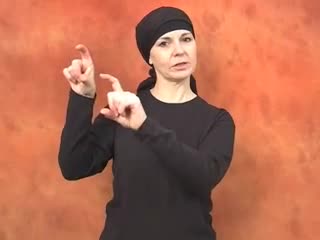
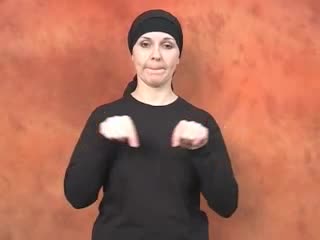
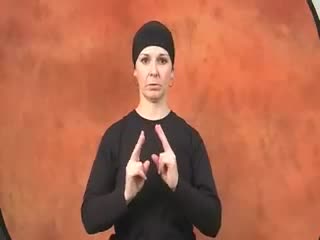
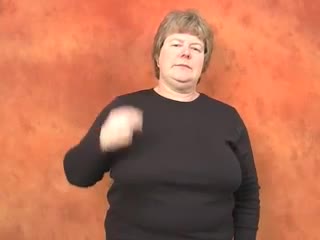
The BSL sign for bolt is wonderfully direct and visual. It represents the physical fastening device used to secure a door, window, or gate. When you see this sign, you're looking at a clear, iconic representation of a solid piece of metal being slid into place. It's a functional sign, immediately conveying the concept of securing something firmly.
This sign doesn't carry a lot of abstract meaning; its strength lies in its literal interpretation. It’s about creating a physical barrier, adding an extra layer of security, or simply closing something definitively. You’ll use it when discussing the actual component that keeps things shut, not for the act of locking in a general sense, which might have a slightly different sign or context.
What makes this sign particularly valuable is its precision. It distinguishes itself from broader concepts like 'lock' or 'close' by focusing on this specific type of mechanism. It’s a sign that brings clarity and detail to your BSL communication, allowing you to specify exactly how something is being secured or what part of a fastening system you're referring to.
When This Sign Feels Natural
This sign feels most natural and appropriate when you're referring to the actual hardware – the metal bar or pin – that slides into place to secure something. Imagine you're describing the parts of a door, explaining how to make a shed more secure, or pointing out a feature on a window. In these practical, descriptive scenarios, using the sign for bolt is perfectly suited.
You'd typically use it in contexts where the physical action of engaging a bolt is relevant. For example, if you're instructing someone to "slide the bolt across," or if you're talking about the need to "install a new bolt" on a garden gate. It's a sign that grounds your conversation in the tangible world, making your meaning unambiguous for the people you're signing with.
It's important to remember that this sign specifically refers to the noun "bolt" as a securing device. You wouldn't use it for the verb "to bolt" in the sense of running away quickly, nor for a "bolt of lightning" or a "bolt of fabric." For those concepts, BSL offers entirely different signs. Sticking to its core meaning as a physical fastener will ensure your communication remains clear and accurate within BSL.
What Learners Usually Miss
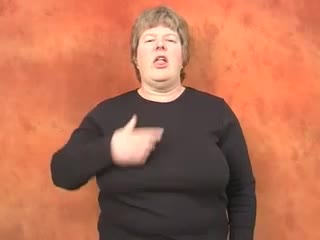
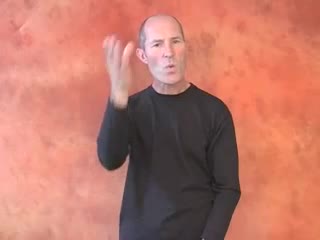
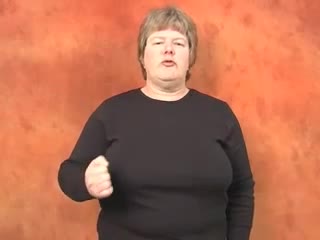
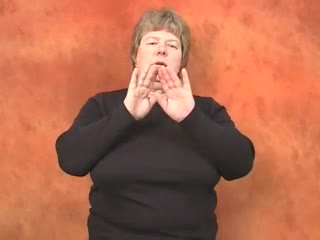
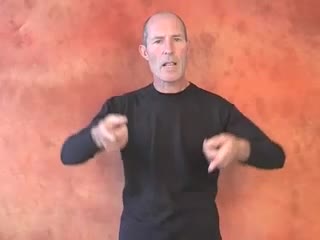
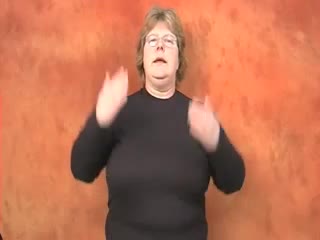
One common area where learners might miss the nuance with the BSL sign for bolt is in the precision of the dominant hand's shape. It’s not just a general pointing gesture. You need a clear G-handshape, where your index finger is extended straight, and your thumb is held alongside it, often lightly resting on the side of your middle finger. If the index finger isn't distinctly extended or if other fingers are splayed, it can lose its iconic representation of the bolt itself.
Another subtle point learners sometimes overlook is the quality of the movement. The sign calls for a straight, horizontal sliding motion forward. It's a decisive push, not a wobbly, curved, or hesitant movement. Think about the firm, deliberate action of pushing a heavy bolt into its receiver. The movement should convey that same sense of finality and security. Any deviation, such as pushing downwards or upwards, changes the visual metaphor and can make the sign less clear.
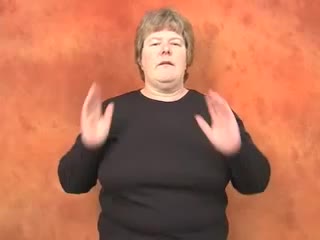
Finally, while the sign can be performed near the non-dominant hand (representing a doorframe), it’s often done clearly in mid-air when the context is already understood. However, for maximum clarity, especially when introducing the concept or if the context isn't obvious, using your non-dominant hand as a stationary "doorframe" or "receiver" against which your dominant hand performs the "bolting" action can significantly enhance understanding. Missing this contextual setup can sometimes lead to a less impactful or harder-to-interpret sign for those who are newer to BSL.
A Simple Way to Remember It
Think of the sign for bolt as literally enacting the function of the object itself. Your dominant index finger isn't just pointing; it is the bolt, ready to slide into place and secure something. This direct visual connection makes it incredibly memorable.
- Your extended index finger (the G-handshape) represents the shape of a physical bolt itself – a long, solid piece.
- The straight, forward sliding motion mimics the action of pushing a bolt into its housing to secure it.
- The firm, controlled movement conveys the security and finality that a bolt provides when engaged.
Short Practice Situations
- "Could you please ensure the **bolt** on the garden gate is fully engaged before you leave?"
- "They decided to install a stronger **bolt** on the shed door to deter potential intruders."
- "The old window had a small, rusty **bolt** that was quite stiff to operate."
- "I noticed a new safety **bolt** had been fitted to the inside of the cupboard."
- "Before we go, let's double-check the front door **bolt** is securely in place."
Signs to Learn Next
- LOCK (noun/verb): This is a natural next step, as "bolt" is a specific type of locking mechanism. Understanding the general sign for "lock" will help you distinguish between the specific and the general, enriching your vocabulary for security.
- DOOR: Since bolts are most commonly found on doors, learning the sign for "door" provides essential context and allows you to create more complete sentences and scenarios using "bolt."
- SECURE / SAFE: A bolt's primary purpose is to make something secure or safe. Learning these related concepts will help you express the outcome or intention behind using a bolt, broadening your ability to communicate about safety.
- KEY: Often, a bolt works in conjunction with a key (or a locking mechanism that uses one). Understanding "key" helps you discuss the full process of locking and unlocking.
- CLOSE (verb): While "bolt" is about securing, "close" is about the initial action. Knowing both allows you to differentiate between merely closing something and then actively bolting it shut.