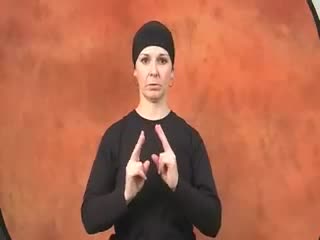
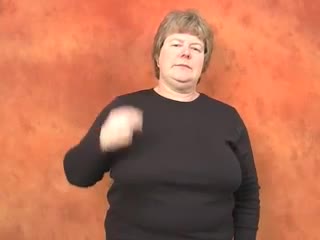
What Is the BSL Sign for "thread"?
Imagine the delicate dance of a needle and its companion, pulling through fabric; the British Sign Language sign for "thread" captures this essence beautifully. It's more than just a word, it’s a concept central to crafting, mending, and even the very fabric of our lives. When you learn how to sign thread in BSL, you're not just acquiring vocabulary; you're gaining a visual metaphor that connects directly to the action and utility of this everyday item. This particular BSL sign for thread offers a wonderful example of iconicity in sign language, where the sign's form clearly illustrates its meaning, making it incredibly intuitive for learners.
How to Sign "thread" in British Sign Language - Step-by-Step
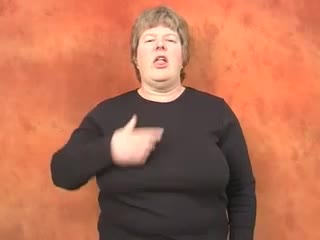
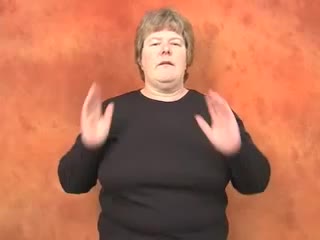
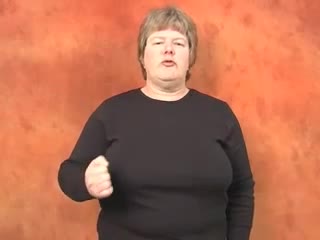
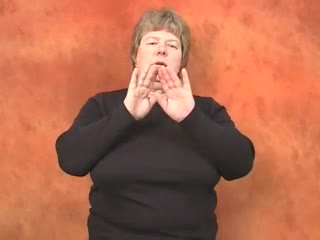
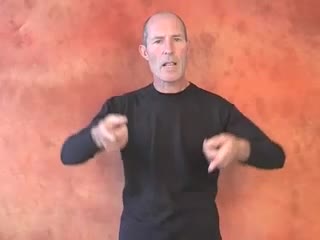
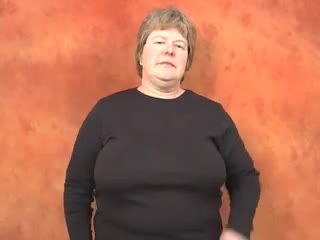
Mastering this sign involves a graceful coordination of your dominant hand, bringing the imagery of a fine strand to life.
Step 1: Handshape
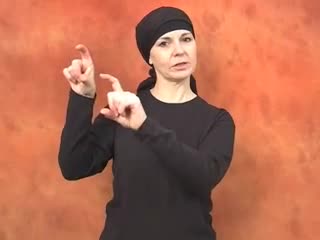
To begin, you'll form a delicate 'F' handshape with your dominant hand. This means your index finger and thumb gently touch at their tips, creating a small, open circle, almost like you're holding a tiny, invisible piece of string. Your remaining three fingers (middle, ring, and pinky) will curl inward towards your palm, resting lightly. It’s a precise and elegant handshape, crucial for conveying the thinness of a thread.
Step 2: Hand Placement and Location
With your hand shaped, position it just in front of your dominant shoulder, slightly to the side of your chest. There's no need for your non-dominant hand here; this is a one-handed sign. You're setting the stage for the thread to emerge from this starting point, ready to be "pulled" into existence through your signing space.
Step 3: Movement
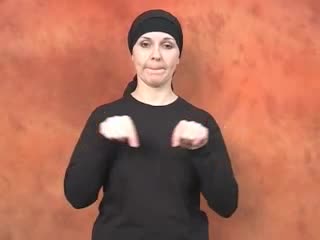
Now comes the motion that truly defines the sign. From its starting position, you'll smoothly pull your dominant 'F' handshape straight outwards and slightly downwards, away from your body. The movement is continuous and deliberate, extending about 10-15 centimetres. Picture yourself gently pulling a length of thread from a spool or through the eye of a needle. Execute this motion once, ensuring a fluid, unbroken sweep.
Step 4: Facial Expression and Mouthing
While the sign for "thread" doesn't inherently demand a strong facial expression, a neutral or mildly contemplative look often accompanies it, reflecting the focused nature of working with thread. More importantly, you'll mouth the English word "thread" silently or very subtly. This mouthing, a non-manual feature, provides vital phonetic information and ensures clarity, especially when similar signs might exist. It helps differentiate the sign from others that might share handshape or movement but represent different concepts.
Step 5: Palm Orientation
Throughout the sign's movement, your palm will consistently face towards your non-dominant side. The back of your hand, therefore, faces the person you are communicating with. This orientation is important because it aligns with the visual representation of pulling a thread, where the 'F' handshape naturally presents itself sideways as it extends forward. A different palm orientation could subtly alter the perceived action or even lead to confusion with other signs.
"thread" in BSL - Quick Reference Snapshot
- Handshape: Dominant 'F' handshape (index finger and thumb tips touching, other fingers curled).
- Location: In front of your dominant shoulder, near the chest.
- Movement: Pull dominant hand smoothly outwards and slightly downwards, once.
- Facial Expression: Neutral or mildly contemplative.
- Dominant Hand: Used exclusively for this sign.
- Palm Orientation: Palm faces towards your non-dominant side throughout the movement.
5 Memorisation Tricks for the BSL Sign "thread"
- Visual Mnemonic: Picture your 'F' handshape literally holding the end of a very fine thread. As you pull your hand away from your shoulder, visualise that thread extending, almost as if you’re trying to measure a short piece. This connection to the action will cement the handshape and movement together.
- Muscle-Memory Drill: Perform the sign ten times slowly, focusing on the precision of the 'F' handshape and the smooth, controlled pulling motion. Close your eyes and feel the movement, then open them and check your handshape in a mirror, refining until it feels completely natural.
- Connection to Meaning: Think about the act of threading a needle; that precise, careful grip on the end of the thread is perfectly mirrored by the 'F' handshape. The forward movement is like drawing the thread through the needle's eye, making the sign’s meaning deeply embedded in its form.
- Common-Confusion Tip: Be mindful not to let your curled fingers spread out, as this changes the handshape significantly and could lead to confusion with other signs. Keep those three non-touching fingers tucked in, maintaining the 'F' and the specific visual of a thin strand.
- Daily-Life Practice: Every time you see thread, whether in a sewing kit, on clothing, or even in a spider's web, mentally or physically perform the sign. Connect the real-world object to the BSL sign, making it a natural part of your visual vocabulary throughout your day.
Real-Life Situations to Use the BSL Sign for "thread"
Learning a sign is one thing; knowing when and how to use it in conversation truly brings it to life. Here are a few scenarios for "thread":
- You might be discussing a craft project: "I need some blue thread for this embroidery." Here, the sign for "thread" would follow the colour sign, maintaining a topic-comment structure.
- Perhaps you're pointing out a practical problem: "Look, there's a loose thread on your jumper!" In this context, you'd sign "JUMPER YOUR LOOSE THREAD" with a clear visual reference to the specific location.
- When asking for an item: "Do you have any strong thread for mending?" This would incorporate question facial grammar (raised eyebrows) along with signs like "HAVE YOU STRONG THREAD MEND?"
- Imagine describing an intricate design: "The pattern uses very fine gold thread." The sign for "thread" might be modified with a smaller, more delicate movement to indicate its fineness, alongside signs for "GOLD" and "PATTERN."
Top 3 Mistakes Learners Make Signing "thread" in BSL
Even experienced signers had to start somewhere, and certain signs, like "thread," often catch learners out. Don't worry, these are easily fixed!
- Incorrect Handshape: A common error is not forming the 'F' handshape precisely, often resulting in the thumb and index finger being too far apart, or the other fingers splayed rather than curled. This changes the visual significantly. The correction is to consciously ensure the tips of your index finger and thumb meet to form a closed circle, and your remaining fingers are tightly curled, conveying the image of something very thin.
- Movement Too Large or Repetitive: Some learners might make the pulling motion too exaggerated or repeat it multiple times, perhaps confusing it with signs that indicate 'pulling' something larger or require repetition. The sign for "thread" is a single, contained, smooth pull, about 10-15 cm. Focus on a single, continuous, modest extension, reflecting the gentle action of drawing a single thread.
- Ignoring Palm Orientation: It's easy to overlook the palm's direction, but having your palm face forward rather than towards your non-dominant side can subtly alter the visual. This might make it look like you're pointing or pulling something else. Always ensure your palm faces inwards, towards your non-dominant side, with the back of your hand presenting outwards, maintaining the correct perspective for the "pulling" action.
Fascinating Facts About the BSL Sign for "thread"
Every sign has its own story and linguistic nuances, and the sign for "thread" is no exception. Delving into these facts can deepen your appreciation for British Sign Language.
- The sign for "thread" is considered highly iconic, meaning its form directly resembles the action or object it represents – in this case, the act of pulling a piece of thread. This makes it intuitively understandable for many learners.
- While the core handshape and movement are widely consistent across the UK, very subtle regional variations might appear in the exact starting location or the precise angle of the pull. However, these are minor and won't impede understanding within the broader BSL-using community.
- Interestingly, the 'F' handshape itself is quite versatile in BSL, appearing in various signs where a delicate grip or a small, circular opening is implied, reinforcing its iconic connection to fine objects or precise actions.
- The very concept of "thread" can extend metaphorically in English to ideas like "thread of conversation" or "losing the thread." While BSL has its own ways to express these abstract concepts, the foundational sign for the physical thread remains distinct and concrete.
- This sign often serves as a base for compound signs. For instance, you might see it combined with other signs to specify "sewing thread" or "dental floss," where the core "thread" component is modified or paired to narrow down the meaning.
"thread" in Deaf Culture - Community and Identity
For Deaf people, communication flows through a rich tapestry of signs, expressions, and shared experiences. The humble "thread" might seem like a simple concept, but it weaves into the practicalities and creative expressions within the Deaf community. Many Deaf individuals engage in crafts like sewing, knitting, and embroidery, where thread is fundamental, connecting them to a long history of making and mending. The sign itself becomes a direct link in these conversations, enabling precise discussion about materials, projects, and techniques. It's a testament to the hands-on, visual nature of Deaf culture, where the material world is often directly represented and articulated through signing. Furthermore, the idea of "threads" can subtly resonate with the interconnectedness of Deaf communities themselves, forming strong bonds of shared language and identity across the UK.
Example Conversations Using "thread" in BSL
Here are a few ways you might encounter or use the sign for "thread" in a conversation, showcasing its versatility.
English: Can you pass me the black thread, please? - BSL structure: YOU PASS ME BLACK THREAD PLEASE? (Direct request, adjective before noun)
English: I need a strong thread to fix this button. - BSL structure: BUTTON FIX ME, NEED STRONG THREAD. (Topic-comment structure, 'button fix' is the topic)
English: My needle broke, and now I can't thread it. - BSL structure: NEEDLE BREAK NOW I CAN'T THREAD IT. (Clear sequence of events, 'thread it' uses the sign with a directional movement)
English: What kind of thread is best for silk? - BSL structure: SILK THREAD BEST WHAT KIND? (Question word at end, 'silk' as a classifier for thread)
English: Be careful, the thread might snap if you pull too hard. - BSL structure: CAREFUL, THREAD PULL HARD, MIGHT SNAP. (Conditional statement, visualising the action and consequence)
Frequently Asked Questions: The BSL Sign for "thread"
Is the BSL sign for "thread" the same across all regions of the UK?
Generally, the core BSL sign for "thread" with its 'F' handshape and outward pulling motion is widely understood and used consistently throughout the United Kingdom. While minor stylistic variations in movement or starting position might exist regionally, they are usually subtle and don't hinder comprehension among BSL users. This particular sign is quite robust in its form.
Are there any similar BSL signs I might confuse with "thread"?
You're right to be aware of potential confusions! Some signs that involve a delicate handshape or a pulling motion could potentially be mistaken. For example, some signs related to 'fine' or 'thin' might use a similar hand configuration, but their movement or location will always differ significantly. Focusing intently on the precise 'F' handshape and the specific outward pull for "thread" will help you avoid misinterpretations.
Is the BSL sign for "thread" suitable for beginners?
Absolutely, the BSL sign for "thread" is an excellent sign for beginners to learn early in their journey. Its iconic nature means the sign's form clearly represents its meaning, making it relatively easy to remember and execute. Plus, it's a practical word that comes up in many everyday contexts, offering immediate opportunities for practice and integration into your signing vocabulary.
Can children learn the BSL sign for "thread" easily?
Yes, children typically pick up the BSL sign for "thread" quite readily. Its clear visual representation of pulling something thin is very intuitive for young learners. Incorporating it into games, stories about sewing or crafting, or even pointing out loose threads on their clothes can make learning this sign engaging and memorable for kids.
How does the BSL sign for "thread" differ from the sign for 'yarn' or 'string'?
That's a fantastic question, as these concepts are closely related! The BSL sign for "thread" specifically refers to a very fine strand, typically used for sewing. The sign for 'yarn' often involves a different handshape, perhaps depicting a thicker, looser strand, or the action of winding it. Similarly, 'string' might use a handshape that suggests a thicker cord, or a different movement to denote its characteristics. Each sign maintains its distinct form to reflect the material's specific properties.
Signs That Pair Naturally with "thread" in BSL
Building your vocabulary around thematic clusters helps you communicate more effectively. Here are some signs that naturally complement "thread":
- NEEDLE: This is a classic pairing, as thread and needle go hand-in-hand in the context of sewing. Learning them together reinforces their practical relationship.
- SEW/SEWING: Understanding how to sign "thread" becomes even more useful when you can express the action it's used for. They share a conceptual link in the world of crafts.
- FABRIC/CLOTH: Thread is used to create and mend fabric, making these signs essential companions. You'll often discuss the type of fabric alongside the thread you're using.
- MEND/REPAIR: Often, you'll need thread specifically for mending clothes or other items, so this sign naturally fits into conversations about fixing things.
- BUTTON: Buttons are frequently sewn onto garments, requiring thread. This specific item provides another excellent real-world application for the sign.
- KNIT/KNITTING: While knitting typically uses yarn, the underlying concept of creating something with strands is similar, and sometimes finer threads are used for delicate knitting.
Building Fluency: How to Practise "thread" in BSL
Consistent, focused practice is the key to signing "thread" naturally and confidently. Start by using a mirror: carefully watch your dominant hand as you form the 'F' handshape and execute the pulling movement, making sure your palm orientation is correct. Integrate the sign into your daily conversations, even if you're just signing to yourself; for instance, if you see a sewing kit, sign "THREAD" aloud. A powerful technique is to film yourself signing; reviewing your own video footage can highlight subtle areas for improvement that you might miss otherwise. Most importantly, seek out opportunities to interact with a Deaf conversation partner; authentic communication is where your skills will truly flourish. They can provide invaluable feedback and expose you to the sign in various natural contexts. Remember, fluency comes from repetition spaced over days, allowing your muscle memory to truly embed the sign. Keep signing, and you'll soon be weaving "thread" seamlessly into your BSL conversations!