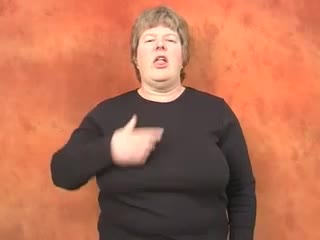
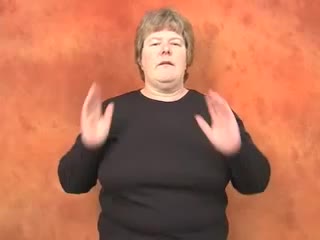
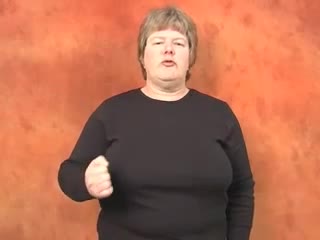
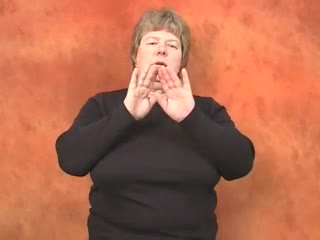
What Is the BSL Sign for "circular saw blade"?
Imagine the whirring power of a workshop tool, the kind that shapes wood with precision and speed. The BSL sign for circular saw blade beautifully captures that essence, instantly conveying a complex piece of equipment through a fluid, descriptive movement. This sign isn't just about naming an object; it's a visual representation, demonstrating its function and form within the rich tapestry of British Sign Language circular saw blade communication. You'll find this particular sign incredibly descriptive, which is often a hallmark of practical, tool-related vocabulary in our language.
How to Sign "circular saw blade" in British Sign Language - Step-by-Step
Creating this sign correctly involves a series of specific hand movements, positions, and expressions that bring the object to life in your signing space.
Step 1: Handshape
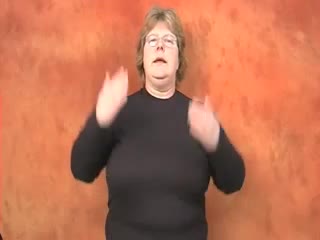
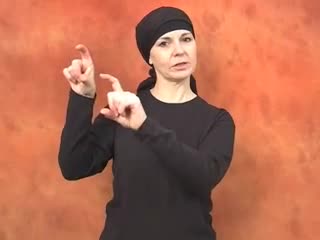
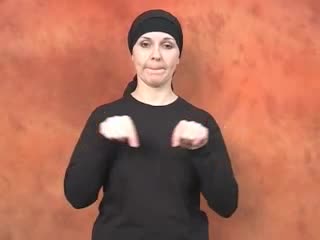
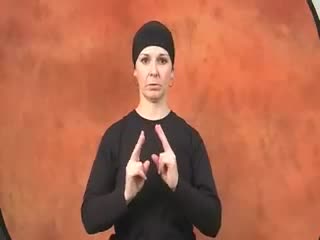
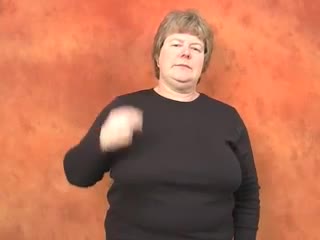
For this sign, you'll want to form a flat, open handshape with your dominant hand. Keep all your fingers extended and held together, touching side-by-side, with your thumb also extended and alongside your palm. Your fingers will be straight and firm, creating a solid, flat surface that mimics the edge of a blade.
Step 2: Hand Placement and Location
Begin by positioning your dominant hand in a neutral signing space, directly in front of your chest. Your flat hand should be held horizontally, with the palm facing towards your non-dominant side, almost as if you're holding a plate upright. Your non-dominant hand isn't typically involved in the primary formation or movement of this specific sign; it remains relaxed or subtly supports your dominant hand if that feels more natural for you.
Step 3: Movement
From your initial chest-level placement, the sign for circular saw blade involves a distinctive circular motion. Rotate your wrist repeatedly and quite rapidly, making your flat hand describe a small, tight circle in the air. This rotation should be smooth and continuous, mimicking the fast, spinning action of a saw blade. You'll typically perform two to three full rotations, ensuring the movement is clear and consistent.
Step 4: Facial Expression and Mouthing
Non-manual features are absolutely vital for conveying meaning and grammatical nuances in British Sign Language, and this sign is no exception. While signing "circular saw blade," you should maintain a neutral, focused facial expression. You don't necessarily need a specific emotive face, but rather one that shows concentration. Crucially, you'll mouth the words "circular saw blade" or simply "saw" as you perform the sign. Mouthing helps clarify the English equivalent, especially for more technical terms, and it provides important context for your conversation partner.
Step 5: Palm Orientation
Throughout the entire movement, your palm orientation will remain consistent. Your palm faces towards your non-dominant side, with your extended fingers pointing straight ahead, away from your body. This orientation is key because it visually represents the flat, cutting surface of the blade itself. Maintaining this consistent orientation ensures that the sign accurately depicts the object and prevents confusion with other signs that might have similar handshapes but different palm directions.
"circular saw blade" in BSL - Quick Reference Snapshot
- Handshape: Dominant hand flat, fingers extended and together, thumb alongside.
- Location: Neutral signing space, in front of the chest.
- Movement: Repeated, rapid wrist rotation describing a small circle.
- Facial Expression: Neutral, focused expression.
- Mouthing: Mouth "circular saw blade" or "saw".
- Dominant Hand: Performs the main action.
- Palm Orientation: Palm faces non-dominant side, fingers point forward.
5 Memorisation Tricks for the BSL Sign "circular saw blade"
Learning new signs is always an adventure; here are some specific ways to make "circular saw blade" stick in your memory.
- Visual Mnemonic: Picture the flat handshape as the actual blade itself. Then, imagine your wrist is the motor of the saw, making that blade spin quickly and powerfully, ready to cut through wood. This mental image directly links the sign's form to the object's function.
- Muscle-Memory Drill: Try signing "circular saw blade" ten times in a row, focusing on the smooth, controlled wrist rotation. Afterward, close your eyes and attempt to replicate the motion, paying close attention to the sensation in your wrist and forearm. This repetition builds the physical memory needed for natural execution.
- Connection to Meaning: Think about the core components of a circular saw: it's flat and it spins. The sign directly embodies both of these characteristics, making it an iconic representation. Understanding this direct visual link helps solidify the sign's meaning and makes it intuitively graspable.
- Common-Confusion Tip: Be mindful not to confuse this sign with generic "wheel" or "spin" where the hand might be cupped or the movement less controlled. The flat handshape and precise, rapid rotation are distinct features of the "circular saw blade" sign. This differentiation avoids ambiguity in your conversations.
- Daily-Life Practice: Whenever you see a circular saw, or even just a picture of one, take a moment to practice the sign. You could even mime using the tool while signing it, connecting the action to the sign in a practical, hands-on way. Integrating the sign into your everyday observations reinforces learning significantly.
Real-Life Situations to Use the BSL Sign for "circular saw blade"
Understanding how a sign functions in real conversations is just as important as knowing its form. You'll find "circular saw blade" useful in various practical contexts.
- Imagine you're discussing home renovations with a friend; you might sign, "WE NEED NEW WOOD, *CIRCULAR SAW BLADE* WE'LL USE." Here, the sign fits into a topic-comment structure, clearly stating the tool for the task.
- Perhaps you're at a hardware store describing a broken tool to an assistant; you could sign, "MY *CIRCULAR SAW BLADE* BROKEN, NEED REPLACE." This illustrates a direct object usage, showing possession and a need for repair.
- If you're explaining a safety rule to someone, you might sign, "CHILDREN *CIRCULAR SAW BLADE* NOT TOUCH, DANGEROUS!" This demonstrates the sign within a negative command, emphasizing caution and potential harm.
- You might be teaching someone about different workshop tools. You could sign, "THIS TOOL, IT'S CALLED *CIRCULAR SAW BLADE*." This provides a clear identification, introducing new vocabulary in a demonstrative way.
Top 3 Mistakes Learners Make Signing "circular saw blade" in BSL
Everyone makes a few missteps when learning, and that's perfectly normal. Being aware of common errors for "circular saw blade" can help you refine your signing.
- Incorrect Handshape: Many beginners might cup their hand slightly or spread their fingers, which doesn't accurately represent a flat blade. This can make the sign look more like "wheel" or "turn." The precise correction is to keep your dominant hand absolutely flat, with all fingers held tightly together and straight, mimicking a rigid, cutting disc.
- Insufficient or Incorrect Movement: Sometimes, learners perform too small a rotation, or they might move their entire arm rather than just their wrist. A weak or imprecise movement diminishes the sign's clarity. The key is a clear, rapid wrist rotation, making the flat hand describe a distinct, tight circular path in the air, maintaining a consistent rhythm and speed.
- Neglecting Mouthing: Forgetting to mouth "circular saw blade" or "saw" is a common oversight, particularly with more descriptive, less common signs. Without mouthing, your conversation partner might struggle to pinpoint the exact item you're referring to, especially if the context isn't perfectly clear. Always remember to mouth the English equivalent alongside the sign for optimal understanding.
Fascinating Facts About the BSL Sign for "circular saw blade"
Every sign holds a story, and "circular saw blade" is particularly interesting in how it visually communicates.
- The sign for "circular saw blade" exemplifies an iconic sign, meaning its form directly mimics the object it represents. You're not just signing a word; you're physically demonstrating the spinning action and flat shape of the blade itself.
- While its precise historical origin within British Sign Language isn't extensively documented, its highly descriptive nature suggests it evolved from a practical need to communicate about tools in a straightforward, visually accessible manner. Signs for tools often develop organically within trades and communities.
- You'll find very little regional variation for this specific sign across the UK's Deaf community. Its clear, descriptive form makes it universally understood, avoiding the local dialects sometimes seen in more abstract vocabulary. This consistency is incredibly helpful for learners.
- This sign is a fantastic example of BSL's visual grammar at play, where the movement component itself conveys a crucial aspect of the object's function. The repeated rotation isn't just decoration; it's fundamental to understanding what a circular saw blade does.
- Interestingly, while the sign represents the blade, it often serves as a metonym for the entire circular saw tool. You wouldn't typically sign "circular saw" and then separately "blade"; this single sign usually covers both concepts in context.
"circular saw blade" in Deaf Culture - Community and Identity
Signs for practical objects like "circular saw blade" highlight the Deaf community's ingenuity and pragmatism in communication. When people share information about building, DIY projects, or working with their hands, descriptive signs like this become powerful tools for conveying precise details without spoken words. Deaf individuals, like anyone else, engage in various trades and hobbies requiring specific equipment, and BSL provides a rich vocabulary to discuss these with clarity and efficiency. The ability to visually represent tools and actions fosters a shared understanding, strengthening community bonds through common interests and practical knowledge exchange. It underscores how BSL is a living language, adapting and expanding to meet the communicative needs of its users in every aspect of life, from abstract discussions to concrete construction plans.
Example Conversations Using "circular saw blade" in BSL
Let's see how "circular saw blade" might appear in a few different conversational contexts.
English: We need a new circular saw blade for this project. - BSL structure: Topic-comment order, clearly stating the need before the object.
English: Did you remember to sharpen the circular saw blade? - BSL structure: Question marker (raised eyebrows) at the end, integrating the sign as the direct object of the verb "sharpen."
English: Be careful, the circular saw blade is very sharp. - BSL structure: Emphasising caution first, then introducing the object with its dangerous quality.
English: He bought a special circular saw blade for cutting metal. - BSL structure: Describing the specific type of blade and its intended use, using a classifier or descriptive sign for "cutting metal."
English: The old circular saw blade broke last week. - BSL structure: Time marker (LAST WEEK) at the beginning, followed by the object and its state.
Frequently Asked Questions: The BSL Sign for "circular saw blade"
Is the BSL sign for circular saw blade suitable for beginners?
Absolutely, this sign is quite beginner-friendly. Its iconic nature, directly mimicking the object's function, makes it relatively easy to grasp and remember. Focusing on the flat handshape and the distinct wrist rotation will help new learners quickly master its form and meaning.
Are there any alternative BSL signs for "circular saw blade"?
For "circular saw blade" specifically, you'll find a high degree of consistency across the UK; there aren't widely recognised alternative BSL signs for this term. The descriptive nature of the established sign makes it very effective and generally understood throughout the Deaf community. While variations for some concepts exist, this particular sign is quite standardised due to its clear visual representation.
How do I make sure I'm not confusing "circular saw blade" with other BSL signs?
To avoid confusion, really focus on the specific combination of a flat, straight-fingered handshape and the distinct, rapid wrist rotation. Other signs for general "wheel" or "spin" might involve a cupped hand or a less precise movement. The context of tools and construction will also heavily cue your conversation partner towards the correct meaning.
Can children learn the BSL sign for circular saw blade?
Children can definitely learn this sign, especially if they're exposed to tools or construction play. Emphasise the spinning motion and the flat shape in a fun, engaging way. You might simplify the mouthing to just "saw" to make it more accessible for younger learners.
Does the BSL sign for circular saw blade also mean the entire circular saw tool?
Yes, often in context, the sign for "circular saw blade" functions as a metonym for the entire "circular saw" tool. If you're discussing using the machine, this single sign is typically sufficient to convey the full tool, much like how in English you might say "get the saw" when referring to the entire power tool.
Signs That Pair Naturally with "circular saw blade" in BSL
Expanding your vocabulary by learning related signs helps you build more natural and fluid conversations.
- SAW (verb): This sign naturally accompanies "circular saw blade," as you'd use the blade to perform the action of sawing. They belong together in discussions about woodworking or construction tasks.
- WOOD: Since circular saw blades are often used for cutting wood, this sign is an obvious pairing, linking the tool to its primary material. Learning them together helps create thematic clusters.
- MEASURE: Before cutting with a circular saw blade, one almost always needs to measure. This sign connects to the preparatory actions involved in using the tool effectively.
- BUILD: The overall goal of using tools like a circular saw blade is often to build something. This broader concept helps contextualise the specific tool within a larger project.
- TOOL: A general sign for "tool" helps categorise "circular saw blade" as part of a larger group of implements. It's useful for introducing or grouping various pieces of equipment.
- WORKSHOP: This sign provides the common environment where a circular saw blade would be found and used, creating a natural setting for your signed conversations.
Building Fluency: How to Practise "circular saw blade" in BSL
Becoming fluent in British Sign Language means consistent practice, and there are wonderful ways to integrate "circular saw blade" into your routine. Start by using a mirror to observe your handshape and movement; pay particular attention to ensuring your fingers are flat and the wrist rotation is smooth and distinct. Integrate this sign into daily BSL conversation by consciously looking for opportunities to talk about tools, DIY projects, or even just the concept of spinning objects. Filming yourself signing this word and then reviewing it provides invaluable insight, allowing you to catch any subtle errors in handshape or movement that you might otherwise miss. The absolute best way to refine your signing is to connect with a Deaf conversation partner; they can offer real-time feedback and expose you to natural usage. Remember, repetition spaced over several days, rather than intense cramming, will help solidify the sign in your long-term memory. Keep signing, keep connecting, and you'll soon be using "circular saw blade" with complete confidence!