What Is the BSL Sign for "saw blade"?
Imagine the precise, sharp edge of a tool designed for cutting; that's the core concept we’re exploring with the British Sign Language saw blade sign. For anyone delving into BSL, understanding signs for practical objects helps bridge everyday communication gaps. This particular sign vividly portrays the essence of the cutting instrument itself, not just the action of sawing, which is a key distinction in BSL. It's a foundational vocabulary item, especially useful when discussing tools, craftsmanship, or even home repairs within the Deaf community. Mastering the BSL sign for saw blade gives you a clearer way to describe a specific component of a saw, enhancing your expressive abilities in British Sign Language.
How to Sign "saw blade" in British Sign Language - Step-by-Step
Let's break down the distinct actions and forms that bring the sign for "saw blade" to life in BSL.
Step 1: Handshape
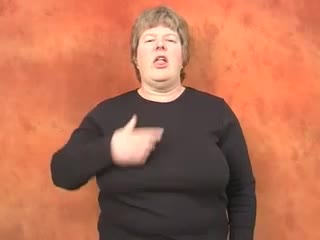
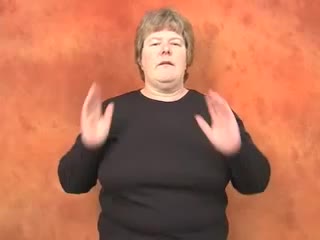
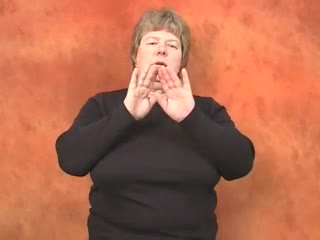
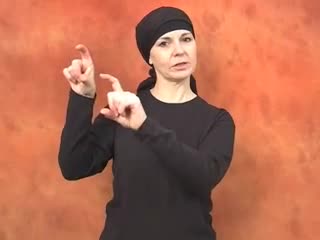
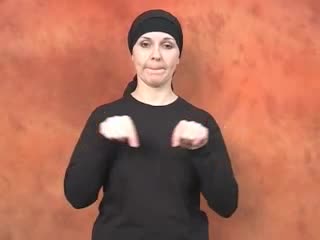
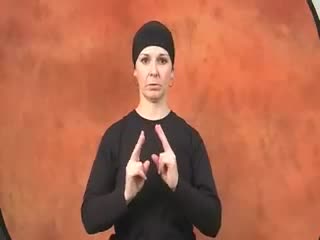
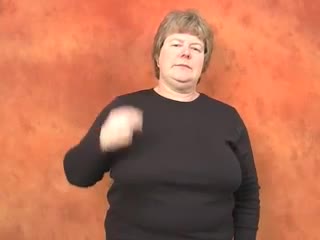
Begin by forming a flat handshape with your dominant hand. This means all your fingers should be held straight and tightly together, completely extended, with your thumb tucked across your palm or resting alongside your index finger. Picture your hand becoming a rigid, thin plane, much like the flat surface of a blade itself, ready to convey its sharp function.
Step 2: Hand Placement and Location
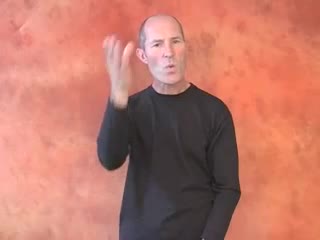
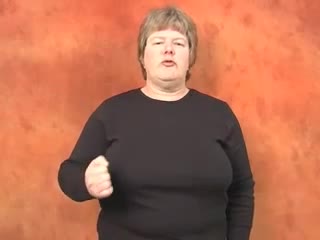
Position your dominant hand in the neutral signing space directly in front of your body, around chest height. You'll want to place it slightly to your non-dominant side, preparing for the upcoming motion. There's no contact with your body or your non-dominant hand here; your signing hand floats freely, poised for action.
Step 3: Movement
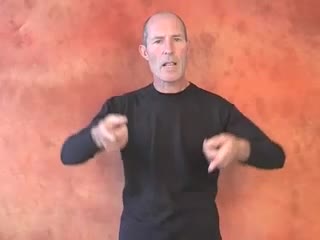
Execute a short, sharp, repeated horizontal motion with your dominant hand. Move your hand forward a small distance, then pull it back to its starting point, mimicking the action of a saw cutting through material. Perform this precise back-and-forth movement two or three times, ensuring each stroke is distinct and deliberate.
Step 4: Facial Expression and Mouthing
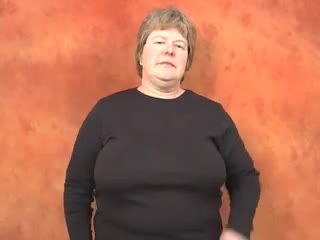
Maintain a neutral and focused facial expression throughout the sign, perhaps with a slight narrowing of the eyes or a gentle furrow of the brow, reflecting the concentration often associated with using such a tool. When signing "saw blade" in British Sign Language, it's common to mouth the English word "saw blade" simultaneously. This vital non-manual feature helps disambiguate the sign from others that might share similar handshapes or movements but possess different meanings.
Step 5: Palm Orientation
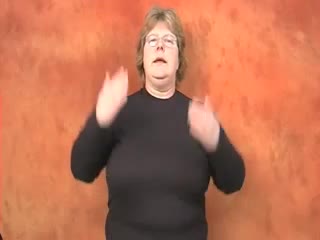
Your palm should generally face downwards or slightly towards your non-dominant side during the entire execution of the sign. The pinky-finger side of your flat hand, which represents the cutting edge, should be directed towards the imagined surface or material you are "cutting." This specific orientation is crucial for conveying the function and directionality of the blade.
"saw blade" in BSL - Quick Reference Snapshot
- Handshape: Dominant hand forms a flat "B" shape (fingers together, extended).
- Location: Neutral signing space, chest height, slightly to non-dominant side.
- Movement: Short, repeated horizontal sawing motion forward and back (2-3 times).
- Facial Expression: Neutral, focused, often mouthing "saw blade."
- Dominant Hand: Performs all the signing action.
- Palm Orientation: Downwards or slightly towards non-dominant side, pinky edge forward.
5 Memorisation Tricks for the BSL Sign "saw blade"
Here are some clever ways to really make the sign for "saw blade" stick in your memory.
- Visual Mnemonic: Picture your dominant hand becoming the actual flat, rigid metal of a saw blade. Envision its cutting edge along your pinky finger side, moving to slice through an imaginary piece of wood right in front of you. This direct visual connection to the tool's form and function will strengthen your recall.
- Muscle-Memory Drill: Practice the specific back-and-forth movement repeatedly, focusing on the slight resistance you might feel as if you were actually cutting. Start slow, then gradually increase your speed, ensuring the motion feels natural and fluid, committing the rhythm of the sign to your motor memory.
- Connection to Meaning: Think about the primary characteristic of a saw blade-its ability to cut with a reciprocating motion. The sign perfectly encapsulates this action, so when you see or use a saw, consciously link that real-world experience to the BSL sign, reinforcing the semantic connection.
- Common-Confusion Tip: Be mindful of the flat handshape and precise horizontal movement. Some learners might confuse it with signs involving broader sweeping motions or different hand orientations, so focus on the distinct, controlled sawing action.
- Daily-Life Practice: Each time you encounter a saw or see something cut, perform the sign for "saw blade" discreetly. Whether you're in a hardware store, watching a DIY show, or even just seeing a picture, consciously incorporate the sign into your mental dialogue.
Real-Life Situations to Use the BSL Sign for "saw blade"
Knowing a sign is one thing; using it naturally in conversation is quite another. Here are some scenarios where "saw blade" would fit right in.
- If a friend is talking about renovating their house, you might sign, "YOUR SAW, BLADE SHARP?" to ask if their saw blade is sharp, using question-form non-manual features.
- When discussing a project, you could sign, "NEED NEW SAW BLADE, METAL CUT," indicating a specific type of blade is required for cutting metal.
- During a repair, you might explain, "BROKEN SAW BLADE, CAREFUL," warning someone about a damaged blade and employing spatial grammar to indicate its location.
- You might describe a DIY task by signing, "ME USE SAW BLADE, WOOD CUT, FINISH," conveying the completed action with appropriate BSL syntax.
Top 3 Mistakes Learners Make Signing "saw blade" in BSL
Everyone makes errors when learning a new language, and BSL is no different. Here are some common pitfalls with "saw blade" and how to overcome them.
- Incorrect Handshape: A frequent mistake involves not keeping all fingers tightly together, sometimes allowing the index finger to separate, or curling the thumb incorrectly. This alters the visual representation of a flat blade. The correction is to consciously flatten your dominant hand completely, ensuring all fingers are unified and extended, creating a smooth, blade-like surface.
- Too Broad or Loose Movement: Some beginners perform the sawing motion too widely or with a floppy wrist, making it look more like waving or stirring. This loses the precision essential for conveying a cutting tool. Instead, focus on a controlled, compact, and rigid back-and-forth movement, ensuring only your forearm and wrist contribute to the action, mimicking the firm control needed for sawing.
- Missing Facial Expression/Mouthing: Learners sometimes neglect the crucial non-manual components, signing with a blank face or not mouthing the word. Without these, the sign can lack clarity or grammatical completeness. The solution is to deliberately mouth "saw blade" as you sign and adopt a focused, neutral expression, integrating these elements from the very start of your practice.
Fascinating Facts About the BSL Sign for "saw blade"
Every sign has a story or an interesting characteristic, and "saw blade" is no exception.
- The sign for "saw blade" is highly iconic, meaning its form directly resembles the action or object it represents, making it relatively intuitive for new learners to grasp.
- While the core handshape and movement are quite stable across the UK, subtle regional variations in BSL might exist in the exact speed or amplitude of the sawing motion, reflecting local community norms.
- This sign distinguishes the *blade* itself from the broader concept of "saw" (the whole tool) or "sawing" (the action), highlighting BSL's capacity for specific semantic differentiation.
- Its strong visual motivation allows it to be understood contextually even by those with limited BSL knowledge, as the mimetic quality is very clear.
- The precision required in its execution underscores BSL's emphasis on clarity and distinct movements to convey specific meanings accurately.
"saw blade" in Deaf Culture - Community and Identity
Tools and craftsmanship often hold a special place in any community, and for the Deaf community, the practical application of skills, including those involving tools like saw blades, is a respected part of life. Throughout history, many Deaf individuals have found fulfilling careers and hobbies in trades that rely on manual dexterity and visual communication, such as carpentry, engineering, or mechanics. The ability to clearly sign specific tools like a "saw blade" facilitates detailed communication about projects, sharing knowledge, and collaborating on tasks. It reinforces a sense of shared experience and practical skill, fostering connections within the community around tangible creations and problem-solving. This common vocabulary allows for rich discussions about craftsmanship, innovation, and the satisfaction of building or repairing things, all communicated through the visual beauty of BSL.
Example Conversations Using "saw blade" in BSL
Let's see how "saw blade" fits into actual BSL exchanges.
English: Do you have a spare saw blade for this machine? - BSL structure: YOU HAVE SAW BLADE SPARE MACHINE THIS? (Topic-comment structure, question NMF)
English: The old saw blade is dull; we need a new one. - BSL structure: SAW BLADE OLD DULL. NEED NEW. (Clear statement, topic first)
English: Be careful with that saw blade, it's very sharp. - BSL structure: SAW BLADE THAT, SHARP, CAREFUL. (Emphasis on caution, spatial reference to the blade)
English: I used a fine-toothed saw blade for this delicate cut. - BSL structure: ME USE SAW BLADE FINE-TEETH, CUT DELICATE THIS. (Descriptive adjectives preceding the noun, then verb)
English: Where can I buy a saw blade for plastic? - BSL structure: SAW BLADE PLASTIC, BUY WHERE? (Object-first question structure, spatial question)
Frequently Asked Questions: The BSL Sign for "saw blade"
We hear a lot of great questions from learners, and these are some of the most common ones about "saw blade."
Is the BSL sign for "saw blade" the same across all regions of the UK?
While the fundamental handshape and movement for the BSL sign "saw blade" remain largely consistent nationwide, you might observe minor stylistic differences in speed or how pronounced the back-and-forth motion is, depending on regional dialects within the Deaf community. These subtle variations are natural in any living language, but the core meaning is always understood.
Are there any similar BSL signs I should be careful not to confuse with "saw blade"?
Absolutely, you'll want to avoid confusing it with signs for "knife" (which often involves a single cutting motion, often downwards or across the non-dominant hand) or "cutting" (which can be more generic or involve different handshapes). Always remember the flat handshape and the specific, repeated horizontal sawing motion for "saw blade" to maintain clarity.
Is "saw blade" a suitable sign for BSL beginners to learn early on?
Yes, it's an excellent sign for beginners! Its iconic nature means it visually represents the object, making it quite intuitive and easy to remember. Learning signs like "saw blade" helps build a practical vocabulary for discussing everyday objects and actions, which is foundational for early BSL communication.
Can children learn and use the BSL sign for "saw blade"?
Children can definitely learn and use this sign. Its clear visual representation and motor action make it engaging for younger learners. Using signs like "saw blade" helps children connect with their environment and express observations about tools or activities they might see adults doing, enriching their vocabulary development.
How does the BSL sign for "saw blade" compare to a similar concept in another sign language, like American Sign Language?
While specific comparisons are beyond the scope of BSL learning, it's common for different sign languages to have unique signs for similar concepts. The BSL sign for "saw blade" is distinct to British Sign Language, reflecting its own linguistic evolution and community usage, and would likely differ significantly from its equivalent in, for instance, American Sign Language due to separate histories and cultural contexts.
Signs That Pair Naturally with "saw blade" in BSL
Expanding your vocabulary involves understanding how signs connect thematically. Here are some signs that naturally complement "saw blade" for building a richer BSL vocabulary.
- SAW (tool): This sign, often representing the entire hand tool, naturally links with "saw blade" as the blade is a key component.
- WOOD: As a primary material cut by a saw blade, signing "wood" immediately creates a contextual pairing.
- CUT: The general action of "cut" is directly related to the function of a saw blade, allowing you to describe what the blade does.
- SHARP: Describing the condition of a saw blade, "sharp" is a vital adjective that often accompanies discussions of blades.
- MEASURE: Before using a saw blade, one often needs to "measure," making this a logical preceding action in a sequence.
- BUILD: Saw blades are used in construction and creation, so "build" provides a broader context for the blade's utility.
Building Fluency: How to Practise "saw blade" in BSL
Moving from knowing a sign to using it fluently is a journey, and here’s how to make the sign for "saw blade" truly yours. Start by using a mirror to observe your dominant handshape closely, ensuring your fingers are perfectly flat and together, just like the rigid edge of a blade. Integrate the sign into short, spontaneous BSL sentences throughout your day; for example, if you see a construction site, mentally sign "SAW BLADE BIG" or "SAW BLADE CUT." Filming yourself signing "saw blade" from different angles can highlight any subtle inconsistencies in your movement or palm orientation that you might miss otherwise. Most importantly, seek out opportunities to engage with Deaf individuals or experienced BSL users, as their feedback and natural usage will be invaluable for refining your sign. Keep practising consistently over several days, letting the movement and meaning become second nature, and you'll find your confidence growing beautifully.