What Is the BSL Sign for "square metre"?
Imagine needing to describe the floor space of a new flat or the dimensions for a garden shed; you'll certainly want to know how to convey "square metre" effectively. This crucial term in British Sign Language allows you to precisely discuss measurements of area, whether you're talking about property, materials, or even planning a project. Learning the BSL sign for square metre isn't just about adding a word to your vocabulary; it's about gaining a tool for practical, everyday communication within the Deaf community. This specific sign uniquely combines visual representation with a clear indicator of measurement, providing an intuitive way to express this essential concept in British Sign Language square metre discussions.
How to Sign "square metre" in British Sign Language - Step-by-Step
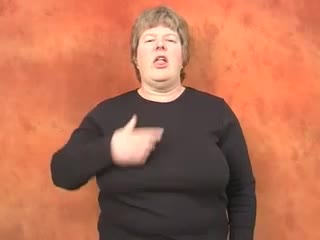
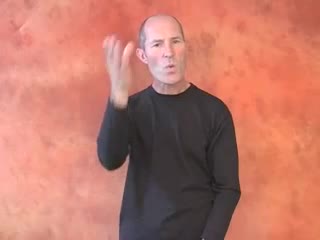
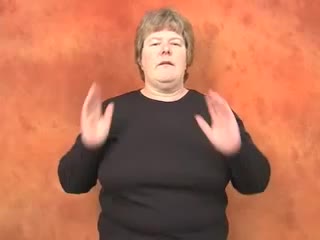
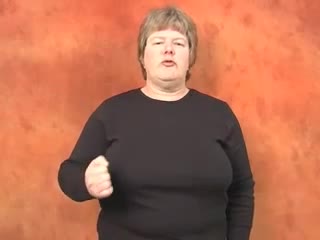
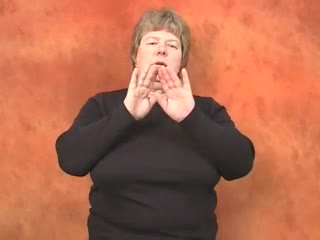
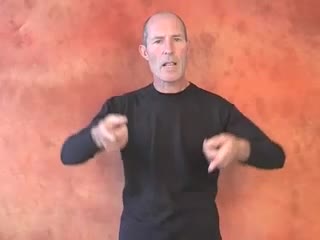
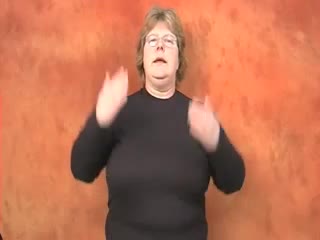
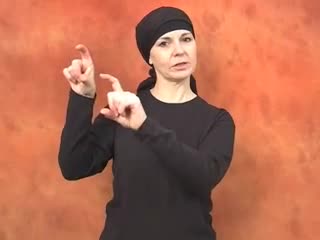
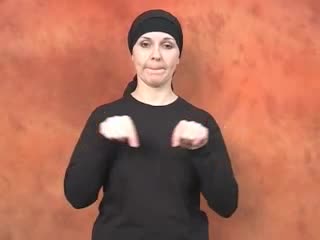
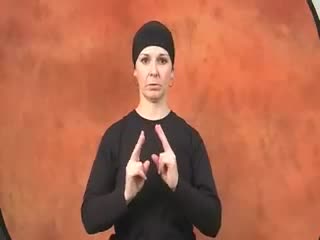
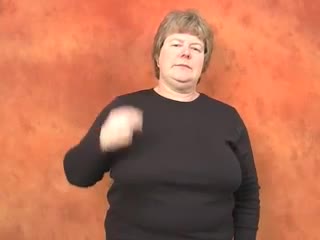
Mastering this sign involves a precise combination of handshape, placement, and movement, all working together to convey the specific unit of area.
Step 1: Handshape
Both your hands will adopt a 'G' handshape for this particular sign. To achieve this, extend your index finger straight out while curling all your other fingers tightly into your palm; your thumb should gently rest alongside your middle finger, maintaining a clear, distinct index finger pointing forward.
Step 2: Hand Placement and Location
Begin with both hands held comfortably in the neutral signing space directly in front of your chest, roughly at shoulder height. Your dominant hand should position itself slightly above and to the left of your non-dominant hand, ensuring a comfortable working distance between them, ready to form a visual square.
Step 3: Movement
From their starting positions, your dominant hand sweeps horizontally to the right, outlining the top edge of an imaginary square, then pivots and moves vertically downwards, forming the right edge. Simultaneously, your non-dominant hand traces horizontally to the right, creating the bottom edge, before rising vertically to connect with your dominant hand, completing the left edge of the square. After the hands meet to close the shape, both index fingers execute a very brief, distinct flick outwards and downwards, signifying the unit of measurement.
Step 4: Facial Expression and Mouthing
Maintain a neutral and focused facial expression throughout the signing process; a slight furrow of the brow can subtly convey concentration on the precise measurement. Simultaneously, mouth the words "square metre" clearly and naturally, as this non-manual feature acts as a vital linguistic component, reinforcing the sign's meaning and aiding comprehension in BSL.
Step 5: Palm Orientation
Your palms initially face each other slightly as you begin the sign, creating an open space for the square. As the hands trace the outline, their orientation shifts to face generally forward, allowing the imaginary square to be clearly visible to your conversational partner. The final small flick sees the palms briefly turn slightly downwards, concluding the sign.
"square metre" in BSL - Quick Reference Snapshot
- Handshape: Both hands use the 'G' handshape (index finger extended).
- Location: Neutral signing space, chest height, in front of the body.
- Movement: Two hands trace a square outline, followed by a small, outward flick of both index fingers.
- Facial Expression: Neutral, focused; mouthing "square metre".
- Dominant Hand: Leads the top and right side of the square; both hands are active.
- Palm Orientation: Starts facing each other, shifts to forward, ends slightly downward during the flick.
5 Memorisation Tricks for the BSL Sign "square metre"
- Visual Mnemonic: Picture a window frame in your mind; your hands are literally drawing the invisible frame of a single window pane, then giving it a tiny "ping!" at the end to say "this is a specific unit." This connection helps embed the tracing motion.
- Muscle-Memory Drill: Try tracing the square on a flat surface like a table or even in the air while looking at a real square object, such as a tile or a book cover. The repeated physical action of outlining the shape and adding that final flick will solidify the movement pattern in your hands.
- Connection to Meaning: Think about the word itself: "square" (the shape) and "metre" (a unit of measurement). The sign visually shows the shape first, and that little flick at the end is your brain's way of saying "and this is the *unit* part of it," making the full concept cohesive.
- Common-Confusion Tip: Don't forget that final little flick! Many beginners accurately trace the square but omit the small, outward movement, which is essential for distinguishing "square metre" from simply "square" (the shape) or "box." That tiny motion makes all the difference for clarity.
- Daily-Life Practice Idea: Whenever you see a space described in "square metres" in an advert or hear it mentioned, discreetly practice the sign. Imagine you're outlining the floor plan for a room you're in, mentally applying the concept to your surroundings and then signing it.
Real-Life Situations to Use the BSL Sign for "square metre"
- When discussing property details: "The living room here is twenty square metres, quite spacious for a city flat." You'd sign the measurement after the room name, perhaps pointing to the space, then signing "square metre," ensuring the BSL grammatical structure places the topic first.
- Explaining a project requirement: "We need enough laminate flooring to cover an area of fifty square metres." Here, the sign comes after the quantity, often accompanied by a visual gesture indicating the floor.
- Comparing garden sizes: "My garden is only ten square metres, but my friend's is much larger, maybe thirty square metres." You can use comparative BSL signs like 'SMALL' or 'BIG' alongside the numerical value and the sign for "square metre."
- Asking about material quantities: "How many square metres of fabric do we need for the new curtains?" In a question, the sign typically appears before the 'QUESTION' marker or with an inquisitive facial expression, indicating you're seeking specific numerical information related to area.
Top 3 Mistakes Learners Make Signing "square metre" in BSL
- Omitting the "Metre" Indicator: Many new signers accurately trace the square shape but forget the crucial final flick of the index fingers. This error means you're just signing "square" (the shape), not the specific unit of "square metre," leaving your communication partner confused about the measurement aspect. The correction is simple: always include that distinct, small, outward flick immediately after completing the square outline.
- Inconsistent Handshapes: Sometimes, learners might let their non-dominant hand relax or use a slightly different handshape than the 'G' handshape required for both hands. This inconsistency can make the square look uneven or less defined, reducing the sign's clarity. The precise correction involves consciously ensuring both hands maintain a firm, identical 'G' handshape throughout the entire tracing motion, making the square crisp and clear.
- Lack of Spatial Precision: Beginners often trace a square that's either too small, too large, or poorly defined in the signing space, making it difficult to convey the concept of a clear, standard unit. This happens because they're not thinking about the 'ideal' square. To fix this, practice tracing a consistent, medium-sized square in the neutral space, imagining it represents a standard unit, with deliberate and controlled movements for each side.
Fascinating Facts About the BSL Sign for "square metre"
- The iconic nature of this sign, visually representing the geometric shape, makes it highly intuitive for many learners, directly mirroring the concept it describes.
- While the core elements of tracing the square are consistent, subtle regional variations might exist in the exact speed or emphasis of the final 'unit' flick across different BSL-using communities in the UK.
- This sign demonstrates how BSL often combines established visual concepts (like tracing a shape) with subtle additional movements to specify more complex meanings, illustrating the language's efficiency.
- Its structure does not directly relate to the manual alphabet; instead, it's a prime example of a descriptive, multi-part sign that conveys a complete idea through its form and action.
- The sign's clarity for "square metre" means it helps avoid lengthy explanations, serving as a quick, universally understood shorthand for area measurements within BSL discourse.
"square metre" in Deaf Culture - Community and Identity
Communicating measurements accurately is incredibly important within the Deaf community, especially when discussing practical matters like housing, construction, or even artistic projects. The ability to clearly articulate "square metre" facilitates smooth transactions and shared understanding in these contexts, fostering independence and confidence. It highlights the Deaf community's pragmatic approach to language, where signs are often developed to be efficient and visually logical, ensuring that essential information is conveyed without ambiguity. This sign, like many technical signs, empowers Deaf individuals to engage fully and equally in conversations that require precise numerical and spatial details, reinforcing their active participation in all aspects of life.
Example Conversations Using "square metre" in BSL
English: The new office space is eighty square metres, which is quite generous. - BSL structure: Topic-comment order: NEW OFFICE SPACE (point) EIGHTY (number sign) SQUARE METRE (sign) GENEROUS (sign).
English: Could you tell me how many square metres of carpet we'll need for this room? - BSL structure: Question formation: THIS ROOM (point) CARPET (sign) HOW MANY (sign) SQUARE METRE (sign) NEED (sign) QUESTION MARKER (facial expression).
English: They said the plot of land measures two hundred square metres. - BSL structure: Reported speech: THEY (index finger) SAY (sign) LAND (sign) MEASURE (sign) TWO HUNDRED (number sign) SQUARE METRE (sign).
English: My balcony is only three square metres, so it's quite small. - BSL structure: Descriptive comparison: MY BALCONY (sign) THREE (number sign) SQUARE METRE (sign) SMALL (sign) TRUE (sign).
English: We're aiming for a total area of at least ten square metres for the new shed. - BSL structure: Goal-oriented statement: NEW SHED (sign) TOTAL AREA (sign) AT LEAST (sign) TEN (number sign) SQUARE METRE (sign) GOAL (sign).
Frequently Asked Questions: The BSL Sign for "square metre"
Is there a specific regional variation for the BSL sign for square metre?
While the core tracing of the square is widely consistent across the UK, minor regional nuances might appear in the speed or emphasis of the final 'unit' flick or the exact hand placement. However, the fundamental elements remain universally recognisable among BSL users, ensuring clear communication regardless of slight local differences.
Are there any similar BSL signs I should avoid confusing with square metre?
Yes, you'll want to differentiate it from simply signing "square" (the shape), which lacks the final 'unit' flick, or "box," which might involve different handshapes and a more enclosed movement. Also, be careful not to confuse it with other measurement signs like "metre" (linear) or "area" (a more general concept), as the combination of the square shape and the unit indicator is unique to "square metre."
Is the BSL sign for square metre suitable for beginners to learn early on?
Absolutely, this sign is perfectly suitable for beginners because it's highly iconic and combines simple handshapes with a clear, descriptive movement. It introduces learners to how BSL visually represents concepts and builds a foundational understanding of measurement terms, which are invaluable for practical conversations.
Can children easily learn and use the BSL sign for square metre?
Children can definitely pick up the sign for "square metre" with relative ease, especially because of its visual nature that directly depicts a shape. Encouraging them to trace squares in the air or on surfaces while practicing the sign helps reinforce the concept and makes learning enjoyable and engaging for younger learners.
How does the BSL sign for square metre compare to its equivalent in other sign languages?
Sign languages often develop signs for measurements independently, so while other sign languages might also use iconic representations for "square," the exact handshapes, movements, and the specific way "metre" is indicated will typically differ significantly from the BSL sign for square metre. Each sign language has its unique linguistic fingerprint for such concepts.
Signs That Pair Naturally with "square metre" in BSL
- MEASURE: This sign, often involving a 'G' handshape moving across a distance, naturally pairs with "square metre" as it denotes the act of taking dimensions or assessing size.
- AREA: The sign for "area," typically a broad circular or sweeping motion, complements "square metre" by providing a more general context for discussing space before specifying the exact unit.
- ROOM: When talking about the size of a specific space, signing "room" followed by "square metre" allows for a complete description of interior dimensions.
- LAND: For discussing exterior plots or property, "land" frequently precedes "square metre" to specify the extent of a given parcel.
- SIZE: The general sign for "size" (often using 'S' handshapes moving apart) pairs well, offering a way to inquire about or state the scale before detailing the "square metre" measurement.
- BUILDING: When discussing construction or architectural plans, the sign for "building" would logically be followed by specific measurements like "square metre" to describe its footprint.
Building Fluency: How to Practise "square metre" in BSL
To truly embed the sign for "square metre" into your BSL repertoire, start by practicing the motion in front of a mirror, paying close attention to both handshapes and the precision of your tracing. Consciously integrate it into your daily conversations, perhaps by mentally converting everyday measurements you encounter into their signed equivalent, even if you're just talking to yourself. Film yourself signing this specific term, then review the footage critically to identify any areas where your handshapes or the final flick could be clearer. Most importantly, seek out opportunities to engage with a Deaf conversation partner; using "square metre" in a real-time exchange provides invaluable feedback and builds confidence in your expressive and receptive skills. Consistency is key, so space your practice sessions over several days, allowing your muscle memory and linguistic understanding to solidify naturally.