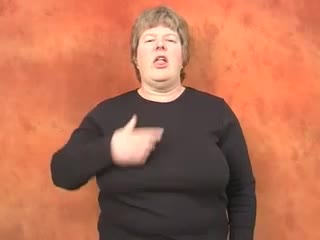
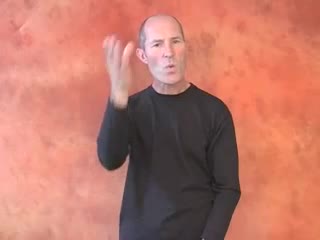
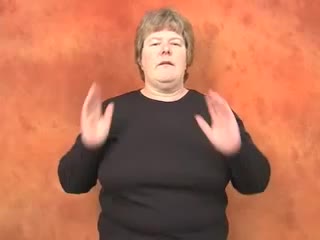
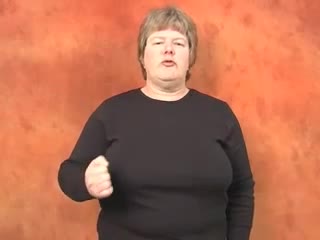
What Is the BSL Sign for "metre"?
Welcome, future BSL communicators! Whether you are Deaf yourself, a hearing ally, or simply curious to expand your British Sign Language vocabulary, understanding the BSL sign for "metre" is a fantastic step. This fundamental sign represents the standard unit of length, crucial for discussing measurements, distances, and dimensions in everyday conversation. Learning how to sign "metre" in BSL effectively opens up a world of practical communication, enabling you to accurately describe objects, spaces, and plans. Our comprehensive guide will ensure you master the British Sign Language metre sign with confidence and clarity.
How to Sign "metre" in British Sign Language - Step-by-Step Guide
Let's break down the BSL sign for "metre" into clear, manageable steps, allowing you to learn and practice effectively.
Step 1: Handshape
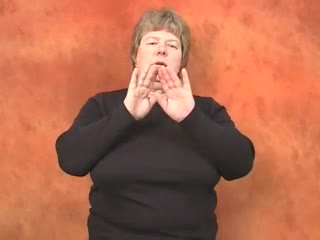
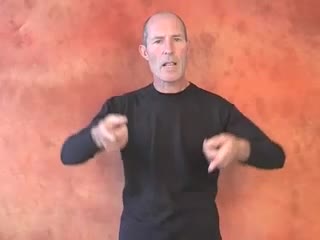
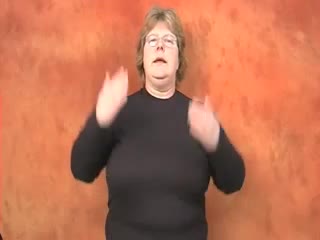
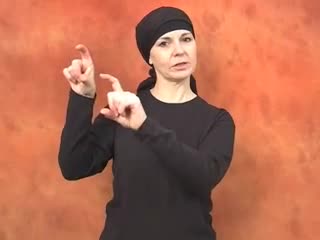
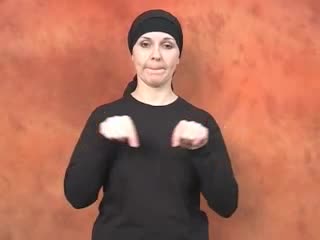
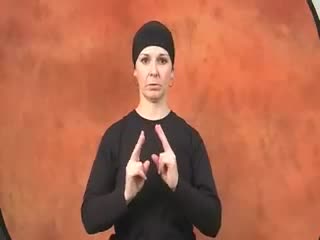
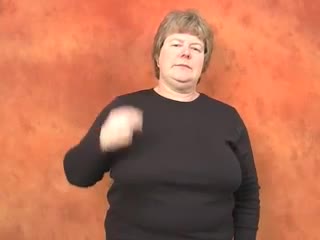
To begin, you will form the '1' handshape with your dominant hand. This means extending your index finger straight upwards, while curling your remaining fingers (middle, ring, and pinky) tightly into your palm. Your thumb should be tucked in alongside or across your curled fingers, ensuring it does not extend outwards. Imagine you are pointing directly at something, but with a firm, straight finger. This precise handshape is critical for the clarity of the BSL sign for "metre".
Step 2: Hand Position and Location
With your dominant hand now in the '1' handshape, position it in front of your body, within your neutral signing space. This is the area directly in front of your chest and torso, where most signs are performed comfortably. Specifically, start with your dominant hand positioned roughly at the height of your chest, slightly to the side of your body (on the same side as your dominant hand). The index finger should be pointing generally forward or slightly towards your non-dominant side, ready to indicate a measure.
Step 3: Movement
The movement for the BSL metre sign is a distinct, linear motion. From its starting position at chest height, move your dominant hand (still in the '1' handshape) straight outwards and slightly downwards, away from your body. This movement should be smooth and deliberate, extending for a short, consistent distance, as if you are indicating a specific, fixed unit of length. It's a single, confident stroke, not a repeated or bouncy motion. The movement effectively "draws" the concept of a unit of measure in the air.
Step 4: Non-Manual Features (Facial Expression & Mouthing)
Non-manual features are grammatically essential in British Sign Language and add crucial context to your signs. For the BSL sign for "metre", your facial expression should generally be neutral and attentive, reflecting the objective nature of measurement. Crucially, you should mouth the word "metre" clearly as you perform the sign. Mouthing helps distinguish this sign from others that might use a similar handshape or movement, and it aids comprehension for both Deaf and hearing signers. Your head position should remain upright and natural.
Step 5: Palm Orientation
Throughout the movement for the BSL sign for "metre", your palm orientation is important. As you begin the sign, with your index finger extended, your palm will generally be facing inwards towards your body or slightly downwards. As you perform the outward and slightly downward movement, the palm will typically rotate to face more downwards or towards the front, accompanying the direction of the index finger as it defines the length. The index finger itself remains pointing generally forward or downwards, indicating the 'measurement line'.
Quick Reference: "metre" BSL Sign at a Glance
- Handshape: Dominant hand forms a '1' (index finger extended, others curled).
- Location: Starts at chest height, in front of the dominant side of the body.
- Movement: Single, deliberate stroke outwards and slightly downwards.
- Facial Expression: Neutral, accompanied by mouthing "metre".
- Dominant Hand: Used throughout the sign.
5 Tips to Learn the BSL Sign for "metre" Quickly
-
Visualise the Measurement: Connect the BSL metre sign directly to the act of measuring. Imagine your extended index finger as a ruler or tape measure, marking out a single unit of length. This strong visual association will help solidify the handshape and movement in your memory, making it easier to recall the British Sign Language metre sign.
-
Practice with "Length" Concepts: Integrate "metre" with other BSL signs related to size and distance, such as "LONG," "SHORT," or "DISTANCE." By signing these words together, you build contextual understanding and reinforce the specific application of the metre sign, helping you remember its meaning and usage long-term.
-
Use Mouthing Consistently: Always remember to mouth "metre" while performing the sign. This non-manual feature is a crucial part of the sign's identity in BSL. Consistent mouthing helps both your muscle memory and your cognitive recall, ensuring you don't miss this essential element when you learn metre BSL.
-
Contextual Storytelling: Create short, simple BSL sentences or stories that require the sign for "metre." For example, "TABLE ONE METRE LONG" or "HOUSE TWO METRES WIDE." Practicing in context makes the sign more meaningful and easier to retrieve in real-life conversations, enhancing your ability to sign metre in BSL naturally.
-
Mirror Practice with Purpose: Stand in front of a mirror and sign "metre" repeatedly, paying close attention to your handshape, movement, and palm orientation. Compare your execution to the step-by-step guide. Self-correction through mirror practice is incredibly effective for refining your technique and building confidence in your BSL metre sign.
When and How to Use the BSL Sign for "metre"
The BSL sign for "metre" is a versatile and frequently used sign, essential for accurate descriptions involving length. Here are some everyday contexts and grammatical considerations:
-
Describing Dimensions: When discussing the size of objects like furniture, rooms, or pieces of fabric. For example, you might sign "TABLE ONE METRE LONG" to indicate the length of a table.
-
Giving Directions or Distances: Informing someone about how far away a location is, or the length of a path. You could sign "SHOP TWO HUNDRED METRE AWAY" to specify a distance.
-
In Construction or DIY: When planning projects or discussing measurements for building materials. For instance, "WOOD NEED THREE METRE" would clearly communicate the required length of timber.
-
Grammatical Considerations: In BSL, the sign for "metre" typically follows the number it quantifies (e.g., "TWO METRE"). It can also be incorporated into spatial grammar, where the sign is performed in a specific location in your signing space to represent the actual object or distance being discussed, providing a visual reference for subsequent signs.
Common Mistakes When Signing "metre" in BSL - And How to Fix Them
Even experienced learners can sometimes make small errors. Here are three common mistakes when signing "metre" and how to correct them for a clearer BSL metre sign.
-
Mistake: Incorrect Handshape. Beginners sometimes use a 'V' handshape (index and middle fingers extended) or an open hand instead of the precise '1' handshape. This happens because the exact finger configuration isn't yet committed to muscle memory.
Correction: Focus intensely on curling only the middle, ring, and pinky fingers, keeping the index finger perfectly straight. Practice forming the '1' handshape several times independently before incorporating the movement. Visualise your index finger as a solitary pointer.
-
Mistake: Ambiguous Movement. Instead of a clear, single outward and downward stroke, learners might use a wobbly, circular, or excessively short/long movement. This can occur if the concept of 'unit' isn't fully internalised, leading to an imprecise visual representation.
Correction: Ensure the movement is direct and unwavering. Imagine drawing a perfectly straight line in the air with your index finger, stopping definitively to mark the end of the "unit." Practice with a consistent endpoint to establish the proper length of the movement.
-
Mistake: Neglecting Non-Manual Features. Forgetting to mouth "metre" or having an inappropriate facial expression (e.g., questioning when stating a fact). This common oversight often stems from focusing solely on manual components, forgetting that BSL is a full-body language.
Correction: Consciously pair the mouthing of "metre" with the hand movement every single time you practice. Make it an inseparable part of the sign. Use a mirror to check your facial expression, ensuring it matches the context of your communication, whether stating a fact or asking a question.
"metre" in BSL - Fun Facts and History
The BSL sign for "metre" carries interesting facets that highlight the richness and evolution of British Sign Language.
-
Iconic Representation: The sign for "metre" is largely iconic, meaning it visually represents the concept it describes. The extended index finger and the measuring motion directly mimic the act of using a measuring tool, making the sign intuitive and easy to grasp for many learners.
-
Connection to General Measurement: While specifically for "metre," the core handshape and movement are often foundational to other signs related to general measurement or length in BSL, demonstrating how a single concept can be adapted for various contexts.
-
Regional Nuances: While the core concept of the BSL sign for "metre" (using a '1' handshape for measurement) is widely understood across the UK, subtle regional variations in the exact starting point, direction, or extent of the movement might exist. For instance, some areas might favour a more horizontal sweep, while others prefer a diagonal one. Awareness of these minor differences comes with exposure to diverse signers.
-
Evolution of Precision: As BSL has evolved, the need for precise technical and scientific vocabulary has grown. Signs like "metre" demonstrate the language's capacity to adapt and create clear, unambiguous representations for specific units, moving beyond general concepts of "long" or "short."
"metre" in Deaf Culture and BSL Community
The concept of "metre" and its sign are woven into the practical fabric of daily life for the Deaf community in the UK, just as it is for the hearing community. For Deaf individuals, effective communication about measurements is paramount, whether they are discussing home renovations, describing distances in travel, or engaging in hobbies that require precision like carpentry or crafting. The BSL sign for "metre" enables seamless and independent communication in these scenarios, fostering self-reliance and ensuring clear understanding without needing to rely on written notes or verbal interpretation. It represents the community's need for a complete and functional language that can handle all aspects of life, from abstract concepts to concrete units of measure. Learning this sign is not just about vocabulary; it’s about gaining access to and participating in the practical conversations that shape daily experiences within the Deaf community, reinforcing the invaluable role of British Sign Language in Deaf identity and communication.
Example Sentences Using "metre" in BSL
Here are five practical example sentences demonstrating the BSL sign for "metre" in context, helping you understand how to use it naturally.
English sentence: The table is one metre long. - BSL structure: TABLE ONE METRE LONG (Topic-comment order, number precedes the sign for 'metre').
English sentence: I need three metres of fabric. - BSL structure: FABRIC I NEED THREE METRE (Topic-comment order, 'metre' follows the numerical quantifier).
English sentence: How many metres is the swimming pool? - BSL structure: SWIMMING-POOL HOW MANY METRE? (Question structure with "how many" followed by the unit).
English sentence: Please stand two metres away. - BSL structure: PLEASE STAND TWO METRE AWAY (Clear instruction, 'metre' specifies the distance).
English sentence: The wall needs to be five metres high. - BSL structure: WALL NEED FIVE METRE HIGH (Describes a required dimension, number precedes 'metre').
Frequently Asked Questions About the BSL Sign for "metre"
Is this sign the same everywhere in the UK?
While the core concept of using a '1' handshape for measuring is broadly understood, minor regional variations in the exact movement or orientation of the BSL sign for "metre" can occur across different parts of the UK. However, the sign is generally consistent enough to be understood nationwide. Exposure to diverse signers will help you recognise these subtle differences.
How is this sign different from similar signs?
The BSL sign for "metre" distinguishes itself through its specific '1' handshape, linear measuring movement, and crucial mouthing of "metre." Other signs for "length" or "measure" might use different handshapes (e.g., 'G' for general length) or a more continuous, less precise movement. Always remember the mouthing to avoid confusion with similar-looking signs.
Is this suitable for beginners?
Absolutely! The BSL sign for "metre" is considered a foundational and practical sign, making it very suitable for beginners. Its iconic nature and clear steps make it relatively easy to learn and incorporate into early BSL conversations, helping you build a solid vocabulary base.
Can I use this sign with Deaf children?
Yes, this sign is perfectly suitable for use with Deaf children. Teaching them the BSL sign for "metre" helps them grasp concepts of measurement and quantity from an early age, supporting their cognitive and linguistic development. Children often pick up iconic signs quickly, so it's a great one to introduce.
Where can I practise this sign?
You can practise the BSL sign for "metre" anywhere! Start by using a mirror to refine your technique. Then, try incorporating it into everyday conversations, even if you're just signing to yourself. Joining BSL classes, attending Deaf events, or finding a BSL buddy are excellent ways to get real-time feedback and apply the sign in authentic contexts.
Related BSL Signs to Learn Alongside "metre"
Learning related signs in clusters helps build a more robust and interconnected BSL vocabulary. Here are some complementary signs for the BSL sign for "metre":
-
LONG: This sign uses two 'G' handshapes (index finger and thumb extended) moving away from each other, indicating general length. Learning "LONG" alongside "metre" helps you describe length both generally and with specific units.
-
SHORT: Often the opposite of "LONG," using two 'G' handshapes brought closer together or a 'H' handshape moving downwards. This provides a contrasting concept to "metre" and "long."
-
WIDE: Typically uses two open 'B' handshapes (flat hand) moving outwards horizontally from each other. Useful for describing dimensions other than length, complementing "metre."
-
HIGH/TALL: Often signed with an index finger or flat hand moving upwards. This allows you to describe vertical measurements, creating a full set of dimensional descriptors with "metre."
-
MEASURE: A more general sign for the act of measuring, often involving a 'Y' handshape or a 'V' handshape moving across a surface. Learning this helps contextualise the specific unit "metre."
-
CENTIMETRE: While less common as a distinct sign and sometimes fingerspelled, understanding how "metre" works sets the stage for discussing smaller units or their fingerspelled representations.
How to Practise the BSL Sign for "metre" Effectively
Consistent and varied practice is key to mastering any BSL sign. To effectively learn metre BSL, begin with mirror practice, focusing intently on each step: handshape, position, movement, and non-manual features. Film yourself signing "metre" and then review the footage, comparing it against our guide to identify areas for improvement. Crucially, try to use the BSL metre sign in real or imagined sentences throughout your day. For instance, look around your room and sign the estimated length of objects: "TABLE TWO METRE LONG." Daily repetition in meaningful contexts will build muscle memory and solidify your understanding, making the British Sign Language metre sign a natural part of your communication.