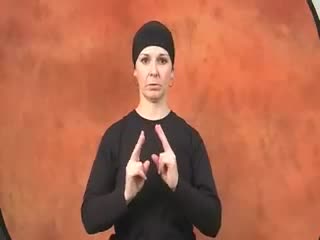
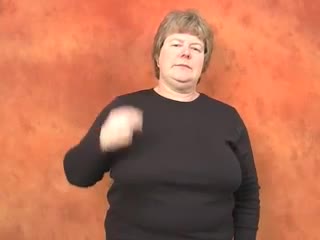
What Is the BSL Sign for "sandpaper"?
Are you ready to explore a really practical sign in British Sign Language? Understanding the BSL sign for sandpaper opens up a world of DIY, crafting, and building conversations. This particular sign vividly portrays its function, making it quite intuitive once you grasp the visual representation. It's a fantastic example of BSL's iconic nature, where the movement tells a story all its own. Learning how to sign sandpaper in BSL connects you directly with discussing textures and finishes, which is incredibly useful for everyday interactions. We're going to dive deep into every aspect of the British Sign Language sandpaper sign, ensuring you gain confidence and fluency.
How to Sign "sandpaper" in British Sign Language - Step-by-Step
Mastering this sign involves a blend of specific handshapes and a very descriptive movement, all coming together to clearly communicate the gritty material.
Step 1: Handshape
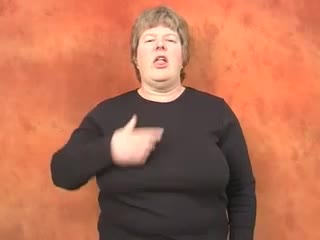
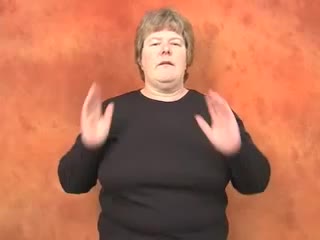
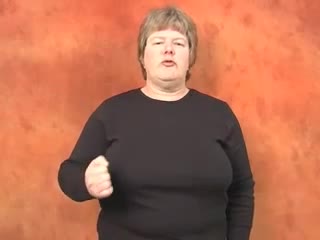
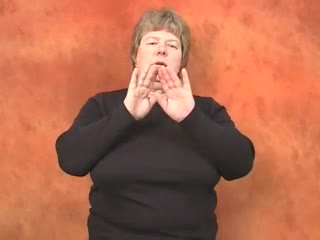
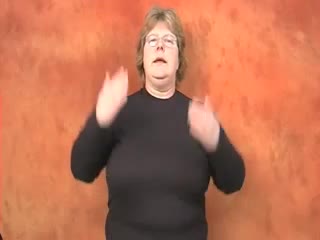
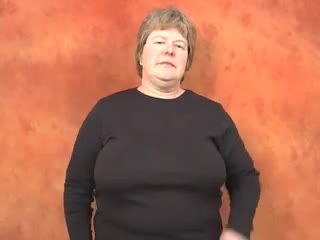
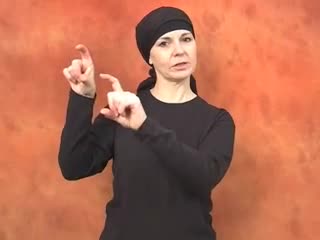
For this sign, your dominant hand forms a flat handshape, much like you’re holding a small, rectangular piece of paper. You'll keep your fingers together, perfectly straight, with your thumb tucked naturally alongside your palm. Your non-dominant hand will also adopt a flat handshape, fingers neatly together, with its thumb resting against the side of the hand; this hand will serve as the "surface" being worked on.
Step 2: Hand Placement and Location
You'll position your non-dominant hand flat, palm facing upwards, extending comfortably in front of your body at about waist height. This creates a stable base, representing the object or surface you're about to sand. Then, your dominant hand, in its flat, "sandpaper" configuration, will hover directly above the palm of your non-dominant hand, poised for action. The space between the two hands should be minimal, suggesting direct contact without actually touching just yet.
Step 3: Movement
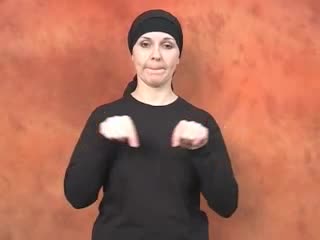
With your dominant hand positioned over the non-dominant, you'll execute a short, brisk rubbing motion. Move your dominant hand back and forth horizontally across the palm of your non-dominant hand, simulating the action of sanding. Repeat this rubbing movement two or three times in quick succession. The motion should feel controlled and deliberate, mirroring the focused effort one applies when using actual sandpaper.
Step 4: Facial Expression and Mouthing
A neutral, focused facial expression is typically appropriate for this sign, reflecting the concentration often required for tasks involving sandpaper. Simultaneously, you should mouth the word "sandpaper" without vocalising it. This mouthing acts as a crucial non-manual feature, providing clarity and reinforcing the signed concept for your conversation partner. It truly helps to disambiguate the sign, particularly when context might otherwise be unclear.
Step 5: Palm Orientation
Throughout the sign, your dominant hand's palm will consistently face downwards, directed towards your non-dominant hand. Conversely, your non-dominant hand's palm will maintain an upward orientation, acting as the surface being abraded. This specific palm orientation is fundamental; it visually conveys the abrasive material pressing down onto a surface, which is essential for the sign's meaning and natural appearance. A shift in orientation could inadvertently alter the meaning or make the sign less recognisable.
"sandpaper" in BSL - Quick Reference Snapshot
- Handshape: Dominant hand flat, fingers together; non-dominant hand flat, palm up.
- Location: Dominant hand above non-dominant palm, in front of the body.
- Movement: Short, repeated back-and-forth rubbing motion across non-dominant palm.
- Facial Expression: Neutral, focused.
- Dominant Hand: Performs the rubbing action.
- Palm Orientation: Dominant palm down, non-dominant palm up.
5 Memorisation Tricks for the BSL Sign "sandpaper"
- Visual Mnemonic: Picture your dominant hand literally *being* the sandpaper, a flat, rigid surface ready to smooth things out. Your non-dominant hand then becomes the piece of wood or metal you're trying to refine; imagining this active scenario strengthens the memory link.
- Muscle-Memory Drill: Try sanding an imaginary surface in the air with your actual hand, focusing on the slight friction you'd feel. Repeating the exact movement of the sign with this sensory recall helps embed the motion into your muscle memory, making it feel more natural when you sign it.
- Connection to Meaning: The sign is beautifully iconic, directly mimicking the physical act of sanding. Think about how you'd physically use sandpaper, pressing it against a surface and moving it back and forth; this direct connection makes the sign's form inherently logical.
- Common-Confusion Tip: Be mindful not to confuse this with a general "rubbing" sign, which might use different handshapes or a more vigorous, less controlled movement. The key here is the flat handshape and the specific, controlled back-and-forth motion, distinctly portraying the act of using sandpaper.
- Daily-Life Practice Idea: Every time you see a piece of furniture, a wooden surface, or even a rough wall, pause for a moment and mentally or physically practice the sign for "sandpaper." Integrating the sign into your observations of the world around you reinforces its practical application.
Real-Life Situations to Use the BSL Sign for "sandpaper"
You'll find this sign incredibly useful in various practical conversations. Imagine you're discussing a home improvement project; you might sign, "WE NEED sandpaper BUY," using topic-comment structure. Perhaps you're critiquing a DIY job, signing, "SURFACE ROUGH. NEED sandpaper," where "ROUGH" might precede the noun in BSL. If you're asking for advice, you could sign, "WHICH sandpaper BEST?" incorporating a BSL question marker with raised eyebrows and a slight forward lean. Or, if you're explaining a technique, you might say, "YOU TAKE sandpaper, RUB GENTLY," utilising spatial grammar to show the action precisely.
Top 3 Mistakes Learners Make Signing "sandpaper" in BSL
- Mistake 1: Incorrect Handshape for the Dominant Hand. Many beginners might use a loose 'C' hand or a squashed 'O' hand, thinking they're showing "holding" something. This happens because they're over-literalising the grip. The correct approach is to maintain a flat handshape, representing the *surface* of the sandpaper itself, not the act of holding it. Keep those fingers together and straight to avoid this common error.
- Mistake 2: Overly Vigorous or Uncontrolled Movement. Some learners perform the rubbing motion with too much force or in large, sweeping arcs, making it look more like a general "cleaning" or "polishing" action. This often stems from an exaggerated attempt to convey effort. The sign for sandpaper requires a controlled, short, and repeated back-and-forth movement, truly mimicking the precise action of smoothing a surface, so focus on small, deliberate rubs.
- Mistake 3: Neglecting Non-Manual Features, especially Mouthing. A common oversight is signing the physical action correctly but failing to mouth "sandpaper" or maintain a neutral expression. Learners sometimes forget that facial expressions and mouthing are grammatical components in BSL, not just optional extras. Without mouthing, the sign can lose clarity and potentially be confused with other rubbing-like actions, so always remember to articulate the word with your lips.
Fascinating Facts About the BSL Sign for "sandpaper"
- The sign for sandpaper is a strong example of an iconic sign, meaning its form directly resembles the action or object it represents. This makes it relatively easy for new learners to grasp the concept visually.
- While BSL has regional variations for many signs, the core concept and execution of 'sandpaper' tends to be quite consistent across different areas where British Sign Language is used, reflecting its straightforward iconic nature.
- This sign's form is driven by its function; it's not arbitrary but rather a direct visual metaphor for the abrasive process. You're not just signing a word; you're enacting the very purpose of the item.
- There isn't a direct relationship to the manual alphabet for this sign, as it's a two-handed, movement-based sign rather than a finger-spelled word. Its meaning comes entirely from its visual and kinetic properties.
- What makes this sign distinctive is its dual-hand role: one hand explicitly acts as the tool, and the other simultaneously acts as the material being worked on. This simultaneous representation is a common and powerful linguistic feature in BSL.
"sandpaper" in Deaf Culture - Community and Identity
Within the Deaf community, practical signs like "sandpaper" are integral to sharing experiences and knowledge across various contexts, from discussing home repairs to sharing craft ideas. Deaf individuals, like anyone else, engage in DIY projects, hobbies, and professional trades that require specific tools and materials. Being able to communicate about these items efficiently and accurately, using a clear, descriptive sign, fosters a sense of shared understanding and collective experience. It's not just about the word itself; it's about the ability to fully participate in conversations about making, building, and creating, which are fundamental human activities. These signs allow for rich, detailed discussions about textures, finishes, and techniques, fully integrating Deaf people into all aspects of practical life and skill-sharing.
Example Conversations Using "sandpaper" in BSL
English: We need to buy some sandpaper for this project. - BSL structure: TOPIC (THIS PROJECT) NEED BUY SANDPAPER. (Topic-comment structure, clear statement)
English: Can you pass me the fine-grit sandpaper? - BSL structure: YOU PASS ME SANDPAPER, FINE-GRIT? (Question using BSL grammatical markers like raised eyebrows, object-verb order)
English: The surface is still rough; it needs more sandpapering. - BSL structure: SURFACE STILL ROUGH. NEED SANDPAPER MORE. (Descriptive statement, using 'more' to indicate repetition of action)
English: What kind of sandpaper works best on metal? - BSL structure: METAL, WHICH SANDPAPER BEST? (Topic-first question structure, clearly establishing the subject before the query)
English: He sanded the old door smooth with sandpaper. - BSL structure: OLD DOOR HE SANDPAPER SMOOTH. (Focus on action and outcome, often placing the subject after the object in narrative)
Frequently Asked Questions: The BSL Sign for "sandpaper"
Is the sign for "sandpaper" the same across all regions of the UK?
While minor stylistic differences might exist, the fundamental handshapes and descriptive movement for 'sandpaper' in British Sign Language are generally consistent throughout the UK. Its iconic nature means the core visual representation is widely understood, ensuring clear communication regardless of specific regional nuances. You'll find it highly recognisable wherever BSL is used.
Are there any similar signs in BSL that I should be careful not to confuse with "sandpaper"?
You'll want to differentiate 'sandpaper' from a general 'rub' or 'polish' sign. While 'sandpaper' specifically uses a flat hand representing the paper itself, a general 'rub' might use different handshapes or a less controlled, more expansive motion. Pay close attention to the precise handshapes and the deliberate, short back-and-forth movement unique to 'sandpaper' to avoid confusion.
Is "sandpaper" an easy sign for beginners to learn in BSL?
Absolutely, this sign is quite beginner-friendly! Because it’s so iconic and visually represents the action of sanding, new learners often find it straightforward to pick up. The direct connection between the sign's form and its meaning makes it a memorable and accessible addition to your early BSL vocabulary.
Can children easily learn and use the BSL sign for "sandpaper"?
Yes, children can certainly learn and use the sign for 'sandpaper' with ease. Its visual nature and the clear connection to a common physical activity make it very appealing and understandable for younger learners. Incorporating it into play or craft activities can be an excellent way for children to practise this practical sign.
How does the BSL sign for "sandpaper" differ from simply gesturing the act of smoothing something?
The BSL sign for 'sandpaper' is far more specific than a general gesture for smoothing. While a smoothing gesture might involve a flat hand passing over a surface, the BSL sign for 'sandpaper' specifically incorporates the dominant hand *as* the paper, performing a distinct, controlled rubbing motion. This precision in handshape and movement linguistically identifies the *tool* being used, not just the outcome of the action.
Signs That Pair Naturally with "sandpaper" in BSL
- WOOD: This sign is a natural companion, as sandpaper is frequently used on wooden surfaces. Understanding "wood" helps you specify the material you're working with.
- SMOOTH: After using sandpaper, you'd want to describe the result. The sign for "smooth" directly relates to the outcome of sanding, building a conceptual link.
- ROUGH: Conversely, "rough" describes the texture before sanding, providing context for *why* sandpaper is needed. These two signs create a clear before-and-after scenario.
- PROJECT: When you're talking about using sandpaper, you're often discussing a larger "project." This sign helps frame the context of your activity.
- BUY: Since sandpaper is a consumable, you'll often need to "buy" it. Learning "buy" alongside "sandpaper" makes practical conversations much more fluid.
- PAINT: Sanding often precedes painting, so "paint" is a logical next step in a sequence of actions, linking preparation with finishing.
Building Fluency: How to Practise "sandpaper" in BSL
To truly master the sign for "sandpaper," try using a mirror to observe your dominant hand's handshape and its precise rubbing movement over your non-dominant palm. Focus on making the motion consistent and the handshapes clear, just as described. A fantastic way to integrate this into your daily BSL conversation is to actively look for opportunities to discuss household repairs or craft hobbies, bringing the sign to life in meaningful exchanges. You might also find it helpful to film yourself signing it; watching playback allows you to spot any subtle differences from the ideal form and make quick corrections. Seeking out a Deaf conversation partner is invaluable; they can offer real-time feedback and show you how the sign is naturally used in context. Remember to practise the sign not just once, but spaced out over several days or weeks, allowing your muscle memory and brain to consolidate this important piece of vocabulary. You're doing brilliantly, keep going!