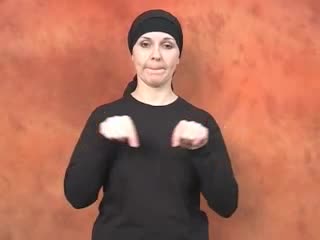
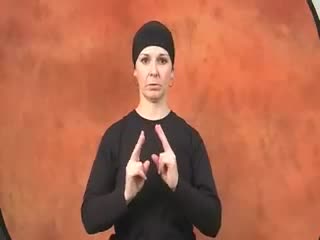
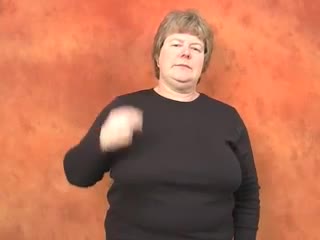
Speed
0
Practice reps times watched

Create a free account to keep your watch history and review plan.

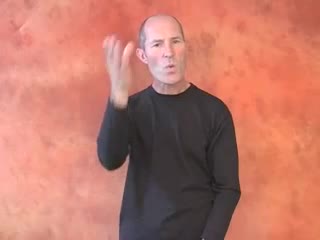
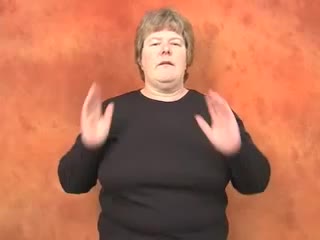
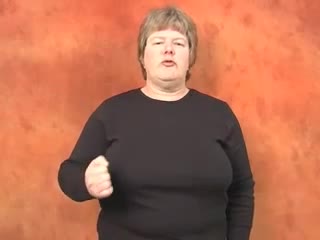
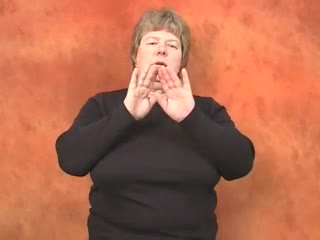
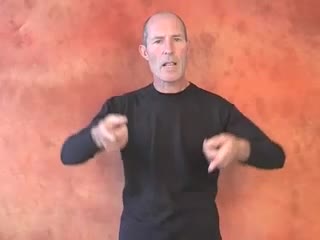
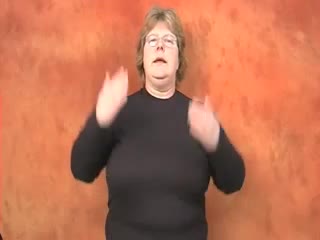
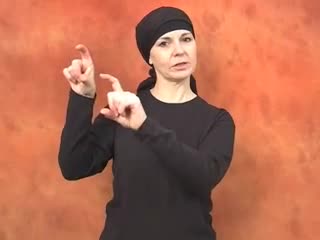
Best practice Use mirror mode, then watch the frame breakdown below to catch the start, movement, and finish cleanly.
Video via SpreadTheSign  - Free educational resource BSL
Updated April 23, 2026
British Sign Language (BSL) 🟢 Beginner 📊 A1 ⚡ Very Common Noun

student

A person engaged in formal learning or study

Source-linked video Step-by-step guide Context and safety notes
Synonyms
Learner pupil
Antonyms
Teacher instructor
Difficulty
Not rated yet

Create a free account to save this sign, keep your watch history, and unlock a one-note journal preview.

How to sign it
Handshape
Dominant hand forms a flat B-handshape
Location
Starts near the non-dominant wrist or forearm
Movement
Moves forward and slightly down, then repeats
Palm Orientation
Palm faces slightly down or forward
Facial Expression
Neutral facial expression
🔁 Spaced Review Try it free

How well do you know this sign?

STUDENT
Your Progress Live
🌱
Level 1 · BSL Beginner +0 XP today
This sign Not learned yet
0 watches
Mastery 0%
Confidence
How well do you know this sign?
0 🔥 Streak
0 Signs seen
0 Learned
0 Watches
📖 Vocabulary health 🔒 Log in to see score
0 Mastered
0 Confident
0 Practicing
0 Just seen

Create a free account to keep your vocabulary score between sessions

7-day activity 0 of 7 active

Register free to sync activity across devices

Watch signs to see your history here

Tracking locally for now. Create a free account to save your progress and sync across devices.
Free gets you started. Paid adds the repeat-learning layer: review queues, deeper notes, compare mode, and better comeback tools.
My Sign Journal
Personal notes, saved to your account forever
Locked

Write memory tricks, usage examples, and cultural reminders beside each sign. Create a free account to unlock your first saved note preview on this page.

Create free account Already have an account? Log in

What This Sign Means in BSL

The BSL sign for student is wonderfully direct and evocative, capturing the essence of someone engaged in learning. At its core, this sign represents an individual who is actively receiving information or knowledge. It’s not just a label; it embodies a role, a journey of growth and acquisition. When you see this sign, you should feel the immediate connection to an academic or training context, whether that's in a school, college, university, or any structured learning environment.

What makes this sign particularly noticeable is its clarity and common usage. It’s a foundational sign in BSL, used frequently across all age groups and educational levels. Its simple, repetitive movement conveys a steady, ongoing process, much like the continuous effort of a student. There's an inherent warmth and acknowledgement in the sign itself, recognising the learner's position within a system designed for imparting knowledge.

This sign carries a neutral, respectful tone, simply identifying a person by their current status as a learner. It doesn't imply a judgment about their abilities or specific field of study, just their engagement in the process of being taught. Understanding this core meaning helps you appreciate its versatility and why it's such a vital part of everyday BSL communication about education.

When This Sign Feels Natural

You’ll find the BSL sign for student feels incredibly natural in a wide array of educational and social settings. It’s your go-to sign when introducing yourself or others in an academic context, such as "I am a student" or "She is a student at university." It’s also perfect for discussing educational institutions, courses, or events, like "Many students attend that lecture" or "The students are preparing for exams." Its versatility means it fits comfortably in both formal discussions about policy and informal chats among friends.

This sign is used broadly to encompass anyone from a primary school pupil to a university postgraduate or even someone undertaking vocational training. There isn't typically a distinct BSL sign for "pupil" that's widely used in the same way; "student" often serves as the umbrella term. So, whether you're talking about a child in Year 6 or an adult pursuing a PhD, this is the sign you'll most often reach for.

However, it’s useful to remember that while "student" is very flexible, context is always king in BSL. If you're talking about someone learning a specific trade on the job, you might lean towards signs like APPRENTICE if such a sign is commonly used and clarifies the context better, though STUDENT would still be understood. For most academic or formal learning scenarios, though, this sign is precisely what you need, conveying the role with clarity and ease.

What Learners Usually Miss

One subtle but important detail learners sometimes miss with the BSL sign for student is the precise *flatness* of the dominant hand's B-handshape. It's not a relaxed open hand, nor is it cupped; it should be firm and truly flat, with fingers together and the thumb tucked neatly alongside. A common error is a slightly splayed or curved hand, which can detract from the crispness of the sign and, in some cases, could potentially be confused with parts of other signs. Practise keeping your handshape precise and strong from start to finish.

Another area where precision often falters is the *direction and repetition* of the movement. The hand moves forward and slightly down, then repeats. Learners sometimes make the movement too large, too small, or simply move the hand forward without the subtle downward arc, or they forget the repetition entirely. The movement isn't just a push; it's a gentle, controlled sweep that feels like offering or receiving. Ensure your movement is consistent, smooth, and repeats, maintaining the rhythm of the sign rather than making it a single, abrupt action.

Finally, the starting location near the non-dominant wrist or forearm is crucial. Some learners might start too high, near the elbow, or too far away from the body. Keeping it close to the non-dominant arm grounds the sign, giving it a natural feel. This initial placement is key to setting up the correct trajectory for the forward and slightly downward movement. Pay attention to starting in the right place to ensure the sign flows correctly and is immediately recognisable.

A Simple Way to Remember It

Imagine the flat B-handshape of your dominant hand as an open book or a clean slate, ready to receive knowledge. The movement, starting from your non-dominant arm (perhaps symbolising the source of learning or the classroom environment), sweeping forward and slightly down, suggests information being absorbed or "taken in." The repetition reinforces the ongoing nature of learning.

  • The Open Book: Think of your flat dominant hand as an open book or notebook, ready to be filled with new lessons. Students are always ready to receive information.
  • Receiving Knowledge: Visualise the movement as "sweeping up" or "taking in" information that's being offered or presented, moving from a source (your non-dominant arm) outwards to you.
  • The Learning Journey: The repeated movement underscores that being a student isn't a single event, but an ongoing process, a continuous journey of learning and discovery.

Short Practice Situations

  • Introduce yourself to a new group: "Hello, I am a student at the local college."
  • Ask a friend about their family: "Does your younger sister still go to school? Is she a student?"
  • Discuss educational plans: "Next year, I want to become a student again and study history."
  • Comment on a busy campus: "There are so many students here today; it must be exam season."
  • Describe a specific course: "The BSL course has many dedicated students who practise daily."

Signs to Learn Next

  • TEACHER: This is the natural counterpart to "student." Learning it next will help you discuss both sides of the educational relationship.
  • LEARN: Students engage in the act of learning. This sign will allow you to talk about the process itself, not just the person.
  • SCHOOL: A primary location for students. This sign will help you set the scene for where learning happens.
  • UNIVERSITY: For many, "student" immediately brings to mind higher education. This sign is essential for discussing university life and studies.
  • CLASS: Students attend classes. Learning this sign will enable you to talk about specific lessons or groups of learners.

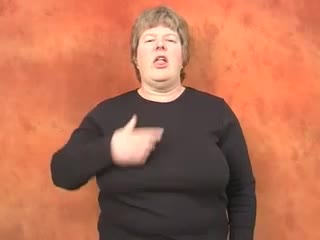
🤖 AI Learning Guide for "student"

The sign combines a flat handshape representing a book or tablet with a repetitive movement suggesting ongoing learning or taking in information from a source

🎯 Practice Challenge

Practice the B-handshape and repeated forward-down movement near your non-dominant wrist

⚠️ Most Common Mistake

Ensure your hand is a flat B, not splayed. Repeat the movement clearly, don't just sweep once

👐 How to Sign "student" in British Sign Language (BSL) (Quick Answer)

Follow these steps to sign student correctly in British Sign Language (BSL):

  1. 1 Form dominant hand into a flat B-handshape, palm slightly down
  2. 2 Place hand near the non-dominant wrist or forearm
  3. 3 Move hand forward and slightly down
  4. 4 Repeat the forward and down movement once or twice

Tip: Watch the video above while following these steps for best results.

🤚 Sign Profile

🤚
Handshape
Dominant hand forms a flat B-handshape
🔣
Handshape Code
B
Dominant Hand
Right
🙌
Hand Count
One-handed
📍
Location
Starts near the non-dominant wrist or forearm
↗️
Movement
Moves forward and slightly down, then repeats
🔄
Movement Type
Repeated
👆
Contact
Near
👋
Palm Orientation
Palm faces slightly down or forward
⚖️
Symmetry
Asymmetric

😊 Non-Manual Features

Facial expressions and body language are grammatically essential in British Sign Language (BSL) - not optional!

😊
Facial Expression
Neutral facial expression
🙆
Eyebrows
Neutral
👁️
Eye Gaze
Forward
🙂
Head Movement
None
👄
Mouth Morpheme
Mouths 'student' or neutral
🕴️
Body Shift
None

📖 Grammar & Linguistics

Part of Speech Noun
Inflection No
Classifier Usage N/A
Role Shift No

🎓 Learning Context

📌 When to Use: Used when referring to someone in education or learning
⚠️ Common Mistake: Incorrect handshape, not repeating movement, confusing with 'LEARN'
🚫 When NOT to Use: If referring to casual learning rather than formal study
Context Tags
Education school university college learning

🧪 Practice Lab

Use these tiny checks right after watching the video. Fast feedback is what turns recognition into recall.

Meaning check

Which word matches the sign you just watched?

Usage check

Where would this sign fit most naturally?

Confidence check

How do you feel about student right now?

Pick one so SignDeaf can shape the rest of your session around how this sign actually feels.

🧭 Scenario Drill

One sign gets remembered faster when you attach it to real situations. Try these quick scene prompts.

Work

Stretch practice

Use this sign in a short workplace sentence or meeting exchange.

Family

Stretch practice

Try signing this while talking about family life or something at home.

School

Strong fit

Imagine teaching this sign to a classmate or using it in a lesson.

Doctor

Stretch practice

Practise it in a healthcare conversation where clarity matters.

Travel

Stretch practice

Use it in a travel scenario like asking for help or directions.

💬 Example Usage

1.He is a student. / BSL:HE STUDENT | 2.Are you a student? / BSL:YOU STUDENT Q | 3.Many students learn BSL. / BSL:MANY STUDENT LEARN BSL

1.He is a student. / BSL:HE STUDENT | 2.Are you a student? / BSL:YOU STUDENT Q | 3.Many students learn BSL. / BSL:MANY STUDENT LEARN BSL

When to use it

Used when referring to someone in education or learning

When not to use it

If referring to casual learning rather than formal study

Register

Neutral

🌍 Cultural Context

The sign implies the action of 'learning' or 'taking in knowledge'

🗺️ Regional Variations

Minor variations in movement extent or placement may exist

⚖️ Similar Signs - What's the Difference?

This sign student
VS
Similar signs Look closely
**LEARN**: Uses a similar flat B-handshape, but 'LEARN' typically moves from the non-dominant palm (representing a book/information) towards the head (representing taking in knowledge), often with a single or double inward motion. 'STUDENT' is specifically at the non-dominant arm and repeats a forward, down motion. **STUDY**: Often signed with a similar handshape, but the movement for 'STUDY' is usually more intense, perhaps tapping or brushing the non-dominant palm or arm repeatedly, implying focused effort. 'STUDENT' is a smoother, repeated forward movement

📝 Usage Notes

This sign implies someone undertaking formal education

Frequently Asked Questions

Common questions about the British Sign Language (BSL) sign for "student".

🏷️ Tags

Handshape

Keywords

💡
Did you know?
SpreadTheSign has 600,000+ sign language videos across 40+ sign languages - all free to view.

📚 Explore More British Sign Language (BSL) Signs

Keep building your British Sign Language (BSL) vocabulary - explore signs by category or browse the full dictionary.