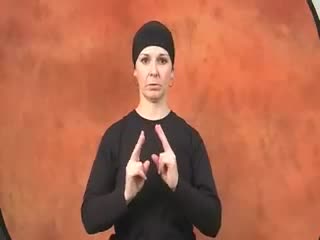
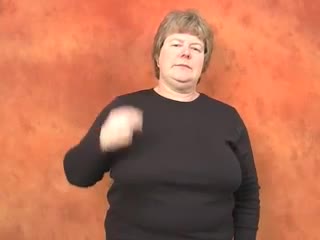
What This Sign Means in BSL
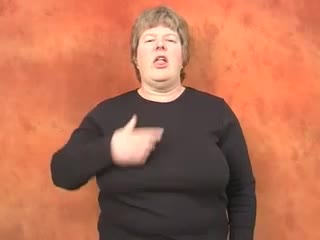
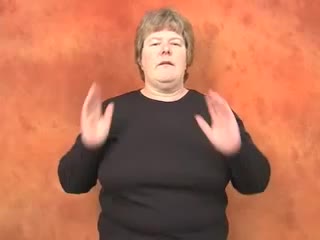
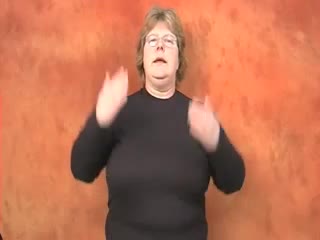
The BSL sign for bevel is wonderfully descriptive, truly embodying the concept of an angled edge. It specifically refers to the slanted surface or edge created when two planes meet at an angle other than a right angle. Imagine the precise cut on a piece of wood or the design on a mirror; this sign captures that distinct feature. It’s not just a general ‘angle’ but a particular kind of angled finish, making it a very useful and visually direct sign for anyone discussing craftsmanship, design, or precise measurements.
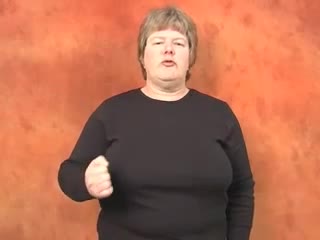
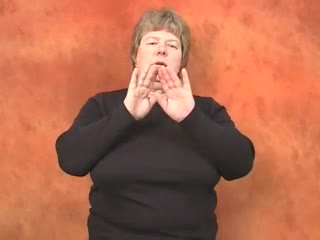
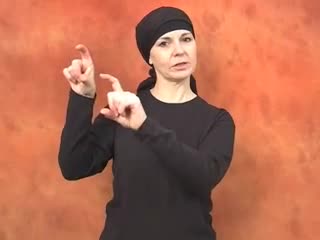
What makes this sign so impactful is how your hands become the very planes themselves. With both hands flat, representing two surfaces, your dominant hand approaches the non-dominant to form that characteristic slant. This visual clarity helps you convey the exact nature of the edge, whether you’re describing a woodworking project, an architectural detail, or even a piece of jewellery. It’s a sign that demands a degree of visual accuracy, reinforcing its meaning directly through its form.
You’ll find this sign incredibly handy when precision matters. Unlike more general signs for 'slope' or 'angle', 'bevel' is about that deliberate, finished edge. It’s a noun in BSL, just as in spoken English, and it maintains a neutral, descriptive tone. There’s no inherent emotion in the sign itself; instead, it conveys a technical detail. Mastering this sign means you can articulate specific structural and design elements with confidence and clarity in your BSL conversations.
When This Sign Feels Natural
This sign feels most natural and effective in contexts where you’re describing specific features of objects or constructions. Think about discussions involving carpentry, joinery, glasswork, or even metal fabrication. If you’re explaining how a table edge is finished, describing the cut on a piece of glass, or detailing a design element on a building, the BSL sign for bevel is your go-to. It’s perfect for conveying a precise, intentional angled cut rather than a naturally occurring slope or a general corner.
You’ll also find it very useful in educational or professional settings, particularly if you’re studying or working in fields like design, engineering, or architecture. When communicating with fellow Deaf professionals or students, using the correct, specific sign like ‘bevel’ demonstrates a higher level of technical vocabulary and precision. It avoids ambiguity, ensuring that your audience understands exactly the kind of edge you’re referring to, rather than just a general inclination.
However, it’s worth noting when you might choose a different sign. If you’re simply talking about a hill going up, you’d likely use a sign for ‘slope’ or ‘incline’. If you’re discussing the corner of a room, a sign for ‘corner’ or ‘angle’ would be more appropriate. The key differentiator for ‘bevel’ is that it refers to that created angled surface, often for aesthetic or functional reasons, not just any meeting of two surfaces. Reserve this sign for those moments when that specific angled edge is the central point of your description.
What Learners Usually Miss
One common area where learners sometimes miss the nuance is distinguishing the BSL sign for bevel from more general signs like ‘angle’ or ‘slope’. The main distinction lies in its specificity: ‘bevel’ is about that deliberate, often finished, angled edge. Learners might sometimes use it for any general inclination, but remember its strong connection to crafted surfaces. The correction here is to be mindful of the context; is it a natural incline, or a manufactured angled edge? If it's the latter, you’re on the right track.
Another subtle point often overlooked is the precision of the handshape and movement. Both hands must maintain a clear, flat B-hand shape to accurately represent the two surfaces. Sometimes, learners might let their fingers relax or curve slightly, which detracts from the visual clarity of the flat planes meeting. The dominant hand's approach to the non-dominant hand should be smooth and deliberate, forming a clear, stable angle. Avoid a 'floppy' or vague movement; the angle should be well-defined and held for a moment to convey its distinct form.
Finally, while facial expression for a noun sign like 'bevel' is generally neutral, don’t forget that context can add subtle cues. If you're describing a beautifully crafted bevel, a slight appreciative nod or raised eyebrows can convey admiration without changing the core sign. Conversely, if you're pointing out a poorly cut bevel, a slight frown might accompany it. The main point is to avoid an overly exaggerated or unrelated facial expression that could confuse the core meaning of the sign itself. Let the sign do the heavy lifting, and allow your expression to add a layer of contextual feeling.
A Simple Way to Remember It
To really cement the BSL sign for bevel in your memory, think about how your hands physically represent the concept. It's a highly iconic sign, meaning it looks like what it means. Use these hooks to help it stick:
- The Two Surfaces: Imagine your flat B-hands are two separate pieces of material – perhaps wood, glass, or metal. They are distinct planes that are about to meet to create that specific angled edge.
- The Precise Cut: As your dominant hand moves towards the non-dominant, visualise the act of cutting or machining that angle. The movement isn't random; it's a deliberate, precise action that results in the finished bevel.
- Forming the Angle: The final position, where your hands create an angle, perfectly mirrors the physical shape of a bevel. Focus on the crispness of that angle – it's not a gentle curve, but a sharp, defined corner.
Short Practice Situations
- Can you see the beautiful bevel on the edge of this mirror?
- The carpenter added a subtle bevel to all the shelf edges for a softer look.
- We need to ensure the correct bevel angle when cutting the roof timbers for a perfect fit.
- That diamond has a stunning bevel on its facets, making it sparkle even more brightly.
- The new kitchen counter has a sleek, modern bevel along its front edge.
Signs to Learn Next
- ANGLE: While 'bevel' specifies a type of angled edge, the general sign for 'angle' is useful for broader contexts where you're not referring to a deliberate finish. Understanding both helps you choose the most precise sign.
- SLOPE: This sign is vital for describing natural inclines, like hills or ramps, where the 'finished edge' aspect isn't present. It contrasts nicely with the manufactured quality of a bevel.
- EDGE: Often, a bevel is an edge. Learning the sign for 'edge' helps you describe the perimeter of an object in general, and then you can specify if that edge has a 'bevel'.
- CUT: Since a bevel is often created by cutting, the sign for 'cut' is a natural follow-up. You might sign 'CUT' then 'BEVEL' to explain the process of creating such an edge.
- FLAT: The handshape for 'bevel' starts with flat B-hands. Practising the sign for 'flat' reinforces this fundamental handshape, which is crucial for many descriptive signs in BSL.