What Is the BSL Sign for "edge"?
Stepping into the world of British Sign Language means exploring how concepts like "edge" translate from a spoken word into a powerful visual expression. This isn't just about boundaries; it’s about that specific line, the brink, the very limit of something. Learning the BSL sign for edge opens up so many conversations, helping you articulate precise spatial relationships and abstract ideas. You'll find this particular sign incredibly versatile, allowing you to discuss everything from the side of a table to being on the verge of a big decision, making it a foundational piece in your British Sign Language edge vocabulary.
How to Sign "edge" in British Sign Language - Step-by-Step
Ready to truly grasp the visual mechanics of this sign? Let's meticulously break down each component, ensuring you capture its essence.
Step 1: Handshape
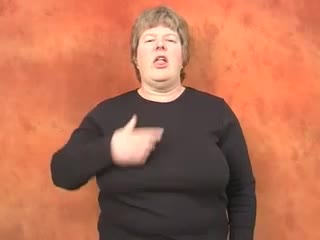
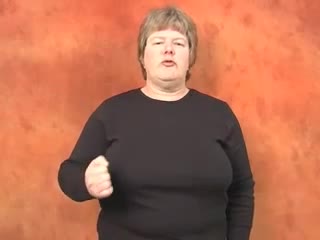
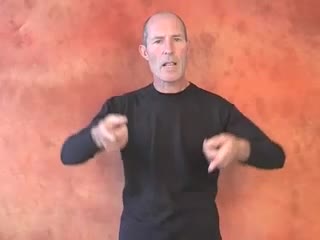
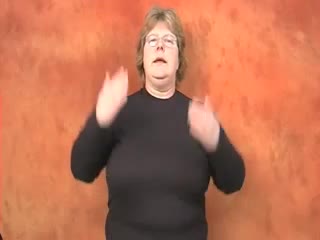
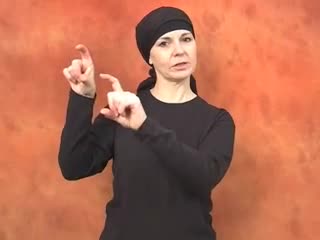
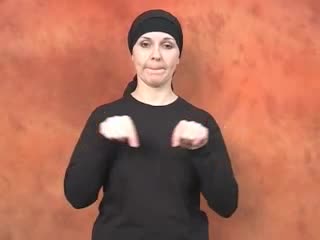
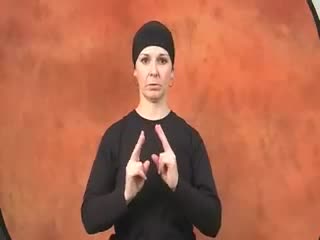
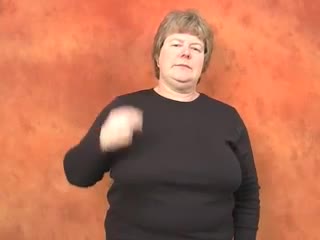
For the sign "edge," you'll primarily use your dominant hand. Form your hand into a flat "B" handshape, meaning all your fingers are held together, straight and extended, with your thumb tucked neatly across your palm. Imagine your hand becoming a rigid, flat surface, almost like a paddle or a perfectly straight ruler. Your knuckles remain unflexed, maintaining a firm, level plane, representing the straightness often associated with an edge.
Step 2: Hand Placement and Location
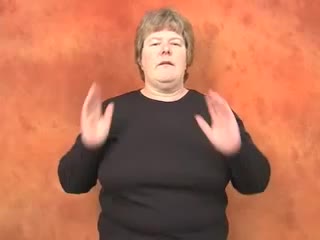
Position your dominant hand, already in that flat "B" shape, just in front of your body, usually around the mid-chest to shoulder height. There's no requirement for it to touch any part of your body; it should hover comfortably in the neutral signing space. This initial placement sets the stage for the upcoming movement, giving you ample room to execute the gesture clearly without obstruction.
Step 3: Movement
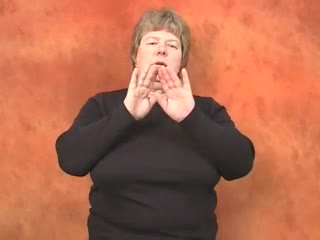
From its starting position, move your flat dominant hand with a clear, deliberate motion. You'll sweep it outwards and slightly downwards, creating an imaginary line that extends away from your body. Think of it as outlining a sharp, defined boundary in the air. This movement is usually a single, controlled stroke, not a repetitive action, signifying the singular nature of an "edge."
Step 4: Facial Expression and Mouthing
While the sign itself carries much of the meaning, accompanying it with appropriate non-manual features will significantly enhance clarity in British Sign Language. You should mouth the word "edge" silently or with a very subtle articulation. Your facial expression might convey a slight furrow of the brow, indicating precision or focus, particularly if you're referring to a sharp or critical edge. Remember, these elements aren't optional adornments; they're integral to the grammatical structure and nuance of the sign.
Step 5: Palm Orientation
Begin with your palm facing downwards or slightly towards your body, with the pinky-finger side of your hand pointing outwards. As you perform the outward sweeping movement, your palm maintains this orientation throughout the sign. This specific palm direction helps to visually represent a flat surface or a boundary being defined, ensuring the receiver understands you're indicating a distinct, linear separation.
"edge" in BSL - Quick Reference Snapshot
- Handshape: Dominant hand in a flat "B" shape (all fingers extended and together, thumb tucked).
- Location: In front of the body, mid-chest to shoulder height in the neutral signing space.
- Movement: Single, clear sweep outward and slightly downward, drawing an imaginary line.
- Facial Expression: Subtle mouthing of "edge," possibly a slight furrowed brow for emphasis.
- Dominant Hand: Primarily performed with the dominant hand.
- Palm Orientation: Palm initially faces downwards or slightly towards the body, pinky-finger side pointing outwards.
5 Memorisation Tricks for the BSL Sign "edge"
- Visualise a Book Spine: Picture your flat hand as the spine of a book or the edge of a ruler. When you perform the sweeping motion, imagine you're drawing that precise, thin line along the side of an object. This visual mnemonic helps connect the handshape and movement directly to the concept.
- Trace the Table: Practice this sign by physically tracing the actual edge of a table or desk with your dominant hand. Feel the sharpness and linearity as your hand moves, reinforcing the muscle memory for the flat handshape and the deliberate outward sweep.
- "On the Brink" Connection: Think about the phrase "on the edge" or "on the brink." The outward sweeping motion can represent pushing something to its limit or reaching a boundary. This conceptual link helps cement the sign's abstract meaning alongside its literal one.
- Avoid the "Flat Hand" Confusion: Many signs use a flat hand. To differentiate "edge," specifically remember the *single, controlled outward sweep* and the *pinky-side leading* aspect. Don't confuse it with signs for "flat" or "surface" which might involve different orientations or movements.
- Daily Object Practice: Throughout your day, whenever you see an object with a distinct edge-a doorframe, a shelf, a picture frame-mentally (or physically, if appropriate) practice the sign for "edge." Integrating it into your daily observations will make it feel more natural and accessible when you need to use it in conversation.
Real-Life Situations to Use the BSL Sign for "edge"
- Imagine you're describing furniture: "The table has a sharp edge." (BSL structure would place "table" first, then "sharp" and "edge," possibly indicating the table's shape spatially before signing "edge").
- When discussing danger or proximity: "Be careful, you're standing too close to the edge of the cliff!" (Here, "cliff" would be established first, then a clear warning, with "edge" indicating the precarious position).
- Describing a precise boundary: "Draw a straight line right along the edge of the paper." (Visually, you might sign "paper," then mime drawing, with "edge" clarifying the exact location for the line).
- Talking about a competitive situation: "They were right on the edge of winning the championship." (In this abstract context, "edge" signifies being on the verge, often accompanied by a more intense facial expression to convey the tension).
Top 3 Mistakes Learners Make Signing "edge" in BSL
-
Incorrect Handshape: Many beginners inadvertently curl their fingers slightly or spread them apart, creating a "5" handshape instead of the required flat "B." This error can completely alter the meaning, potentially being misinterpreted as "flat" or "wide." The correction is to ensure all four fingers are pressed tightly together, extended straight, and the thumb is tucked securely against the palm, creating a truly unified, flat surface.
-
Lack of Definitive Movement: Learners sometimes make the sweeping motion too vague, too short, or overly repetitive, rather than the crisp, single stroke needed. An unclear movement diminishes the sign's iconic representation of a distinct line. Focus on a single, clean, controlled sweep outwards and slightly down, as if you're drawing a precise boundary with a pen in the air.
-
Forgetting Non-Manual Features: Some new signers neglect to mouth "edge" or fail to include the subtle facial expressions that convey precision. In BSL, these non-manual elements are crucial for full meaning and grammatical accuracy. Always remember to silently mouth the word "edge" as you sign, and perhaps add a focused brow if you're emphasising a sharp or critical boundary.
Fascinating Facts About the BSL Sign for "edge"
- The iconic nature of the sign for "edge" is quite strong; its flat handshape and linear movement visually mimic the physical characteristic of a boundary or a defined line. This makes it intuitively understandable even for those new to British Sign Language.
- While the core sign remains consistent, you might observe subtle regional variations in the *speed* or *length* of the sweep within different BSL-using communities across the UK. These nuances don't change the meaning but add a local flavour to the execution.
- The sign can be modified spatially to indicate the specific *type* of edge; for instance, a rounded edge might involve a slightly curved handshape or movement, demonstrating BSL's inherent spatial grammar at play.
- This sign's form is distinct from any direct letter in the two-handed BSL manual alphabet, meaning it's a unique lexical item rather than a fingerspelled abbreviation. It stands on its own as a complete concept.
- The versatility of "edge" allows it to function in both concrete descriptions (like the edge of a table) and more abstract metaphorical contexts (like being "on the edge" of a breakthrough), highlighting its semantic depth within the language.
"edge" in Deaf Culture - Community and Identity
The concept of "edge" within Deaf culture often resonates with themes of clarity, boundary, and navigating spaces with precision. In a community that relies heavily on visual information, understanding and communicating exact spatial relationships, like the edge of a stage or the boundary of a conversation circle, is paramount for safety and inclusion. It’s not just about physical edges; it also speaks to the "edge" of understanding, the boundary between being included and excluded, or the cutting "edge" of innovation within Deaf arts and technology. The sign itself, with its clear, defined motion, reflects a cultural value for unambiguous communication, where every gesture has a purpose and leaves no room for misinterpretation.
Example Conversations Using "edge" in BSL
English: Please place the book on the edge of the shelf. - BSL structure: "Shelf," then "book" (placed) "edge" (spatial grammar, indicating placement).
English: We are at the edge of a new era for technology. - BSL structure: "Technology," "new era" (topic), "we" "edge" (metaphorical use, expressing being on the brink).
English: Watch out, the cat is right on the edge of the roof! - BSL structure: "Roof," "cat" (spatial location), "watch out!" "edge" (warning, emphasizing precarious position).
English: Did you see the beautiful lace along the edge of her dress? - BSL structure: "Her dress," "lace" "beautiful" (topic), "edge" (descriptive, showing where the lace lies).
English: The company is always looking for an innovative edge. - BSL structure: "Company" "always" "look-for" (topic), "innovation" "edge" (abstract use, referring to a competitive advantage).
Frequently Asked Questions: The BSL Sign for "edge"
Does the BSL sign for "edge" have regional variations?
While the core handshape and movement for "edge" remain largely consistent across the UK, you might find subtle differences in the emphasis or extent of the sweep, depending on the region. These minor stylistic shifts usually don't impede understanding but add a local flavour to the sign. It’s always fascinating to observe these small community-specific characteristics.
Are there similar signs in BSL that I should avoid confusing with "edge"?
Yes, learners sometimes confuse "edge" with signs like "flat" or "surface" because they also use a flat handshape. The key distinction for "edge" lies in its specific, single outward sweeping motion and the leading pinky-finger side, which delineates a boundary, unlike the broader, often static or encompassing motions of "flat" or "surface." Pay close attention to the precise movement to avoid any mix-ups.
Is the BSL sign for "edge" suitable for beginners?
Absolutely, the sign for "edge" is an excellent sign for beginners! Its iconic nature, directly representing a line or boundary, makes it relatively easy to grasp and remember. Practising this sign helps reinforce fundamental BSL handshapes and movements, building a strong foundation for more complex vocabulary.
Can children easily learn the BSL sign for "edge"?
Children often pick up the sign for "edge" quite readily, especially when taught in context, such as pointing out the edge of a book or a toy. Its simple, visual movement makes it intuitive for young learners. Encouraging them to physically trace edges as they sign can further aid their comprehension and memory.
How does BSL express the concept of a "cutting edge" or an "advantage," beyond the literal boundary?
British Sign Language handles abstract concepts like "cutting edge" or "advantage" by often combining "edge" with other signs, or by using specific classifiers. For "cutting edge," you might sign "new" or "innovative" followed by "edge," while an "advantage" could use signs for "benefit" or "upper hand," demonstrating BSL's rich capacity for nuanced expression beyond direct word-for-sign translation.
Signs That Pair Naturally with "edge" in BSL
- Boundary: This sign complements "edge" perfectly, as both concepts relate to limits and divisions. Learning "boundary" alongside "edge" helps distinguish between a specific line and a broader area of separation.
- Sharp: When talking about a keen or dangerous edge, the sign for "sharp" provides crucial descriptive detail. Combining them allows you to express "sharp edge" with clarity and impact.
- Cliff: Discussing natural features often involves "edge," and "cliff" is a prime example. You'll frequently use "edge" to describe the precipice of a cliff, making them a natural pairing for environmental discussions.
- Table: Practical, everyday objects like a "table" often have prominent edges. Learning this sign together helps you practice signing "the edge of the table" in a common conversational context.
- Line: The sign for "line" shares a visual connection with "edge," as both imply a linear form. Understanding their subtle differences and when to use each enhances your ability to describe shapes and paths.
- On the Verge: For those more abstract uses of "edge," signs like "on the verge" or "about to" naturally cluster. They help you express the concept of being at a critical point or turning point in a situation.
Building Fluency: How to Practise "edge" in BSL
To truly embed the sign for "edge" into your British Sign Language repertoire, start by using a mirror to observe your handshape and movement, ensuring your flat "B" hand is consistently precise and your sweep is clean and controlled. Try integrating "edge" into your daily conversations; instead of just saying "the table's edge," physically sign it as you look at objects around you. Filming yourself performing the sign can provide invaluable feedback, allowing you to catch any subtle inconsistencies that might hinder clarity. Most importantly, seek out opportunities to practise with a Deaf conversation partner; their feedback on your non-manual features and overall flow will accelerate your progress immensely. Regular, spaced repetition over several days will help solidify this sign in your long-term memory, making it a natural part of your expressive vocabulary.