Speed
0
Practice reps times watched

Create a free account to keep your watch history and review plan.

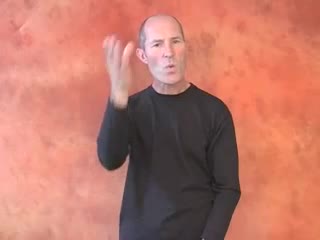
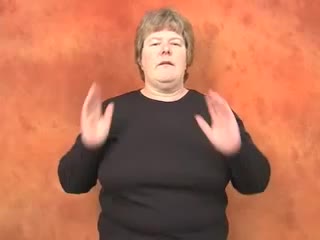
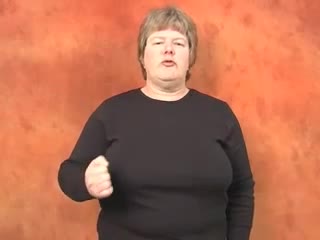
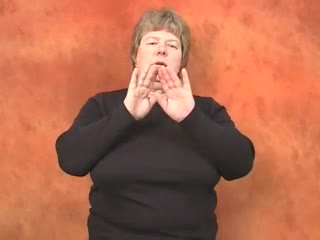
Best practice Use mirror mode, then watch the frame breakdown below to catch the start, movement, and finish cleanly.
Video via SpreadTheSign  - Free educational resource BSL
Updated April 25, 2026
British Sign Language (BSL) 🟢 Beginner 📊 A1 ⚡ Very Common Noun

month

A calendar period of approximately four weeks

Source-linked video Step-by-step guide Context and safety notes
Synonyms
Period cycle
Antonyms
Year week day
Difficulty
Not rated yet

Create a free account to save this sign, keep your watch history, and unlock a one-note journal preview.

How to sign it
Handshape
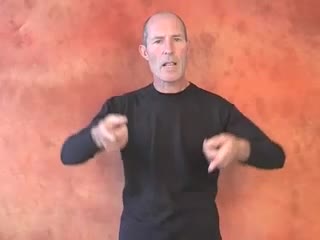
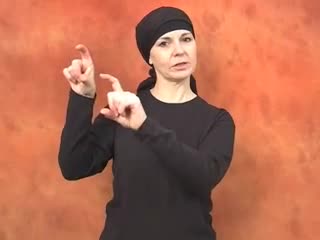
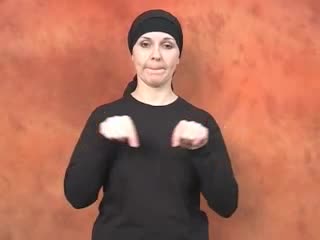
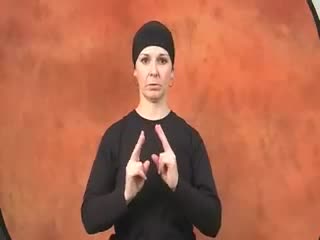
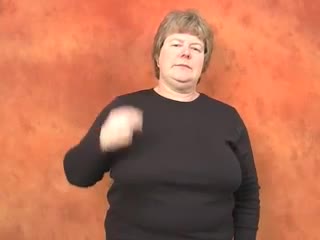
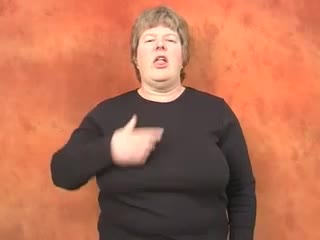
Dominant hand forms a G-handshape (index finger extended, thumb alongside)
Location
Side of the dominant cheek or jaw area
Movement
Dominant G-hand moves downwards in a short arc
Palm Orientation
Palm generally faces signer
Facial Expression
None specific
🔁 Spaced Review Try it free

How well do you know this sign?

MONTH
Your Progress Live
🌱
Level 1 · BSL Beginner +0 XP today
This sign Not learned yet
0 watches
Mastery 0%
Confidence
How well do you know this sign?
0 🔥 Streak
0 Signs seen
0 Learned
0 Watches
📖 Vocabulary health 🔒 Log in to see score
0 Mastered
0 Confident
0 Practicing
0 Just seen

Create a free account to keep your vocabulary score between sessions

7-day activity 0 of 7 active

Register free to sync activity across devices

Watch signs to see your history here

Tracking locally for now. Create a free account to save your progress and sync across devices.
Free gets you started. Paid adds the repeat-learning layer: review queues, deeper notes, compare mode, and better comeback tools.
My Sign Journal
Personal notes, saved to your account forever
Locked

Write memory tricks, usage examples, and cultural reminders beside each sign. Create a free account to unlock your first saved note preview on this page.

Create free account Already have an account? Log in

What This Sign Means in BSL

The BSL sign for month is one of those foundational signs you’ll learn early on, and for good reason. It directly communicates the concept of a monthly period, a vital unit of time in daily conversation. When you see this sign, you know you’re dealing with a duration of roughly 30 days, whether you’re talking about past events or planning for the future.

What makes this sign so clear is its distinct combination of handshape, location, and movement. You'll notice the dominant hand forms a precise G-handshape – that's your index finger extended with your thumb alongside it – positioned right by the side of your dominant cheek or jaw. From there, it executes a short, downward arc. This precise, fluid action makes the sign unambiguous and effective.

It’s an essential building block in BSL grammar. Once you master "month," you're equipped to talk about specific durations, like "two months ago" or "every month," and you'll find it integrates seamlessly into more complex time expressions. Think of it as a cornerstone for structuring your BSL communication around periods of time.

When This Sign Feels Natural

You'll find yourself using the sign for "month" constantly in everyday BSL conversations. It feels completely natural when you’re discussing schedules, planning events, or talking about how long something has taken or will take. For example, if you're making plans to meet a friend, you might sign "next month" or "in two months" with ease. It's incredibly versatile for both casual chats and more formal discussions.

This sign is the go-to for referring to a general monthly period. It works whether you're recounting something that happened "last month" or anticipating an event "next month." It’s an efficient way to convey time without needing to fingerspell or use more elaborate descriptions, making your communication clear and concise for any BSL user.

While you might sometimes fingerspell the names of specific months (like J-A-N-U-A-R-Y), the actual sign for "month" is distinct and serves a different purpose. It represents the *concept* of a month as a unit of time, rather than a specific named month. So, when you’re discussing durations or recurring events, this sign is almost always the most natural and expected choice.

What Learners Usually Miss

One common area where learners can sometimes falter with the sign for "month" is the precision of the G-handshape. It's crucial that your index finger is clearly extended, and your thumb rests alongside it, not tucked away or extended separately. Sometimes, learners might let their other fingers relax too much, making it look more like a slightly open '5' handshape or a loose 'I', which can create confusion with other signs.

The movement and location are also key. The sign isn't a poke at the cheek, nor is it a wide sweep. It’s a relatively short, distinct downward arc that begins at or very near the side of your dominant cheek or jaw. Ensure the movement is fluid and controlled, rather than jerky or too aggressive. The exact spot matters; avoid letting your hand float too far from your face, which can make the sign less clear or even indistinguishable.

Another subtle point is to ensure the sign is a single, integrated movement. It’s not a two-part action where you touch your cheek then move your hand. Instead, think of it as a smooth, continuous action that starts near the face and arcs downwards. Practising this fluid motion will help the sign feel more natural and legible to native BSL users.

A Simple Way to Remember It

Associating the visual elements of a sign with its meaning can really help it stick in your memory. For "month," try to link its specific form and movement to the idea of marking time.

  • Imagine the G-handshape near your cheek as if you're gently drawing a segment on the side of your face, like ticking off a section on a personal calendar.
  • Think of the downward arc movement as turning a page on a calendar, signalling the passage from one month to the next.
  • The G-hand itself can be a reminder of a "group" of days, specifically a month's worth, visually separated by that distinct movement.

Short Practice Situations

  • "How many months until your birthday?" Try signing "how many" followed by "month" and "your birthday."
  • "I'm going on holiday next month." Practice signing "holiday," then "next," and finally "month."
  • "We haven't seen each other in months!" Sign "we," then "not see," followed by "many months" to express the duration.
  • "The project is due in three months." Practice signing "project," then "due," followed by "three" and "month."
  • "Can you believe it's been a month already?" Sign "believe," then "it has been" (or a similar expression), then "month" and "already."

Signs to Learn Next

  • WEEK: This sign is a natural follow-on as it also marks a fundamental unit of time, but a shorter one. Learning "week" alongside "month" helps you discuss durations with more precision.
  • YEAR: Once you've mastered "month," moving to "year" completes the trio of basic time units. You'll notice similarities in how time is conceptualised but distinct handshapes and movements.
  • DAY: Understanding "day" will give you the smallest common time unit, allowing you to build up sentences about daily routines or specific dates.
  • CALENDAR: This sign directly relates to tracking months and years. Learning "calendar" will help you refer to the tool used for organising these time periods.
  • TIME: While "month" specifies a duration, "time" refers to the general concept. Understanding how to use the general "time" sign will enhance your ability to discuss temporal concepts more broadly.

🤖 AI Learning Guide for "month"

The BSL sign for 'month' uses a G-handshape near the cheek with a downward arc movement

🎯 Practice Challenge

Practice signing 'month' then 'next month' and 'last month'

⚠️ Most Common Mistake

Ensure G-handshape is clear and movement is a short, distinct downward arc

👐 How to Sign "month" in British Sign Language (BSL) (Quick Answer)

Follow these steps to sign month correctly in British Sign Language (BSL):

  1. 1 Form G-handshape
  2. 2 Place index finger near dominant cheek/jaw
  3. 3 Move hand downwards in short arc

Tip: Watch the video above while following these steps for best results.

🤚 Sign Profile

🤚
Handshape
Dominant hand forms a G-handshape (index finger extended, thumb alongside)
🔣
Handshape Code
G-hand
Dominant Hand
Either
🙌
Hand Count
One-handed
📍
Location
Side of the dominant cheek or jaw area
↗️
Movement
Dominant G-hand moves downwards in a short arc
🔄
Movement Type
Arc
👆
Contact
Near
👋
Palm Orientation
Palm generally faces signer
⚖️
Symmetry
Asymmetric

😊 Non-Manual Features

Facial expressions and body language are grammatically essential in British Sign Language (BSL) - not optional!

😊
Facial Expression
None specific
🙆
Eyebrows
Neutral
👁️
Eye Gaze
Forward
🙂
Head Movement
None
👄
Mouth Morpheme
None
🕴️
Body Shift
None

📖 Grammar & Linguistics

Part of Speech Noun
Inflection No
Classifier Usage N/A
Role Shift No

🎓 Learning Context

📌 When to Use: Discussing time, dates, scheduling, duration
⚠️ Common Mistake: Incorrect handshape or location
🚫 When NOT to Use: When referring to the moon
Context Tags
Time calendar duration dates

🧪 Practice Lab

Use these tiny checks right after watching the video. Fast feedback is what turns recognition into recall.

Meaning check

Which word matches the sign you just watched?

Usage check

Where would this sign fit most naturally?

Confidence check

How do you feel about month right now?

Pick one so SignDeaf can shape the rest of your session around how this sign actually feels.

🧭 Scenario Drill

One sign gets remembered faster when you attach it to real situations. Try these quick scene prompts.

Work

Stretch practice

Use this sign in a short workplace sentence or meeting exchange.

Family

Stretch practice

Try signing this while talking about family life or something at home.

School

Stretch practice

Imagine teaching this sign to a classmate or using it in a lesson.

Doctor

Stretch practice

Practise it in a healthcare conversation where clarity matters.

Travel

Stretch practice

Use it in a travel scenario like asking for help or directions.

💬 Example Usage

1. [en] Next month / BSL: NEXT MONTH | 2. [en] Every month / BSL: EVERY MONTH (repeated) | 3. [en] Last month / BSL: LAST MONTH

1. [en] Next month / BSL: NEXT MONTH | 2. [en] Every month / BSL: EVERY MONTH (repeated) | 3. [en] Last month / BSL: LAST MONTH

When to use it

Discussing time, dates, scheduling, duration

When not to use it

When referring to the moon

Register

Neutral

🌍 Cultural Context

Basic time unit, no specific cultural nuances

🗺️ Regional Variations

Slight variations in exact location on cheek/jaw

⚖️ Similar Signs - What's the Difference?

This sign month
VS
Similar signs Look closely
Compared to WEEK, which uses a B-hand tapping and sliding on the non-dominant palm. YEAR involves two S-hands circling each other. MONTH is distinct with its G-handshape near the cheek, moving in a short downward arc, focusing on a single, specific time unit

📝 Usage Notes

Often repeated for plural or 'every month'

🏷️ Tags

Handshape

Keywords

💡
Did you know?
SpreadTheSign has 600,000+ sign language videos across 40+ sign languages - all free to view.

📚 Explore More British Sign Language (BSL) Signs

Keep building your British Sign Language (BSL) vocabulary - explore signs by category or browse the full dictionary.