What This Sign Means in BSL
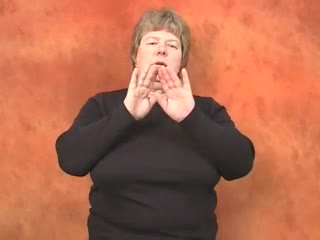
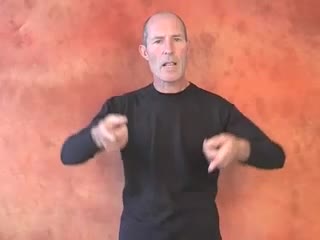
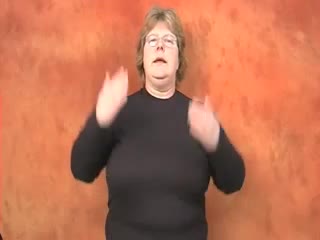
The BSL sign for time is one of the most fundamental concepts you'll learn, acting as a crucial building block for countless conversations. At its core, this sign represents the general concept of "time" itself – the passage of moments, the duration of events, or the abstract idea of when things happen. It's a versatile sign that establishes a temporal context in your signing, allowing you to discuss schedules, deadlines, or simply acknowledge the flow of existence.
You'll find this sign used when asking about the current hour, discussing how long something will take, or when referring to a period in the past or future. It's not just about a numerical measurement; it encompasses the broader understanding of time as an essential dimension of our lives. Mastering this sign early on helps unlock deeper engagement with more complex BSL grammar and vocabulary that relies on temporal markers.
Think of it as the foundational "when" or "duration" sign. Its straightforward movement and clear location make it relatively easy to learn, yet its importance cannot be overstated. It's a sign that appears frequently in daily BSL interactions, from casual chats about meeting up to more formal discussions about project timelines. Its simplicity belies its profound utility in the language.
When This Sign Feels Natural
This sign feels most natural when you're referring to time in a general sense, or when you're setting up a question or statement that will be followed by more specific time-related details. For instance, if you're asking "What time is it?", you'd typically sign "WHAT TIME NOW?" Similarly, when you want to express that something "takes time" or "time flies," this is the sign you'd reach for. It's perfectly suited for everyday dialogue, whether you're chatting with a friend, giving instructions, or participating in a meeting.
The register for this sign is universally neutral, making it appropriate for almost any audience or situation. You won't find it to be too formal or too casual; it simply states the concept. While there are more specific signs for hours, minutes, days, and other units, this general "time" sign is your go-to when you're not yet specifying a precise measurement, or when you're introducing a broader temporal theme. It serves as an excellent anchor for other temporal signs you might use in the same sentence.
Consider using it when you want to convey "Do you have time?" or "I need more time." It's also integral when discussing events that occurred "a long time ago" or will happen "some time in the future." The context will often clarify whether you're asking about the clock time or the general availability of time, but the core sign remains consistent. It's your default for the abstract notion of time, before you start adding specific numbers or units.
What Learners Usually Miss
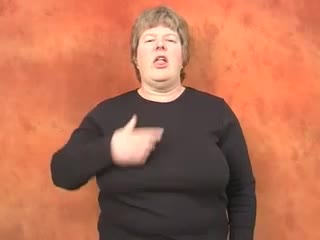
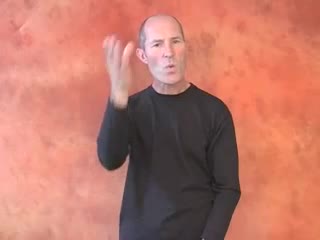
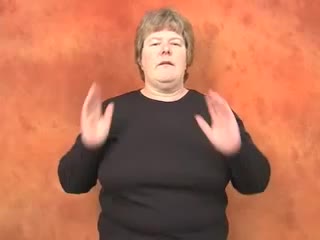
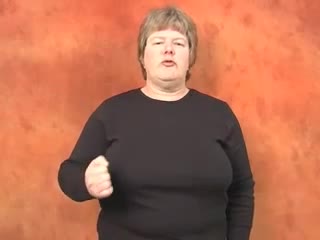
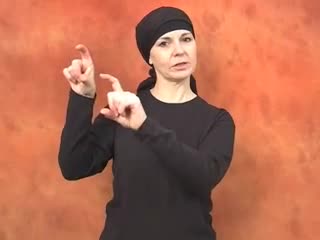
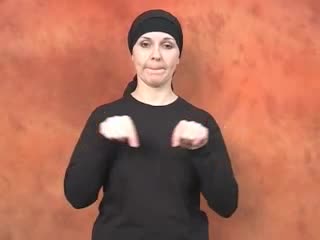
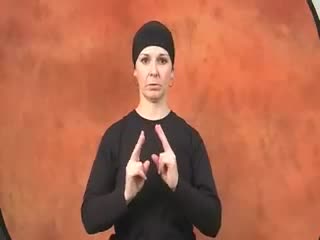
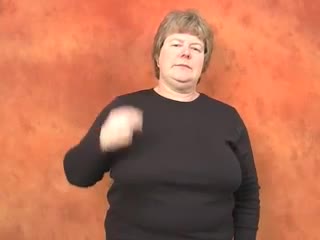
One common subtlety learners sometimes miss with the BSL sign for time is the precise movement and intention. It’s a single, clear tap of the dominant index finger on the non-dominant wrist. New learners might sometimes make a repeated tapping motion, or even a small circular one. While a repeated tap can signify "watch" or "clock" in some contexts, or even "wait" with different facial expression, the singular tap is crucial for conveying the general concept of "time." Getting this right ensures clarity and avoids misinterpretation, keeping your communication smooth and accurate.
Another point of confusion can be the exact handshape of the dominant hand and the location. Ensure your dominant hand forms a clear G-hand (extended index finger, rest of fingers and thumb tucked in). Sometimes, learners might use a slightly open hand or a less distinct index finger, which can blur the sign. Similarly, the location is specifically the non-dominant wrist area, where a wristwatch would typically be worn. Placing the sign higher up the arm, or on the palm, deviates from the standard and can make your sign less immediately recognisable to fluent signers.
Finally, pay attention to the facial expression. For the general sign "time," your facial expression is usually neutral. However, if you're asking "What time is it?", your eyebrows might be slightly raised to indicate a question. Over-expressiveness for the basic concept of "time" itself isn't typically necessary and might even distract from the sign's core meaning. Remember, the BSL sign for time is a functional noun; let your facial expressions add nuance to *what you're saying about* time, rather than to the sign itself, unless you're emphasizing urgency ("time is running out!") or a similar emotional state.
A Simple Way to Remember It
A very straightforward way to remember the BSL sign for time is to associate it with the universal action of checking a wristwatch. Even if you don't wear one yourself, the image is instantly recognisable globally. Your dominant index finger acts like a pointer, tapping the spot where a watch face would be, signalling the concept of time.
- The "Watch Check": Imagine you're just glancing at your wrist to see what time it is. Your dominant index finger points and taps the "watch face" area.
- Single Tap, General Time: The single, deliberate tap represents the singular concept of time as a whole, or a specific moment in time you're referring to, rather than a continuous action.
- Wrist Location Logic: The wrist is the traditional place we monitor time using devices, making the sign's location incredibly logical and easy to recall.
Short Practice Situations
- What time is it right now?
- We need more time to finish this project.
- Do you have time to meet up tomorrow?
- Time flies quickly when you're having fun.
- I don't have enough time to explain everything.
Signs to Learn Next
- CLOCK/WATCH: This sign is often made with a similar handshape and location but typically involves a repeated circular motion or multiple taps on the wrist, specifically referring to the physical object used to tell time. Understanding its distinction from the general "time" sign is crucial.
- WAIT: While not directly about time, "WAIT" often uses a similar handshape near the wrist or forearm, but the movement is usually a small circular motion or repeated forward taps, conveying the action of pausing or holding on. Distinguishing the subtle movement and context prevents confusion.
- FUTURE: This sign moves the dominant flat hand forward from the side of the head or shoulder, representing time ahead. It connects to "time" as it’s a specific temporal direction within the broader concept.
- PAST: Often signed with a dominant flat hand moving backward over the shoulder, "PAST" represents time that has already occurred. Learning this alongside "time" helps you discuss events in their correct temporal context.
- DAY: This sign, typically a dominant flat hand sweeping down across the non-dominant arm, signifies a specific unit of time. Once you grasp the general "time," you'll naturally want to break it down into these smaller, measurable segments.