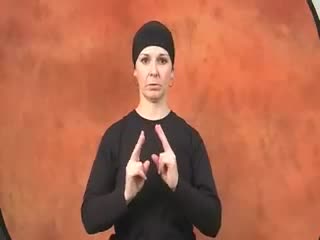
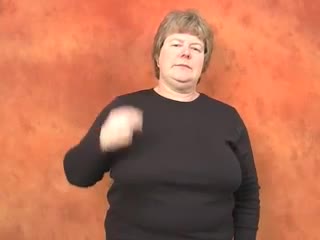
What Is the BSL Sign for "water conduit"?
Understanding how we move water from one place to another is a really fundamental concept, and British Sign Language beautifully captures these ideas with clear, visual signs. When you're talking about a channel, pipe, or structure specifically designed to convey water, you're looking for the BSL sign for water conduit. This expressive sign directly illustrates the path and flow of water, making it incredibly intuitive for learners. Learning the British Sign Language water conduit sign helps you describe everything from ancient aqueducts to modern plumbing systems, connecting you more deeply with everyday conversations in the Deaf community. It’s a brilliant example of BSL’s visual nature in action, helping you conceptualise an otherwise abstract engineering term.
How to Sign "water conduit" in British Sign Language - Step-by-Step
Let's break down this fascinating sign, which visually traces the path of water itself, ensuring you execute each component with precision.
Step 1: Handshape
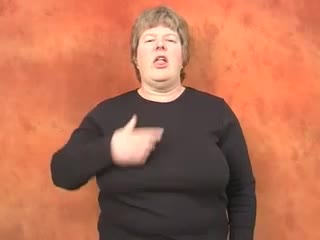
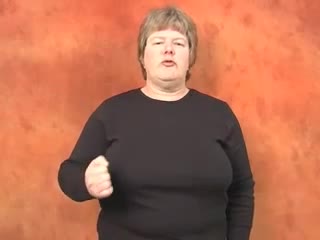
For this sign, you’ll begin by forming a distinct C-handshape with your dominant hand. To achieve this, gently curve all your fingers and your thumb, bringing your fingertips and thumb tip close together but not quite touching, creating an open 'C' shape. Your palm will naturally face slightly inwards, towards your body, and your fingers will be oriented to point towards your non-dominant side, ready for the motion.
Step 2: Hand Placement and Location
Start by positioning this C-handshape directly in front of your lower face, specifically near your chin or just below your mouth. Imagine it as the opening of a pipe or source from which water will emerge. This initial placement is crucial, anchoring the sign to a natural point of origin for water, making it immediately understandable.
Step 3: Movement
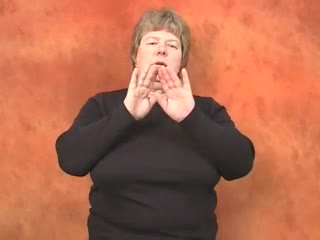
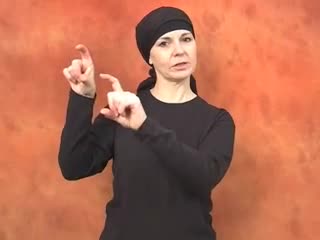
From its starting position near your chin, smoothly move your C-handshape outwards and slightly downwards, away from your body, in a graceful, consistent arc. This single, deliberate motion mimics water flowing out of a pipe or channel, extending its path. There's no repetition here; a single, clear sweep is all you need to convey the concept of a water conduit.
Step 4: Facial Expression and Mouthing
While signing "water conduit," maintain a neutral facial expression; there's no inherent emotion tied to this particular concept. However, mouthing the words "water conduit" or simply "water" as you sign can significantly enhance clarity, particularly for those who lip-read or are learning. Non-manual features like mouthing are fundamental to BSL grammar, providing crucial context and disambiguation, so don't overlook their importance for effective communication.
Step 5: Palm Orientation
Your palm orientation shifts subtly but importantly throughout the sign's movement. It begins facing slightly inward, towards your body or slightly downwards, and then as your hand moves outwards and downwards, your palm will naturally rotate to face more forward or slightly towards the ground. This transition in orientation helps to visually convey the direction and flow of the water, illustrating the open channel of the conduit.
"water conduit" in BSL - Quick Reference Snapshot
- Handshape: Dominant hand forms a C-shape.
- Location: Starts near the chin/mouth area.
- Movement: Smooth arc, moving outwards and slightly downwards from the body.
- Facial Expression: Neutral expression.
- Dominant Hand: Used alone for this sign.
- Palm Orientation: Begins inward/downward, rotates to forward/downward during movement.
5 Memorisation Tricks for the BSL Sign "water conduit"
- Picture a flexible pipe or hose extending from your mouth, the C-handshape perfectly embodies the curve and openness of a channel. This visual mnemonic directly links the handshape to the meaning, making it stick in your mind.
- Engage your muscle memory by practising the sign slowly and deliberately, focusing on the smooth, arcing motion away from your chin. Repeating this motion while consciously thinking about water flowing will embed the movement into your motor pathways.
- Connect the C-shape directly to the "conduit" part of the word, representing the channel itself, and the outward movement as the "water" flowing through it. This clever breakdown helps you remember both elements of the sign and its conceptual link.
- A lot of people initially confuse this sign with a simple "drink" sign, which typically uses an index finger to the mouth. Remember, the C-handshape and the distinct outward sweep are what truly define "water conduit," differentiating it clearly.
- Integrate this sign into your daily observations; whenever you see a pipe, a drain, or even a stream, silently sign "water conduit." This real-world practice helps you associate the sign with its physical representations, strengthening your recall.
Real-Life Situations to Use the BSL Sign for "water conduit"
Here are some practical scenarios where you'll find yourself using this sign, seeing how it fits naturally into BSL communication.
- Imagine you're discussing local infrastructure with a Deaf friend. You might sign, "NEW WATER CONDUIT INSTALL HERE," to talk about a recent construction project. In BSL, this topic-comment structure clearly places the focus on the conduit needing installation.
- If you're hiking and come across an old, impressive aqueduct, you could express your awe by signing, "THAT OLD WATER CONDUIT IMPRESSIVE, LONG TIME AGO BUILD." Here, spatial grammar might even show the conduit's length or direction with your arm.
- Perhaps you're pointing out a problem in your home, like a blocked drain. You might sign, "WATER CONDUIT BLOCKED, NEED FIX," conveying both the issue and the required action. The sign behaves as a noun here, the subject of the sentence.
- When asking about where water goes in a building, you could sign, "THIS WATER CONDUIT WHERE LEAD?" using a raised eyebrow and leaning forward to indicate a question. The sign "water conduit" acts as the object of inquiry, modified by the question's non-manual features.
Top 3 Mistakes Learners Make Signing "water conduit" in BSL
It’s completely normal to make a few errors when you’re learning a new sign, and understanding common pitfalls can significantly speed up your progress. Here are the top three mistakes learners often encounter with "water conduit" and how to correct them.
-
Incorrect Handshape: Many beginners tend to use a flatter hand or an overly tight fist, rather than the precise C-shape required. This can make your sign unclear, potentially resembling something completely different. The fix is simple: consciously focus on forming that gentle, open curve with your fingers and thumb, ensuring it truly represents a channel.
-
Stiff or Jerky Movement: Another common error is a hesitant or abrupt movement, instead of the smooth, flowing arc that characterises this sign. A jerky motion breaks the visual metaphor of water flowing. To correct this, practise the movement slowly and deliberately, emphasising a continuous, fluid sweep away from your chin, just like water gracefully exiting a pipe.
-
Wrong Starting Location: Sometimes learners place the sign too high, near the forehead, or too low, near the chest. This spatial inaccuracy can alter the sign's natural context and make it harder to understand. Always remember to begin the C-handshape directly in front of your lower face, specifically near your chin or mouth, establishing the natural origin point of the water source.
Fascinating Facts About the BSL Sign for "water conduit"
Every sign in BSL carries its own unique story and linguistic nuances; "water conduit" is no exception. Here are some interesting insights into this particular sign.
- The sign for "water conduit" boasts a strong iconic motivation, meaning its form visually resembles what it describes. The C-handshape directly mimics the curve of a pipe or channel, and the outward movement illustrates the flow of water, making it incredibly intuitive to grasp.
- While the precise historical origin of every BSL sign can be complex to trace, the sign for "water conduit" likely evolved from earlier BSL concepts for "water" and "pipe" or "channel," gradually merging into a single, cohesive lexicalised sign over time. This shows how BSL adapts and refines its vocabulary.
- Within the diverse BSL-using community across the United Kingdom, you might encounter minor regional variations for "water conduit." Some areas might introduce a subtle wrist flick at the end, or perhaps a two-handed version where the non-dominant hand establishes a fixed point for the conduit.
- Linguistically, this sign effectively functions as a compound concept, visually combining the essence of "water" and "channel" into one fluid motion. It doesn't rely on fingerspelling, but rather on a clear, visual representation, which is a hallmark of BSL.
- Although the C-handshape used in this sign is the same handshape for the manual alphabet letter 'C', context completely eliminates any confusion. The dynamic movement and specific location of "water conduit" instantly distinguish it from a simple fingerspelled letter, highlighting the importance of non-manual features.
"water conduit" in Deaf Culture - Community and Identity
Concepts like "water conduit" might seem purely functional, but their signs weave into the rich tapestry of Deaf culture, reflecting how the community interacts with and describes the world. In a visually-oriented language like BSL, describing physical structures and their functions is fundamental to daily communication. Discussions about infrastructure, environmental concerns, or even historical sites often involve signs like this, enabling Deaf individuals to share their experiences and knowledge. It helps foster a shared understanding of the built and natural environment, becoming part of the collective identity. Through such signs, Deaf people articulate their observations and contribute to dialogues about the spaces they inhabit, making the world accessible and comprehensible through a Deaf lens.
Example Conversations Using "water conduit" in BSL
Here are some practical example sentences, showcasing "water conduit" within various BSL grammatical structures and contexts.
English: Where does this water conduit lead? - BSL structure: You'll typically see a topic-comment structure, with spatial grammar indicating direction. (THIS WATER CONDUIT LEAD WHERE?)
English: The old water conduit needs repairing. - BSL structure: This uses a straightforward subject-verb-object order, often with the topic established first. (OLD WATER CONDUIT NEED REPAIR.)
English: Is that a new water conduit system for the city? - BSL structure: For a yes/no question, a raised eyebrow and slight forward lean would accompany the signs. (CITY NEW WATER CONDUIT SYSTEM THAT?)
English: We discovered a hidden water conduit under the garden. - BSL structure: This involves past tense (implied by context or a time sign) and spatial description. (GARDEN UNDER WE DISCOVER HIDDEN WATER CONDUIT.)
English: Be careful, the water conduit is leaking. - BSL structure: This combines an imperative or warning with a descriptive statement. (CAREFUL, WATER CONDUIT LEAKING.)
Frequently Asked Questions: The BSL Sign for "water conduit"
Are there regional variations for "water conduit" in BSL?
Yes, just like spoken languages, BSL has regional variations, and while the core concept of "water conduit" remains, you might occasionally observe slight differences in its execution across the UK. Some signers might use a slightly different handshape or incorporate a subtle additional movement, but the general iconic representation of a channel for water remains consistent. Always be open to these regional nuances as you encounter different signers.
What signs are similar to "water conduit" and how do I avoid confusion?
A common point of confusion arises with signs for "pipe" or "drink." The sign for "pipe" might involve a similar C-handshape, but it usually remains static or indicates a solid structure, lacking the outward flow of "water conduit." The sign for "drink" typically uses an index finger or a specific handshape tapping the mouth, which is distinct from the C-handshape and outward movement of "water conduit." Paying close attention to the full movement and hand placement helps avoid these confusions.
Is the sign for "water conduit" suitable for beginners learning BSL?
Absolutely, the sign for "water conduit" is very suitable for beginners! Its highly iconic nature, directly representing the concept of a water channel, makes it quite intuitive and easy to remember. The handshape is common, and the movement is straightforward, allowing new learners to quickly grasp and practise it effectively in their early BSL journey.
Can children use the sign for "water conduit" easily when learning BSL?
Children can indeed learn and use the sign for "water conduit" with ease. The visual simplicity and the clear connection to a physical object or concept make it accessible for young learners. Encouraging children to use this sign when pointing out drains, hoses, or even drawing pictures of water flow can help them integrate it naturally into their developing BSL vocabulary.
How does the BSL sign for "water conduit" compare to equivalents in other sign languages?
While this page focuses exclusively on British Sign Language, it’s fascinating to note that many sign languages develop signs for common concepts like "water conduit" through similar iconic principles. However, the specific handshapes, locations, and movements will vary significantly between different sign languages, reflecting their unique linguistic structures and cultural contexts. Always remember that each sign language is distinct and independent.
Signs That Pair Naturally with "water conduit" in BSL
Building your BSL vocabulary effectively means learning signs in clusters, understanding how they relate to each other. Here are some signs that naturally complement "water conduit" and help you expand your communicative range.
- WATER: This fundamental sign (often an index finger tapping the chin or a 'W' handshape) directly relates to what flows through a conduit, making it an obvious pairing.
- PIPE: The sign for "pipe" (often a C-handshape or similar, held statically) describes the physical structure, a more general term that "water conduit" specifies for water.
- REPAIR: When a water conduit experiences an issue, the sign for "repair" (two fists bumping or twisting) immediately follows as a necessary action.
- LEAK: This sign (often wiggling fingers downwards from a hand) describes a common problem associated with conduits, highlighting a crucial functional aspect.
- BUILDING/STRUCTURE: Conduits are often integral parts of larger constructions, so "building" or "structure" (hands outlining a box or structure) helps place the conduit in its broader context.
- FLOW: The sign for "flow" (wiggling fingers moving forward) directly represents the action of water, which is the primary purpose of any water conduit.
Building Fluency: How to Practise "water conduit" in BSL
Becoming fluent in BSL, particularly with specific signs like "water conduit," requires consistent and thoughtful practice. Here’s how you can truly embed this sign into your expressive repertoire. Begin by using a mirror; carefully observe your dominant hand as you form the C-handshape and execute the smooth, arcing movement, ensuring your palm orientation shifts correctly. Next, actively integrate "water conduit" into your daily BSL conversations by mentally (or actually) describing pipes, drains, or streams you encounter. Film yourself signing this word in different sentence contexts, then review the footage to identify any areas for refinement, focusing on clarity and naturalness. The most transformative step is finding a Deaf conversation partner; they'll provide invaluable feedback and help you use the sign appropriately in real-time dialogue. Remember, consistent repetition spaced over several days, rather than intense cramming, will solidify this sign in your muscle memory and make it feel completely natural when you use it.