What Is the BSL Sign for "pipe"?
Ever wondered how to precisely communicate about a classic smoking pipe, or perhaps even a section of plumbing, within a conversation in British Sign Language? You've come to the perfect resource to truly grasp the BSL sign for pipe, a wonderfully visual gesture that instantly conveys this specific concept. This particular sign fulfills a straightforward yet essential role in daily communication, whether you're describing an object, relating a story, or pointing out a detail in your environment. Mastering the British Sign Language pipe sign will quickly expand your descriptive vocabulary, allowing you to share specific nuances and connect more deeply with others.
How to Sign "pipe" in British Sign Language - Step-by-Step
Let's meticulously unpack the individual components that form the BSL sign for "pipe", ensuring you understand every detail for accurate execution.
Step 1: Handshape
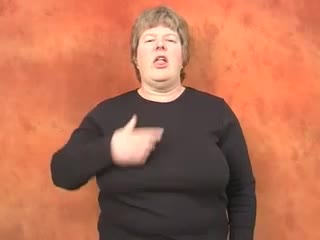
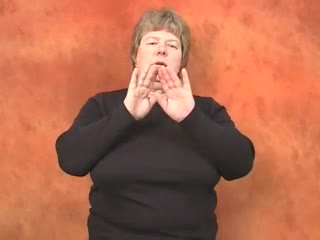
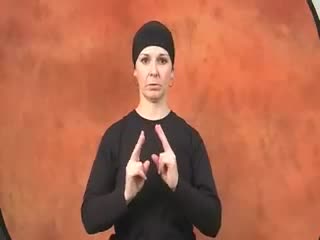
Begin by shaping your dominant hand into a loose 'C' formation, specifically as if you're gently grasping a slender, cylindrical object. Your thumb should softly meet the side of your index finger, creating a distinct circular opening, while your remaining middle, ring, and little fingers are softly curled inwards, not forming a tight fist. This particular handshape intentionally mimics the natural grip one would use when holding the stem of a smoking pipe, poised for use.
Step 2: Hand Placement and Location
Position your dominant hand, already in its 'C' handshape, in the area directly beneath your mouth, slightly to one side of your chin. Your wrist should remain relaxed, with your forearm angled gently upwards, mirroring the natural posture someone adopts when holding a pipe in anticipation of taking a draw. Your non-dominant hand stays at rest, either casually by your side or in a neutral space in front of you, as it does not actively participate in forming this specific sign.
Step 3: Movement
From its initial position just below your mouth, smoothly lift your dominant hand upwards and subtly towards your lips, as if you're taking a slow, deliberate inhalation from a pipe. This movement should be fluid and controlled, tracing a small, almost imperceptible arc towards your mouth, before gently returning to its starting point beneath your chin. You perform this gentle upward and downward motion only once, ensuring the entire gesture feels measured and unhurried.
Step 4: Facial Expression and Mouthing
When executing the sign for "pipe," your facial expression should maintain a neutral or mildly thoughtful appearance, often reflecting the calm or contemplation associated with the object itself. Crucially, you'll mouth the English word "pipe" clearly and without any vocalisation, as this specific non-manual feature provides essential phonological information within BSL, helping to clarify the precise meaning and prevent any potential confusion with other visually similar signs. This silent mouth pattern is integral to distinguishing "pipe" and integrates it deeply into the grammatical structure of British Sign Language.
Step 5: Palm Orientation
Your palm should consistently face towards your own body or tilt slightly upwards throughout the entire duration of the sign, as if you're holding the imagined pipe for your personal use. As your hand performs its subtle movement towards your mouth, this orientation remains unchanged, preserving the visual integrity of holding an object. Maintaining this precise palm direction is vital because it powerfully reinforces the iconic representation of holding and using a pipe, setting it apart from signs where the palm might face outwards, which would convey presentation to another individual or represent a different kind of object entirely.
"pipe" in BSL - Quick Reference Snapshot
- **Handshape:** Loose 'C' formation, thumb gently touching index finger.
- **Location:** Below the mouth, positioned near the chin.
- **Movement:** Small, smooth arc upwards towards the lips, then back, executed once.
- **Facial Expression:** Neutral or a contemplative look.
- **Mouthing:** Silent mouthing of the word "pipe."
- **Dominant Hand:** Exclusively used for the sign.
- **Palm Orientation:** Primarily facing towards your body or slightly upwards.
5 Memorisation Tricks for the BSL Sign "pipe"
- **Visual Mnemonic:** Envision a classic character, perhaps a detective in a film, deep in contemplation while holding their curved pipe. Allow that distinct image to embed itself in your mind, directly linking the specific handshape and the precise movement towards the mouth to the concept of "pipe." This strong mental image will effortlessly aid your recall whenever you need to sign the word.
- **Muscle-Memory Drill:** Consistently practise the exact handshape and movement for "pipe" while observing yourself in a mirror, paying close attention to the smooth, deliberate arc. Repeat the action ten times slowly, then ten times with slightly increased speed, enabling your hand and wrist to fully internalise the unique physical sensation of the sign. Building this kinesthetic memory ensures the sign becomes second nature, flowing effortlessly whenever you need it.
- **Connection to Meaning:** Reflect on the act of smoking a pipe the gentle, relaxed grip, the slow, considered draw. This sign is remarkably iconic, meaning its form directly mimics the action it represents, making it one of those signs where the visual itself tells a clear story. Grasping this direct link helps you retrieve the sign simply by imagining the object's function.
- **Common-Confusion Tip:** Be cautious not to over-extend the movement or make it overly forceful, as this might be misconstrued as other signs involving bringing the hand to the face. The "pipe" sign is characterised by its subtle, contained motion, reflecting a calm, controlled action. Keeping the movement small and precise prevents it from merging into other facial signs in BSL.
- **Daily-Life Practice:** Each time you encounter a visual representation of a pipe, whether in a book, on television, or even a real-world plumbing pipe, take a brief moment to perform the BSL sign for "pipe." Consciously integrate this sign into your daily observations, actively connecting the physical object to its BSL equivalent. This frequent, low-pressure repetition naturally strengthens your recall.
Real-Life Situations to Use the BSL Sign for "pipe"
- Imagine you're chatting with a Deaf friend about recent home improvements, explaining, "The old drainage pipe completely burst yesterday." Here, you'd sign "YESTERDAY DRAINAGE PIPE BURST," using BSL's clear topic-comment structure, establishing "drainage pipe" as the immediate subject of your conversation.
- Perhaps you're browsing at an antique fair, and you want to point out a fascinating vintage smoking pipe to a companion. You might simply sign "LOOK, PIPE BEAUTIFUL!" accompanied by an appreciative facial expression, embedding the sign within a descriptive statement.
- If someone asks you about smoking habits, and you wish to clarify that you don't use a pipe, you could sign "ME PIPE NOT," employing the crucial negative headshake to convey the negation after the sign, making your non-engagement clear.
- When describing a character in a fictional narrative, you might say, "He always has a pipe resting in his hand." You'd sign "HE ALWAYS PIPE IN HAND," utilising BSL's spatial grammar to indicate the pipe's constant presence and precise location.
Top 3 Mistakes Learners Make Signing "pipe" in BSL
- **Mistake 1: Exaggerated Movement:** Many new learners often make the movement far too large or position it too far away from the mouth, almost as if they are miming a comically oversized pipe. This frequently stems from an overzealous attempt to ensure clarity. The precise correction involves bringing the hand much closer to the face and executing a far more subtle and contained upward arc, accurately reflecting the small, controlled action of smoking a pipe.
- **Mistake 2: Incorrect Handshape for a Smoking Pipe:** Occasionally, learners will use a flattened 'C' or a more open handshape, which resembles a general 'tube' or 'cylinder' rather than the specific grip of a pipe stem. This can easily lead to misunderstanding, as BSL possesses a separate, distinct sign for a general "tube" or "conduit." The accurate correction requires ensuring your thumb and index finger form a clear, small circle, while the other fingers curl gently, precisely mirroring the specific grip needed for a smoking pipe.
- **Mistake 3: Omitting Mouthing or Incorrect Mouthing:** Forgetting to mouth "pipe" or mouthing an entirely different word represents a common error, particularly for individuals new to BSL's non-manual features. Learners sometimes concentrate solely on the hand sign and neglect the critically important mouth pattern. The precise correction is to consciously and silently mouth the English word "pipe" with utmost clarity, as this vital non-manual component significantly aids in distinguishing the sign and guarantees accurate communication.
Fascinating Facts About the BSL Sign for "pipe"
- The primary BSL sign for "pipe" is remarkably iconic, meaning its physical form directly resembles the action of holding and smoking a pipe, which makes it particularly intuitive for many learners to acquire. This strong visual mimicry acts as a powerful linguistic feature, firmly embedding the sign in its intended meaning.
- While the iconic "smoking pipe" sign is widely recognised and understood, for a general plumbing pipe or conduit, many BSL users will frequently employ the sign for "TUBE" or sometimes incorporate pointing to a specific context to clarify the type of pipe. This perfectly illustrates BSL's inherent contextual flexibility.
- Interestingly, some older generations of BSL users might utilise a slightly varied handshape or a more pronounced puffing movement, reflecting historical influences and the natural evolution of linguistic norms within the BSL-using community. Regional nuances often subtly modify signs across different geographical areas.
- This sign's reliance on a precise handshape and a specific location on the body makes it a clear example of how distinct parameters combine to create unique meaning, effectively differentiating it from other signs that might involve the mouth area, such as "EAT" or "DRINK." Its exactness is crucial for clarity.
- Although not directly derived from the manual alphabet, the 'C' handshape used in "pipe" is a common and highly versatile handshape frequently found in numerous BSL signs, demonstrating how fundamental handforms are efficiently reused and adapted for conveying a wide array of concepts.
"pipe" in Deaf Culture - Community and Identity
Deaf culture, vibrant and profoundly rich, frequently expresses concepts like "pipe" through immediate visual representation, connecting signers effortlessly to the object's function or appearance. While the sign for "pipe" itself may not hold the deep, unique cultural significance that some other signs do, its practical use beautifully exemplifies how the Deaf community values absolute clarity and visually driven language. Signers readily adapt and modify signs to convey extremely specific meanings, whether describing an ornate antique smoking pipe or a critical piece of plumbing infrastructure within a home. Through such precise signing, Deaf individuals share their experiences, knowledge, and understanding, forging a robust shared identity that powerfully transcends spoken language. This sign, like countless others, consistently reinforces the collective identity found in a community communicating through a beautiful, visually expressive language.
Example Conversations Using "pipe" in BSL
English: My grandfather smoked a pipe every evening. - BSL structure: Expresses habitual action with the clear sequence: "GRANDFATHER EVERY EVENING PIPE SMOKE."
English: We need to fix the leaking pipe under the sink. - BSL structure: Uses topicalisation and spatial referencing: "SINK UNDER PIPE LEAK, WE NEED FIX."
English: Do you think that old pipe is valuable? - BSL structure: Poses a question with raised eyebrows and "THAT OLD PIPE VALUABLE? YOU THINK?"
English: He bought a new pipe for his collection. - BSL structure: Straightforward subject-verb-object with "HE NEW PIPE BOUGHT, HIS COLLECTION FOR."
English: Be careful, the hot pipe might burn you. - BSL structure: Provides a warning with the structure: "CAREFUL, HOT PIPE BURN YOU MAY."
Frequently Asked Questions: The BSL Sign for "pipe"
Is there a regional variation for the BSL sign for "pipe"?
For the iconic "smoking pipe" sign, the fundamental handshape and movement generally remain consistent across most regions where British Sign Language is actively used. However, subtle differences in the precise degree of movement or exact placement might occasionally occur, which typically reflects individual signing styles rather than widespread regional variants. Always endeavour to observe local signers to pick up on any minor nuances in their execution.
What are some similar BSL signs I should avoid confusing with "pipe"?
You'll definitely want to avoid confusing "pipe" with general signs for "TUBE" (which often uses a 'C' handshape moved forward to clearly depict a conduit) or even "SMOKE" (which can involve similar hand-to-mouth actions but possesses a distinct handshape and a different movement). Pay very close attention to the specific handshape and the subtle, singular motion of "pipe" to clearly differentiate it from these related concepts in BSL.
Is "pipe" a good sign for beginners to learn in BSL?
Absolutely, "pipe" represents an excellent sign for beginners to learn! Its highly iconic nature, directly mimicking the action of holding a pipe, makes it remarkably memorable and