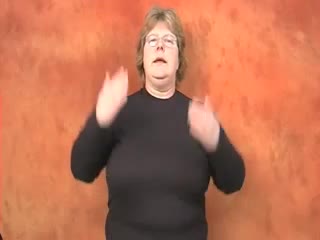
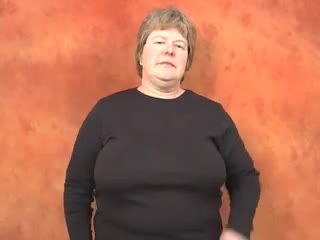
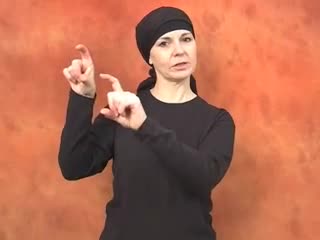
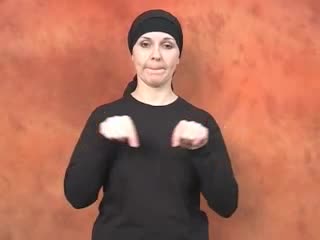
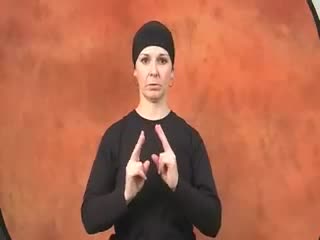
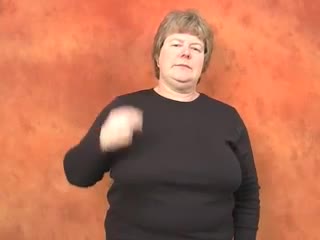
What Is the BSL Sign for "knife"?
Picture yourself in the kitchen, preparing a meal, and you need that essential utensil. How would you ask for it in British Sign Language? You'll find that talking about a "knife" in BSL is wonderfully intuitive, reflecting the everyday action of cutting. This specific BSL sign for knife gives you a direct, clear way to communicate about the tool, whether you're discussing cooking, safety, or just setting the table. It's a fundamental part of everyday conversation, opening up discussions about food, implements, and even more abstract concepts that require a cutting action within the rich tapestry of British Sign Language.
How to Sign "knife" in British Sign Language - Step-by-Step
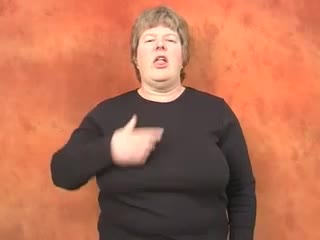
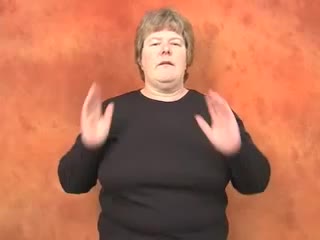
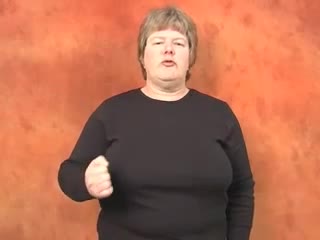
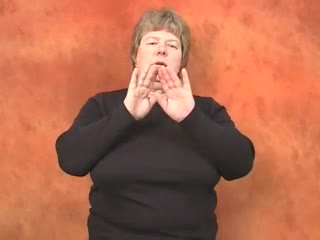
Mastering this sign involves a precise coordination of handshapes, placement, and movement that beautifully illustrates the item it represents.
Step 1: Handshape
For this sign, you'll engage both your dominant and non-dominant hands, each taking on a distinct role. With your dominant hand, form what's often referred to as an "F" handshape; your index finger and thumb meet to create a small circle, while your remaining three fingers (middle, ring, and pinky) extend upwards, slightly separated and relaxed. This configuration visually represents the handle of a knife you're gripping. Now, for your non-dominant hand, keep it flat and open, with all fingers extended and held together, and your thumb resting alongside. This flat hand serves as the surface or object you're about to cut.
Step 2: Hand Placement and Location
You'll want to position your non-dominant hand first, held out horizontally in front of your body, usually around chest height, with its palm facing upwards. This hand acts as a stable base, an imaginary chopping board or piece of food. Then, bring your dominant hand, already in its "knife-gripping" shape, directly above your non-dominant hand. The imaginary blade edge of your dominant hand should be aligned above the palm of your non-dominant hand, ready for the cutting motion.
Step 3: Movement
The action for "knife" involves a distinct, repeated motion. Take your dominant hand, holding that "F" handshape, and move it downwards and forwards across the palm of your non-dominant hand. It’s not a deep plunge, but rather a series of short, sharp, slicing movements, as if you're making several quick cuts. Perform this movement two to three times, ensuring the motion is controlled and clear, mimicking the practical use of a blade. The wrist of your dominant hand should remain relatively stable, with the motion primarily coming from your elbow and shoulder, giving it an authentic cutting feel.
Step 4: Facial Expression and Mouthing
When you're signing "knife" in isolation, a neutral facial expression is perfectly appropriate and commonly used. However, the context of your conversation might subtly alter your expression; for instance, if you're warning someone about a sharp object, your eyebrows might furrow slightly. Crucially, you should mouth the word "knife" clearly as you execute the sign. This mouthing, a non-manual feature, provides vital phonetic information, helping to differentiate the sign from others that might have similar handshapes or movements, and is an integral part of BSL grammar, enhancing clarity and meaning.
Step 5: Palm Orientation
The palm orientation for both hands is quite specific and contributes significantly to the sign's clarity. Your non-dominant hand remains with its palm facing upwards throughout the sign, providing that stable base. For your dominant hand, the palm will primarily face downwards, or slightly towards your non-dominant hand, as it performs the cutting action. This downward orientation helps convey the sense of a blade coming down onto a surface. Maintaining this direction for your palm ensures that the iconic representation of cutting is unmistakable and visually consistent.
"knife" in BSL - Quick Reference Snapshot
- Handshape: Dominant hand forms an "F" shape (thumb and index finger touching, others extended). Non-dominant hand is flat, palm up.
- Location: Dominant hand moves above the palm of the non-dominant hand, in front of the body at chest height.
- Movement: Short, repeated downward and forward slicing motions across the non-dominant palm, two to three times.
- Facial Expression: Generally neutral, can adapt to context.
- Dominant Hand: Performs the "cutting" action.
- Palm Orientation: Dominant palm faces downwards; non-dominant palm faces upwards.
5 Memorisation Tricks for the BSL Sign "knife"
Here are some clever ways to help that sign for "knife" stick in your memory for good.
- **Visual Mnemonic:** Imagine you're actually holding a small knife in your dominant "F" handshape, and you're carefully slicing an invisible piece of bread on your non-dominant palm. This direct visual connection to the action makes the sign's form instantly logical and recallable.
- **Muscle-Memory Drill:** Practice the cutting motion rhythmically while looking in a mirror, focusing on the fluidity and repetition. Feel the distinct, light tapping or stroking action against your non-dominant palm, allowing your muscles to learn the precise movement without conscious thought.
- **Connection to Meaning:** Think about how the sign perfectly mimics the practical function of a knife – cutting. The dominant hand is the tool, the non-dominant hand is the object, and the movement is the action; understanding this iconic relationship solidifies the sign's meaning in your mind.
- **Common-Confusion Tip:** Be careful not to confuse the handshape with other signs that involve the "F" hand, such as "flower" or "family," which have very different movements and locations. The key distinguishing feature for "knife" is the specific downward slicing motion against the non-dominant hand.
- **Daily-Life Practice Idea:** Every time you use a knife in real life, mentally or physically (if appropriate and safe!), sign "knife" as you perform the action. Whether you're cutting vegetables or spreading butter, associating the BSL sign with the real-world item will embed it into your daily routine.
Real-Life Situations to Use the BSL Sign for "knife"
Knowing how to use a sign in context truly brings it to life and helps you communicate naturally.
- You might use the sign in a question: "WHERE KNIFE?" indicating you're looking for the utensil. Here, the sign "knife" would typically appear at the end of the question, with an accompanying inquisitive facial expression (raised eyebrows, tilted head).
- Perhaps you need to offer one: "YOU WANT KNIFE?" where the sign for "knife" would occur before the question marker, often accompanied by an open hand inviting acceptance.
- When you’re setting the table, you could sign "NEED KNIFE, FORK, SPOON" to list the necessary cutlery, demonstrating how signs for related items often cluster together in BSL sentence structure.
- To give a warning, you might sign "KNIFE SHARP, CAREFUL" where the sign for "knife" initiates the statement, followed by signs describing its condition and a caution, often with a serious facial expression.
Top 3 Mistakes Learners Make Signing "knife" in BSL
It's completely normal to make a few errors when you're first learning, but spotting these common pitfalls early will help you refine your signing quickly.
- **Incorrect Dominant Handshape:** Many beginners might use a flat hand or a simple index finger for the cutting motion instead of the precise "F" handshape. This happens because they're focusing solely on the "cutting" action and overlooking the specific grip. To correct this, consistently practice forming the "F" handshape until it feels natural, ensuring your thumb and index finger meet while the others are extended.
- **Missing or Incorrect Non-Dominant Hand:** Sometimes learners forget to use their non-dominant hand at all, or they hold it in an awkward position, like vertical or palm down. This error often stems from not fully understanding the two-handed nature of the sign's iconic representation. The solution is to consciously ensure your non-dominant hand is always flat, palm up, acting as the stable surface for the cutting motion.
- **Movement That's Too Broad or Too Gentle:** Some new signers might make a very wide, sweeping motion, or a very soft, hesitant one, rather than the short, sharp, repeated strokes. This can happen if they're not fully internalising the practical, deliberate nature of using a knife. To fix this, focus on precise, controlled, and slightly firm repeated movements that clearly convey a slicing action, rather than a single, vague gesture.
Fascinating Facts About the BSL Sign for "knife"
Delving into the unique characteristics of signs often reveals deeper insights into the language itself.
- The BSL sign for "knife" is highly **iconic**, meaning its form directly mimics the action of using the object it represents. This makes it a very intuitive sign for new learners, as you can almost guess its meaning just by watching the movement.
- While the core elements of the sign remain consistent across the BSL-using community, you might occasionally encounter subtle regional variations in the exact speed or number of repetitions of the cutting motion. These minor differences often highlight the organic development of sign languages within their geographical communities.
- Unlike some signs derived from the manual alphabet, the sign for "knife" has no direct link to fingerspelling. Its origin is purely gestural and action-based, a testament to BSL's visual-spatial nature rather than a direct transliteration of spoken language.
- The two-handed nature of this sign, where one hand acts as the object being cut and the other as the tool, is a common linguistic feature in BSL for many utensil or action-based signs. It demonstrates how BSL frequently uses spatial relationships to convey complex interactions between objects.
- This sign's clear distinction from signs for "cut" or "slice" is important; while it shares the cutting *action*, the specific handshape and context of "knife" always refer to the implement itself, rather than solely the verb.
"knife" in Deaf Culture - Community and Identity
Food and shared meals are universal, and within Deaf culture, they hold a special place, often serving as central points for community gatherings and social connection. The sign for "knife" therefore isn't just about an object; it's part of the broader vocabulary used in these vital social contexts. Imagine families sharing stories over dinner, friends catching up in a café, or community events where food is served – the ability to easily refer to utensils like a knife facilitates smooth communication and inclusion. It’s a sign that supports the everyday rituals of life, reinforcing the visual and practical foundations of BSL that connect individuals within the Deaf community, making communication around the shared experience of food effortless and natural.
Example Conversations Using "knife" in BSL
Putting signs into full sentences helps you understand their flow and grammatical role.
English: Can I borrow your knife for a moment? - BSL structure: YOUR KNIFE, I BORROW, CAN I?
English: The sharp knife is in the drawer. - BSL structure: KNIFE SHARP, DRAWER INSIDE.
English: Please pass me the small knife. - BSL structure: KNIFE SMALL, PASS ME, PLEASE.
English: Be careful with that kitchen knife! - BSL structure: KITCHEN KNIFE THAT, CAREFUL! (Often accompanied by a cautionary facial expression).
English: We need a good knife for cutting bread. - BSL structure: BREAD CUT, KNIFE GOOD, WE NEED.
Frequently Asked Questions: The BSL Sign for "knife"
You've got questions, and we've got answers to help clarify everything about this sign.
Is there a specific regional variation for the BSL sign for "knife"?
While the core elements of the BSL sign for "knife" are widely understood across the UK, you might find subtle differences in the speed of the movement or the exact number of repetitions depending on the region. These variations are usually minor and wouldn't hinder understanding, but they add to the rich diversity within British Sign Language.
Are there any similar BSL signs I should be careful not to confuse with "knife"?
Yes, learners sometimes confuse "knife" with signs like "cut" or "slice," which share a similar cutting motion. The key distinction lies in the specific "F" handshape for "knife" which represents holding the tool, whereas "cut" or "slice" often use a flat hand or index finger to represent the action itself, without necessarily referring to the implement.
Is "knife" an easy sign for beginners to learn in BSL?
Absolutely, the sign for "knife" is generally considered quite accessible for beginners. Its iconic nature, directly mimicking the action of using a knife, makes it very intuitive and easy to remember, often one of the first action-oriented signs learners pick up.
How do I teach the BSL sign for "knife" to a child?
When teaching this sign to a child, focus on making it fun and interactive! You can use real (safe!) or toy knives and practice the sign while pretending to cut food, emphasising the "F" handshape as the grip and the gentle slicing motion, tying it directly to their play.
How does the BSL sign for "knife" compare to signs in other international contexts?
Different sign languages around the world will have their own distinct signs for "knife," reflecting their unique linguistic and cultural origins. While many might share an iconic quality, the specific handshapes, movements, and locations can vary significantly from one sign language to another, highlighting their independent development.
Signs That Pair Naturally with "knife" in BSL
Expanding your vocabulary by learning related signs helps you build more coherent and natural conversations.
- FORK: Often learned alongside "knife" as part of a cutlery set, visually representing the prongs.
- SPOON: Another essential eating utensil, frequently taught in the same cluster to complete the basic table settings.
- PLATE: The surface upon which the knife and other cutlery are used, creating a natural thematic grouping.
- EAT: This verb is directly related, as a knife is often used in the preparation or consumption of food.
- CUT: While distinct from "knife," the verb "cut" is conceptually linked and often used in conjunction with the implement.
- COOK: As a knife is a fundamental tool in cooking, learning this sign helps expand conversations around meal preparation.
Building Fluency: How to Practise "knife" in BSL
To truly make the BSL sign for "knife" your own, consistent and varied practice is key. Try standing in front of a mirror and signing "knife" several times, paying close attention to your dominant hand's "F" handshape and the precise, short slicing motion across your non-dominant palm, ensuring your palm orientation is correct. Integrate the sign into your daily BSL conversations by thinking about when you might use it naturally, perhaps when discussing dinner plans or household chores. Filming yourself signing can provide invaluable feedback, allowing you to critically assess your handshape, movement, and facial expression, pinpointing any areas for improvement. Crucially, seek out opportunities to interact with Deaf individuals or experienced signers, as their feedback and natural usage will significantly refine your fluency. Finally, spaced repetition – revisiting the sign over several days rather than just in one session – will embed it deeply into your long-term memory, ensuring you can recall and execute it effortlessly whenever you need it.