What Is the BSL Sign for "joint"?
Welcome to SignDeaf.com, your ultimate resource for mastering British Sign Language! Today, we're diving deep into the BSL sign for "joint." This essential sign represents an anatomical joint – a point where two or more bones meet, allowing movement. Understanding how to sign joint in BSL is crucial for discussing everything from health and anatomy to sports injuries and general body descriptions. Whether you are Deaf yourself, a hearing individual eager to communicate more effectively with the Deaf community, or simply looking to learn joint BSL as part of your language journey, you've come to the right place. We'll guide you through every nuance of this important British Sign Language joint, ensuring you gain confidence and fluency.
How to Sign "joint" in British Sign Language - Step-by-Step Guide
Learning the precise movements and non-manual features is key to correctly conveying the BSL sign for "joint." Follow these detailed steps for accurate execution.
Step 1: Handshape
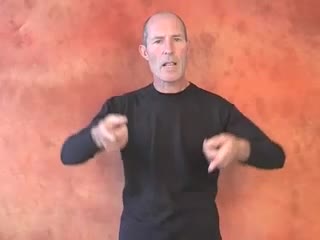
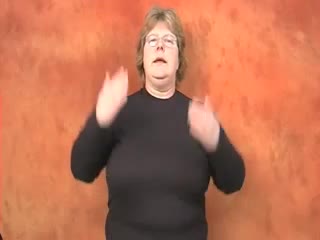
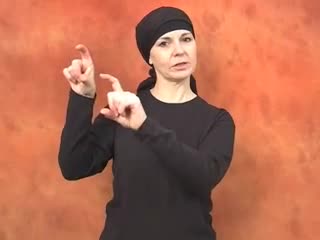
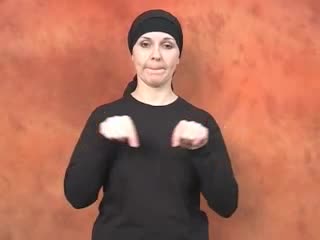
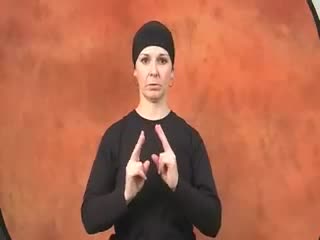
To begin the BSL sign for "joint," both your dominant and non-dominant hands will play distinct roles. For your non-dominant hand, extend all your fingers and your thumb, keeping them straight and held together, forming a flat, open palm. Your palm should face upwards or slightly towards your dominant hand, resembling a flat surface ready to be acted upon. This hand will serve as the base, representing a general area of the body or a concept of connection. For your dominant hand, you will form what is known as an "S" handshape. This involves curling all your fingers tightly into a fist, with your thumb resting across the front of your curled fingers or alongside your index finger. Ensure your fist is firm but relaxed, ready for the subsequent movement. This "S" handshape signifies the point of articulation or the connection itself. This precise hand configuration is fundamental to how to sign joint in BSL effectively.
Step 2: Hand Position and Location
With your handshapes ready, let's establish their starting position for the BSL joint sign. Your non-dominant hand, held flat and open, should be positioned in front of your body, around chest or waist height, slightly to the side of your dominant hand's space. Its palm should be facing upwards or slightly towards your dominant hand. This hand remains relatively stationary throughout the sign. Now, take your dominant hand, formed into the "S" handshape (fist). You will position this dominant hand directly above or very close to the knuckles of your non-dominant hand. Specifically, align the pinky-side edge of your dominant fist with the top of your non-dominant hand’s knuckles. The exact location is critical; it’s not just anywhere on the hand, but precisely at the knuckles, which iconically represent the joints of the fingers. This positioning immediately conveys the focus on a connection point, making the joint sign language clear and understandable.
Step 3: Movement
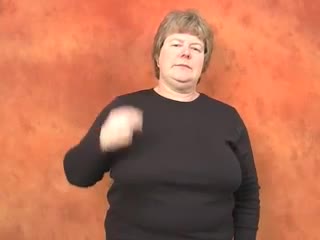
The movement for the British Sign Language joint is subtle yet highly descriptive. Starting with your dominant "S" handshape positioned above the knuckles of your non-dominant hand, you will perform a gentle, repeated tapping motion. Lower your dominant fist so that the pinky-side edge of your fist makes light contact with the top of the knuckles of your non-dominant hand. Immediately after contact, lift your dominant hand slightly, just enough to break contact, and then bring it down again to tap the same spot. This tapping motion should be repeated once or twice. The movement is quick and decisive, representing the impact or connection at a joint. It's not a rub or a sweep, but a distinct tap. This repetitive, focused action is what truly defines the BSL sign for joint, visually mimicking the idea of a connecting point or articulation in the body. Ensure your wrist remains relatively stable, with the movement primarily coming from your elbow or shoulder, guiding the fist downwards.
Step 4: Non-Manual Features (Facial Expression & Mouthing)
Non-manual features (NMFs) are an absolutely vital component of British Sign Language, adding grammatical information, emotional context, and clarity to every sign. For the BSL sign for "joint," while not always accompanied by a dramatic facial expression for its basic noun form, there are still important considerations. When signing "joint" neutrally, maintain a calm, neutral facial expression. However, if you are discussing a painful joint, your facial expression should reflect discomfort or pain (e.g., furrowed brows, a slight wince). Similarly, if you are asking a question about a joint (e.g., "Is your joint sore?"), your eyebrows would raise. As for mouthing, it is common and helpful to mouth the English word "joint" silently as you produce the sign. This aids in clarity, especially for those who are lip-reading or are new to BSL. Your head position should remain natural, facing the person you are communicating with. Remember, NMFs are not optional; they are grammatically essential and contribute significantly to the overall meaning and natural flow of your BSL communication.
Step 5: Palm Orientation
For the BSL sign for "joint," the palm orientation of both hands is consistent throughout the sign, without any significant changes during the movement. Your non-dominant hand, held flat with fingers extended, will have its palm facing generally upwards or slightly angled towards your dominant hand. This creates a stable base. Your dominant hand, formed into the "S" handshape (fist), will have its palm facing downwards or slightly towards your body as you bring it down to tap the non-dominant hand. The pinky-side edge of the fist is what makes contact, so the palm naturally faces in this downward direction. This orientation remains constant during the slight up-and-down tapping motion, reinforcing the idea of a downward impact or connection. Maintaining this consistent palm orientation is crucial for the correct and clear execution of the BSL joint sign, ensuring that the visual representation of a "joint" is accurately conveyed.
Quick Reference: "joint" BSL Sign at a Glance
- Handshape: Dominant hand "S" (fist), non-dominant hand flat, open palm.
- Location: Dominant hand taps the knuckles of the non-dominant hand.
- Movement: Dominant fist taps non-dominant knuckles 1-2 times.
- Facial Expression: Neutral for basic noun; reflects context (e.g., pain, question) otherwise.
- Dominant Hand: Used for the tapping motion; non-dominant hand forms the base.
5 Tips to Learn the BSL Sign for "joint" Quickly
- Visualise the Connection: Think of the dominant fist as something making a connection or impact, and the non-dominant hand's knuckles as the exact spot where bones meet. This visual mnemonic helps solidify the "joint" concept – literally, a point of articulation. Regularly picturing this interaction will make the BSL joint sign more intuitive to recall.
- Practice with Purposeful Tapping: Don't just tap aimlessly. As you practice the BSL sign for "joint," consciously feel the light impact of your dominant fist on your non-dominant knuckles. This kinesthetic feedback reinforces the memory, associating the physical sensation with the meaning of a connection point. The deliberate nature of the tap is key to remembering how to sign joint in BSL.
- Integrate Non-Manual Features Early: From your very first practice session, try to incorporate a neutral facial expression and mouthing "joint." Making these an automatic part of your practice will prevent you from having to add them on later, helping you learn joint BSL as a complete and natural linguistic unit. It's crucial for fluent communication in British Sign Language.
- Connect to Body Parts: Whenever you think about different body parts, consciously try to sign "joint" in relation to them. For example, if you think of your knee, briefly sign "knee" then "joint." This contextual practice helps embed the sign within a broader anatomical vocabulary, making the joint sign language more integrated into your BSL knowledge.
- Record and Review: Use your phone to film yourself signing "joint." Afterwards, watch the recording and compare your execution to this guide. Pay close attention to handshape, location, movement, and your non-manual features. Self-correction through review is an incredibly powerful tool for refining your technique and ensuring you are accurately signing "joint" in British Sign Language.
When and How to Use the BSL Sign for "joint"
The BSL sign for "joint" is versatile and frequently used in various contexts, particularly when discussing anatomy, health, and physical well-being. It primarily refers to an anatomical joint in the body, such as a knee, elbow, or shoulder. Understanding its application in real-life scenarios is crucial for effective communication within the Deaf community.
- Discussing Pain or Injury: This is perhaps the most common usage. If someone has a sore knee, you might sign "KNEE" then "JOINT" and then "PAIN" to indicate discomfort in that specific area. For instance, you could sign, "MY KNEE JOINT HURT" (BSL: MY KNEE JOINT PAIN). This allows for precise communication about health concerns.
- Explaining Anatomy or Movement: In an educational context or when describing how the body works, the sign for "joint" is indispensable. You might use it to explain how different parts of the body articulate, for example, "ARM JOINT MOVE" (BSL: ARM JOINT MOVE) to illustrate the flexibility of the elbow or shoulder.
- Describing Physical Activities: When discussing sports, exercise, or any activity involving bodily movement, "joint" can be used to specify areas prone to stress or requiring flexibility. For example, "FOOTBALL PLAYER KNEE JOINT STRONG" (BSL: FOOTBALL PLAYER KNEE JOINT STRONG) to comment on an athlete's physical attributes.
- General Reference to Connection Points: While primarily anatomical, the concept of "joint" can sometimes extend metaphorically to connection points or hinges, though this is less common than its direct anatomical meaning. For general connection points, other signs might be more appropriate, but understanding the core meaning of BSL joint sign helps discern context. Grammatically, "joint" in BSL functions as a noun and typically follows the noun it describes (e.g., "KNEE JOINT" rather than "JOINT KNEE"). This follows the topic-comment structure often seen in British Sign Language.
Common Mistakes When Signing "joint" in BSL - And How to Fix Them
Learning any new sign comes with its challenges, and the BSL sign for "joint" is no exception. Being aware of common pitfalls can help you avoid them and refine your signing for clearer communication. Remember, every learner makes mistakes, and identifying them is the first step to mastery.
- Incorrect Handshape on Dominant Hand: A frequent error is not forming a proper "S" handshape (closed fist) with the dominant hand. Beginners might use an open palm, a "G" handshape (index finger extended), or a loose, half-closed fist. This can change the meaning or make the sign unclear.
Correction: Ensure all fingers are tightly curled into your palm, with your thumb resting across the front of your fingers, forming a solid, compact fist. Practice forming this handshape independently until it feels natural before combining it with the movement. The tight fist is key to representing the solidity of a joint.
- Inaccurate Location on Non-Dominant Hand: Some learners might tap their dominant fist anywhere on the non-dominant hand – on the palm, wrist, or forearm – instead of specifically on the knuckles. This lack of precision can lead to ambiguity, as other signs might use different hand locations.
Correction: Focus intently on positioning your dominant hand so that its pinky-side edge precisely aligns with the top of the knuckles of your non-dominant hand. The knuckles are the iconic representation of a joint in this sign. Visualise the bones meeting there and aim for that specific target during practice to properly convey the BSL sign for joint.
- Vague or Missing Movement: Another common mistake is either performing a sweeping or rubbing motion instead of a distinct tap, or omitting the tapping movement altogether, simply holding the hands in position. Without the clear, repeated tapping, the sign loses its dynamic element and its meaning.
Correction: Practice the movement as a clear, light, and repeated tap. Your dominant fist should make contact with the non-dominant knuckles once or twice, lifting slightly in between. Emphasize the distinctness of each tap rather than a continuous motion. This precise, short action is fundamental to how to sign joint in BSL accurately.
"joint" in BSL - Fun Facts and History
The BSL sign for "joint" carries with it interesting facets that reveal more about the language's iconic nature and regional variations. Delving into these aspects enriches your understanding of British Sign Language joint.
- Iconic Representation: The BSL sign for "joint" is highly iconic, meaning it visually resembles the concept it represents. The action of one fist tapping the knuckles of the other hand vividly depicts a point of connection or articulation where bones meet, forming a joint. This direct visual link makes the joint sign language intuitive to many learners.
- Regional Variations Exist: Like many signs in BSL, "joint" can have subtle regional variations across the UK. While the described sign (dominant fist tapping non-dominant knuckles) is widely understood and common, some regions might use a slightly different handshape for the dominant hand (e.g., a "G" handshape where the index finger points to the knuckle) or a slightly different movement, such as a gentle twist. It's always beneficial to observe local signers when travelling.
- Evolution of Anatomical Signs: Signs for body parts and anatomical terms often evolve from more descriptive or pointing gestures. While specific historical records for the exact BSL joint sign are scarce, it's likely rooted in early attempts to visually explain bodily structures, developing into the conventionalised sign we use today. This evolution highlights BSL's organic development as a full, rich language.
- Connection to "Connect": While distinct, the concept of "joint" (as a connection point) shares a thematic link with other BSL signs related to "connection" or "joining." Although the signs themselves are different, understanding the core idea of how things link together can help you see patterns in BSL vocabulary. This deepens your appreciation for how the language constructs meaning.
- Clarity in Medical Contexts: The clear and precise nature of the BSL sign for joint is particularly important in medical and health-related discussions within the Deaf community. It allows for unambiguous communication about symptoms, injuries, and treatments, underscoring the practical significance of mastering how to sign joint in BSL.
"joint" in Deaf Culture and BSL Community
The concept of "joint" in BSL, particularly in its anatomical sense, is a fundamental building block for countless conversations within the Deaf community in the UK. Beyond its literal meaning, its usage often intertwines with discussions about health, well-being, sports, and daily physical experiences. When Deaf individuals discuss injuries, chronic conditions, or even just the aches and pains of daily life, the BSL sign for "joint" becomes a crucial element in expressing their experiences clearly and precisely. It's not merely a word; it's a tool for self-advocacy and shared understanding. For instance, explaining a visit to the doctor for a "sore joint" becomes effortless with this sign. Moreover, in a community that highly values visual communication, the iconic nature of the joint sign language resonates deeply, allowing for immediate comprehension and connection. Learning to use the BSL joint sign correctly demonstrates respect for the language and a commitment to engaging fully with Deaf culture, fostering stronger communication bridges and mutual understanding.
Example Sentences Using "joint" in BSL
Here are five practical example sentences to show the BSL sign for "joint" in context, helping you understand its application in everyday conversations.
English sentence: My knee joint is very painful today. - BSL structure: MY KNEE JOINT PAIN TODAY VERY
English sentence: The doctor examined my shoulder joint. - BSL structure: DOCTOR EXAMINE MY SHOULDER JOINT
English sentence: Do you have any problems with your hip joints? - BSL structure: YOUR HIP JOINT PROBLEM YOU?
English sentence: Regular exercise strengthens your joints. - BSL structure: EXERCISE REGULAR STRENGTHEN YOUR JOINT
English sentence: I need to stretch my finger joints before typing. - BSL structure: BEFORE TYPE I NEED STRETCH MY FINGER JOINT
Frequently Asked Questions About the BSL Sign for "joint"
Is this sign the same everywhere in the UK?
While the core BSL sign for "joint" (dominant fist tapping non-dominant knuckles) is widely understood across the UK, BSL has regional variations. Some areas might have slight differences in handshape, location, or movement for this sign. It's always good practice to observe local signers and adapt if you notice a common variation, but the primary sign provided here will generally be understood.
How is this sign different from similar signs?
The BSL sign for "joint" is distinct due to its specific handshapes (dominant "S" handshape, non-dominant flat hand) and its precise tapping movement on the knuckles. It differs from signs like "bone" (which often involves a dominant "B" handshape moving down the arm) or "connect" (which might involve two "C" handshapes linking together). The specificity of the hand location on the knuckles is key to its unique meaning as an anatomical joint.
Is this suitable for beginners?
Absolutely! The BSL sign for "joint" is a foundational anatomical sign and is perfectly suitable for beginners. It involves clear handshapes and a straightforward movement, making it relatively easy to learn and incorporate into early BSL vocabulary. Mastering this sign will quickly build confidence in discussing body parts and health.
Can I use this sign with Deaf children?
Yes, this sign is entirely appropriate for use with Deaf children. It's a common and standard sign in BSL vocabulary. When teaching children, you might want to make the sign more tactile by gently tapping their own knuckles or pointing to their various joints as you sign, to help them make the physical connection.
Where can I practise this sign?
You can practise the BSL sign for "joint" in several ways: by signing in front of a mirror, filming yourself for self-correction, or engaging with BSL resources online. The best way is to practise with a Deaf person or a qualified BSL tutor who can provide feedback. Additionally, try to use it naturally in conversations about body parts or health to build fluency.
Related BSL Signs to Learn Alongside "joint"
Learning related signs in clusters can significantly boost your BSL fluency and contextual understanding. Here are some complementary BSL signs to learn alongside "joint," helping you build a richer vocabulary around anatomy and health.
- BONE: Often signed with a dominant "B" handshape moving down the non-dominant arm, representing the length and structure of a bone. Learning "bone" with "joint" helps differentiate between the solid structure and the point of articulation.
- PAIN: Typically signed with two index fingers pointing at each other and twisting, often accompanied by a pained facial expression. This is crucial for discussing what happens when a joint is injured or affected.
- MUSCLE: Often signed by touching the upper arm with the dominant hand and flexing, indicating strength. Understanding "muscle" alongside "joint" helps in discussing overall musculoskeletal health.
- BODY: Signed by sweeping both hands down the front of the torso. "Body" provides the overarching context for where all these individual anatomical parts, including joints, are located.
- HURT/INJURY: Similar to "pain," but often more specific to physical trauma. It can be signed by tapping two "I" handshapes together or by bringing a dominant "I" handshape to the affected area. This is essential for talking about joint injuries.
- DOCTOR: Signed by tapping the dominant "D" handshape on the wrist, representing taking a pulse. Learning this helps you discuss who might treat issues related to your joints.
How to Practise the BSL Sign for "joint" Effectively
Consistent and thoughtful practice is the cornerstone of mastering any BSL sign, including "joint." Start by standing in front of a mirror, allowing you to visually check your handshapes, location, and movement against the step-by-step guide. Film yourself performing the BSL sign for "joint" and then critically review the footage, paying close attention to any discrepancies in your execution compared to the correct form. Integrate the sign into short, simple sentences, even if just in your head or to a practice partner, to help it flow naturally within conversational structures. Regularly practise the sign for "joint" by incorporating it into your daily routine; for instance, as you think about your various body parts, briefly sign "knee joint," "elbow joint," etc. The most valuable practice, however, comes from interacting with Deaf individuals or experienced BSL users, who can provide authentic feedback and guidance, ensuring your British Sign Language joint is not only correct but also culturally appropriate.