What Is the BSL Sign for "hinge"?
Imagine for a moment the quiet, essential work of a hinge, allowing doors to swing open, gates to pivot, and lids to lift with fluid grace. That fundamental motion of connection and movement is beautifully captured in the British Sign Language hinge sign. Learning this particular sign for "hinge" introduces you to a core concept in BSL, where objects are often represented by their function or defining characteristic. Grasping the British Sign Language hinge sign helps you articulate not just the object itself, but also the action it performs, making your communication clearer and more vivid. Here's a sign that truly opens doors for your vocabulary, so let's explore it together.
How to Sign "hinge" in British Sign Language - Step-by-Step
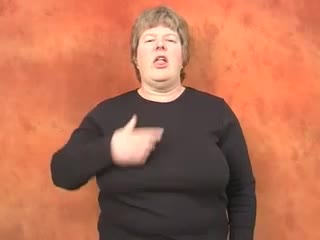
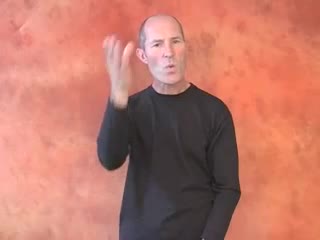
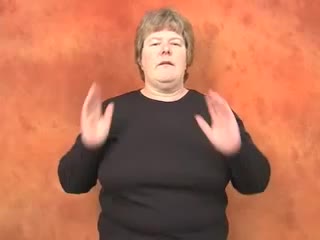
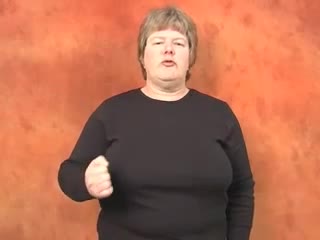
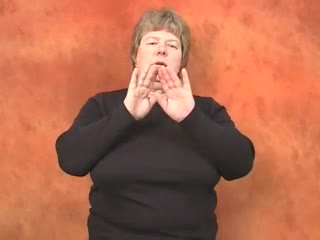
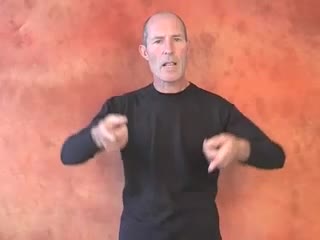
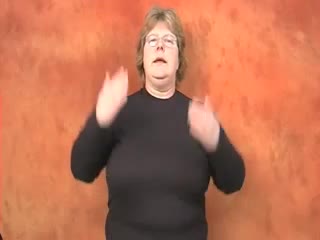
Mastering this sign involves a precise coordination of handshapes and movement, designed to visually represent the very mechanism it describes.
Step 1: Handshape
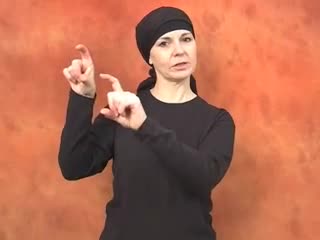
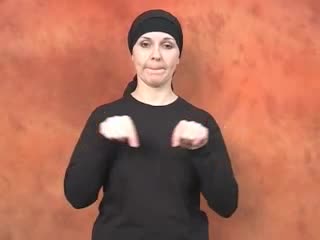
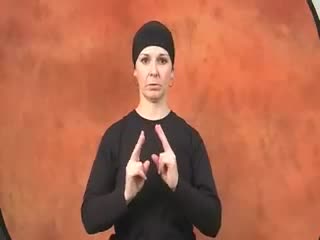
You'll begin with both hands forming a specific 'G' handshape. To achieve this, extend your index finger straight out, keeping it firm and pointed. Your thumb should rest across your palm, tucked beneath your index finger, while your remaining three fingers (middle, ring, and pinky) are curled down tightly into your palm. Both your dominant and non-dominant hands will adopt this identical 'G' handshape.
Step 2: Hand Placement and Location
Position your non-dominant hand slightly in front of your body, around chest height, with its index finger pointing horizontally forward. This hand will serve as the stationary part of the hinge, establishing the fixed point of the mechanism. Then, bring your dominant hand towards your non-dominant hand, aligning your dominant index finger to touch the side of your non-dominant index finger, specifically near the knuckle.
Step 3: Movement
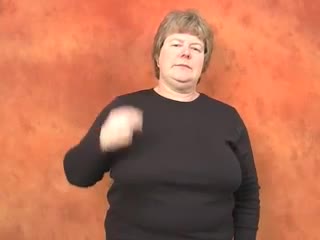
Now, the action begins. Keep your non-dominant hand steady and unmoving; it's the anchor of our hinge. Your dominant hand, maintaining its 'G' handshape, will pivot at the point where its index finger meets your non-dominant index finger. Perform a controlled, arc-like movement, allowing your dominant hand to swing downwards and then back upwards, mimicking the opening and closing motion of a hinge. This movement should be smooth and deliberate, completing one full arc down and up, perhaps repeating it once more for emphasis.
Step 4: Facial Expression and Mouthing
For the BSL sign for "hinge," a neutral or slightly focused facial expression typically accompanies the movement; there's no inherent emotion tied to this specific noun. You might subtly mouth the word "hinge" as you sign it, which aids in clarifying the specific concept you're conveying, especially when introducing new vocabulary. This non-manual feature provides crucial contextual information, reinforcing the intended meaning of your hands.
Step 5: Palm Orientation
Initially, as your hands come together, the palms of both hands will face inward towards each other, or perhaps slightly downwards. As your dominant hand executes its pivoting movement, its palm orientation will naturally shift, rotating outwards as it arcs downwards, then turning back inwards as it returns to its starting position. This change in orientation is vital; it visually communicates the three-dimensional plane upon which the hinge operates, ensuring the sign is perceived correctly as a functional component.
"hinge" in BSL - Quick Reference Snapshot
- Handshape: Both hands form a 'G' shape (index finger extended, others curled).
- Location: In neutral space, dominant index finger touching non-dominant index finger.
- Movement: Dominant hand pivots at the point of contact, arcing down and up.
- Facial Expression: Neutral, possibly mouthing "hinge."
- Dominant Hand: Performs the pivotal action, non-dominant hand remains stationary.
- Palm Orientation: Initially inward, shifting to outward and back as dominant hand moves.
5 Memorisation Tricks for the BSL Sign "hinge"
Here are some clever ways to help the BSL hinge sign stick firmly in your memory.
- Visualise the Action: Picture a door hinge right in front of you, seeing how one part rotates around a fixed pin. Your dominant index finger truly embodies that moving leaf, while your non-dominant index finger becomes the steadfast pin, holding everything together. This direct visual link to the object's function makes the sign incredibly intuitive.
- The "Knuckle Pivot" Drill: Focus intently on the exact point where your dominant index finger pivots against your non-dominant one. Practice this isolated movement repeatedly, feeling the slight pressure and the smooth arc. This muscle memory exercise ensures the core action of the sign is deeply ingrained, preventing common errors in execution.
- Connect to Opening and Closing: Think about what a hinge *does*-it facilitates opening and closing. The downward sweep of your dominant hand can represent the door opening, and the upward return signifies it closing. Linking the sign directly to this fundamental action reinforces its meaning beyond just the static object.
- Avoid "Door" Confusion: A lot of new learners might accidentally confuse this sign with elements of the sign for "DOOR" (which typically involves two flat hands moving apart or together). Remember, "hinge" is all about that precise, small pivot point with pointed index fingers, not the broad sweep of an entire door. Concentrate on the distinct handshapes to keep them separate.
- Daily Life Association: Every time you open or close a door, a cupboard, or even a laptop, subtly perform the BSL sign for hinge. This constant, real-world reinforcement connects the abstract sign to tangible items you interact with daily. You'll find yourself signing "hinge" without even thinking about it after a while.
Real-Life Situations to Use the BSL Sign for "hinge"
Knowing how to integrate "hinge" into everyday BSL conversations will boost your confidence and fluency.
- You might use it to explain a problem: "DOOR HINGE BROKEN" (BSL structure: DOOR HINGE BROKEN – topic-comment order, noun followed by adjective).
- Perhaps you're discussing repairs: "NEED NEW HINGE THIS GATE" (BSL structure: GATE THIS NEW HINGE NEED – spatial reference, object first, then description, then verb).
- Asking about an item's construction: "THIS BOX HINGE WHERE?" (BSL structure: BOX THIS HINGE WHERE – question word often at the end, clear topic).
- Describing a specific type of furniture: "CUPBOARD HAS SPECIAL HINGE" (BSL structure: CUPBOARD SPECIAL HINGE HAS – descriptive phrase, straightforward statement).
Top 3 Mistakes Learners Make Signing "hinge" in BSL
It's completely normal to make a few errors when picking up a new sign; understanding these common pitfalls will help you refine your technique for the BSL hinge sign.
- Incorrect Handshape: Many beginners inadvertently use a 'V' handshape (two fingers extended) or even flat hands instead of the precise 'G' handshape for each part of the hinge. This happens because they're trying to visualise a broader 'open' shape rather than the distinct pivot. The correction is simple: curl down your middle, ring, and pinky fingers tightly, ensuring only your index finger is extended and firm, with your thumb tucked in.
- Sweeping, Not Pivoting Movement: Another frequent error is making a large, sweeping motion with the dominant hand, as if opening a wide door, rather than a contained pivot. Learners sometimes overlook the specific point of contact as the central axis. To fix this, concentrate on keeping your dominant index finger's knuckle pressed against your non-dominant index finger, allowing the movement to originate from that single point of rotation, creating a small, controlled arc.
- Lack of Connectedness: Some learners sign "hinge" with their hands too far apart, failing to establish the crucial physical connection between the dominant and non-dominant index fingers. This often stems from a slight spatial misunderstanding. Always ensure your dominant index finger is firmly touching the side of your non-dominant index finger, as this contact is what visually communicates the joint and its function.
Fascinating Facts About the BSL Sign for "hinge"
Delving into the unique aspects of a sign can often deepen your understanding and appreciation for BSL.
- The BSL sign for "hinge" is highly iconic, meaning its form directly mimics the action of the object it represents; you're literally signing the pivot.
- While the core movement of the sign remains consistent throughout the BSL-using community, some regional variations might exist in the exact degree of the pivot or the initial placement of the hands relative to the body, reflecting local nuances.
- This sign does not directly derive from the manual alphabet, instead relying on its strong visual connection to the mechanical function of a hinge.
- The two-handed structure of this sign is crucial for its meaning; a single hand would struggle to convey the interaction of two components that defines a hinge.
- Understanding the sign for "hinge" provides a fantastic foundation for other signs involving mechanical parts or specific types of movement, demonstrating how BSL builds vocabulary logically.
"hinge" in Deaf Culture - Community and Identity
While the word "hinge" itself might seem like a purely technical term, its underlying concepts of connection, access, and function resonate within the Deaf community. Hinges allow for openings and closures, symbolising pathways to communication and the barriers that can exist. In a practical sense, being able to articulate everyday objects like a hinge is part of navigating the world, and clear communication about physical surroundings is vital for everyone. This sign becomes part of the shared vocabulary that helps Deaf individuals describe their environment, discuss repairs, or simply engage in conversations about the physical world around them, fostering connection through a common language. Using such precise signs strengthens the collective understanding and shared identity within the BSL-speaking community.
Example Conversations Using "hinge" in BSL
Let's see the BSL sign for hinge in some real communicative contexts.
English: The door hinge on the shed is rusty and needs oiling. - BSL structure: SHED DOOR HINGE RUSTY, NEED OIL.
English: Can you check if the cupboard hinge is loose? - BSL structure: CUPBOARD HINGE LOOSE, YOU CHECK?
English: We need to buy a stronger hinge for this heavy gate. - BSL structure: GATE THIS HEAVY, STRONGER HINGE BUY WE NEED.
English: I accidentally broke the hinge on my jewellery box. - BSL structure: MY JEWELLERY BOX HINGE, I BROKE ACCIDENTALLY.
English: This old window has a very unusual hinge design. - BSL structure: WINDOW THIS OLD, HINGE DESIGN UNUSUAL VERY.
Frequently Asked Questions: The BSL Sign for "hinge"
Are there different ways to sign "hinge" in BSL across the UK?
Generally, the core BSL sign for "hinge" with its iconic two-handed pivot remains quite consistent throughout British Sign Language regions. While minor stylistic differences in speed or hand positioning might occur, the fundamental handshapes and movement are widely understood, making it a reliable sign wherever BSL is used.
What signs are easily confused with "hinge" in BSL?
Learners often confuse "hinge" with other signs that involve two hands coming together or moving. Signs like "DOOR" (which uses flat hands to mimic a door opening) or "OPEN" (a more general concept) can sometimes be mistaken. Remember that "hinge" is specifically about the precise, small pivot point made by the index fingers.
Is the BSL sign for "hinge" easy for beginners to learn?
Absolutely, the BSL sign for "hinge" is quite beginner-friendly! Its highly iconic nature means it visually represents the object, making it intuitive to grasp. Once you understand the handshapes and the pivot, you'll find it relatively straightforward to reproduce and remember.
How can I teach the BSL sign for "hinge" to children?
Teaching "hinge" to children can be fun by making it interactive. Have them physically look at and touch a real hinge on a door, then guide their hands to mimic the movement. You can turn it into a game, asking them to find all the "hinges" around the house and sign each one they discover.
How does the BSL sign for "hinge" compare to the sign for "door"?
The BSL sign for "hinge" specifically focuses on the small, pivoting mechanism, using two 'G' handshapes that connect and rotate. In contrast, the BSL sign for "DOOR" typically uses two flat hands (B handshape) held vertically, which then either move apart or one pivots away from the other, representing the entire opening or closing of the door itself.
Signs That Pair Naturally with "hinge" in BSL
Expanding your vocabulary by learning related signs helps you build more complex and natural BSL sentences.
- DOOR: Naturally, the sign for "DOOR" goes hand-in-hand with "hinge," as doors are one of the most common places to find them.
- GATE: Similar to a door, a "GATE" relies on hinges to swing open and closed, making it a logical vocabulary companion.
- FIX: If a hinge is broken, you'll likely need to "FIX" it, so this verb is an essential pairing for practical conversations.
- BROKEN: Conversely, when a hinge isn't working, it's "BROKEN," a descriptive sign that frequently accompanies discussions about faulty mechanisms.
- MECHANISM: The concept of a "MECHANISM" broadly covers how things work, and a hinge is a simple yet vital mechanism, linking these two signs conceptually.
- SCREW: Hinges are often attached with "SCREW"s, making this a useful sign to learn alongside for detailed descriptions of repairs or assembly.
Building Fluency: How to Practise "hinge" in BSL
Bringing the BSL sign for hinge into your regular practice routine will solidify your learning and build confidence. Stand in front of a mirror and slowly perform the sign, paying close attention to your handshapes, the precise point of contact between your index fingers, and the smooth, controlled pivot. Try integrating "hinge" into short, simple sentences about objects around your home; describe a cupboard door, a garden gate, or a desk lid using the sign, even if you're just signing to yourself. Filming yourself executing the sign can also provide invaluable feedback, allowing you to catch any subtle errors you might miss otherwise. Most importantly, seek opportunities to use this sign with a Deaf conversation partner; their feedback and context will be the most authentic way to refine your BSL and ensure you're communicating clearly and effectively. Keep practising consistently, and you'll find this sign becomes a seamless part of your BSL repertoire.