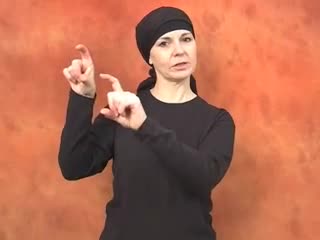
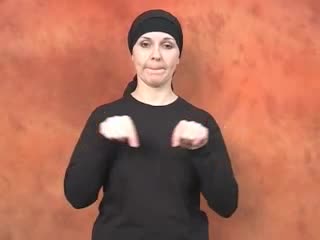
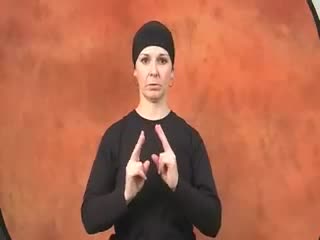
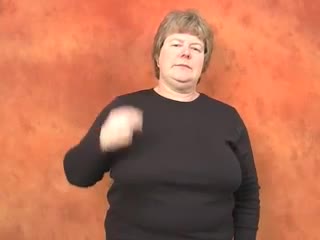
What Is the BSL Sign for "courtyard"?
Ever found yourself wanting to describe that lovely enclosed outdoor space, perhaps surrounded by buildings, where people gather or simply pass through? For those learning British Sign Language courtyard concepts are beautifully conveyed through a visually intuitive sign. This particular BSL sign for courtyard effectively captures the essence of an open area, bringing a vivid image to mind for anyone you're communicating with. It's a foundational noun, helping you discuss architecture, meeting places, or even just a quiet spot for a coffee, making it a valuable addition to your vocabulary.
How to Sign "courtyard" in British Sign Language - Step-by-Step
Crafting this sign involves a deliberate movement that paints a clear picture of the space, so let's walk through each element carefully.
Step 1: Handshape
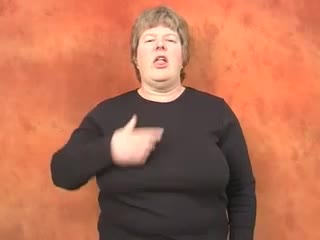
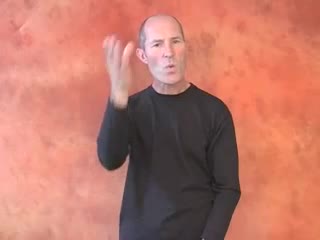
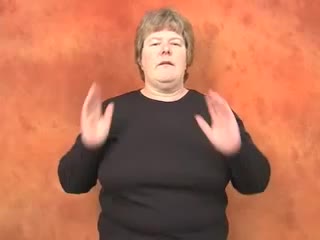
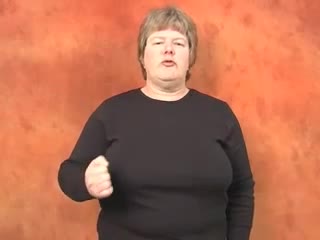
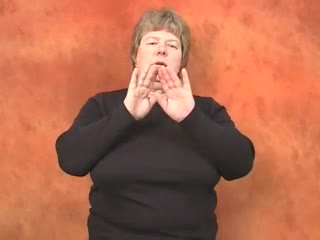
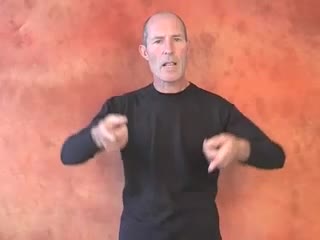
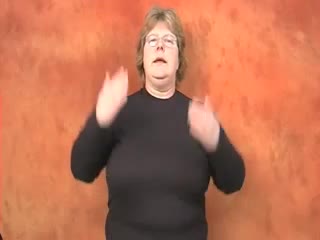
You'll begin by forming what we call a "C" handshape with your dominant hand. To achieve this, extend your index finger and thumb, curving them towards each other as if you're gently holding a small ball. Your remaining fingers (middle, ring, and pinky) should be naturally curled into your palm, resting lightly. It’s a relaxed C, not a tense one, allowing for smooth movement.
Step 2: Hand Placement and Location
Start with your dominant hand, in that "C" shape, positioned in the neutral signing space directly in front of your chest. Imagine your hand is hovering comfortably, roughly at the level of your sternum. There's no interaction with your non-dominant hand for this specific sign; your dominant hand works independently to convey the meaning.
Step 3: Movement
From its initial position, your "C" hand will perform a square-like motion. You'll move your hand first outward to your dominant side, then sweep it downward, then bring it across towards your non-dominant side, and finally, move it upward to complete a visible rectangle or square in the air. This entire motion should be performed smoothly and with a consistent speed, outlining the perimeter of an enclosed space. This is a single, deliberate outline, not a repeated action.
Step 4: Facial Expression and Mouthing
When signing "courtyard," maintain a neutral and relaxed facial expression. The concept itself doesn't inherently carry strong emotion, so your face should reflect this straightforward description. Crucially, you'll mouth the English word "courtyard" clearly and naturally as you execute the sign. This mouthing, known as a non-manual feature in BSL, provides vital grammatical and lexical information, helping to differentiate it from similar-looking signs and reinforcing the specific English equivalent.
Step 5: Palm Orientation
Throughout the outlining movement, your palm should consistently face inward, towards your body. This orientation helps to convey the sense of an *enclosed* space, as if you're drawing the boundaries of a contained area with your hand. The inward-facing palm during the square motion reinforces the idea of defining a boundary, making the sign visually coherent and immediately understandable.
"courtyard" in BSL - Quick Reference Snapshot
- Handshape: Dominant hand forms a relaxed "C" shape.
- Location: Neutral signing space, in front of the chest.
- Movement: Outlines a square or rectangle in the air.
- Facial Expression: Neutral.
- Mouthing: "Courtyard" spoken naturally.
- Dominant Hand: Used alone.
- Palm Orientation: Palm consistently faces inward towards the body.
5 Memorisation Tricks for the BSL Sign "courtyard"
- Visual Mnemonic: Picture your "C" hand as a miniature wall, and as you move it through the air, imagine you are literally tracing the four walls of a courtyard. This visual connection will help solidify the physical motion in your mind.
- Muscle-Memory Drill: Perform the sign slowly at first, focusing on the precise "C" handshape and the square movement. Then, gradually increase your speed, repeating the motion ten times daily without looking in a mirror. Your hand will start to "remember" the path.
- Meaning Connection: Think about the core meaning of a courtyard – it's an *enclosed* or *contained* outdoor space. The sign's movement of drawing a boundary reinforces this; your hand is creating that enclosure in the air.
- Common-Confusion Tip: Be mindful not to confuse this with signs that involve an open, circular movement or a simple 'C' shape in place. The key differentiator for courtyard is the distinct, angular, square-like path your hand traces, clearly defining a four-sided space.
- Daily-Life Practice: Each time you see a courtyard, whether in real life, a photo, or on TV, mentally (or physically, if appropriate) practise the BSL sign for it. This contextual repetition helps engrain the sign in practical memory, linking it directly to its referent.
Real-Life Situations to Use the BSL Sign for "courtyard"
- Asking for directions to a specific meeting point: "Where is the main courtyard?" (BSL structure: COURTYARD MAIN, WHERE?)
- Describing a feature of a building: "The hotel has a beautiful inner courtyard." (BSL structure: HOTEL, INNER COURTYARD, BEAUTIFUL.)
- Discussing plans with friends: "Let's meet in the courtyard at lunchtime." (BSL structure: LUNCH, COURTYARD, MEET, US.)
- Referring to a historical site: "Many old castles feature impressive courtyards for various activities." (BSL structure: CASTLE OLD MANY, COURTYARD IMPRESSIVE, ACTIVITIES VARIOUS, INCLUDE.)
Top 3 Mistakes Learners Make Signing "courtyard" in BSL
- Incorrect Handshape: A frequent error involves not maintaining the precise "C" handshape throughout the sign, sometimes letting fingers splay or curling them too tightly. This can make the sign appear unclear or be mistaken for another. The correction is to consciously keep your index finger and thumb curved to form that distinct C, with other fingers tucked away.
- Inaccurate Movement Path: Learners often create too wide or too narrow a square, or they might make the movement circular instead of angular. This distorts the spatial representation. To fix this, visualise a clear rectangular boundary you're tracing; focus on the four distinct corners and straight lines, making your hand pause momentarily at each corner before changing direction.
- Forgetting Mouthing: Neglecting to mouth "courtyard" is a common oversight, particularly for beginners who are concentrating hard on the manual components. Without the mouthing, the sign loses vital contextual information. The solution is to consciously practise mouthing the word every single time you sign it, integrating it as an inseparable part of the communication.
Fascinating Facts About the BSL Sign for "courtyard"
- This sign is an excellent example of an iconic sign in BSL, meaning its form visually resembles the concept it represents. Your hand literally draws the shape of the enclosed space, making it highly intuitive.
- While the core form of "courtyard" is quite stable across the UK, you might occasionally see slight regional variations in the exact size or speed of the square outlined. However, the fundamental "C" handshape and the angular movement remain consistent.
- The sign's clear, defined perimeter drawing is a linguistic feature that demonstrates how BSL often uses spatial grammar to convey physical attributes and layouts, rather than relying solely on abstract vocabulary.
- Unlike some signs that might derive directly from finger-spelled letters, the sign for "courtyard" is a pure concept sign, developed from the visual representation of the space itself, showcasing BSL's rich visual lexicon.
- Its clear, single-handed execution means it's often a sign that even early learners can grasp quickly, providing a satisfying sense of achievement when they accurately depict a common architectural feature.
"courtyard" in Deaf Culture - Community and Identity
Within Deaf culture, spaces for gathering and community are incredibly important, and a courtyard, whether at a school for the Deaf, a Deaf club, or a community centre, often serves as a natural hub. These outdoor areas provide accessible, often quieter environments where Deaf people can easily converse in BSL without the distractions of background noise that might hinder communication. Imagine friends catching up, families enjoying an event, or students socialising during a break; the concept of a courtyard often aligns with places where connection and shared identity flourish. It signifies not just a physical space, but potentially a space for belonging and effortless communication within the Deaf community.
Example Conversations Using "courtyard" in BSL
English: Is there a courtyard at the art gallery? - BSL structure: ART GALLERY, COURTYARD, EXIST? (Question marker on face)
English: We had our lunch in the tranquil courtyard. - BSL structure: LUNCH, COURTYARD, TRANQUIL, HAD WE.
English: The hotel's courtyard is usually very busy in the evenings. - BSL structure: HOTEL, COURTYARD, EVENING, BUSY USUALLY.
English: Please wait for me by the entrance to the inner courtyard. - BSL structure: INNER COURTYARD, ENTRANCE, BY, WAIT ME PLEASE.
English: I love the historical atmosphere of these old city courtyards. - BSL structure: CITY COURTYARD OLD, ATMOSPHERE HISTORICAL, LOVE I.
Frequently Asked Questions: The BSL Sign for "courtyard"
Is there any regional variation for the BSL sign for "courtyard"?
While the fundamental "C" handshape and the square-like movement for "courtyard" are widely understood across the UK, you might observe minor regional differences in the size or quickness of the movement. However, the core concept and visual representation remain consistent enough for clear communication.
Are there any similar signs I should be careful not to confuse with "courtyard" in BSL?
Yes, learners sometimes confuse "courtyard" with signs like "room" or "box" if the movement isn't precise enough. The key difference lies in the specific handshape and the careful outlining of an open, yet enclosed, space, distinct from the solid walls of a room or a smaller, more contained box.
Is "courtyard" a good sign for BSL beginners to learn?
Absolutely, "courtyard" is an excellent sign for beginners! Its iconic nature, where the sign visually represents the concept, makes it relatively easy to remember and execute, offering a quick win for new learners building their BSL vocabulary.
Can children easily learn to sign "courtyard" in BSL?
Children typically pick up "courtyard" quite readily, often enjoying the physical act of drawing the shape in the air. Its visual simplicity and direct representation make it a fun and accessible sign for young BSL learners to master.
How does the BSL sign for "courtyard" compare to signs for similar concepts in other sign languages?
Many sign languages have iconic signs for "courtyard" or similar architectural spaces, often involving drawing a perimeter in the air. While the specific handshapes or movement paths might differ, the underlying principle of visually representing an enclosed area is a common linguistic strategy across various signing systems.
Signs That Pair Naturally with "courtyard" in BSL
- BUILDING: Often, a courtyard is part of a larger structure, so knowing "building" helps describe its context.
- GARDEN: Many courtyards feature planting or green spaces, making "garden" a logical companion sign.
- SQUARE: This sign helps differentiate between a formal, open public square and a more enclosed courtyard.
- MEET: As courtyards are common gathering places, the sign for "meet" frequently appears in sentences alongside it.
- OUTSIDE: Emphasising that a courtyard is an external, open-air space pairs well with the sign for "outside."
- WALK: Describing moving through or around a courtyard naturally incorporates the sign for "walk."
Building Fluency: How to Practise "courtyard" in BSL
To truly embed the BSL sign for "courtyard" into your signing repertoire, consistent and varied practice is your best friend. Start by using a mirror to observe your handshape and movement; really focus on making that "C" shape clear and tracing a distinct, angular square. Try integrating "courtyard" into sentences you already know, perhaps describing places you've visited or seen in pictures, helping you use it naturally within a grammatical context. Record yourself signing the word and then play it back, critically evaluating your execution and looking for areas to refine. Ultimately, the most powerful way to build fluency is by finding a Deaf conversation partner; they'll offer invaluable real-time feedback and help you use the sign confidently in genuine communication.