Speed
0
Practice reps times watched

Create a free account to keep your watch history and review plan.

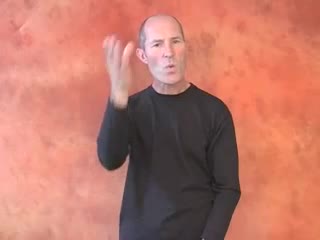
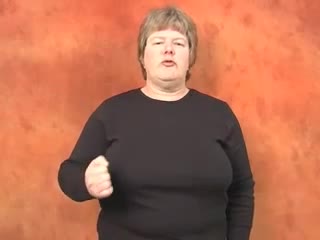
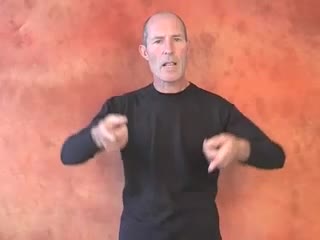
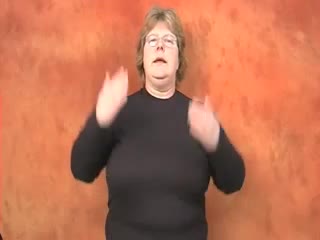
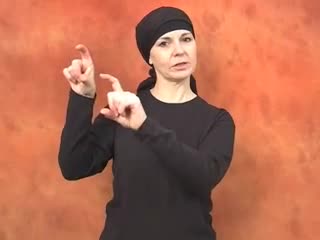
Best practice Use mirror mode, then watch the frame breakdown below to catch the start, movement, and finish cleanly.
Video via SpreadTheSign  - Free educational resource BSL
Updated April 25, 2026
British Sign Language (BSL) 🟢 Beginner 📊 A1 ⚡ Very Common Noun

communication

The act or process of conveying information, ideas, or feelings

Source-linked video Step-by-step guide Context and safety notes
Synonyms
Talk converse interaction discussion
Antonyms
Silence isolation non-communication
Difficulty
Not rated yet

Create a free account to save this sign, keep your watch history, and unlock a one-note journal preview.

How to sign it
Handshape
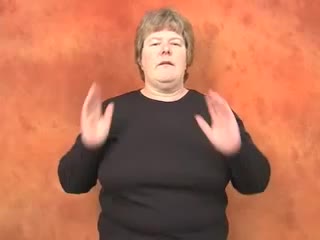
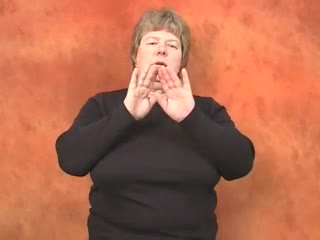
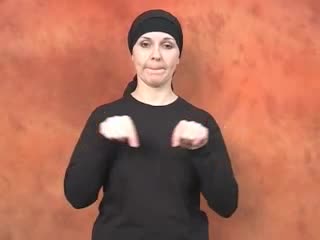
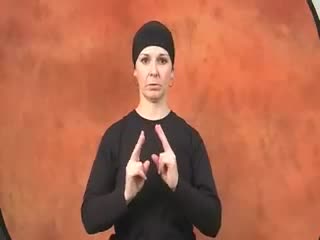
Both hands open flat, fingers together, thumb slightly tucked
Location
Mid-chest to forward space
Movement
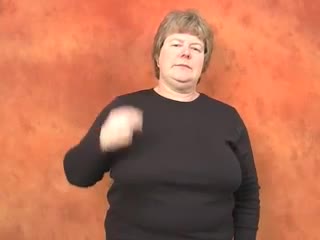
Hands move outwards from near the chest, then return, repeating
Palm Orientation
Palms generally face each other, then slightly forward
Facial Expression
Neutral facial expression often accompanies
🔁 Spaced Review Try it free

How well do you know this sign?

COMMUNICATION
Your Progress Live
🌱
Level 1 · BSL Beginner +0 XP today
This sign Not learned yet
0 watches
Mastery 0%
Confidence
How well do you know this sign?
0 🔥 Streak
0 Signs seen
0 Learned
0 Watches
📖 Vocabulary health 🔒 Log in to see score
0 Mastered
0 Confident
0 Practicing
0 Just seen

Create a free account to keep your vocabulary score between sessions

7-day activity 0 of 7 active

Register free to sync activity across devices

Watch signs to see your history here

Tracking locally for now. Create a free account to save your progress and sync across devices.
Free gets you started. Paid adds the repeat-learning layer: review queues, deeper notes, compare mode, and better comeback tools.
My Sign Journal
Personal notes, saved to your account forever
Locked

Write memory tricks, usage examples, and cultural reminders beside each sign. Create a free account to unlock your first saved note preview on this page.

Create free account Already have an account? Log in

What This Sign Means in BSL

The BSL sign for communication captures the essence of exchanging thoughts, ideas, and information between people. It's a foundational sign, representing the broad concept of interaction and mutual understanding. When you see this sign, it’s not just about one person talking or expressing; it inherently suggests a dynamic flow, a back-and-forth process where messages are sent and received. Think of it as the connective tissue that links individuals and groups, allowing them to share their internal worlds with each other. This sign is particularly versatile because it doesn't specify *how* communication occurs – whether through spoken words, written text, signing, or other means. It refers to the *act* or *system* of conveying meaning. The bilateral movement, where both hands engage, beautifully illustrates this two-way street, where input and output are equally vital. It’s about opening channels and ensuring that what’s inside can be shared with others, and what’s outside can be understood internally. You'll find yourself using this sign in a multitude of contexts, from discussing a team's need for better internal messaging to reflecting on the complexities of cross-cultural dialogue. It’s a neutral, descriptive sign, setting the stage for deeper conversations about *how* we connect, *what* we're connecting about, and *why* that connection matters. Mastering this sign gives you a powerful tool to articulate the very act of human interaction itself.

When This Sign Feels Natural

The BSL sign for communication feels most natural when you're referring to the overarching concept of exchanging information, rather than a specific instance of talking or telling. Imagine you’re discussing the importance of clear communication in a relationship, or perhaps the challenges businesses face in maintaining effective communication with their global teams. Here, the sign works perfectly because it encompasses the entire system and process, not just a single spoken word or signed sentence. You'll find this sign useful across various registers, from a formal business meeting discussing "communication strategies" to a casual chat about "how we communicate" with friends. It serves as an excellent noun, a subject or object in a sentence, representing the abstract idea. For instance, you might sign, "Good communication is important," or "Their communication broke down." It's about the *noun* form, the 'what' of exchanging information. However, be mindful that sometimes a more specific sign might be better. If you’re talking about "a chat" with a friend, the sign for CHAT or TALK might feel more fitting. If it's about a structured exchange of opinions, DISCUSS could be a stronger choice. The sign for communication excels when you need to convey the general principle or the broader system of interaction. It's the big picture of how we share and understand each other, rather than the brushstroke of a single interaction.

What Learners Usually Miss

A common pitfall for learners is getting the rhythm and consistency of the movement just right. The hands don't just go out once; they move outwards from near the chest and then return, repeating this smooth, rhythmic cycle. This repetition is crucial – it’s what conveys the ongoing, dynamic process of communication, not just a one-off transmission. Some learners might make the movement too jerky, or only perform it once, which can subtly alter the meaning, making it feel less like a continuous exchange and more like a single announcement. Another subtle point often missed is the precise handshape and location. Both hands should be open flat, fingers together, with the thumb slightly tucked, starting around the mid-chest level. Sometimes learners might let their hands cup slightly, or start too high or low. Maintaining that flat, open handshape is important as it visually suggests openness and clarity in the exchange. The movement should feel natural and effortless, like information flowing freely, not constrained or forced. Finally, watch out for over-generalising this sign when a more nuanced BSL sign exists. While "communication" is broad, BSL, like any rich language, has specific signs for different types of interaction. For example, if you're talking about a friendly conversation, the sign for CHAT might be more appropriate. If you're discussing a serious debate, DISCUSS would be better. Using "communication" for every instance of interaction can sometimes make your signing feel less precise. Ensure you’re using it to refer to the *system* or *concept* of communication, rather than a specific *act* of talking or conversing, unless that broader concept is truly what you intend.

A Simple Way to Remember It

To help you remember the BSL sign for communication, think about the natural flow and exchange of information between people.
  • The Outward Flow: Imagine your hands are gently pushing ideas *out* from your mind or chest towards another person, showing the act of expressing or sending information.
  • The Inward Return: The hands returning towards your chest can represent receiving information, or the ideas coming *back* to you from the other person, completing the two-way exchange.
  • Open Hands, Open Mind: The flat, open handshape itself can be a reminder of being open and receptive to others’ ideas, and clear in expressing your own. It’s about creating an open channel.

Short Practice Situations

  • We need to work on improving our team’s internal communication strategies.
  • Effective communication is the cornerstone of any successful relationship, personal or professional.
  • I believe there's been a breakdown in communication between the two departments on this project.
  • The rise of social media has dramatically altered the landscape of global communication.
  • Her new role as a manager involves a significant amount of direct communication with clients daily.

Signs to Learn Next

  • TALK / SPEAK: This sign refers more to the active process of conversing or speaking, often one-way or less formal than the broad concept of "communication". Learning it helps differentiate between the act and the concept.
  • DISCUSS: While communication is broad, DISCUSS implies a more structured and often deeper exchange of ideas or opinions. It’s a specific *type* of communication, emphasising debate or deliberation.
  • MEETING: A meeting is a prime environment where various forms of communication take place. Understanding this sign provides context for where communication often happens in a formal setting.
  • EXPLAIN: Good communication often aims to explain clearly. This sign connects directly to the goal of making information understandable, which is a key function of effective communication.
  • LANGUAGE: Language is the primary medium through which much human communication occurs. Learning this sign helps to frame the systems we use to communicate.

🤖 AI Learning Guide for "communication"

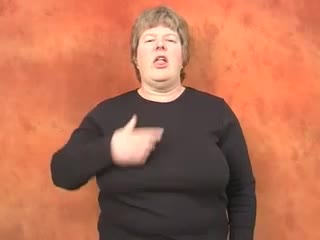
Two open B-hands move out from the chest and back repeatedly, showing exchange

🎯 Practice Challenge

Sign "communication" multiple times, varying speed and context

⚠️ Most Common Mistake

Ensure both hands are flat and moving symmetrically. Maintain repetition and location

👐 How to Sign "communication" in British Sign Language (BSL) (Quick Answer)

Follow these steps to sign communication correctly in British Sign Language (BSL):

  1. 1 Form B-flat hands, fingers together, thumb tucked
  2. 2 Place hands near mid-chest, palms facing
  3. 3 Move hands outwards a short distance
  4. 4 Return hands towards chest, repeat movement

Tip: Watch the video above while following these steps for best results.

🤚 Sign Profile

🤚
Handshape
Both hands open flat, fingers together, thumb slightly tucked
🔣
Handshape Code
B-flat
Dominant Hand
Either
🙌
Hand Count
Two-handed
📍
Location
Mid-chest to forward space
↗️
Movement
Hands move outwards from near the chest, then return, repeating
🔄
Movement Type
Repeated
👆
Contact
Air
👋
Palm Orientation
Palms generally face each other, then slightly forward
⚖️
Symmetry
Symmetric

😊 Non-Manual Features

Facial expressions and body language are grammatically essential in British Sign Language (BSL) - not optional!

😊
Facial Expression
Neutral facial expression often accompanies
🙆
Eyebrows
Neutral
👁️
Eye Gaze
Forward
🙂
Head Movement
None
👄
Mouth Morpheme
"Communication" or neutral mouth
🕴️
Body Shift
None

📖 Grammar & Linguistics

Part of Speech Noun
Inflection No
Classifier Usage N/A
Role Shift No

🎓 Learning Context

📌 When to Use: Discussing general interaction, conveying messages, sharing information
⚠️ Common Mistake: Not using both hands, incorrect handshape, insufficient repetition
🚫 When NOT to Use: If referring to a specific message; use 'message' instead
Context Tags
Abstract noun social interaction conversation

🧪 Practice Lab

Use these tiny checks right after watching the video. Fast feedback is what turns recognition into recall.

Meaning check

Which word matches the sign you just watched?

Usage check

Where would this sign fit most naturally?

Confidence check

How do you feel about communication right now?

Pick one so SignDeaf can shape the rest of your session around how this sign actually feels.

🧭 Scenario Drill

One sign gets remembered faster when you attach it to real situations. Try these quick scene prompts.

Work

Stretch practice

Use this sign in a short workplace sentence or meeting exchange.

Family

Stretch practice

Try signing this while talking about family life or something at home.

School

Stretch practice

Imagine teaching this sign to a classmate or using it in a lesson.

Doctor

Stretch practice

Practise it in a healthcare conversation where clarity matters.

Travel

Stretch practice

Use it in a travel scenario like asking for help or directions.

💬 Example Usage

1.[en] We need better communication. / BSL:[Need better 'communication'] | 2.[en] Communication is key. / BSL:['Communication' important] | 3.[en] It's good communication. / BSL:[Good 'communication']

1.[en] We need better communication. / BSL:[Need better 'communication'] | 2.[en] Communication is key. / BSL:['Communication' important] | 3.[en] It's good communication. / BSL:[Good 'communication']

When to use it

Discussing general interaction, conveying messages, sharing information

When not to use it

If referring to a specific message; use 'message' instead

Register

Neutral

🌍 Cultural Context

Emphasizes shared exchange between people

🗺️ Regional Variations

Minimal. Core sign is widespread

⚖️ Similar Signs - What's the Difference?

This sign communication
VS
Similar signs Look closely
'COMMUNICATION' uses two open B-hands moving outwards and back, representing general exchange. 'TALK' (or 'SPEAK') typically uses a dominant B-hand tapping the side of the mouth then moving forward, focusing on the act of verbal speech. 'DISCUSS' often involves both B-hands moving towards and away from each other, sometimes meeting, implying a back-and-forth conversation
webcam sign thumbnail

webcam

Beginner

A device for recording video, often connected to a computer for online communication

Compare with webcam
leadership sign thumbnail

leadership

Beginner

The state or position of being a leader; the ability to lead a group or organization

Compare with leadership

📝 Usage Notes

Represents the abstract concept of communication, not a specific act

Frequently Asked Questions

Common questions about the British Sign Language (BSL) sign for "communication".

🏷️ Tags

Handshape

Keywords

💡
Did you know?
BSL is a full, natural language with its own grammar - not just English signed word by word.

📚 Explore More British Sign Language (BSL) Signs

Keep building your British Sign Language (BSL) vocabulary - explore signs by category or browse the full dictionary.