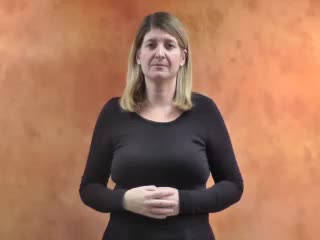
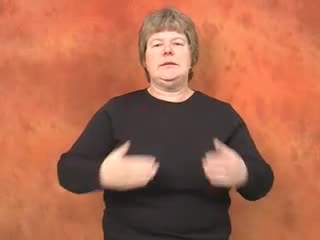
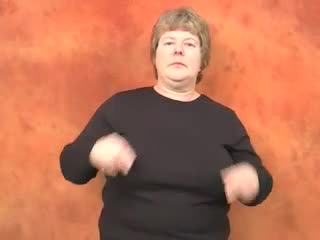
Speed
0
Practice reps times watched

Create a free account to keep your watch history and review plan.

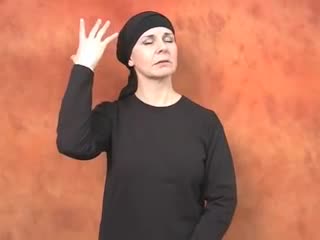
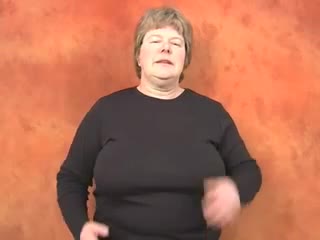
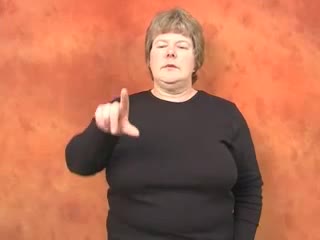
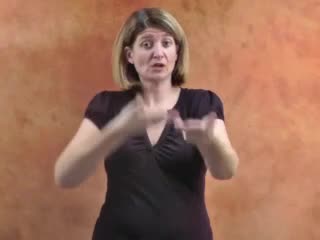
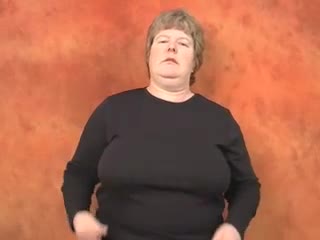
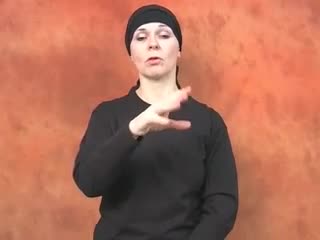
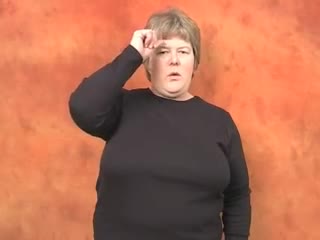
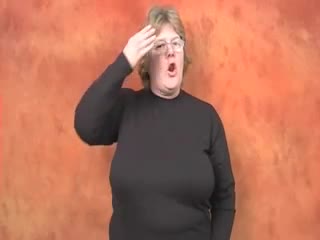
Best practice Use mirror mode, then watch the frame breakdown below to catch the start, movement, and finish cleanly.
Video via SpreadTheSign  - Free educational resource BSL
Updated April 24, 2026
British Sign Language (BSL) 🟢 Beginner 📊 A1 ⚡ Very Common Verb

talk

To communicate verbally or through sign language

Source-linked video Step-by-step guide Context and safety notes
Synonyms
Speak chat converse discuss communicate
Antonyms
Listen silence quiet
Difficulty
Not rated yet

Create a free account to save this sign, keep your watch history, and unlock a one-note journal preview.

How to sign it
Handshape
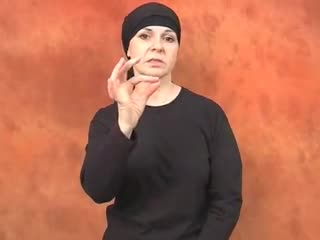
Index finger extended, other fingers curled into palm, thumb tucked in or alongside
Location
Near the mouth/chin area
Movement
The index finger repeatedly bends and straightens from the knuckle
Palm Orientation
Dominant hand palm generally faces inwards or slightly to the side
Facial Expression
Usually mouthing 'talk' or neutral expression
🔁 Spaced Review Try it free

How well do you know this sign?

TALK
Your Progress Live
🌱
Level 1 · BSL Beginner +0 XP today
This sign Not learned yet
0 watches
Mastery 0%
Confidence
How well do you know this sign?
0 🔥 Streak
0 Signs seen
0 Learned
0 Watches
📖 Vocabulary health 🔒 Log in to see score
0 Mastered
0 Confident
0 Practicing
0 Just seen

Create a free account to keep your vocabulary score between sessions

7-day activity 0 of 7 active

Register free to sync activity across devices

Watch signs to see your history here

Tracking locally for now. Create a free account to save your progress and sync across devices.
Free gets you started. Paid adds the repeat-learning layer: review queues, deeper notes, compare mode, and better comeback tools.
My Sign Journal
Personal notes, saved to your account forever
Locked

Write memory tricks, usage examples, and cultural reminders beside each sign. Create a free account to unlock your first saved note preview on this page.

Create free account Already have an account? Log in

What This Sign Means in BSL

The BSL sign for talk is one of the most fundamental and widely used verbs you'll encounter. At its heart, it represents the general act of speaking, conversing, or communicating verbally. Imagine words flowing from a person's mouth; this sign beautifully captures that essence through its location and movement, making it instantly recognisable once you understand its components.

This sign is incredibly versatile, serving as your go-to for almost any situation where someone is engaged in verbal communication. It's neutral in tone by itself, acting as a blank canvas that can take on a myriad of meanings simply by pairing it with different facial expressions. A person can talk happily, talk angrily, or talk thoughtfully, all conveyed through the face, while the core hand movement remains consistent.

It's a foundational sign, often one of the first verbs people learn because it's so central to daily interaction. Understanding "talk" not only allows you to express the action of speaking but also opens the door to grasping more nuanced communication verbs, many of which build upon or contrast with this basic concept. Mastering this sign is a vital step in developing fluent BSL conversations.

When This Sign Feels Natural

You'll find yourself reaching for this sign in countless everyday scenarios. It feels most natural when you're simply describing that someone is speaking, has spoken, or will speak, without needing to specify the exact content or manner of their speech. For example, if you want to say, "I need to talk to my friend," or "They were talking for a long time," this sign fits perfectly.

It's also the natural choice for general statements about conversation or communication. Perhaps you're discussing the importance of open dialogue: "It's good to talk through problems." Or maybe you're observing others: "The children were talking excitedly after school." It describes the ongoing process of verbal exchange rather than a single utterance or directive.

While versatile, it's worth considering your audience and the register. This sign is generally appropriate across informal and semi-formal contexts. If the context demands a more specific nuance – like a formal discussion, a casual chat, or giving an instruction – you might choose a different, more precise sign. However, for the broad concept of "speaking," this sign remains your reliable default.

What Learners Usually Miss

A common subtlety learners often miss is the repeated nature of the movement. The index finger should bend and straighten multiple times from the knuckle, creating a continuous, rhythmic action. It’s not a single, sharp flick, which might imply a one-off "say" or "speak." The repetition is key to conveying the ongoing nature of talking, whether it's a long conversation or simply the general act of speaking.

Another crucial element frequently overlooked is the role of facial expression. Because the handshape and movement for "talk" are quite neutral, the meaning of *how* someone is talking is heavily reliant on your face. Without a corresponding facial expression – a smile for happy talk, a frown for serious discussion, or wide eyes for surprised speech – the sign can appear flat or emotionless, missing a huge part of the intended message.

Learners sometimes confuse "talk" with "say" or "tell." While related, they have distinct uses. "Talk" is about the act of speaking itself. "Say" often focuses on the utterance of specific words or a single statement. "Tell" usually implies a directional transfer of information *to* someone. For example, you might "talk to someone" (the action), but you would "tell someone something" (the information transfer). Pay attention to whether you're describing the process of speaking or the delivery of a message.

A Simple Way to Remember It

Visualise your hand as representing the mouth and tongue in action. The index finger, extending and then repeatedly bending, can be seen as the tongue moving within the mouth, generating speech. This simple, direct connection makes the sign highly intuitive and easy to recall once you've made the link.

  • The "Tongue" Action: Imagine your index finger is a tongue, actively moving to form words as it bends and straightens.
  • Flow of Conversation: The repeated movement signifies the continuous, flowing nature of conversation, not just a single word.
  • Source of Sound: The location near the mouth directly grounds the sign to where speech originates, reinforcing its meaning.

Short Practice Situations

  • "I need to talk to my manager about my schedule next week."
  • "They were talking quietly for hours after everyone else had gone home."
  • "It’s important for families to talk openly with each other about their feelings."
  • "Could you please talk a little bit slower so I can understand you better?"
  • "I'm too tired to talk right now; I just want to relax."

Signs to Learn Next

  • SAY: This sign is often used for specific utterances or single statements, distinguishing it from the ongoing action of "talk." Learning "say" will help you differentiate between general conversation and reporting exact words.
  • TELL: "Tell" usually implies conveying information directly to someone, often with a directional movement. Understanding "tell" helps clarify when information is being delivered versus simply engaging in speech.
  • CHAT: A more informal and relaxed version of "talk," "chat" suggests light, friendly conversation. Learning it will add nuance to your ability to describe social interactions.
  • DISCUSS: This sign indicates a more structured and often collaborative form of talking, involving an exchange of ideas or opinions. It's useful for situations requiring deeper communication.
  • SPEECH/VOICE: While "talk" is the verb for the action, "speech" or "voice" often refers to the abstract concept or the physical sound produced. Learning this can help you refer to verbal communication as a noun.

🤖 AI Learning Guide for "talk"

The BSL sign for "talk" uses a G-hand near the mouth, repeatedly bending the index finger. This mimics verbal articulation

🎯 Practice Challenge

Practice forming the G-hand and bending the index finger smoothly near your mouth. Focus on repetition

⚠️ Most Common Mistake

Ensure your index finger bends from the knuckle and the movement is repeated, not static

👐 How to Sign "talk" in British Sign Language (BSL) (Quick Answer)

Follow these steps to sign talk correctly in British Sign Language (BSL):

  1. 1 Form a G-handshape
  2. 2 Place hand near mouth/chin
  3. 3 Repeatedly bend and straighten index finger from knuckle
  4. 4 Maintain neutral facial expression

Tip: Watch the video above while following these steps for best results.

🤚 Sign Profile

🤚
Handshape
Index finger extended, other fingers curled into palm, thumb tucked in or alongside
🔣
Handshape Code
G-hand
Dominant Hand
Either
🙌
Hand Count
One-handed
📍
Location
Near the mouth/chin area
↗️
Movement
The index finger repeatedly bends and straightens from the knuckle
🔄
Movement Type
Repeated
👆
Contact
Air
👋
Palm Orientation
Dominant hand palm generally faces inwards or slightly to the side

😊 Non-Manual Features

Facial expressions and body language are grammatically essential in British Sign Language (BSL) - not optional!

😊
Facial Expression
Usually mouthing 'talk' or neutral expression
🙆
Eyebrows
Neutral
👁️
Eye Gaze
Forward
🙂
Head Movement
None
👄
Mouth Morpheme
Mouthing 'talk' or 'speak'
🕴️
Body Shift
None

📖 Grammar & Linguistics

Part of Speech Verb
Transitivity Both
Inflection Partially
Classifier Usage None
Role Shift No

🎓 Learning Context

📌 When to Use: Everyday communication, discussions, general conversation
⚠️ Common Mistake: Confusing with 'say' or 'tell'; incorrect handshape or location
🚫 When NOT to Use: When specifically meaning 'say a single word' or 'tell a story'
Context Tags
Communication verb conversation discussion

🧪 Practice Lab

Use these tiny checks right after watching the video. Fast feedback is what turns recognition into recall.

Meaning check

Which word matches the sign you just watched?

Usage check

Where would this sign fit most naturally?

Confidence check

How do you feel about talk right now?

Pick one so SignDeaf can shape the rest of your session around how this sign actually feels.

🧭 Scenario Drill

One sign gets remembered faster when you attach it to real situations. Try these quick scene prompts.

Work

Stretch practice

Use this sign in a short workplace sentence or meeting exchange.

Family

Stretch practice

Try signing this while talking about family life or something at home.

School

Stretch practice

Imagine teaching this sign to a classmate or using it in a lesson.

Doctor

Stretch practice

Practise it in a healthcare conversation where clarity matters.

Travel

Stretch practice

Use it in a travel scenario like asking for help or directions.

💬 Example Usage

1.[en] Let's talk. / BSL: LET'S TALK | 2.[en] I talked to her. / BSL: ME TALK HER | 3.[en] He's talking fast. / BSL: HE TALK FAST

1.[en] Let's talk. / BSL: LET'S TALK | 2.[en] I talked to her. / BSL: ME TALK HER | 3.[en] He's talking fast. / BSL: HE TALK FAST

When to use it

Everyday communication, discussions, general conversation

When not to use it

When specifically meaning 'say a single word' or 'tell a story'

Register

Neutral

🌍 Cultural Context

Core sign for initiating or describing communication in BSL

🗺️ Regional Variations

Minor variations in speed or extent of movement

⚖️ Similar Signs - What's the Difference?

This sign talk
VS
Similar signs Look closely
The sign for "TALK" (G-hand, index finger bends repeatedly near mouth) differs from "SAY" (flattened O-hand, moves forward from mouth once) and "TELL" (index finger pointing from mouth, moves forward). "TALK" implies an ongoing conversation, "SAY" implies uttering words, and "TELL" implies imparting information

📝 Usage Notes

Can be directed towards a person to indicate talking to them

🏷️ Tags

Handshape

Keywords

💡
Did you know?
Watching Deaf signers on YouTube or BSL content online is one of the best ways to improve fluency.

📚 Explore More British Sign Language (BSL) Signs

Keep building your British Sign Language (BSL) vocabulary - explore signs by category or browse the full dictionary.