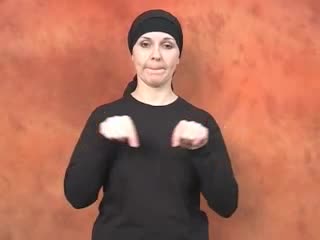
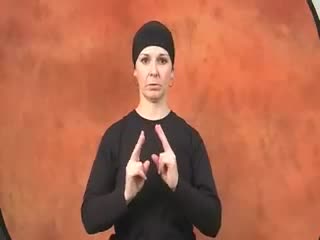
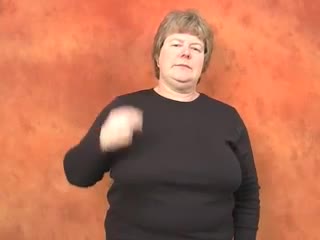
Speed
0
Practice reps times watched

Create a free account to keep your watch history and review plan.

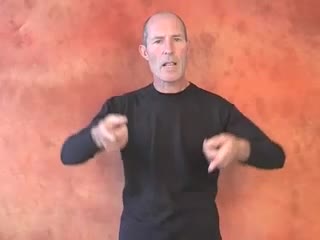
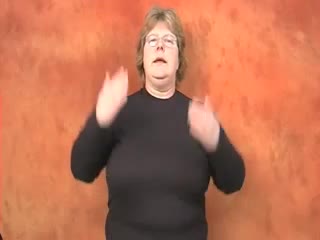
Best practice Use mirror mode, then watch the frame breakdown below to catch the start, movement, and finish cleanly.
Video via SpreadTheSign  - Free educational resource BSL
Updated April 25, 2026
British Sign Language (BSL) 🟢 Beginner 📊 A1 ⚡ Common Noun

club

An organized group of people with a common interest or purpose

Source-linked video Step-by-step guide Context and safety notes
Synonyms
Society association organization circle
Antonyms
Individual loner outsider
Difficulty
Not rated yet

Create a free account to save this sign, keep your watch history, and unlock a one-note journal preview.

How to sign it
Handshape
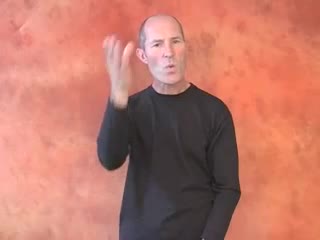
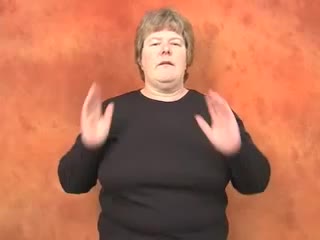
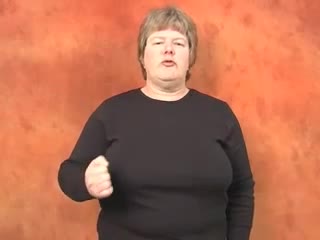
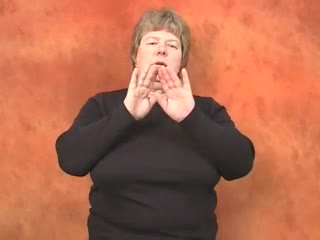
Both hands form tight fists with thumbs tucked in (S-handshape)
Location
Mid-chest/centre of the body
Movement
Hands meet at the knuckles/backs and rub or circle slightly against each other
Palm Orientation
Palms facing each other
Facial Expression
None
🔁 Spaced Review Try it free

How well do you know this sign?

CLUB
Your Progress Live
🌱
Level 1 · BSL Beginner +0 XP today
This sign Not learned yet
0 watches
Mastery 0%
Confidence
How well do you know this sign?
0 🔥 Streak
0 Signs seen
0 Learned
0 Watches
📖 Vocabulary health 🔒 Log in to see score
0 Mastered
0 Confident
0 Practicing
0 Just seen

Create a free account to keep your vocabulary score between sessions

7-day activity 0 of 7 active

Register free to sync activity across devices

Watch signs to see your history here

Tracking locally for now. Create a free account to save your progress and sync across devices.
Free gets you started. Paid adds the repeat-learning layer: review queues, deeper notes, compare mode, and better comeback tools.
My Sign Journal
Personal notes, saved to your account forever
Locked

Write memory tricks, usage examples, and cultural reminders beside each sign. Create a free account to unlock your first saved note preview on this page.

Create free account Already have an account? Log in

What This Sign Means in BSL

The BSL sign for club is wonderfully versatile, capturing the essence of a social gathering, an organised group, or even a venue where people come together. Think of it as the go-to sign when you're referring to anything from a local chess club, a sports team, a youth group, or even a lively nightclub. It's a broad sign that covers a lot of ground in the social sphere.

What makes this sign so effective is its visual representation of unity and connection. The two fists, held firmly, coming together and rubbing, powerfully convey the idea of individuals forming a cohesive unit. It’s not just about a place; it's about the shared identity and purpose that binds people within that group. This sign intrinsically carries a sense of association and belonging.

Crucially, this particular sign specifically refers to a social or organised group. It does not refer to "club" as in a weapon, which is a completely different sign in BSL. Understanding this distinction is key to using the sign correctly in context and avoiding any miscommunication about whether you're joining a social group or preparing for a medieval battle!

When This Sign Feels Natural

You'll find yourself reaching for this sign in countless everyday conversations. It feels most natural when you're discussing joining a new group ("I’ve signed up for a new club"), talking about existing memberships ("I've been a member of that club for years"), or making plans to visit a social venue ("Are we going to the club on Saturday?"). It’s a comfortable, neutral sign suitable for most social registers.

Consider your audience. This sign is widely understood across the UK Deaf community, making it a safe choice in most interactions. It’s effective when the specific type of club isn't the primary focus, but rather the general concept of belonging to an organised group or visiting a social spot. For example, if someone asks what you do in your spare time, signing "I go to a club" makes perfect sense.

However, there are times when you might opt for a more specific sign or add context. While "club" can certainly refer to a sports club, if you're talking specifically about a football team, there might be a more precise sign for "team" that you'd use. Similarly, if you're referring to a very formal "society" or "organisation," other signs might convey that specific nuance more effectively. But for the vast majority of "club" scenarios, this sign works perfectly.

What Learners Usually Miss

One common pitfall for learners is not achieving the correct handshape. The sign requires both hands to form tight fists, specifically the S-handshape, where thumbs are tucked in rather than resting alongside the fingers. Sometimes learners relax their grip or let their thumbs stick out, which subtly changes the visual integrity of the sign. Ensure those fists are solid and compact – it conveys the strength and unity of a group!

Another area where learners often stumble is the movement itself. The hands meet at the knuckles or backs and perform a gentle rub or slight circle against each other. It’s not a vigorous scrubbing motion, nor should the hands be fully open or loose. The movement is controlled, smooth, and relatively small, happening right at the centre of your body, mid-chest level. Overdoing the movement or making it too broad can disrupt the sign's clarity and natural flow.

Finally, context and facial expression, while often neutral, play a crucial role. While the core sign remains the same, your facial expression can subtly convey the type of club you're referring to. A slightly excited or joyful expression might accompany "nightclub," whereas a more focused or neutral expression would suit a "book club." Overlooking this subtle layer can make your signing feel a little flat or less engaging, so always consider the emotion or tone associated with the specific club you're discussing.

A Simple Way to Remember It

Imagine the sign for club as two individuals coming together, reinforcing their bond. The strong, closed fists represent the solid individual members, and their coming together and rubbing signifies their interaction, shared purpose, and the creation of a unified entity.

  • The "Gathering" Gesture: Think of the two fists as people huddling or gathering closely, forming a unified group. The movement is their interaction, their shared space.
  • Solidarity and Strength: The tight S-handshape (closed fists) visually represents the strength, cohesion, and solidarity of a club or organisation. Members are bound together, not loosely connected.
  • Rubbing for Interaction: The gentle rubbing or circling motion suggests ongoing interaction, shared activities, or the continuous 'buzz' of members engaging with each other within the club setting.

Short Practice Situations

  • Are you going to the book club meeting tonight?
  • I've joined a new running club and it's been great for my fitness.
  • The local youth club desperately needs more volunteers for their summer programme.
  • Let's go to a club this weekend; I heard there's a new one opening.
  • Our company's social club is planning an exciting trip for next month.

Signs to Learn Next

  • GROUP: This sign is often used interchangeably or alongside "club" to emphasise the collection of people. It’s great for when you mean a general assembly rather than a formally named club.
  • TEAM: Essential for distinguishing sports clubs. While "club" can cover it, "team" specifically refers to a competitive unit, helping you be more precise in sporting contexts.
  • ORGANISATION: For more formal or larger-scale clubs and societies, "organisation" provides a useful sign to convey a structured, official body with a broader remit.
  • FRIEND: Clubs are fertile ground for forming new friendships. Learning "friend" will naturally complement discussions about social interactions within a club.
  • MEET / GATHER: These action signs are fundamental to what clubs do. Members meet, gather, and socialise, so learning them will enhance your ability to describe club activities.

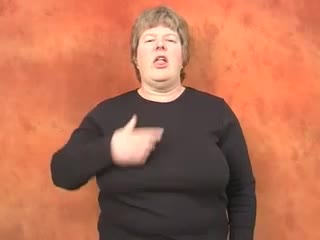
🤖 AI Learning Guide for "club"

The BSL sign for 'club' uses both hands forming fists, which meet at the knuckles/backs at the chest and perform a gentle, repeated rubbing or circling motion. This conveys the idea of people coming together

🎯 Practice Challenge

I want to join a club

⚠️ Most Common Mistake

Ensure both hands are used, forming tight fists and rubbing gently, not hitting

👐 How to Sign "club" in British Sign Language (BSL) (Quick Answer)

Follow these steps to sign club correctly in British Sign Language (BSL):

  1. 1 Form S-handshape with both hands (tight fists, thumbs tucked in)
  2. 2 Bring hands together at mid-chest level
  3. 3 Knuckles/backs of hands meet
  4. 4 Rub or circle hands slightly against each other
  5. 5 Repeat the rubbing motion a few times

Tip: Watch the video above while following these steps for best results.

🤚 Sign Profile

🤚
Handshape
Both hands form tight fists with thumbs tucked in (S-handshape)
🔣
Handshape Code
S
Dominant Hand
Either
🙌
Hand Count
Two-handed
📍
Location
Mid-chest/centre of the body
↗️
Movement
Hands meet at the knuckles/backs and rub or circle slightly against each other
🔄
Movement Type
Circular|Repeated
👆
Contact
Touch
👋
Palm Orientation
Palms facing each other
⚖️
Symmetry
Symmetric

😊 Non-Manual Features

Facial expressions and body language are grammatically essential in British Sign Language (BSL) - not optional!

😊
Facial Expression
None
🙆
Eyebrows
Neutral
👁️
Eye Gaze
Forward
🙂
Head Movement
None
👄
Mouth Morpheme
Mouthing 'club'
🕴️
Body Shift
None

📖 Grammar & Linguistics

Part of Speech Noun
Inflection No
Classifier Usage N/A
Role Shift No

🎓 Learning Context

📌 When to Use: When referring to a social group, sports club, or interest group
⚠️ Common Mistake: Using only one hand; incorrect handshape or movement (e.g., hitting instead of rubbing)
🚫 When NOT to Use: Not for a weapon or a playing card suit
Context Tags
Social organization group leisure

🧪 Practice Lab

Use these tiny checks right after watching the video. Fast feedback is what turns recognition into recall.

Meaning check

Which word matches the sign you just watched?

Usage check

Where would this sign fit most naturally?

Confidence check

How do you feel about club right now?

Pick one so SignDeaf can shape the rest of your session around how this sign actually feels.

🧭 Scenario Drill

One sign gets remembered faster when you attach it to real situations. Try these quick scene prompts.

Work

Possible fit

Use this sign in a short workplace sentence or meeting exchange.

Family

Stretch practice

Try signing this while talking about family life or something at home.

School

Stretch practice

Imagine teaching this sign to a classmate or using it in a lesson.

Doctor

Stretch practice

Practise it in a healthcare conversation where clarity matters.

Travel

Stretch practice

Use it in a travel scenario like asking for help or directions.

💬 Example Usage

1.[en] I joined a new club. / BSL:[NEW CLUB JOIN I] | 2.[en] Is there a chess club? / BSL:[CHESS CLUB EXIST?] | 3.[en] Our club meets weekly. / BSL:[OUR CLUB MEET EVERY WEEK]

1.[en] I joined a new club. / BSL:[NEW CLUB JOIN I] | 2.[en] Is there a chess club? / BSL:[CHESS CLUB EXIST?] | 3.[en] Our club meets weekly. / BSL:[OUR CLUB MEET EVERY WEEK]

When to use it

When referring to a social group, sports club, or interest group

When not to use it

Not for a weapon or a playing card suit

Register

Neutral

🌍 Cultural Context

Clubs are a significant part of social life, including within the Deaf community

🗺️ Regional Variations

Minor variations in speed or size of movement possible

⚖️ Similar Signs - What's the Difference?

This sign club
VS
Similar signs Look closely
The BSL sign for CLUB uses two S-hands rubbing at the chest, specifically for an organized association. This contrasts with GROUP (two C-hands forming and then closing a circle), which is a broader term for any collection of people or items. TEAM (dominant T-hand sweeping across non-dominant palm) refers to a competitive or collaborative unit, distinct from the social or interest focus of CLUB

📝 Usage Notes

Refers to an organized social or interest group, not a physical weapon or card suit

Frequently Asked Questions

Common questions about the British Sign Language (BSL) sign for "club".

🏷️ Tags

Handshape

Keywords

💡
Did you know?
Watching Deaf signers on YouTube or BSL content online is one of the best ways to improve fluency.

📚 Explore More British Sign Language (BSL) Signs

Keep building your British Sign Language (BSL) vocabulary - explore signs by category or browse the full dictionary.