Speed
0
Practice reps times watched

Create a free account to keep your watch history and review plan.

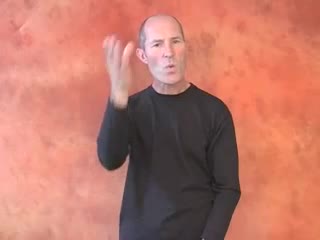
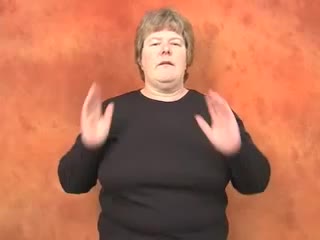
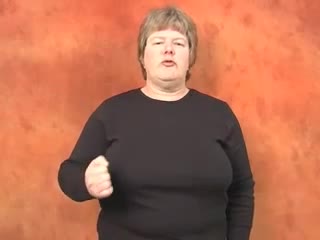
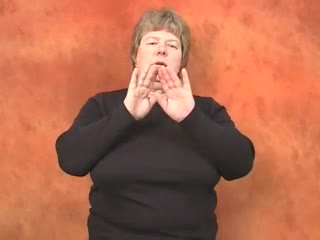
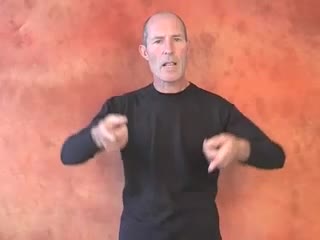
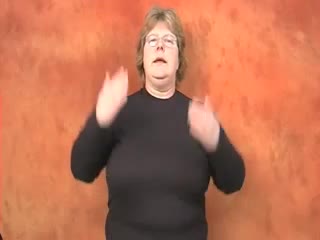
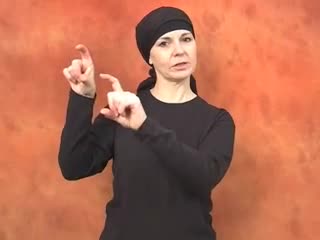
Best practice Use mirror mode, then watch the frame breakdown below to catch the start, movement, and finish cleanly.
Video via SpreadTheSign  - Free educational resource BSL
Updated April 23, 2026
British Sign Language (BSL) 🟢 Beginner 📊 A1 ⚡ Very Common Noun

problem

A difficulty or issue requiring a solution or resolution

Source-linked video Step-by-step guide Context and safety notes
Synonyms
Difficulty issue challenge trouble
Antonyms
Solution answer ease simplicity
Difficulty
Not rated yet

Create a free account to save this sign, keep your watch history, and unlock a one-note journal preview.

How to sign it
Handshape
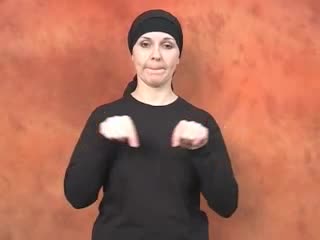
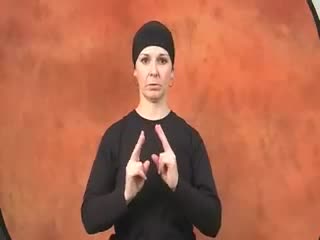
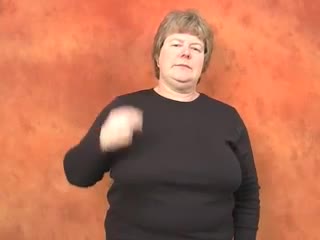
Both hands form G-handshape, index fingers extended
Location
Neutral space in front of the body, around chest height
Movement
Both index fingers move towards each other, meeting or tapping
Palm Orientation
Palms face each other initially
Facial Expression
Often involves furrowed brows
🔁 Spaced Review Try it free

How well do you know this sign?

PROBLEM
Your Progress Live
🌱
Level 1 · BSL Beginner +0 XP today
This sign Not learned yet
0 watches
Mastery 0%
Confidence
How well do you know this sign?
0 🔥 Streak
0 Signs seen
0 Learned
0 Watches
📖 Vocabulary health 🔒 Log in to see score
0 Mastered
0 Confident
0 Practicing
0 Just seen

Create a free account to keep your vocabulary score between sessions

7-day activity 0 of 7 active

Register free to sync activity across devices

Watch signs to see your history here

Tracking locally for now. Create a free account to save your progress and sync across devices.
Free gets you started. Paid adds the repeat-learning layer: review queues, deeper notes, compare mode, and better comeback tools.
My Sign Journal
Personal notes, saved to your account forever
Locked

Write memory tricks, usage examples, and cultural reminders beside each sign. Create a free account to unlock your first saved note preview on this page.

Create free account Already have an account? Log in

What This Sign Means in BSL

The BSL sign for problem is wonderfully direct, serving as a fundamental way to express a difficulty or an obstacle. At its core, it represents something that confronts or stands in the way, a clear point of contention or a hitch in plans. It’s a sign that doesn't usually carry an inherent emotional charge by itself; instead, it sets the stage for further discussion about the nature and impact of the issue.

Think of it as a neutral statement, a factual declaration that something isn't quite right. This makes it incredibly versatile. Whether you're referring to a minor inconvenience or a significant dilemma, the sign itself remains consistent, allowing you to layer additional meaning and emotional depth through your non-manual features – your facial expressions and body language. This adaptability is part of what makes it such a vital sign in BSL communication.

Mastering this sign quickly opens up conversations about challenges, troubleshooting, and seeking assistance. It’s one of those signs that you’ll find yourself using frequently in everyday interactions, from discussing a technical glitch to sharing a personal quandary. It’s a cornerstone for expressing when things deviate from the smooth or expected path.

When This Sign Feels Natural

You’ll find the BSL sign for problem feels most natural in a wide array of everyday situations where something has gone awry or isn’t quite as it should be. It’s your go-to when you encounter a snag, a snag in a plan, a technical fault, or a question that needs addressing. For instance, if your car breaks down, your computer crashes, or you're simply trying to explain why something isn't working, this sign fits perfectly.

Its register is generally neutral, making it suitable for both casual chats among friends and more formal discussions in a professional setting. You can use it when asking, "Is there a problem?" with genuine concern, or when stating, "We have a problem," to colleagues about a project. It’s universally understood within the UK Deaf community, so you don't need to worry about it being too informal or overly dramatic.

While "problem" is incredibly useful, sometimes you might choose a different sign for a more specific nuance. If you want to convey that something requires significant effort or skill to overcome, a sign like difficult might be more apt. If you're referring to a broad topic or concern without a clear solution, issue could be a better fit. But for a direct, tangible obstacle or a point of friction, "problem" is almost always the right choice.

What Learners Usually Miss

One of the most common things learners often miss with the BSL sign for problem isn't the handshape or movement itself, but the crucial role of non-manual features (NMFs), specifically facial expression. While the sign itself is neutral, a "problem" almost always evokes some level of concern, confusion, or a furrowed brow in real life. Without a suitable facial expression, the sign can look somewhat flat or even robotic, losing its natural impact and failing to convey the underlying meaning effectively. A slight frown or a questioning look can transform the sign from a mere action into a meaningful statement.

Another subtle point often overlooked is the precise nature of the meeting of the index fingers. It's not a forceful clash, nor is it merely two fingers pointing at each other without contact. Instead, it's a distinct, firm meeting or light tapping. This contact represents the "point" of the problem, the specific place where things are not aligning. Practising this gentle yet definite contact ensures your sign carries the appropriate weight and clarity, making it easier for others to interpret your meaning correctly.

Sometimes, learners might also overuse "problem" when a more precise sign would communicate their message better. While it’s a versatile sign, not every minor inconvenience is a "problem." Consider the context: is it truly an obstacle, or is it just an annoyance? Is it a genuine difficulty, or simply a task requiring effort? Being mindful of the degree of the issue will help you choose between "problem," difficult, challenge, or even just a simple shake of the head with an appropriate NMF to indicate "not good" or "can't."

A Simple Way to Remember It

Imagine your two index fingers representing two paths or ideas, moving forward smoothly. Then, suddenly, they meet head-on, creating a point of unexpected obstruction. That meeting point is the 'problem' – the place where things stop flowing easily. It's a visual metaphor for encountering a barrier or a clash.

  • Your two index fingers are like two lines of thought or action that suddenly collide or halt, signifying a "problem" has arisen.
  • Think of it as two forces or intentions confronting each other, creating a difficulty that needs resolution.
  • The meeting of the fingers establishes a clear point of contention or blockage, making the abstract idea of a "problem" feel tangible.

Short Practice Situations

  • "We have a problem with the internet connection at home; it keeps dropping out."
  • "You look thoughtful, is there a problem you're trying to work through?"
  • "Finding a clear solution to this complex problem will require a lot of teamwork."
  • "Don't worry, it's no problem at all for me to help you carry those boxes."
  • "My car's engine has a strange noise, I think there might be a problem."

Signs to Learn Next

  • SOLUTION: Often, once you've identified a "problem," the next natural step is to discuss or seek a solution. These two signs frequently appear together in conversation.
  • DIFFICULT: Many problems are inherently difficult. Learning this sign allows you to describe the nature or intensity of the problem more precisely.
  • HELP: When faced with a problem, one often needs or offers help. This sign is a practical companion for discussing overcoming difficulties.
  • UNDERSTAND: To effectively address a problem, you first need to understand it fully. This sign is crucial for clarifying the nature of the issue.
  • CHALLENGE: Similar to a problem, but "challenge" often implies something to be overcome or an opportunity for growth, adding a slightly different nuance to your vocabulary.

🤖 AI Learning Guide for "problem"

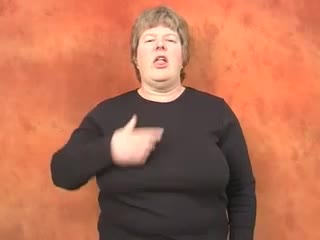
This two-handed symmetric sign uses G-handshapes. Both index fingers extend, moving towards each other to meet or tap, representing a convergence of conflicting elements or a 'sticking point'

🎯 Practice Challenge

Practice signing with clear G-handshapes and distinct meeting motion

⚠️ Most Common Mistake

Ensure both G-handshapes are clear; index fingers must meet or tap precisely

👐 How to Sign "problem" in British Sign Language (BSL) (Quick Answer)

Follow these steps to sign problem correctly in British Sign Language (BSL):

  1. 1 Form G-handshape with both hands, index fingers extended
  2. 2 Position hands in neutral space at chest height, palms facing each other
  3. 3 Move both index fingers linearly towards each other
  4. 4 Tap or meet index fingertips together

Tip: Watch the video above while following these steps for best results.

🤚 Sign Profile

🤚
Handshape
Both hands form G-handshape, index fingers extended
🔣
Handshape Code
G
Dominant Hand
Either
🙌
Hand Count
Two-handed
📍
Location
Neutral space in front of the body, around chest height
↗️
Movement
Both index fingers move towards each other, meeting or tapping
🔄
Movement Type
Linear
👆
Contact
Tap
👋
Palm Orientation
Palms face each other initially
⚖️
Symmetry
Symmetric

😊 Non-Manual Features

Facial expressions and body language are grammatically essential in British Sign Language (BSL) - not optional!

😊
Facial Expression
Often involves furrowed brows
🙆
Eyebrows
Furrowed
👁️
Eye Gaze
Forward
🙂
Head Movement
None
👄
Mouth Morpheme
Slight 'mm' or 'pff' shape
🕴️
Body Shift
None

📖 Grammar & Linguistics

Part of Speech Noun
Inflection No
Classifier Usage N/A
Role Shift No

🎓 Learning Context

📌 When to Use: Discussing difficulties, challenges, or issues
⚠️ Common Mistake: Incorrect handshape, unclear meeting movement, or using one hand
🚫 When NOT to Use: When a solution or answer is already known
Context Tags
Difficulty challenge issue obstacle trouble

🧪 Practice Lab

Use these tiny checks right after watching the video. Fast feedback is what turns recognition into recall.

Meaning check

Which word matches the sign you just watched?

Usage check

Where would this sign fit most naturally?

Confidence check

How do you feel about problem right now?

Pick one so SignDeaf can shape the rest of your session around how this sign actually feels.

🧭 Scenario Drill

One sign gets remembered faster when you attach it to real situations. Try these quick scene prompts.

Work

Stretch practice

Use this sign in a short workplace sentence or meeting exchange.

Family

Stretch practice

Try signing this while talking about family life or something at home.

School

Stretch practice

Imagine teaching this sign to a classmate or using it in a lesson.

Doctor

Stretch practice

Practise it in a healthcare conversation where clarity matters.

Travel

Stretch practice

Use it in a travel scenario like asking for help or directions.

💬 Example Usage

1.[en] We have a problem. / BSL: WE HAVE PROBLEM | 2.[en] What's the problem? / BSL: WHAT PROBLEM | 3.[en] That's not my problem. / BSL: THAT NOT MY PROBLEM

1.[en] We have a problem. / BSL: WE HAVE PROBLEM | 2.[en] What's the problem? / BSL: WHAT PROBLEM | 3.[en] That's not my problem. / BSL: THAT NOT MY PROBLEM

When to use it

Discussing difficulties, challenges, or issues

When not to use it

When a solution or answer is already known

Register

Neutral

🌍 Cultural Context

N/A

🗺️ Regional Variations

Minor variations in contact or location, but core sign is stable

⚖️ Similar Signs - What's the Difference?

This sign problem
VS
Similar signs Look closely
The sign for 'problem' (G-hands meet) is distinct from 'question' (one G-hand moves towards signer, often with a raised eyebrow) where the movement is singular and receptive. It can also be confused with a variant of 'issue' or 'topic' which might involve similar handshapes but often with a wiggling or circular motion of the fingers rather than a direct meeting, or 'conflict' which is more forceful and repeated. The key difference for 'problem' is the direct, singular meeting of the index fingers

📝 Usage Notes

Can be accompanied by a questioning or concerned facial expression

🏷️ Tags

Handshape

Keywords

💡
Did you know?
SpreadTheSign has 600,000+ sign language videos across 40+ sign languages - all free to view.

📚 Explore More British Sign Language (BSL) Signs

Keep building your British Sign Language (BSL) vocabulary - explore signs by category or browse the full dictionary.