Speed
0
Practice reps times watched

Create a free account to keep your watch history and review plan.

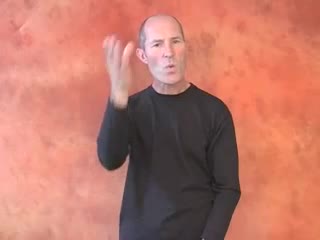
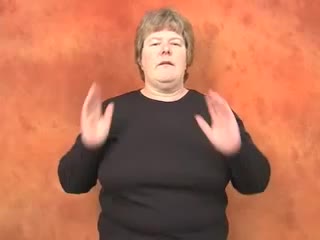
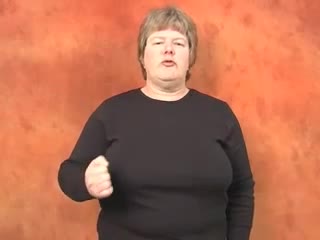
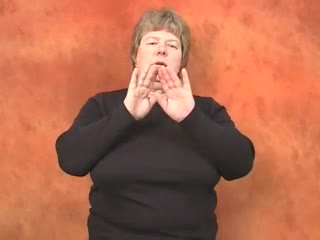
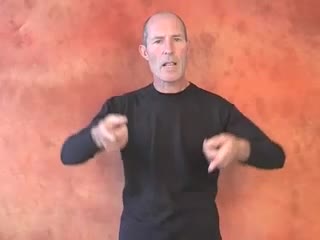
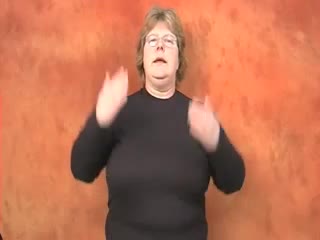
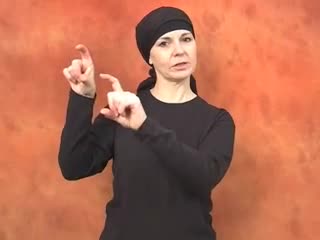
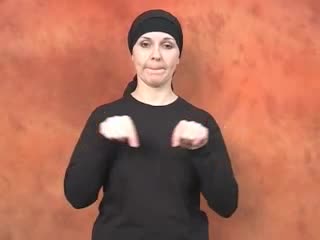
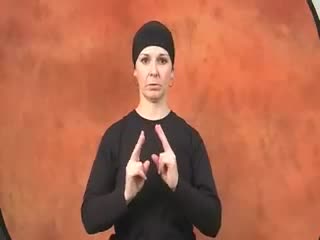
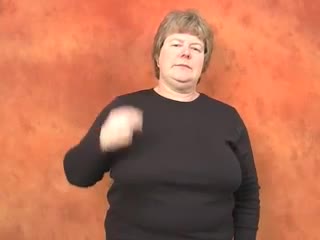
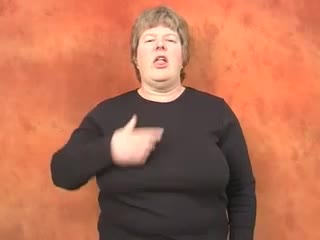
Best practice Use mirror mode, then watch the frame breakdown below to catch the start, movement, and finish cleanly.
Video via SpreadTheSign  - Free educational resource BSL
Updated April 23, 2026
British Sign Language (BSL) 🟢 Beginner 📊 B1 ⚡ Technical Noun

centre punch

Tool used to mark a centre point for drilling

Source-linked video Step-by-step guide Context and safety notes
Synonyms
Punch dot punch
Antonyms
N/A
Difficulty
Not rated yet

Create a free account to save this sign, keep your watch history, and unlock a one-note journal preview.

How to sign it
Handshape
Dominant G-hand, index finger extended, thumb along side
Location
Near non-dominant hand or neutral space
Movement
Sharp, short, repeated downward/forward striking motion
Palm Orientation
Down or forward, depending on imagined angle of use
Facial Expression
Slight facial tension can indicate effort/precision
🔁 Spaced Review Try it free

How well do you know this sign?

CENTRE PUNCH
Your Progress Live
🌱
Level 1 · BSL Beginner +0 XP today
This sign Not learned yet
0 watches
Mastery 0%
Confidence
How well do you know this sign?
0 🔥 Streak
0 Signs seen
0 Learned
0 Watches
📖 Vocabulary health 🔒 Log in to see score
0 Mastered
0 Confident
0 Practicing
0 Just seen

Create a free account to keep your vocabulary score between sessions

7-day activity 0 of 7 active

Register free to sync activity across devices

Watch signs to see your history here

Tracking locally for now. Create a free account to save your progress and sync across devices.
Free gets you started. Paid adds the repeat-learning layer: review queues, deeper notes, compare mode, and better comeback tools.
My Sign Journal
Personal notes, saved to your account forever
Locked

Write memory tricks, usage examples, and cultural reminders beside each sign. Create a free account to unlock your first saved note preview on this page.

Create free account Already have an account? Log in

What This Sign Means in BSL

The BSL sign for centre punch is a wonderful example of how BSL often visually represents the action or characteristic of the object it describes. When you see this sign, you're not just learning a word; you’re being shown a miniature performance of the tool in action. It specifically refers to the hand tool used to make a small indentation in a workpiece before drilling, ensuring the drill bit doesn't wander.

The sign itself is precise and focused, mirroring the tool's function. It’s distinct from a general 'punch' action or simply pointing. This specificity means that when you use it, people will understand you are referring to this particular tool, not just any sharp object or a striking movement. It's a noun sign through and through, representing the item rather than the verb of using it.

This sign is particularly valuable in contexts where precision tools are discussed, such as in workshops, DIY projects, or educational settings focused on trades. Its clarity helps avoid ambiguity, which is crucial when discussing specific equipment. The visual nature of the sign makes it quite intuitive once you understand the tool's purpose.

When This Sign Feels Natural

You’ll find yourself naturally reaching for this sign when you’re talking about specific tools in a practical setting. Imagine you’re at a hardware store, or describing a task to a friend who is also a BSL user – this is where the sign for centre punch fits perfectly. It's most at home in conversations about construction, metalwork, mechanics, or any situation where detailed discussions about tools are happening. The register is generally informal to semi-formal, much like you’d discuss tools with a colleague or fellow enthusiast.

Consider situations where you’re giving instructions or explaining a process. If you’re demonstrating how to prepare a metal sheet for drilling, signing "centre punch" before moving on to "drill" makes the explanation clear and efficient. Your audience will immediately grasp which tool you mean, making the communication flow smoothly without needing to fingerspell or explain further.

However, if you're in a very general conversation and just need to refer to "a tool," you might opt for the more encompassing sign for TOOL to save time. Or, if the specific tool isn't critical to the context, or your audience might not be familiar with it, fingerspelling could be an alternative, though less efficient. The choice depends on the level of detail required and your audience’s familiarity with specific tool signs.

What Learners Usually Miss

One common oversight for learners is the exact sharpness and repetition of the movement. The sign isn't a gentle tap or a wide, sweeping motion. It requires a sharp, short, repeated downward or forward motion with the dominant G-hand. This mimics the precise, impactful action of a centre punch. If the movement is too soft or too broad, it can lose its specific meaning and might be mistaken for a general "poke" or "tap." Remember, it’s about creating a clear, small indent, not a large impact.

Another subtle point is maintaining the correct handshape throughout the movement. Your dominant hand should consistently hold the G-handshape, with the index finger extended and relatively straight, while the thumb rests alongside or across the palm. Sometimes, learners might let their hand relax into a loose C-shape or tighten into a fist, which changes the visual representation from a pointed tool tip to something less defined. Keeping that firm G-hand is crucial for conveying the tool's characteristic shape.

Also, pay attention to the location and direction. While the details mention "near non-dominant hand or neutral space," the downward or forward aspect of the movement is key. It’s always directed towards an imaginary or actual surface, simulating the act of marking. Avoid signing it too high in the air or pointing it randomly. Grounding the sign by directing it towards a surface, even if it's just neutral space in front of your body, reinforces its practical context and makes it more understandable.

A Simple Way to Remember It

To easily remember the BSL sign for centre punch, visualise yourself holding the actual tool and performing its function. Imagine the G-hand as the pointed tip of the centre punch, ready to make a precise mark. The sharp, repeated motion vividly portrays the tool's spring-loaded action or how you’d strike it with a hammer to create that initial dimple.

  • The Pointed Tip: Think of your dominant G-hand, with its extended index finger, as the very tip of the centre punch, ready to make a mark.
  • The Precise Strike: The sharp, short, repeated movement perfectly mimics the focused impact needed to create an indentation, not a wide or forceful hit.
  • Marking the Surface: The downward or forward direction of the movement signifies the action of striking a workpiece, making a clear connection to the tool's practical use.

Short Practice Situations

  • I need to borrow your centre punch to mark these pilot holes before I start drilling.
  • Have you seen the centre punch? I can't find it anywhere in my toolbox.
  • The workshop manual says to use a centre punch to prevent the drill bit from wandering on the metal.
  • He bought a new set of precision tools, and a centre punch was included.
  • Could you pass me the centre punch? I need to finish marking these points.

Signs to Learn Next

  • TOOL: Learning the general sign for TOOL will help you categorise 'centre punch' as a specific item within a broader group, enriching your vocabulary for practical discussions.
  • DRILL: A centre punch is often used in conjunction with a drill. Understanding the sign for DRILL (the tool or the action) will naturally extend your ability to describe work processes.
  • HAMMER: Some centre punches require striking with a hammer. Learning the sign for HAMMER provides a related tool sign that often shares context.
  • MARK/MEASURE: The purpose of a centre punch is to mark. Learning signs like MARK (to make a mark) or MEASURE will help you describe the preparatory steps in a task.
  • METAL: Centre punches are frequently used on metal. Knowing the sign for METAL will allow you to discuss the materials you're working with in conjunction with this tool.

🤖 AI Learning Guide for "centre punch"

The sign uses a G-hand to mimic a centre punch striking a surface. The sharp, repeated motion shows its function for marking

🎯 Practice Challenge

Practice the sharp, repeated downward strike with the G-hand. Ensure your index finger is straight

⚠️ Most Common Mistake

Focus on the G-handshape and short, sharp, repeated movement. Avoid a gentle poke

👐 How to Sign "centre punch" in British Sign Language (BSL) (Quick Answer)

Follow these steps to sign centre punch correctly in British Sign Language (BSL):

  1. 1 Form dominant G-hand, index finger extended
  2. 2 Point finger down/forward, palm down/forward
  3. 3 Make sharp, short, repeated downward/forward striking motion
  4. 4 Often near non-dominant hand holding imaginary object

Tip: Watch the video above while following these steps for best results.

🤚 Sign Profile

🤚
Handshape
Dominant G-hand, index finger extended, thumb along side
🔣
Handshape Code
G
Dominant Hand
Either
🙌
Hand Count
One-handed
📍
Location
Near non-dominant hand or neutral space
↗️
Movement
Sharp, short, repeated downward/forward striking motion
🔄
Movement Type
Repeated
👆
Contact
Air
👋
Palm Orientation
Down or forward, depending on imagined angle of use
⚖️
Symmetry
Asymmetric

😊 Non-Manual Features

Facial expressions and body language are grammatically essential in British Sign Language (BSL) - not optional!

😊
Facial Expression
Slight facial tension can indicate effort/precision
🙆
Eyebrows
Neutral
👁️
Eye Gaze
At referent
🙂
Head Movement
None
👄
Mouth Morpheme
"pah" or "th" for precision/impact (optional)
🕴️
Body Shift
Slight forward lean for precision/impact

📖 Grammar & Linguistics

Part of Speech Noun
Transitivity Transitive
Inflection No
Classifier Usage CL:1
Role Shift No

🎓 Learning Context

📌 When to Use: When discussing tools, DIY, engineering, metalwork, precise marking
⚠️ Common Mistake: Not sharp enough movement; wrong handshape (e.g., bent finger)
🚫 When NOT to Use: General conversation not involving tools or precision marking
Context Tags
Tools workshop engineering DIY precision

🧪 Practice Lab

Use these tiny checks right after watching the video. Fast feedback is what turns recognition into recall.

Meaning check

Which word matches the sign you just watched?

Usage check

Where would this sign fit most naturally?

Confidence check

How do you feel about centre punch right now?

Pick one so SignDeaf can shape the rest of your session around how this sign actually feels.

🧭 Scenario Drill

One sign gets remembered faster when you attach it to real situations. Try these quick scene prompts.

Work

Possible fit

Use this sign in a short workplace sentence or meeting exchange.

Family

Stretch practice

Try signing this while talking about family life or something at home.

School

Stretch practice

Imagine teaching this sign to a classmate or using it in a lesson.

Doctor

Stretch practice

Practise it in a healthcare conversation where clarity matters.

Travel

Stretch practice

Use it in a travel scenario like asking for help or directions.

💬 Example Usage

1.[en] Do you have a centre punch? / BSL:[You have CENTRE-PUNCH?] | 2.[en] I need to mark this. / BSL:[I NEED MARK THIS CENTRE-PUNCH.] | 3.[en] Use the centre punch first. / BSL:[FIRST USE CENTRE-PUNCH.]

1.[en] Do you have a centre punch? / BSL:[You have CENTRE-PUNCH?] | 2.[en] I need to mark this. / BSL:[I NEED MARK THIS CENTRE-PUNCH.] | 3.[en] Use the centre punch first. / BSL:[FIRST USE CENTRE-PUNCH.]

When to use it

When discussing tools, DIY, engineering, metalwork, precise marking

When not to use it

General conversation not involving tools or precision marking

Register

Technical

🌍 Cultural Context

N/A specific to this sign

🗺️ Regional Variations

Minimal, standard sign

⚖️ Similar Signs - What's the Difference?

This sign centre punch
VS
Similar signs Look closely
**MARK (noun/verb)**: Uses the non-dominant palm as a surface and the dominant G-hand (or F-hand for a pen) to make a stroke. "Centre punch" involves a *striking* motion to create a *dot*, not a stroke.
**DRILL (noun/verb)**: Uses a dominant C-hand or S-hand with a twisting, downward motion, mimicking drilling. "Centre punch" is a sharp, linear strike to *prepare* for drilling, not the drilling itself.
**POINT (verb)**: Often a simple G-hand pointing. "Centre punch" adds the specific sharp, repeated, percussive movement characteristic of the tool's action

📝 Usage Notes

Often accompanied by a non-dominant hand holding an imaginary workpiece

🏷️ Tags

Handshape

Keywords

💡
Did you know?
Repetition is key. Try signing this word 10 times, slowly at first, then at natural speed.

📚 Explore More British Sign Language (BSL) Signs

Keep building your British Sign Language (BSL) vocabulary - explore signs by category or browse the full dictionary.