Speed
0
Practice reps times watched

Create a free account to keep your watch history and review plan.

Best practice Use mirror mode, then watch the frame breakdown below to catch the start, movement, and finish cleanly.
Video via SpreadTheSign  - Free educational resource BSL
Updated April 23, 2026
British Sign Language (BSL) 🟢 Beginner 📊 B1 ⚡ Technical Noun

torque wrench

A tool used to apply a specific, measurable rotational force to a fastener

Source-linked video Step-by-step guide Context and safety notes
Synonyms
Torque spanner
Antonyms
Loosen
Difficulty
Not rated yet

Create a free account to save this sign, keep your watch history, and unlock a one-note journal preview.

How to sign it
Handshape
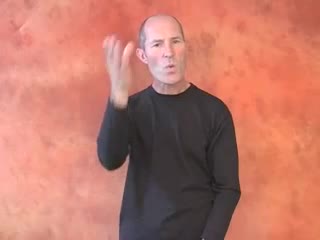
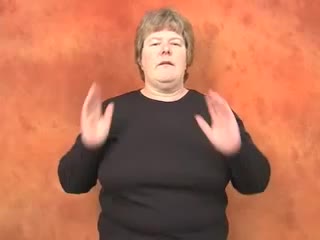
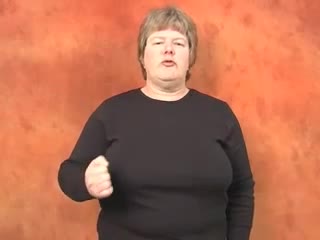
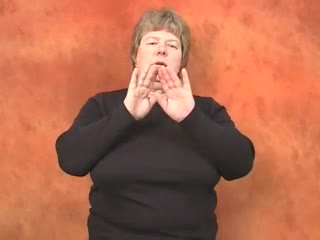
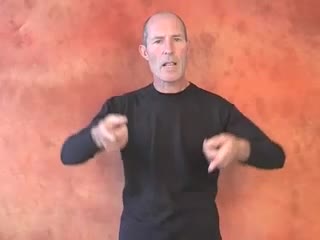
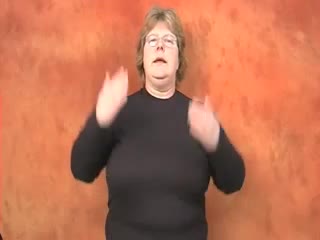
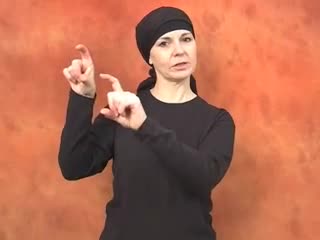
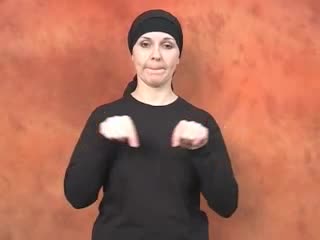
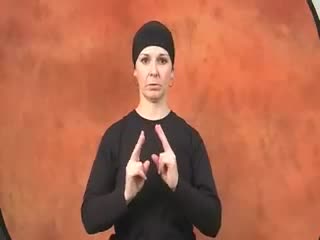
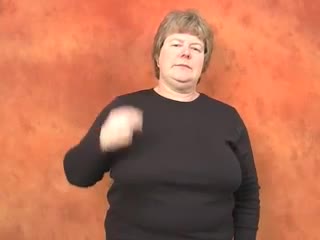
Dominant hand forms a fist (S-hand), gripping. Non-dominant hand forms a fist (S-hand), acting as the object or resistance
Location
In front of the body, waist to chest height
Movement
Dominant hand twists downwards with controlled force, as if tightening a bolt precisely
Palm Orientation
Dominant hand: inward/downward; Non-dominant hand: upward
Facial Expression
Focused expression, slight effort
🔁 Spaced Review Try it free

How well do you know this sign?

TORQUE WRENCH
Your Progress Live
🌱
Level 1 · BSL Beginner +0 XP today
This sign Not learned yet
0 watches
Mastery 0%
Confidence
How well do you know this sign?
0 🔥 Streak
0 Signs seen
0 Learned
0 Watches
📖 Vocabulary health 🔒 Log in to see score
0 Mastered
0 Confident
0 Practicing
0 Just seen

Create a free account to keep your vocabulary score between sessions

7-day activity 0 of 7 active

Register free to sync activity across devices

Watch signs to see your history here

Tracking locally for now. Create a free account to save your progress and sync across devices.
Free gets you started. Paid adds the repeat-learning layer: review queues, deeper notes, compare mode, and better comeback tools.
My Sign Journal
Personal notes, saved to your account forever
Locked

Write memory tricks, usage examples, and cultural reminders beside each sign. Create a free account to unlock your first saved note preview on this page.

Create free account Already have an account? Log in

What This Sign Means in BSL

The BSL sign for torque wrench is a wonderfully descriptive sign that immediately conveys both the tool itself and its precise function. It's not just about a wrench; it’s about the specific, controlled application of force. When you form this sign, you’re visually communicating the exact grip and deliberate twisting motion essential to using a torque wrench. This sign stands out because of its specificity. Unlike more general signs for "wrench" or "tighten," which might imply a broader, less precise action, the "torque wrench" sign highlights the tool’s primary characteristic: accuracy. The dominant hand's firm, controlled twist downwards, coupled with the non-dominant hand acting as the resistance of the object being tightened, paints a clear picture of careful mechanical work. The inherent meaning of this sign carries a sense of professionalism and attention to detail. It's a sign that speaks to careful engineering, maintenance, and assembly where specific tension is critical. When you use it, you're not just naming a tool; you're evoking the careful, measured approach required for tasks where over-tightening or under-tightening could have significant consequences.

When This Sign Feels Natural

You'll find the BSL sign for torque wrench feels most natural in contexts where precision and specific tools are being discussed. Imagine a conversation about car mechanics, bicycle repair, or even intricate DIY projects where fasteners need to be tightened to an exact specification. It's the perfect sign to use when you're explaining *why* a particular tool is needed, beyond just saying "a spanner." This sign fits perfectly into more technical or instructional registers. If you're demonstrating how to assemble something correctly, or discussing safety protocols for machinery, the sign for torque wrench will be understood clearly by those who are familiar with such equipment. It's a precise term for a precise tool, so it naturally surfaces in detailed discussions among tradespeople, engineers, or serious hobbyists. While you might use a more general sign like "wrench" if you're just broadly referring to tools, the moment you need to specify *which* type of wrench – one that measures and applies specific rotational force – this sign becomes indispensable. It’s ideal for situations where ambiguity could lead to misunderstanding, ensuring your audience grasps the importance of using the right tool for the job.

What Learners Usually Miss

Many learners, when first encountering the BSL sign for torque wrench, tend to oversimplify the movement or miss the crucial element of controlled force. They might make the twisting motion too fast, too loose, or too aggressive, similar to a general "tighten" sign. The key distinction here is the *deliberate, measured* quality of the twist – it's not a struggle, but a calculated action. Another common oversight is neglecting the role of the non-dominant hand. It's not just there for show; it actively represents the bolt or nut providing resistance. If your non-dominant hand is too floppy or not held firmly, the sign loses its grounding and clarity. Remember, the dominant hand twists *against* the resistance of the non-dominant hand, creating that sense of a tool at work. Finally, learners sometimes forget the downwards direction of the twist. While "tighten" can be more ambiguous in its direction, the torque wrench sign typically involves that controlled, downward rotation, mimicking how one usually applies force to tighten a fastener. Pay attention to the subtle facial expression too; it often reflects concentration, not strain, reinforcing the idea of precise work. Correcting these elements means focusing on the *quality* of the movement – making it firm, deliberate, and purposeful, not just a rapid flick of the wrist.

A Simple Way to Remember It

Think of the sign as a mini-drama unfolding in front of you, starring your hands as the key players. Your dominant hand is the mighty torque wrench, gripping its handle, while your non-dominant hand is the steadfast bolt, refusing to budge without proper persuasion. The twisting motion is the gentle but firm insistence of the wrench, ensuring everything is just right.
  • The dominant hand’s firm grip mimics holding the handle of the tool, ready to apply force.
  • The non-dominant hand forms a fist, acting as the stubborn bolt or nut that needs tightening.
  • The controlled downward twist of the dominant hand represents the precise, measured action of the torque wrench, ensuring accuracy.

Short Practice Situations

  • "I need to use a torque wrench to tighten the wheel nuts on the car properly."
  • "Always check the specifications; you can't just guess the right tension, you need a torque wrench."
  • "Can you pass me the torque wrench from the toolbox? I’m almost done with this engine repair."
  • "Learning how to use a torque wrench correctly is essential for anyone working with machinery."

Signs to Learn Next

  • WRENCH/SPANNER: This is a more general tool sign. Learning it helps you differentiate between a standard wrench and the specialized torque wrench.
  • TIGHTEN: Understanding the general action of tightening allows you to appreciate the specific, measured quality of the "torque wrench" sign even more.
  • BOLT/NUT: These are the components that a torque wrench acts upon. Knowing their signs helps you build complete sentences around mechanical tasks.
  • ENGINE/CAR: Many torque wrench applications are in automotive contexts. Learning these broader category signs provides useful background for conversation.
  • REPAIR/FIX: This general action sign is often the overall purpose behind using a torque wrench, connecting the tool to its ultimate goal.

🤖 AI Learning Guide for "torque wrench"

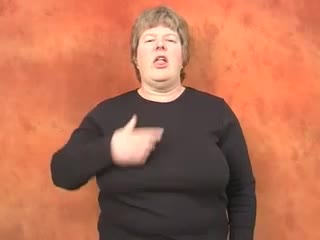
The sign mimics using a torque wrench: one hand grips the tool, the other represents the bolt, and the dominant hand twists with controlled force to signify precise tightening

🎯 Practice Challenge

Practice the distinct two-handed action and controlled twisting movement. Focus on precision

⚠️ Most Common Mistake

Ensure the dominant hand's twist is deliberate and controlled, not just a generic turning motion

👐 How to Sign "torque wrench" in British Sign Language (BSL) (Quick Answer)

Follow these steps to sign torque wrench correctly in British Sign Language (BSL):

  1. 1 Form dominant S-hand gripping
  2. 2 Form non-dominant S-hand representing bolt
  3. 3 Bring hands together, dominant gripping non-dominant
  4. 4 Twist dominant hand downwards precisely

Tip: Watch the video above while following these steps for best results.

🤚 Sign Profile

🤚
Handshape
Dominant hand forms a fist (S-hand), gripping. Non-dominant hand forms a fist (S-hand), acting as the object or resistance
🔣
Handshape Code
S
Dominant Hand
Either
🙌
Hand Count
Two-handed
📍
Location
In front of the body, waist to chest height
↗️
Movement
Dominant hand twists downwards with controlled force, as if tightening a bolt precisely
🔄
Movement Type
Twist
👆
Contact
Touch
👋
Palm Orientation
Dominant hand: inward/downward; Non-dominant hand: upward
⚖️
Symmetry
Asymmetric

😊 Non-Manual Features

Facial expressions and body language are grammatically essential in British Sign Language (BSL) - not optional!

😊
Facial Expression
Focused expression, slight effort
🙆
Eyebrows
Neutral
👁️
Eye Gaze
Forward
🙂
Head Movement
None
👄
Mouth Morpheme
None
🕴️
Body Shift
None

📖 Grammar & Linguistics

Part of Speech Noun
Inflection No
Classifier Usage N/A
Role Shift No

🎓 Learning Context

📌 When to Use: Discussing mechanics, engineering, or automotive tasks
⚠️ Common Mistake: Confusing with generic 'wrench' or 'tighten' if precise force isn't shown
🚫 When NOT to Use: When discussing general tools or non-precision tightening
Context Tags
Mechanics Engineering Tools Automotive

🧪 Practice Lab

Use these tiny checks right after watching the video. Fast feedback is what turns recognition into recall.

Meaning check

Which word matches the sign you just watched?

Usage check

Where would this sign fit most naturally?

Confidence check

How do you feel about torque wrench right now?

Pick one so SignDeaf can shape the rest of your session around how this sign actually feels.

🧭 Scenario Drill

One sign gets remembered faster when you attach it to real situations. Try these quick scene prompts.

Work

Stretch practice

Use this sign in a short workplace sentence or meeting exchange.

Family

Stretch practice

Try signing this while talking about family life or something at home.

School

Stretch practice

Imagine teaching this sign to a classmate or using it in a lesson.

Doctor

Stretch practice

Practise it in a healthcare conversation where clarity matters.

Travel

Stretch practice

Use it in a travel scenario like asking for help or directions.

💬 Example Usage

1.[en] He needs the torque wrench. / BSL:[sign for HE, NEED, TORQUE WRENCH] | 2.[en] Hand me the torque wrench. / BSL:[sign for GIVE-ME, TORQUE WRENCH] | 3.[en] Use the torque wrench. / BSL:[sign for USE, TORQUE WRENCH]

1.[en] He needs the torque wrench. / BSL:[sign for HE, NEED, TORQUE WRENCH] | 2.[en] Hand me the torque wrench. / BSL:[sign for GIVE-ME, TORQUE WRENCH] | 3.[en] Use the torque wrench. / BSL:[sign for USE, TORQUE WRENCH]

When to use it

Discussing mechanics, engineering, or automotive tasks

When not to use it

When discussing general tools or non-precision tightening

Register

Technical

🌍 Cultural Context

N/A

🗺️ Regional Variations

Minimal, concept-driven

⚖️ Similar Signs - What's the Difference?

This sign torque wrench
VS
Similar signs Look closely
WRENCH (generic): Often one-handed, a simple turning. Torque wrench uses two S-hands, one gripping the other, emphasizing precision. TIGHTEN (generic): Can be one or two hands, often a circular motion. Torque wrench is a specific downward twist, representing the tool's action. SCREWDRIVER: Uses a G-hand, twisting in the air or into the non-dominant palm, distinct handshape

📝 Usage Notes

Emphasize controlled, precise twisting for accuracy

🏷️ Tags

Handshape

Keywords

💡
Did you know?
In BSL, non-manual features (facial expressions, mouthing) are as important as the hand movements.

📚 Explore More British Sign Language (BSL) Signs

Keep building your British Sign Language (BSL) vocabulary - explore signs by category or browse the full dictionary.