Speed
0
Practice reps times watched

Create a free account to keep your watch history and review plan.

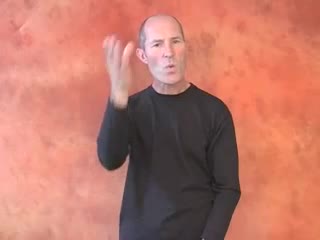
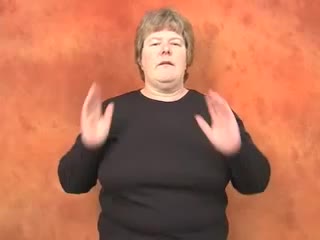
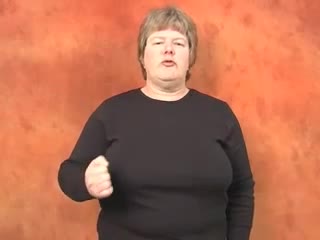
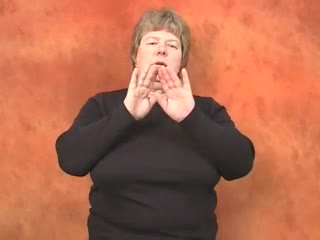
Best practice Use mirror mode, then watch the frame breakdown below to catch the start, movement, and finish cleanly.
Video via SpreadTheSign  - Free educational resource BSL
Updated April 20, 2026
British Sign Language (BSL) 🟢 Beginner 📊 B1 ⚡ Uncommon Noun

coated woven fabric

Fabric treated with a protective layer, often waterproof

Source-linked video Step-by-step guide Context and safety notes
Synonyms
Waterproof fabric Oilcloth Tarpaulin Waxed cotton
Antonyms
Uncoated fabric Breathable fabric
Difficulty
Not rated yet

Create a free account to save this sign, keep your watch history, and unlock a one-note journal preview.

How to sign it
Handshape
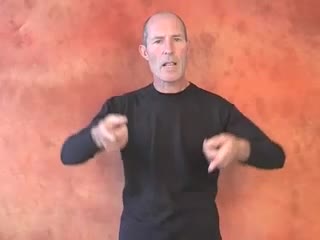
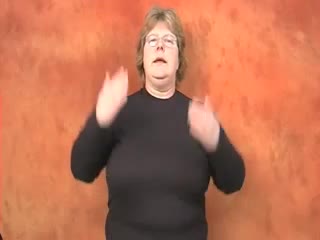
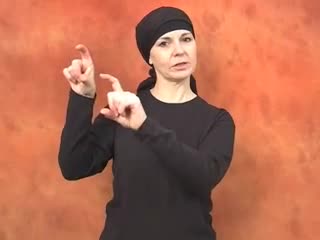
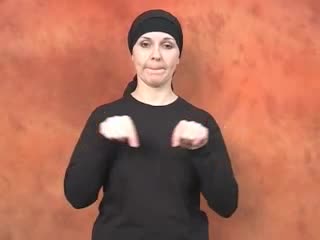
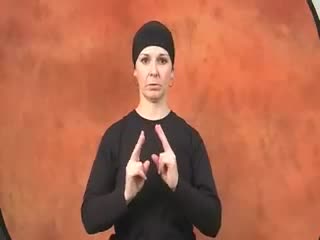
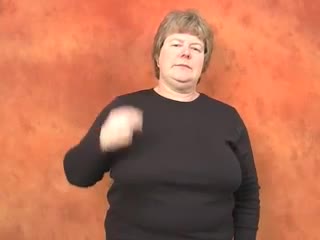
Dominant hand forms an 'X' (hooked index finger), non-dominant hand forms a flat 'B' (palm up)
Location
In front of the body, at chest or waist height
Movement
Dominant 'X' hand rubs smoothly and repeatedly across the non-dominant 'B' palm
Palm Orientation
Dominant: towards non-dominant; Non-dominant: palm up
Facial Expression
MOUTHING-waterproof
🔁 Spaced Review Try it free

How well do you know this sign?

COATED WOVEN FABRIC
Your Progress Live
🌱
Level 1 · BSL Beginner +0 XP today
This sign Not learned yet
0 watches
Mastery 0%
Confidence
How well do you know this sign?
0 🔥 Streak
0 Signs seen
0 Learned
0 Watches
📖 Vocabulary health 🔒 Log in to see score
0 Mastered
0 Confident
0 Practicing
0 Just seen

Create a free account to keep your vocabulary score between sessions

7-day activity 0 of 7 active

Register free to sync activity across devices

Watch signs to see your history here

Tracking locally for now. Create a free account to save your progress and sync across devices.
Free gets you started. Paid adds the repeat-learning layer: review queues, deeper notes, compare mode, and better comeback tools.
My Sign Journal
Personal notes, saved to your account forever
Locked

Write memory tricks, usage examples, and cultural reminders beside each sign. Create a free account to unlock your first saved note preview on this page.

Create free account Already have an account? Log in

What This Sign Means in BSL

The BSL sign for coated woven fabric isn't just about the threads themselves; it beautifully captures the *essence* of a material that’s been treated to resist elements, often water. Think of those robust, resilient fabrics we rely on for protection – like the material of a trusty raincoat, a sturdy tent, or a durable tarpaulin. The sign directly communicates this protective quality through its tactile movement, making it distinct from general signs for 'fabric' or 'cloth'.

This sign is wonderfully descriptive. The dominant hand, shaped like an 'X' (a hooked index finger), isn't just touching the non-dominant 'B' hand (a flat, palm-up surface); it's *rubbing* across it. This action visually and kinesthetically suggests the texture of a coated surface – perhaps feeling its smooth, slightly slippery, or resistant quality. It immediately sets the expectation that we’re talking about a specific type of material with particular properties.

It’s a sign that grounds the conversation in practicality and function. When you see or use this sign, it brings to mind materials designed for durability and weather resistance, rather than soft drapes or delicate garments. It’s a precise term for a very specific kind of textile, useful in many contexts from outdoor activities to home improvements.

When This Sign Feels Natural

You’ll find the BSL sign for coated woven fabric feels most natural when discussing items where the material’s weather-resistant properties are key. Imagine you’re at an outdoor equipment shop, describing why a certain tent fabric is superior, or explaining the benefits of a new waterproof jacket. It’s perfect for those moments when the material’s ability to repel water or withstand wear is the main point of conversation.

This sign sits comfortably in a descriptive register, often used in practical discussions about construction, repair, or product specifications. For instance, if you’re planning a garden project and need to cover something, or if you’re an artist discussing materials for an outdoor installation, this sign clearly articulates the kind of textile you mean. It’s less likely to appear in casual chats about fashion, unless you’re specifically critiquing the material’s functional aspect.

Consider your audience. If you’re communicating with someone who needs to understand the exact properties of a material – perhaps a builder, a crafter, or someone involved in outdoor pursuits – this sign is clear and unambiguous. If you merely mean "some cloth" or "any fabric," you’d opt for the more general BSL signs for those concepts. This sign carries a precise meaning that should be respected for effective communication.

What Learners Usually Miss

A common mistake learners make with the BSL sign for coated woven fabric is in the precision of the handshapes and movement. The dominant hand isn't just a bent finger; it's a distinct 'X' handshape, a firmly hooked index finger, with the other fingers typically curled in. This specific shape is crucial. The non-dominant hand must be a flat 'B' hand, palm up, providing a clear, stable surface for the rubbing action. Ensure your fingers are together and extended for that 'B' shape.

The movement also needs careful attention. It's a smooth, continuous, and repeated *rubbing* motion, not a quick tap or a gentle brush. Think about the action of trying to rub water off a surface or feeling the texture of a resistant material. If the movement is too jerky or too brief, it can lose its descriptive power and might even be misread as a different sign. Practice making the rubbing feel deliberate and consistent across the non-dominant palm.

Another subtle point often missed is the tendency to overgeneralise. Learners might use this sign for *any* fabric they perceive as strong or durable. Remember, this sign specifically indicates a *coated woven* material. If you’re talking about denim (which is woven but not typically coated for water resistance) or a knitted jumper, this sign isn’t appropriate. Be mindful of the specific "coated" aspect, which is what differentiates it from many other fabric signs. The sign's meaning is tied to that protective layer, not just the weave.

A Simple Way to Remember It

To remember the BSL sign for coated woven fabric, think about the practical experience of testing or feeling a waterproof material. The sign visually represents the action of your hooked finger (the 'X' hand) checking the surface of a treated fabric (the 'B' hand) to see if it’s smooth and resistant, or perhaps trying to rub something off its protective layer.

  • Imagine your 'X' hand *scrubbing* away imaginary water droplets from the smooth, resistant surface of a raincoat represented by your 'B' hand.
  • Visualise the repetitive motion as feeling the uniform, somewhat slippery texture of a coated material, confirming its protective quality.
  • Connect the 'X' hand's action to the idea of *examining* or *testing* the integrity of a fabric designed to repel and protect.

Short Practice Situations

  • "That new tent is made from incredibly strong coated woven fabric; it should withstand any storm we encounter this summer."
  • "I need to buy some good quality coated woven fabric to make a durable cover for my outdoor furniture before the rain starts."
  • "The artist chose a brilliant type of coated woven fabric for their sculpture, allowing it to stay outdoors all year round without damage."
  • "Does this brand of waterproof jacket use the same high-performance coated woven fabric as their previous collection?"
  • "We’re looking for a specific type of coated woven fabric that’s also breathable for these new outdoor sports uniforms."

Signs to Learn Next

  • FABRIC / CLOTH: This is a foundational sign for any textile. Learning it next helps you differentiate between a general piece of cloth and the specific "coated woven fabric" we've discussed.
  • WATERPROOF: Often, the reason a fabric is coated is to make it waterproof. This sign is a natural companion, allowing you to explain the key property of the material.
  • RAINCOAT: Many raincoats are made from coated woven fabric. This sign gives you a direct example of an item where our primary sign would be used extensively.
  • TENT: Similar to a raincoat, tents rely heavily on coated woven fabrics for shelter and protection from the elements, making this a relevant sign to connect.
  • MATERIAL: This broader term allows you to talk about substances in general. Understanding it helps you place "coated woven fabric" within the larger category of materials.

🤖 AI Learning Guide for "coated woven fabric"

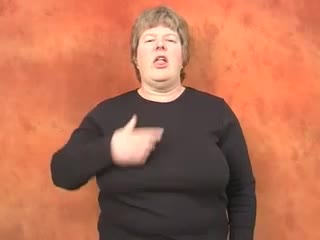
Depicts rubbing treated fabric. 'X' hand is coating, 'B' hand is base

🎯 Practice Challenge

Practice signing 'waterproof material'

⚠️ Most Common Mistake

Ensure correct 'X' and 'B' handshapes and smooth rubbing movement

👐 How to Sign "coated woven fabric" in British Sign Language (BSL) (Quick Answer)

Follow these steps to sign coated woven fabric correctly in British Sign Language (BSL):

  1. 1 Form 'X' hand dominant
  2. 2 Form flat 'B' hand non-dominant, palm up
  3. 3 Place 'X' on 'B' palm
  4. 4 Rub 'X' smoothly across 'B' repeatedly
  5. 5 Sign in front of chest/waist

Tip: Watch the video above while following these steps for best results.

🤚 Sign Profile

🤚
Handshape
Dominant hand forms an 'X' (hooked index finger), non-dominant hand forms a flat 'B' (palm up)
🔣
Handshape Code
X-hand, B-flat-hand
Dominant Hand
Either
🙌
Hand Count
Two-handed
📍
Location
In front of the body, at chest or waist height
↗️
Movement
Dominant 'X' hand rubs smoothly and repeatedly across the non-dominant 'B' palm
🔄
Movement Type
Repeated
👆
Contact
Touch
👋
Palm Orientation
Dominant: towards non-dominant; Non-dominant: palm up
⚖️
Symmetry
Asymmetric

😊 Non-Manual Features

Facial expressions and body language are grammatically essential in British Sign Language (BSL) - not optional!

😊
Facial Expression
MOUTHING-waterproof
🙆
Eyebrows
Neutral
👁️
Eye Gaze
Forward
🙂
Head Movement
None
👄
Mouth Morpheme
Puh (for plastic/smooth texture)
🕴️
Body Shift
None

📖 Grammar & Linguistics

Part of Speech Noun
Inflection No
Classifier Usage N/A
Role Shift No

🎓 Learning Context

📌 When to Use: Describing materials, purchasing fabric, discussing outdoor gear
⚠️ Common Mistake: Confusing with general 'fabric' sign, incorrect handshape
🚫 When NOT to Use: When referring to general fabric or uncoated textiles
Context Tags
Textiles Materials Clothing Waterproof Outdoor

🧪 Practice Lab

Use these tiny checks right after watching the video. Fast feedback is what turns recognition into recall.

Meaning check

Which word matches the sign you just watched?

Usage check

Where would this sign fit most naturally?

Confidence check

How do you feel about coated woven fabric right now?

Pick one so SignDeaf can shape the rest of your session around how this sign actually feels.

🧭 Scenario Drill

One sign gets remembered faster when you attach it to real situations. Try these quick scene prompts.

Work

Stretch practice

Use this sign in a short workplace sentence or meeting exchange.

Family

Stretch practice

Try signing this while talking about family life or something at home.

School

Stretch practice

Imagine teaching this sign to a classmate or using it in a lesson.

Doctor

Stretch practice

Practise it in a healthcare conversation where clarity matters.

Travel

Stretch practice

Use it in a travel scenario like asking for help or directions.

💬 Example Usage

1.[en] Waterproof material. / BSL:[sign for 'WATERPROOF' + 'MATERIAL'] | 2.[en] Coated fabric. / BSL:[sign for 'COATED WOVEN FABRIC'] | 3.[en] Strong textile. / BSL:[sign for 'STRONG' + 'COATED WOVEN FABRIC']

1.[en] Waterproof material. / BSL:[sign for 'WATERPROOF' + 'MATERIAL'] | 2.[en] Coated fabric. / BSL:[sign for 'COATED WOVEN FABRIC'] | 3.[en] Strong textile. / BSL:[sign for 'STRONG' + 'COATED WOVEN FABRIC']

When to use it

Describing materials, purchasing fabric, discussing outdoor gear

When not to use it

When referring to general fabric or uncoated textiles

Register

Neutral

🌍 Cultural Context

Highlights practical importance of material properties in contexts

🗺️ Regional Variations

None recorded; generally standard across UK

⚖️ Similar Signs - What's the Difference?

This sign coated woven fabric
VS
Similar signs Look closely
Compare to 'FABRIC' (two flat 'B' hands rubbing): 'coated woven fabric' uses a dominant 'X' hand, emphasizing the treated surface, while 'FABRIC' is general. Compare to 'CLOTH': 'coated woven fabric' specifies a material *with a coating*, distinct from general cloth
joist sign thumbnail

joist

Beginner

A horizontal supporting timber or steel beam, typically one of a series, that supports a floor or ceiling

Compare with joist

📝 Usage Notes

Often used to specify material quality, especially for outdoor items

Frequently Asked Questions

Common questions about the British Sign Language (BSL) sign for "coated woven fabric".

🏷️ Tags

Handshape

Keywords

💡
Did you know?
In BSL, non-manual features (facial expressions, mouthing) are as important as the hand movements.

📚 Explore More British Sign Language (BSL) Signs

Keep building your British Sign Language (BSL) vocabulary - explore signs by category or browse the full dictionary.