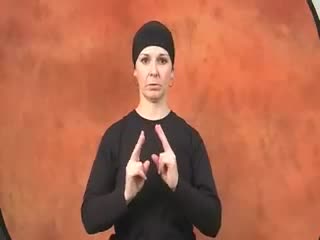
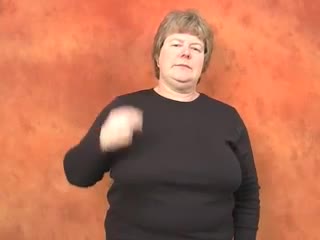
What Is the BSL Sign for "tarpaulin"?
Imagine unfolding a large, protective sheet, smoothing it over an area; that visual image perfectly captures the essence of the BSL sign for tarpaulin. This particular sign brings a very practical, almost hands-on feeling to your communication within British Sign Language. You’re not just conveying a word; you're illustrating the object's function and physical presence. Mastering the British Sign Language tarpaulin sign truly enhances your ability to describe everyday scenarios, making conversations much more vivid and relatable.
How to Sign "tarpaulin" in British Sign Language - Step-by-Step
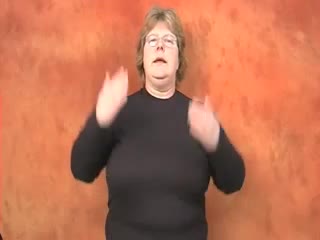
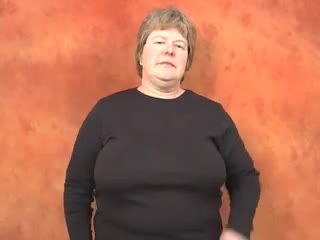
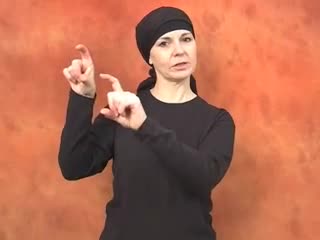
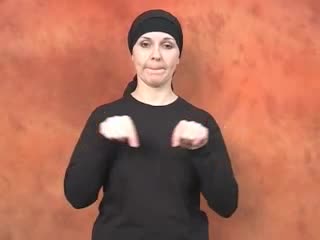
Let's break down the precise actions involved in forming the sign for "tarpaulin," guiding your hands as if you're laying one out yourself.
Step 1: Handshape
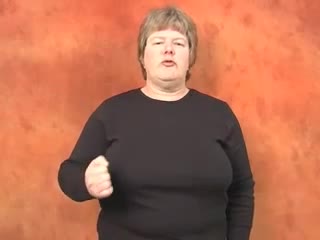
For this sign, you'll prepare both of your hands with a flat handshape. This means you should extend all four fingers of each hand, keeping them held together tightly, and keep your thumbs tucked neatly alongside the palm. It's like you're creating two perfectly flat surfaces, ready to represent the material itself.
Step 2: Hand Placement and Location
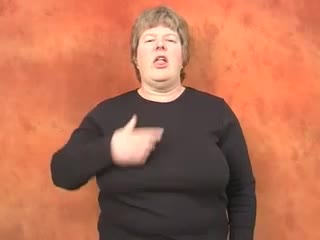
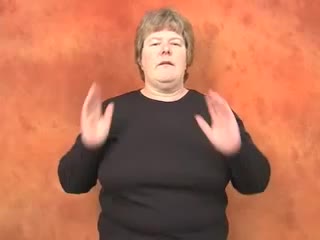
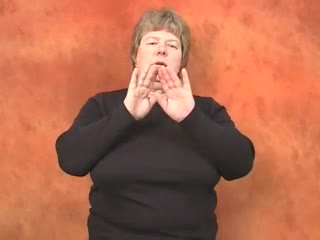
Begin with both of your flat hands positioned in front of your chest, approximately at solar plexus level. Your fingertips should point forward, directed away from your body, and the palms of both hands will face each other, held quite close together. This initial position sets the stage for the expansive movement that follows.
Step 3: Movement
From that starting position, simultaneously move both hands outward and slightly downward in a smooth, sweeping arc. Envision them unfolding and spreading a large fabric. As your hands separate and extend, they should move away from the centre of your body, creating a sense of width and coverage. You'll execute this spreading motion once, or repeat it a second time to really convey the idea of a substantial, wide covering.
Step 4: Facial Expression and Mouthing
Maintain a neutral and relaxed facial expression while executing this sign; there's no inherent emotion tied to the object itself. Crucially, you'll need to mouth the word "tarpaulin" or a natural shortened form like "tarp" as you sign. Non-manual features like mouthing are indispensable linguistic components in British Sign Language, providing clarity and specifying the exact English word being represented. This helps differentiate homophones or similar-looking signs, acting as a vital part of the BSL grammatical structure.
Step 5: Palm Orientation
Initially, your palms face each other as your hands are close together. As you perform the outward and downward spreading movement, the palm orientation shifts to face downward or slightly angled towards the ground. This transition in palm direction is significant, as it visually reinforces the action of laying something flat over a surface, directly mimicking how a physical tarpaulin would be deployed.
"tarpaulin" in BSL - Quick Reference Snapshot
- Handshape: Both hands flat, fingers together, thumb tucked.
- Location: In front of the chest, at solar plexus level.
- Movement: Hands start together, then sweep outward and slightly downward, spreading.
- Facial Expression: Neutral.
- Dominant Hand: Both hands active and symmetrical.
- Palm Orientation: Starts facing each other, shifts to facing downward.
5 Memorisation Tricks for the BSL Sign "tarpaulin"
- Visual Mnemonic: Picture yourself physically holding a corner of a large tarpaulin in each hand, then stretching it out wide. The flat handshape perfectly mimics the stiff, broad surface of the material, making the visual connection between your hands and the object very clear.
- Muscle-Memory Drill: Practice the spreading motion by imagining you're wiping down a very large table with both hands simultaneously. This repetitive, expansive movement builds the necessary muscle memory for the outward sweep, embedding the sign's unique kinetics into your signing repertoire.
- Connection to the Word's Meaning: Focus on the primary function of a tarpaulin: to cover and protect. The BSL sign visually represents this 'spreading over' action, so thinking about *why* we use a tarpaulin helps solidify the sign's form and purpose.
- Common-Confusion Tip: Be mindful not to confuse this sign with a simple "sheet" or "blanket" which might use slightly different movements or handshapes. Remember that "tarpaulin" specifically implies a more robust, often waterproof, material, and its sign reflects that expansive, functional deployment.
- Daily-Life Practice Idea: Every time you see a real tarpaulin – perhaps covering a skip, a boat, or garden furniture – take a moment to sign the word. This real-world contextualisation helps engrain the sign in your memory and connects it to tangible objects around you.
Real-Life Situations to Use the BSL Sign for "tarpaulin"
Using this sign in context helps it stick, and here's how you might encounter it in everyday BSL conversations:
- Someone might ask you, "NEED TARPAULIN YOU?" which is a common BSL structure for "Do you need a tarpaulin?" The sign for "tarpaulin" is placed at the end of the question, with your eyebrows raised to indicate interrogation.
- You could describe an action: "RAIN COME, I TARPAULIN COVER WOOD-PILE." Here, the sign for "tarpaulin" acts as a direct object, often followed by a verb of action like "cover," and spatial grammar shows *where* it's placed.
- Perhaps you're explaining a problem: "TARPAULIN I HAVE NOT, ROOF LEAKING!" The negative "NOT" would typically follow the object "TARPAULIN" in BSL sentence structure, clearly communicating the absence of the item.
- Giving instructions might look like: "GET TARPAULIN FROM SHED," where the signs flow in a topic-comment structure, with the object clearly specified before the action or location.
Top 3 Mistakes Learners Make Signing "tarpaulin" in BSL
Learning a new sign can feel a bit like learning a new dance, and sometimes our hands don't quite get the steps right immediately. Here are some common missteps with "tarpaulin" and how you can sidestep them.
- Incorrect Handshape Rigidity: Many beginners allow their fingers to splay or curl slightly during the sign, losing the crucial flat handshape. This happens because maintaining finger tension can be tricky initially, but a loose hand can change the sign's meaning entirely. To correct this, consciously practise holding your fingers tightly together and perfectly straight, as if they were a single, solid unit, before attempting the movement.
- Limited or Incorrect Movement: Failing to execute the full, expansive outward and downward sweep is another frequent error, sometimes resulting in a small, hesitant motion or an upward one. This often occurs when learners focus too much on speed rather than the visual representation of spreading something large. You'll want to ensure your hands travel a significant distance from each other, genuinely depicting the unfolding of a broad object.
- Neglecting Mouthing: Skipping the mouthing of "tarpaulin" is a common oversight, particularly among those new to BSL's non-manual features. Learners might feel it's less important than the hand movements, but mouthing is integral to BSL's grammatical and lexical clarity. Make a conscious effort to clearly mouth "tarpaulin" or "tarp" every time you sign, integrating it as a core part of the sign's execution.
Fascinating Facts About the BSL Sign for "tarpaulin"
Delving into the specifics of a sign can reveal some truly interesting insights into the structure and nature of British Sign Language itself.
- The BSL sign for "tarpaulin" is highly iconic, meaning its form directly mimics the action or appearance of the object it represents. This visual motivation makes it intuitively understandable, even to new learners, as it clearly depicts the unfolding or spreading of a large sheet.
- While core BSL signs generally maintain consistency across the UK, variations in signing style or minor regional adaptations can sometimes be observed. For "tarpaulin," the fundamental spreading motion remains the same, though the exact range of movement might differ slightly between individuals or communities, reflecting personal expressiveness.
- Many signs for common household or construction items in BSL are relatively modern, evolving as new objects become prevalent in daily life. This sign likely developed to efficiently represent a widely used item, showcasing BSL's dynamic capacity to incorporate new vocabulary.
- The two-handed, symmetrical nature of this sign is a common linguistic feature in BSL for objects that are large, flat, or require two hands to manipulate. This symmetry enhances the sign's clarity and visual impact, making it instantly recognisable as something substantial.
- This sign effectively functions as a noun, but its inherent movement can also imply the verb "to cover with a tarpaulin" depending on the broader sentence structure and context. This fluidity highlights how BSL efficiently packs meaning into single signs, reducing the need for separate signs for closely related concepts.
"tarpaulin" in Deaf Culture - Community and Identity
While a "tarpaulin" might seem like a mundane item, its sign, like any other in BSL, is a thread woven into the rich fabric of Deaf culture. Within the Deaf community, clear and efficient communication about all aspects of life, from practical tasks to abstract ideas, strengthens connections and shared experiences. Imagine community events, perhaps an outdoor gathering or a work party, where a tarpaulin might be used to shelter attendees or protect equipment. The shared BSL sign for this object becomes part of a collective understanding, a quick and effective way to coordinate efforts without relying on spoken language. It’s these everyday signs that empower Deaf individuals to navigate their world with full linguistic access, reinforcing their identity and fostering a profound sense of belonging. The ability to articulate practical needs, like requesting a tarpaulin, underpins the self-sufficiency and resourcefulness that are highly valued within Deaf communities.
Example Conversations Using "tarpaulin" in BSL
Here are five distinct scenarios where you might use the sign for "tarpaulin" in British Sign Language:
English: Did you remember to bring the tarpaulin for the picnic? - BSL structure: PICNIC, TARPAULIN BRING YOU REMEMBER? (Topic-comment structure, question marked by raised eyebrows).
English: The rain was so heavy, but the tarpaulin kept our camping gear dry. - BSL structure: RAIN HEAVY, BUT TARPAULIN OUR CAMPING GEAR DRY. (Simple declarative, "tarpaulin" as the subject of the action).
English: We need to get a bigger tarpaulin for the boat over winter. - BSL structure: WINTER, BOAT NEED BIGGER TARPAULIN. (Statement expressing need, noun-adjective order for "bigger tarpaulin" often reversed or implied through spatial size).
English: Can you help me lay out this tarpaulin over the garden furniture? - BSL structure: GARDEN-FURNITURE, THIS TARPAULIN LAY-OUT HELP ME? (Instructional request, often with eye gaze indicating the items).
English: Unfortunately, the tarpaulin had a small tear in it. - BSL structure: SORRY, TARPAULIN SMALL TEAR HAD. (Adverbial modifier "unfortunately" often signed at the beginning, followed by topic-comment structure).
Frequently Asked Questions: The BSL Sign for "tarpaulin"
Are there regional differences for the BSL sign for tarpaulin?
Generally, the core sign for "tarpaulin" in British Sign Language is quite consistent across the United Kingdom. Its highly iconic nature, mimicking the action of spreading a sheet, contributes to its widespread recognition. While individual signers might have slight stylistic variations in their movement, the fundamental handshape, location, and motion remain largely uniform.
What signs are easily confused with BSL tarpaulin?
Learners sometimes confuse "tarpaulin" with signs for "sheet," "blanket," or "cover." Although they share a common theme of covering, "tarpaulin" typically involves a more expansive, often two-handed, firmer spreading motion, reflecting the material's robust nature. "Sheet" or "blanket" signs might use softer movements or different handshapes to convey fabric texture.
Is the sign for tarpaulin in BSL suitable for beginners?
Absolutely, the sign for "tarpaulin" is very suitable for beginners! It's an iconic sign, meaning its visual form directly relates to the object, making it intuitive and easy to grasp. The handshapes and movements are relatively straightforward, providing a good foundation for learning more complex signs later on.
How can I teach the BSL sign for tarpaulin to children?
Teaching the BSL sign for "tarpaulin" to children is delightful! You can make it fun by pretending to have a giant imaginary tarpaulin to cover toys, or use a real small blanket to demonstrate the spreading action. Emphasise the big, sweeping movement and encourage them to mouth the word "tarpaulin" as they sign, turning it into an engaging play activity.
How does the BSL sign for tarpaulin differ from signs in other international sign languages?
Signs for common objects like "tarpaulin" often vary significantly between different sign languages worldwide, even if some may share an iconic motivation. The BSL sign for "tarpaulin" specifically uses the two-handed, outward-spreading motion with flat hands, which is unique to British Sign Language's lexical structure and regional influences. Each sign language develops its own distinct vocabulary, reflecting its cultural and linguistic heritage.
Signs That Pair Naturally with "tarpaulin" in BSL
Building your vocabulary systematically helps you communicate more effectively. Here are some BSL signs that naturally connect with "tarpaulin":
- COVER: This verb often follows "tarpaulin" in sentences, as you'd typically use a tarpaulin to cover something. Learning them together reinforces the object's purpose.
- WATERPROOF: Since tarpaulins are often waterproof, this adjective is a perfect companion sign. It helps describe a key characteristic of the item.
- RAIN: People frequently use tarpaulins to protect things from rain, so signing "rain" before or after "tarpaulin" provides essential context for its usage.
- TENT: Tarpaulins share a conceptual link with "tent" as they both provide shelter or cover for outdoor activities. They often appear together in conversations about camping or construction.
- ROPE: You often need "rope" to secure a tarpaulin, so these two signs form a practical pair, especially when discussing practical tasks.
- PROTECT: This sign highlights the primary function of a tarpaulin, which is to safeguard items. Linking "tarpaulin" with "protect" deepens your understanding of its role.
Building Fluency: How to Practise "tarpaulin" in BSL
To really make the BSL sign for "tarpaulin" part of your fluent signing, consistent and varied practice is key. Start by standing in front of a mirror, carefully observing your handshapes and movements for precision, ensuring those fingers stay flat and together. Integrate this sign into your daily BSL conversation practice; whenever you're talking about anything related to covering, protecting, or even just large, flat objects, try to naturally weave in the sign for "tarpaulin." You might also film yourself signing the word in a few different short sentences, then review the footage to spot any areas for improvement, paying close attention to your non-manual features. Finally, seek out opportunities to use "tarpaulin" with a Deaf conversation partner or within a signing group; genuine interaction is the fastest way to build confidence and natural flow. Remember, regular repetition spaced over several days, rather than intense cramming, will help solidify this sign in your long-term memory.