What Is the BSL Sign for "protection mask"?
When you're delving into British Sign Language, discovering how we communicate concepts like "protection mask" offers a glimpse into how our language adapts to new realities. This particular sign isn't just about covering your face; it visually encapsulates the idea of shielding oneself, a truly practical and relevant term in modern discourse. Grasping the BSL sign for protection mask means you're adding a vital piece of vocabulary for everyday conversations, especially concerning health and safety within the UK. Understanding this sign provides a clear, concise way to express a common item, strengthening your connection with the Deaf community.
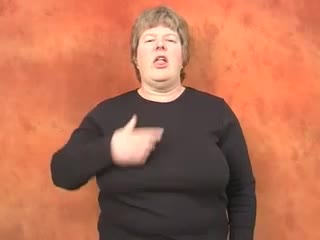
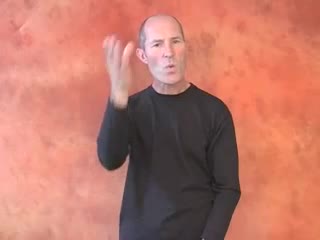
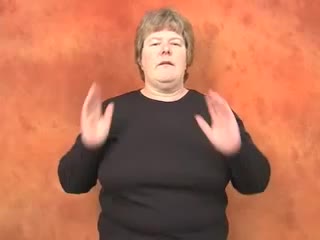
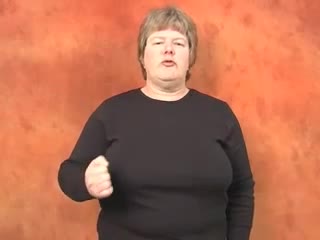
How to Sign "protection mask" in British Sign Language - Step-by-Step
Let's walk through the precise movements that bring the concept of a "protection mask" to life in British Sign Language, ensuring you capture its full meaning.
Step 1: Handshape
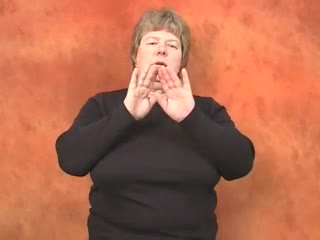
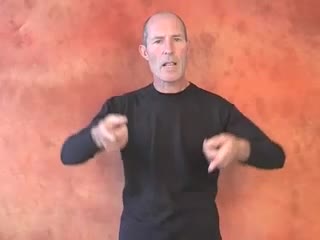
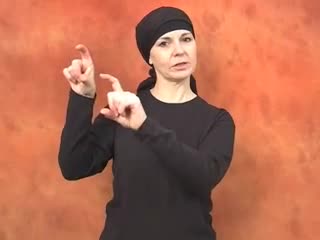
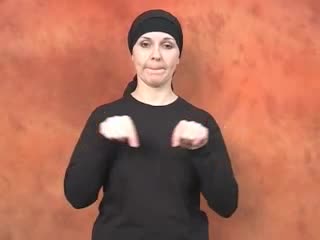
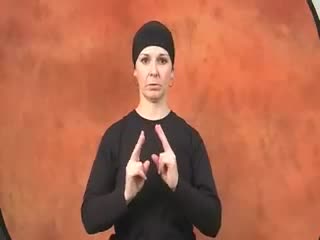
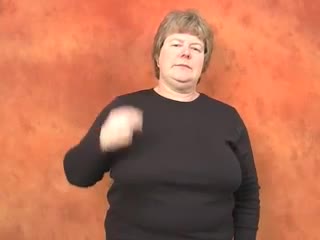
For this sign, you'll begin by forming a 'C' handshape with your dominant hand. This means your index finger and thumb are extended and curved to create a 'C' or 'G' shape, while your middle, ring, and pinky fingers remain curled into your palm. Picture the outline of something gently cupping your chin and mouth; that’s the general form your hand will take.
Step 2: Hand Placement and Location
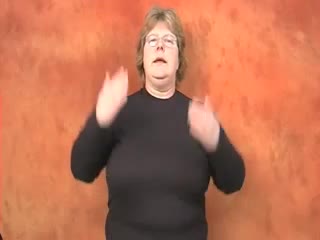
Now, bring your dominant hand, already in that 'C' shape, up towards your face. Your thumb should be positioned near your chin, and your index finger should be pointing upwards, roughly parallel to your cheek, covering the area around your mouth and nose. The hand is held just in front of, but not touching, your face, simulating the presence of a mask.
Step 3: Movement
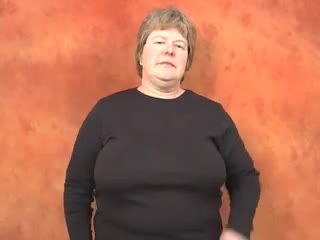
From this initial position, your hand moves slightly outwards and then gently sweeps downwards, away from your face, mimicking the action of removing a mask or simply indicating its presence without direct contact. The movement is fluid and controlled, often a single, deliberate sweep. There's no repetition in the core movement; it's one clear, descriptive action.
Step 4: Facial Expression and Mouthing
Typically, a neutral facial expression accompanies the sign for "protection mask." However, depending on the context – perhaps discussing discomfort or necessity – your expression might subtly shift to convey those nuances. Mouthing the word "mask" or "protection mask" simultaneously with the sign is common practice in British Sign Language, aiding clarity for both Deaf and hearing signers and reinforcing the English equivalent. This non-manual feature serves as a crucial linguistic component, ensuring unambiguous communication.
Step 5: Palm Orientation
Throughout the sign, your palm generally faces inward, towards your face, maintaining the visual impression of covering that area. As your hand sweeps downwards and slightly away, the palm might rotate slightly, finishing with it angled more towards the side. This inward orientation is vital because it clearly signifies the item's function – to cover and protect the front of the face.
"protection mask" in BSL - Quick Reference Snapshot
- Handshape: Dominant 'C' handshape (index finger and thumb curved, other fingers curled)
- Location: In front of the lower face (chin, mouth, nose area)
- Movement: Gentle sweep outwards and downwards, away from the face
- Facial Expression: Generally neutral (context-dependent for nuance)
- Dominant Hand: Always uses the dominant hand
- Palm Orientation: Initially inward, towards the face; may slightly rotate outwards during movement
5 Memorisation Tricks for the BSL Sign "protection mask"
- Visual Mnemonic: Picture your 'C' handshape literally forming the curve of a mask around your mouth and chin. Imagine the fabric stretching around your lower face, making that distinctive 'C' curve easy to recall. This immediate visual link helps cement the handshape in your mind.
- Muscle-Memory Drill: Practice the movement of gently sweeping your hand away from your face ten times, focusing on the fluidity. Engage your wrist and arm to feel the subtle arc, which will help your body remember the motion instinctively without conscious thought.
- Connection to Meaning: Think about the core purpose of a protection mask: it covers and protects. The sign’s movement, where your hand indicates covering the face, directly reflects this function, forging a strong conceptual link for easier recall.
- Common-Confusion Tip: Be careful not to let your hand touch your face directly; the sign signifies *presence* or *action* of a mask, not actually applying it. Maintaining a small distance prevents confusion with signs that involve direct facial contact, such as "wash face."
- Daily-Life Practice Idea: Every time you see someone wearing a protection mask in real life, mentally or physically (if appropriate) practice the sign. Associating the sign with its real-world object whenever you encounter it will solidify your memory.
Real-Life Situations to Use the BSL Sign for "protection mask"
- Imagine you're at a clinic, and a receptionist signs to you, "Do you have your protection mask?" You'd use this sign, perhaps accompanied by a head shake or nod, to answer their question directly.
- Perhaps you're discussing health guidelines with a Deaf friend, explaining that you need to wear a protection mask on public transport. You'd incorporate the sign smoothly into a sentence like, "I need to wear protection mask on bus."
- Consider a scenario where you're asking about rules for an event: "Is protection mask required for entry?" Here, the sign would appear within a question structure, possibly with raised eyebrows to indicate interrogation in BSL grammar.
- You might tell someone, "Don't forget your protection mask!" The sign would be integrated into a negative command, often using a headshake and specific facial grammar to convey the "don't" aspect.
Top 3 Mistakes Learners Make Signing "protection mask" in BSL
- Incorrect Handshape: A common error involves using a flat hand or an open '5' handshape instead of the specific 'C' configuration. This happens because beginners sometimes over-generalise signs related to covering. The correction is to consciously ensure your index finger and thumb form a distinct 'C', with other fingers tucked away, replicating the curve of a mask.
- Touching the Face: Many learners mistakenly allow their hand to make contact with their chin or mouth during the sign. This often stems from a natural inclination to physically demonstrate the item. To correct this, remember the sign indicates the *area* a mask covers and its *action*, so keep your hand just a few centimetres away from your face throughout the movement.
- Wrong Movement Direction: Sometimes people move their hand upwards, or in a circular motion, rather than the specific outward and downward sweep. This usually occurs from a lack of precise observation of the sign's flow. The correct movement is a singular, gentle arc away from the face, clearly depicting the item's placement or removal.
Fascinating Facts About the BSL Sign for "protection mask"
- The sign for "protection mask" has seen increased prominence and perhaps even subtle evolution in its usage and recognition since the global health events of the early 2020s. Its rapid integration reflects BSL's dynamic capacity to incorporate new vocabulary.
- You'll find this sign is largely iconic, meaning its form directly mimics the object it represents – the 'C' handshape and movement clearly evoke the act of covering the lower face. This iconic motivation makes it relatively intuitive for new learners to grasp.
- While core BSL signs often have deep historical roots, "protection mask" is a more contemporary addition, emerging naturally from community needs to communicate about public health measures. This showcases how vibrant languages continuously adapt to the changing world.
- Interestingly, some regional variations in BSL might involve slight differences in the precise arc or initial hand placement, though the fundamental 'C' handshape near the mouth remains consistent across most UK Deaf communities. This gentle variation is typical within BSL, much like spoken language accents.
- The sign doesn't typically relate directly to the BSL manual alphabet, as it's a concept sign rather than a finger-spelled word. Its meaning is conveyed entirely through its visual, spatial, and movement properties, highlighting the richness of BSL beyond just individual letters.
"protection mask" in Deaf Culture - Community and Identity
Within Deaf culture, the concept of a "protection mask" gained immense significance during recent public health crises, particularly regarding accessibility to communication. For many Deaf individuals, masks, especially opaque ones, posed significant barriers to lip-reading, a crucial communication strategy for some. This led to widespread advocacy for clear or transparent masks, highlighting the community's proactive efforts to ensure communication accessibility even in challenging times. The sign itself, therefore, became a powerful tool for discussing these new norms, advocating for inclusive practices, and sharing experiences within the community. It represents not just an object, but a focal point for discussions on health, accessibility, and the resilience of Deaf identity.
Example Conversations Using "protection mask" in BSL
English: Do you need a protection mask for the hospital visit? - BSL structure: HOSPITAL VISIT, PROTECTION MASK NEED YOU? (Topic-Comment structure, question grammar with raised eyebrows)
English: I forgot my protection mask at home, I'll go back and get it. - BSL structure: PROTECTION MASK HOME FORGET I, GO BACK GET IT. (Clear subject-verb-object, spatial reference to home)
English: You should wear a protection mask if you're feeling unwell. - BSL structure: FEEL UNWELL YOU, PROTECTION MASK WEAR SHOULD. (Conditional structure, advice)
English: Is it mandatory to wear a protection mask in this shop? - BSL structure: THIS SHOP, PROTECTION MASK WEAR MANDATORY? (Topic first, question grammar)
English: I prefer a fabric protection mask over a disposable one. - BSL structure: PROTECTION MASK FABRIC I PREFER, DISPOSABLE NOT. (Comparative statement, negation)
Frequently Asked Questions: The BSL Sign for "protection mask"
Is there any regional variation for the BSL sign for protection mask?
While the core handshape and concept remain consistent across the UK, you might encounter very minor regional differences in the exact sweep or initial hand placement. These variations are usually subtle and won't impede understanding, much like regional accents in spoken English. The fundamental message is always clear.
Are there any similar signs I should be careful not to confuse with protection mask?
Indeed, some signs involve the face area, but usually with different handshapes or movements. For instance, "face" uses a flat hand sweeping down the face, and "sick" involves a hand on the stomach and forehead. Paying close attention to the specific 'C' handshape and the distinct outward-downward sweep for "protection mask" will prevent any mix-ups.
Is "protection mask" a good sign for beginners to learn early on?
Absolutely, this is an excellent sign for beginners! It's highly iconic, meaning it looks like what it describes, making it intuitive to remember. Learning it early helps you engage in practical conversations about health and daily life, which is always motivating for new learners.
Can children easily learn and use the BSL sign for protection mask?
Yes, children often pick up iconic signs like "protection mask" very quickly. Its clear visual representation makes it accessible and fun for young learners. Encouraging them to practice helps build their BSL vocabulary from an early age.
How does the BSL sign for protection mask compare to the equivalent in other sign languages?
Across different sign languages globally, you'll often find iconic signs for "mask" that mimic covering the face, but the specific handshapes, movements, and palm orientations will vary. Each sign language develops its own unique linguistic form, even for similar concepts, reflecting its distinct cultural and grammatical structures.
Signs That Pair Naturally with "protection mask" in BSL
- HEALTH: This sign, often made by tapping a 'H' handshape on the non-dominant palm, links naturally to "protection mask" when discussing overall well-being or public health.
- SICK/ILL: When someone is unwell, the topic of wearing a "protection mask" frequently arises, making this a useful pairing.
- HOSPITAL: Given that "protection masks" are often required or used in medical settings, signing "hospital" alongside it creates a common contextual cluster.
- COVER: The more general sign for "cover" (often a flat hand over another) shares conceptual overlap with the function of a protection mask, aiding in broader descriptive contexts.
- WEAR: You'll often sign "wear" (two 'F' handshapes moving down the body) in conjunction with "protection mask" when giving instructions or making observations.
- CLEAN: Discussing the cleanliness or hygiene of a "protection mask" makes the sign for "clean" (wiping motions with flat hands) a natural companion.
Building Fluency: How to Practise "protection mask" in BSL
To truly make the sign for "protection mask" your own, consistent practice is key. Stand in front of a mirror and watch your dominant hand as you form the 'C' shape and execute the outward, downward sweep; pay close attention to the precision of your handshape and the fluidity of your movement, ensuring you're not touching your face. Try integrating the sign into simple, everyday BSL sentences; for instance, as you head out, think "I need protection mask" and sign it, building contextual memory. Filming yourself can also be incredibly insightful, allowing you to review your technique and spot any areas for improvement that you might miss in real-time. Crucially, seek out opportunities to interact with Deaf signers; using the sign in genuine conversations will not only boost your confidence but also refine your natural flow. Remember, spaced repetition over several days will embed this sign firmly into your muscle memory, helping you sign with greater ease and confidence.