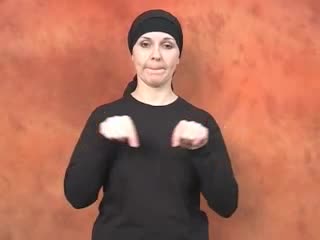
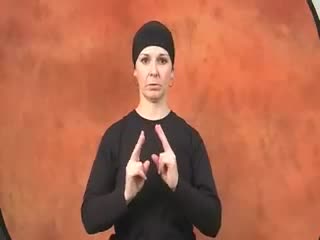
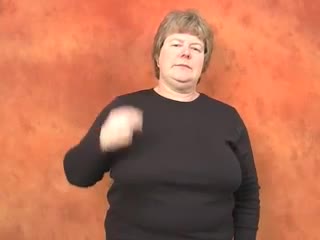
What Is the BSL Sign for "marble"?
Ever wondered how to explain that satisfying click of a marble rolling across a hard floor, or describe those beautiful swirling colours, entirely without sound? The British Sign Language sign for marble offers a wonderfully visual and tactile representation for this classic toy. It's a sign that truly brings the object to life in your hands, making it highly effective for connecting with others about games, art, or even geological formations. Mastering the BSL sign for marble will undoubtedly enrich your conversations about a truly versatile little sphere.
How to Sign "marble" in British Sign Language - Step-by-Step
Let's explore the precise movements that form the sign for 'marble', breaking down each component so you can master it with confidence.
Step 1: Handshape
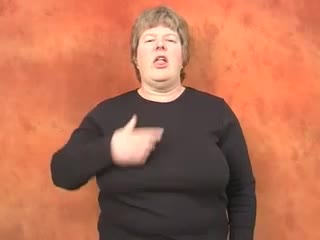
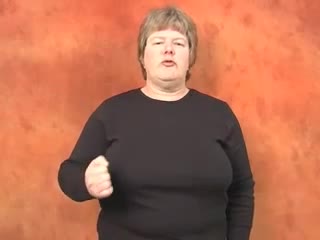
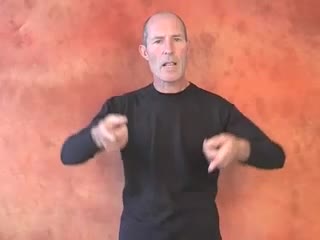
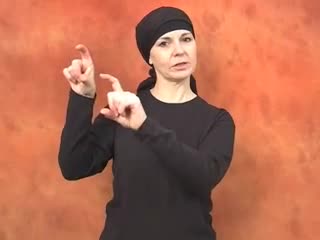
To begin, you'll form what's known as the 'S' handshape with your dominant hand. This means your fingers curl into a firm fist, with your thumb resting across the front of your curled index and middle fingers. Imagine you're gently but securely holding a small, smooth pebble in your palm, ensuring all your fingers are tightly tucked in, ready for action.
Step 2: Hand Placement and Location
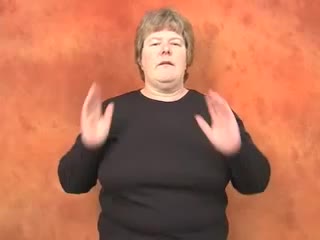
Now, position your dominant hand, still in that 'S' handshape, in the neutral signing space directly in front of your chest. There's no need to touch your body or other hand; simply hold it comfortably about shoulder-width from your torso. This central location ensures clarity and visibility for your communication partner.
Step 3: Movement
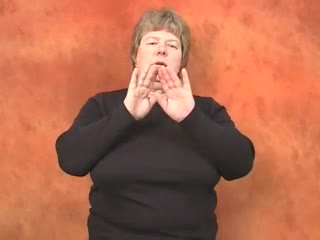
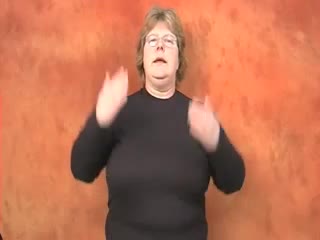
From this starting position, perform a small, circular motion with your wrist, rotating your 'S' handshape clockwise. The movement isn't large or sweeping; instead, it's a tight, controlled circle, as if you're subtly rolling a tiny object between your thumb and fingers. Repeat this gentle rotation two or three times, creating a visual echo of a marble's movement.
Step 4: Facial Expression and Mouthing
While performing the sign, it's customary to mouth the word 'marble' as you sign it. This isn't just about sound; mouthing provides a vital visual cue for hearing people who are learning and for some Deaf individuals who lip-read. A neutral or slightly thoughtful facial expression generally accompanies this sign, reflecting the object itself without conveying strong emotion, unless you're expressing an opinion about the marble, of course.
Step 5: Palm Orientation
Throughout the entire signing process, your palm should consistently face towards your non-dominant side, or slightly downwards. Keeping the palm angled this way showcases the 'S' handshape clearly and naturally presents the circular movement as if you're showing the rolling action of a marble. This orientation remains stable without any shifts during the rotational gesture.
"marble" in BSL - Quick Reference Snapshot
- Handshape: Dominant 'S' hand (fist with thumb over fingers)
- Location: Neutral signing space in front of chest
- Movement: Small, controlled clockwise wrist rotation (2-3 times)
- Facial Expression: Neutral, mouth 'marble'
- Dominant Hand: Yes
- Palm Orientation: Towards non-dominant side or slightly down
5 Memorisation Tricks for the BSL Sign "marble"
- Picture your dominant hand as a closed hand, perfectly cupping a small marble. The 'S' handshape already resembles a hand holding something round and compact, so you can imagine that tiny sphere nestled inside your fist. This helps you remember the initial form before any movement begins.
- Practice making the 'S' handshape repeatedly, then add the small wrist rotation, focusing on the feeling in your wrist and forearm. Do this a few times with your eyes closed, then open them, allowing your body to internalise the physical sensation of signing 'marble' correctly.
- Think about how a marble feels: smooth, round, often rolled between fingers. The BSL sign beautifully mimics this tactile experience with its contained handshape and gentle, circular motion. Connecting the physical sign to the sensory properties of a real marble strengthens your recall.
- Many beginners mistakenly use an open hand or a 'C' shape, or perform a larger, sweeping arm movement. Remember, the key is the tight 'S' handshape and the small, precise wrist rotation, keeping the movement confined as if rolling something tiny in your palm. Avoid any broad arm gestures.
- Whenever you see something small and round, or even think of the game, take a moment to sign 'marble' to yourself. Integrate it into your daily visual vocabulary; for instance, if you pass a statue made of marble, pause and practise the sign, making that direct connection to the object.
Real-Life Situations to Use the BSL Sign for "marble"
- Imagine you're discussing a board game with a Deaf friend, and you need to specify the small, colourful spheres used in it; you'd sign 'marble' clearly before demonstrating the game's rules.
- Perhaps you're admiring an intricate sculpture made from the stone and want to ask, 'IS THIS MARBLE?' Here, you'd sign 'THIS MARBLE QUESTION-MARK' (with raised eyebrows), demonstrating how the sign integrates into a direct interrogative structure.
- You might be explaining a craft project to a child, showing them how to paint designs that look like marble patterns on paper. You'd sign 'PAINT LIKE MARBLE' to convey the visual texture you're aiming for.
- If someone asks what's inside a jar, and you want to say, 'THERE'S NO MARBLE IN THERE', you'd sign 'JAR INSIDE MARBLE NONE' using BSL's topic-comment structure and negation, showing how the sign functions in a negative statement.
Top 3 Mistakes Learners Make Signing "marble" in BSL
- Incorrect Handshape: A frequent error involves using an open hand or a 'C' handshape instead of the correct 'S' handshape. Learners sometimes confuse the idea of 'holding' with a more open gesture. The precise correction is to ensure all fingers are tightly curled into a fist, with the thumb lying across the knuckles, creating a solid, round form.
- Exaggerated Movement: Another common misstep is making the circular movement too large, using the whole arm or elbow, rather than just the wrist. This often happens when people try to visually represent 'rolling' on a larger scale. Focus on keeping the movement very small and controlled, purely from the wrist, as if you're gently rotating a tiny object within your closed hand.
- Palm Orientation Drift: New learners sometimes let their palm orientation shift, perhaps facing forward or downward during the rotation, which can obscure the handshape. The proper orientation keeps the palm consistently facing towards your non-dominant side, ensuring the 'S' handshape is clearly visible and the rolling action is presented cleanly to your audience.
Fascinating Facts About the BSL Sign for "marble"
- The sign for 'marble' in BSL is considered highly iconic, meaning its form directly resembles the action or appearance of the object it represents. The compact handshape and circular motion cleverly mimic holding and rolling a small, round stone.
- While the core sign remains consistent, you might observe subtle regional variations in the size or speed of the circular movement across the UK's diverse Deaf community. Some signers might use a slightly larger or smaller circle, though the fundamental handshape and wrist action persist.
- Interestingly, the 'S' handshape itself is quite versatile in BSL, often representing small, contained objects or actions. For 'marble', it perfectly captures the item's small, dense nature, highlighting how BSL leverages common handshapes for multiple iconic representations.
- The sign doesn't directly derive from a fingerspelled letter, but its iconic nature makes it universally understandable, even across different BSL dialects. It's a prime example of BSL's visual-gestural strength.
- This sign effectively conveys both the object itself and, through context, can even imply the game of marbles. The single sign performs a dual function, showcasing BSL's economy of movement and meaning.
"marble" in Deaf Culture - Community and Identity
Within the vibrant Deaf community, sharing games and activities is a cornerstone of connection, and 'marble' often evokes childhood memories of play and friendly competition. Signing about marbles can spark delightful conversations about pastimes, strategies, and the simple joy of physical games that transcend language barriers. It's a reminder of shared experiences that build community bonds, creating a visual language around play. This sign isn't just about an object; it's a doorway to nostalgic stories and shared cultural touchstones that strengthen identity among BSL users. When you sign 'marble', you're not just communicating a word; you're tapping into a collective memory of fun and interaction.
Example Conversations Using "marble" in BSL
English: Do you want to play marbles later? - BSL structure: 'YOU WANT MARBLE PLAY LATER QUESTION-MARK' (using raised eyebrows for the question and natural BSL word order)
English: That statue is made of beautiful white marble. - BSL structure: 'STATUE THAT MARBLE WHITE BEAUTIFUL' (placing adjectives after the noun and using descriptive signing)
English: I accidentally dropped all the marbles. - BSL structure: 'MARBLE ALL I DROP ACCIDENTALLY' (topic-comment structure, with 'I' often implied or signed at the end)
English: How many marbles do you have in your collection? - BSL structure: 'MARBLE HOW-MANY YOUR COLLECTION QUESTION-MARK' (direct question using specific BSL question signs)
English: Be careful, the floor is slippery like polished marble. - BSL structure: 'BE-CAREFUL FLOOR SLIPPERY LIKE MARBLE POLISHED' (utilising visual comparisons and descriptive modifiers)
Frequently Asked Questions: The BSL Sign for "marble"
Is there a specific BSL sign for different colours of marble?
Generally, you'd sign 'marble' first, then follow it with the appropriate BSL sign for the specific colour you're referring to, like 'BLUE' or 'GREEN'. BSL often uses a base sign for an object, then modifies it with descriptors for greater specificity, rather than having unique signs for every coloured variant.
Are there any regional variations for the BSL marble sign?
While the fundamental handshape and circular motion for 'marble' are widely consistent across the UK, you might encounter slight differences in the precise size or speed of the rotation depending on the regional dialect of BSL. These minor nuances are typically understood within the broader community and don't usually hinder communication.
Is the BSL sign for marble suitable for beginners to learn?
Absolutely! The BSL sign for 'marble' is an excellent sign for beginners because it's highly iconic and easy to visualise, connecting directly to the object's appearance and how it's handled. Its clear, distinct movements make it relatively straightforward to grasp and replicate, building early signing confidence.
How does the British Sign Language marble sign compare to equivalent signs in other signed languages?
While the concept of 'marble' exists universally, other signed languages will have their own distinct signs, often reflecting their unique linguistic and cultural motivations. For instance, some might use a different handshape or movement altogether, demonstrating the independent evolution of various signed languages even for common objects.
Can children easily learn the BSL sign for marble?
Yes, children pick up the BSL sign for 'marble' very quickly, largely due to its visual simplicity and the fact that marbles are common play items. The sign's clear representation of rolling a small object resonates well with a child's understanding of the world, making it a fun and engaging sign for young learners.
Signs That Pair Naturally with "marble" in BSL
- PLAY: This sign naturally complements 'marble' when discussing games, activities, or inviting someone to join in a game of marbles. Both signs evoke recreation and interaction.
- ROUND: Since marbles are inherently spherical, the sign for 'round' is a logical companion, used to describe the object's shape or other circular items. It reinforces visual descriptors.
- COLOUR: Marbles are often vibrant, so 'colour' allows you to specify the different hues of marbles, expanding your descriptive vocabulary in context. This helps you paint a fuller picture.
- GAME: When discussing organised activities or competitions, 'game' pairs well, as marbles are frequently part of a structured play experience. It contextualises the object's use.
- SMALL: Emphasising the size of a marble with the sign for 'small' adds another layer of detail, especially when distinguishing it from larger objects. This highlights a key characteristic.
- DROP: If you're talking about an accident or an action involving marbles, the sign for 'drop' becomes relevant, describing what happens if they fall. This connects to actions involving the object.
Building Fluency: How to Practise "marble" in BSL
To truly embed the BSL sign for 'marble' into your signing repertoire, start by utilising a mirror to observe your own hand