What Is the BSL Sign for "cooling coil"?
Delving into the specifics of technical vocabulary in British Sign Language offers a unique window into the precision and adaptability of our visual language. Today, you're going to master the BSL sign for cooling coil, a term crucial in engineering, HVAC, and even everyday discussions about refrigeration or climate control. This particular sign beautifully illustrates how BSL often combines conceptual representation with clear visual action, making complex ideas accessible. Understanding the specific movements and nuances of the cooling coil sign language contributes significantly to your fluency and confidence within the Deaf community, enriching every conversation you have.
How to Sign "cooling coil" in British Sign Language - Step-by-Step
Learning to produce this sign accurately involves a careful sequence of handshapes, movements, and non-manual features, each playing a vital part in conveying the full meaning.
Step 1: Handshape
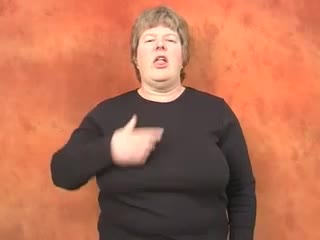
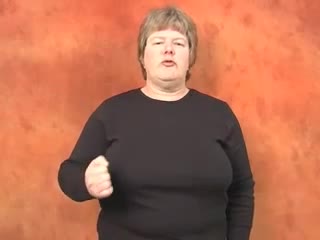
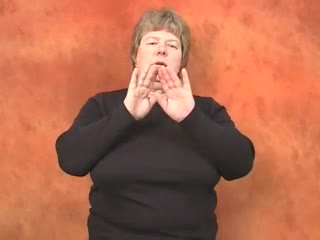
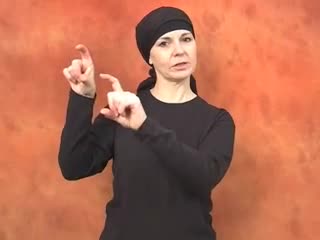
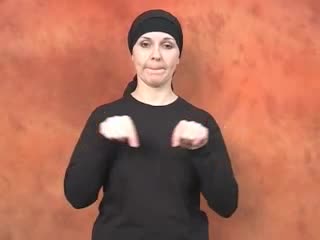
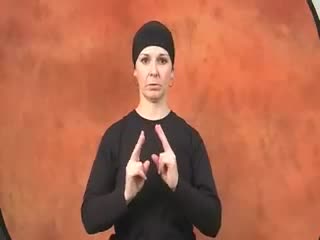
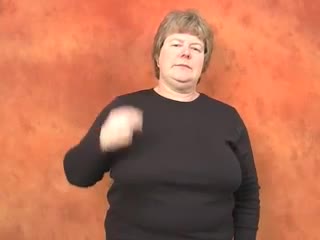
You'll begin with your dominant hand forming a 'C' shape, where your index finger and thumb curve gently towards each other, nearly touching, while your remaining fingers curl naturally into your palm. This precise hand configuration represents the cross-section of a pipe or the circular nature of a coil, establishing the foundational visual for the sign. It's a clear, distinct shape that immediately suggests a cylindrical or tubular form, essential for conveying the concept.
Step 2: Hand Placement and Location
Position your 'C' handshape with your palm facing slightly forward or towards your body, starting around the upper chest or stomach area. Simultaneously, your non-dominant hand should be held flat, palm facing upwards, providing a stable visual base just below where your dominant hand will perform its action. This arrangement sets up a clear spatial context, indicating that the 'coil' is situated on or within a broader structure.
Step 3: Movement
With your dominant 'C' handshape, execute a small, controlled spiralling motion, moving downwards slightly as you complete each rotation. Perform this coiling movement two or three times, ensuring each turn is smooth and deliberate, mimicking the intricate winding of a physical coil. The downward trajectory subtly suggests the flow or the layered structure of the component, bringing dynamic life to the sign.
Step 4: Facial Expression and Mouthing
While the sign for cooling coil primarily relies on hand and arm movements, incorporating a neutral facial expression is generally appropriate. However, for added clarity or emphasis, you might subtly mouth the English word "cooling coil" without vocalising, or allow a slight furrow of your brow to indicate concentration or a technical context. Occasionally, a gentle puff of the cheeks or a small outward breath can accompany the sign, subtly hinting at the concept of air movement or temperature regulation. These non-manual features are integral to how we convey meaning and grammatical information in British Sign Language, complementing the manual sign with crucial contextual layers.
Step 5: Palm Orientation
Your dominant hand's palm initially faces forward or slightly inwards, but you'll notice it naturally rotates subtly throughout the spiralling movement, adapting to the curve of the coil. This fluid change in palm orientation is key; it prevents the sign from appearing stiff or unnatural and actively reinforces the three-dimensional, winding nature of a coil. The changing angle of your palm helps visually represent the continuous curve of the component, making the sign far more descriptive.
"cooling coil" in BSL - Quick Reference Snapshot
- Handshape: Dominant hand in a 'C' shape (index and thumb curved).
- Location: Upper chest/stomach area, above non-dominant flat palm.
- Movement: Dominant 'C' hand spirals downwards 2-3 times.
- Facial Expression: Neutral, possibly subtle mouthing of "cooling coil" or gentle cheek puff.
- Dominant Hand: Performs the 'C' handshape and spiralling movement.
- Palm Orientation: Starts forward/inward, rotating with the coiling motion.
5 Memorisation Tricks for the BSL Sign "cooling coil"
- Visual Mnemonic: Picture your 'C' handshape as a small section of a pipe or a hose. As you perform the spiralling motion, imagine water or coolant winding its way through a series of tubes, gradually dissipating heat. This direct visual link to the object's function makes the movement unforgettable.
- Muscle-Memory Drill: Try closing your eyes and visualising the sign while you execute the movement slowly, focusing intensely on the sensation in your dominant hand and wrist. Repeating this deliberate, mindful practice twenty times each morning will embed the motion deeply into your muscle memory.
- Connect to Meaning: Break the sign down mentally: the 'C' hand shape represents the "coil" itself, while the downward spiralling action can remind you of fluid circulating or heat being drawn downwards and away. Linking these elements directly to the word's definition solidifies the connection.
- Common-Confusion Tip: Be mindful not to confuse the spiralling motion with a simple circle; the downward progression is crucial for "coil." Many learners mistakenly perform a flat circular movement, but remembering that coils have depth and layers will help you avoid this common error.
- Daily-Life Practice: Whenever you encounter an air conditioning unit, a refrigerator, or even a water heater, pause for a moment and physically perform the sign for cooling coil. Integrating it into your natural observations throughout the day reinforces the sign's relevance and makes practice organic.
Real-Life Situations to Use the BSL Sign for "cooling coil"
Knowing how to use the sign for cooling coil in context brings it to life, transforming a static gesture into dynamic communication. You might use this sign when discussing a faulty appliance, as in "MY FRIDGE BROKEN, MAYBE COOLING COIL FAULT?" – here, the sign comes after the object and before the problem, following a BSL topic-comment structure. Perhaps you're explaining a mechanical diagram to a Deaf colleague, pointing to the relevant section and signing "THIS PART, THAT'S COOLING COIL" to clearly identify the component. Or consider a more technical conversation where you're asking about repairs: "WHICH COOLING COIL NEED REPLACE?" – the question word often appears at the end in BSL, adding emphasis. You could also explain a process: "AIR GO THROUGH HERE, THEN COOLING COIL MAKE COLD" – showcasing the sequence of events.
Top 3 Mistakes Learners Make Signing "cooling coil" in BSL
- Incorrect Handshape: Many beginners struggle to maintain the distinct 'C' handshape, often letting their fingers splay or curling them too tightly into a fist. This happens because they're focusing more on the movement than the initial form, which distorts the visual representation of a pipe. The precise correction involves consciously isolating your index finger and thumb, ensuring they form a clear curve, and then allowing the other fingers to relax naturally.
- Flat, Non-Descending Movement: A common error involves performing a simple circular motion without any downward progression, making the sign look like "circle" rather than a three-dimensional "coil." This frequently occurs when learners haven't fully grasped the concept of depth within BSL signing space. To fix this, intentionally guide your hand slightly downwards with each rotation, visualising a spiral staircase rather than a flat loop.
- Missing Non-Dominant Hand Context: Some learners omit the non-dominant hand or hold it in an unspecific way, losing the crucial visual anchor that grounds the 'coil' in a particular space. This oversight usually stems from a lack of awareness about how two-handed signs often use one hand to establish context for the other. The precise correction is to always ensure your non-dominant hand is held flat, palm up, just below the dominant hand's action, providing a clear and consistent base for the coil.
Fascinating Facts About the BSL Sign for "cooling coil"
- The sign for cooling coil exemplifies an iconic motivation; its form directly mimics the shape and action associated with the object it represents, making it highly descriptive and often guessable even by new learners.
- While there isn't a long-standing historical record for many highly technical terms like this, signs for specific industrial components often emerge organically within Deaf professional communities, then gradually disseminate more widely.
- You might encounter subtle regional variations in the speed or tightness of the spiralling motion across different parts of the United Kingdom, reflecting local signing preferences rather than fundamental differences in meaning.
- This sign, being quite specific, often relies on context or an accompanying sign for "cold" or "air conditioning" if the concept isn't immediately clear from the discussion.
- The two-handed nature, with one hand providing a base and the other describing the coil, is a linguistic feature that adds clarity and spatial information, typical of many descriptive signs in British Sign Language.
"cooling coil" in Deaf Culture - Community and Identity
For Deaf individuals working in trades, engineering, or even just discussing household repairs, having specific signs for technical components like the cooling coil is incredibly empowering. It ensures full and equitable access to detailed information and professional discourse, removing the reliance on fingerspelling which can be cumbersome and slow for complex terms. The development and adoption of such signs within the Deaf community underscore a commitment to linguistic self-sufficiency and the ability to articulate any concept, no matter how specialised, in our own language. It's a powerful statement of identity, demonstrating that British Sign Language is a complete and dynamic language capable of expressing the full spectrum of human knowledge and experience. These signs support Deaf professionals and enthusiasts, fostering an environment where technical expertise is shared and celebrated without communication barriers.
Example Conversations Using "cooling coil" in BSL
English: My air conditioning stopped working, I think the cooling coil is broken. - BSL structure: Topic-comment ("MY AIR CONDITIONING STOP WORK. COOLING COIL, I THINK BROKEN.")
English: We need to order a new cooling coil for the refrigerator. - BSL structure: Object-verb-object ("REFRIGERATOR, NEW COOLING COIL, WE NEED ORDER.")
English: Can you show me where the cooling coil is located on this diagram? - BSL structure: Question-verb-object ("THIS DIAGRAM, COOLING COIL, WHERE LOCATION? YOU SHOW ME?")
English: The technician said the cooling coil needs to be cleaned regularly. - BSL structure: Quotation-advice ("TECHNICIAN SAID, COOLING COIL, REGULARLY CLEAN, NEED.")
English: Is this the correct size of cooling coil for our industrial freezer? - BSL structure: Comparative question ("OUR INDUSTRIAL FREEZER, THIS COOLING COIL, CORRECT SIZE? IS IT?")
Frequently Asked Questions: The BSL Sign for "cooling coil"
Is the BSL sign for cooling coil understood across all regions of the UK?
Yes, while slight stylistic variations in speed or emphasis might occur, the core handshape, movement, and placement for the cooling coil sign are generally consistent and widely understood throughout the British Deaf community. It's a functional, descriptive sign that transcends minor regional differences, ensuring clear communication wherever you are in the country.
Are there any similar BSL signs I should be careful not to confuse with cooling coil?
Absolutely, you'll want to avoid confusing the cooling coil sign with general signs for "circle" or "round," which typically involve a single, flat circular motion without the downward spiral. Also, distinguish it from signs for "pipe" or "tube," which often use a fixed 'C' or 'O' handshape but lack the active coiling movement. The crucial spiralling action truly differentiates cooling coil.
Is this BSL sign suitable for beginners to learn, or is it more advanced?
The sign for cooling coil is perfectly accessible for beginners. Its iconic nature, where the sign visually represents the object, makes it relatively intuitive to grasp. Focusing on the distinct 'C' handshape and the specific spiralling movement will help new learners master it quickly, providing a rewarding experience as they expand their technical vocabulary.
How might children learn or use the BSL sign for cooling coil?
Children would likely learn the sign for cooling coil in contexts related to household appliances, like explaining why the fridge isn't cold, or during educational activities about science and engineering. Teachers and parents might simplify the explanation, perhaps by drawing a coil shape while performing the sign, making the abstract concept more concrete and engaging for young learners.
Does the BSL sign for cooling coil have an equivalent in other sign languages?
While other sign languages might have their own unique signs for "cooling coil," they would likely differ significantly from the British Sign Language version. Each sign language develops independently, with its own lexicon and grammatical structures. Therefore, a sign that is iconic in BSL would probably have a different visual form and set of movements in another sign language, reflecting its distinct cultural and linguistic evolution.
Signs That Pair Naturally with "cooling coil" in BSL
- FRIDGE / REFRIGERATOR: This sign naturally complements cooling coil, as refrigerators are a common place to find such components. Learning them together helps you discuss household appliance issues effectively.
- AIR CONDITIONING: Often uses cooling coils to function, so pairing these two signs allows for detailed conversations about climate control systems. They share a conceptual link in temperature regulation.
- BROKEN / FAULTY: Essential for discussing problems with a cooling coil, this sign helps you articulate issues and request repairs. It's a practical vocabulary link for troubleshooting.
- COLD: A fundamental concept directly related to the function of a cooling coil, learning this sign reinforces the purpose of the component. It helps explain the coil's effect.
- REPAIR / FIX: If a cooling coil is broken, the next step is often repair. This sign allows you to discuss maintenance and restoration of functionality.
- ENGINEER / TECHNICIAN: These signs are vital when talking about the professionals who work with and maintain cooling coils, linking the component to the people involved.
Building Fluency: How to Practise "cooling coil" in BSL
To truly embed the sign for cooling coil into your natural BSL repertoire, consistent and varied practice is absolutely essential. Start by using a mirror to observe your own handshape and movement; watch closely to ensure your 'C' is perfectly formed and your spiralling action descends naturally, just as described. Then, try integrating the sign into your daily BSL conversations, even if you have to stretch a little to find a relevant context – perhaps you could comment on the cold air from a fan or discuss a recent appliance purchase. Filming yourself signing the word, then reviewing the video, offers invaluable self-correction opportunities, highlighting areas where your handshape or movement could be clearer. Most importantly, seek out opportunities to practise with a Deaf conversation partner; their feedback and natural usage will refine your signing far more effectively than solitary practice ever could. Remember, spaced repetition over several days will solidify the sign in your memory, transforming it from a learned gesture into a fluent part of your British Sign Language vocabulary.