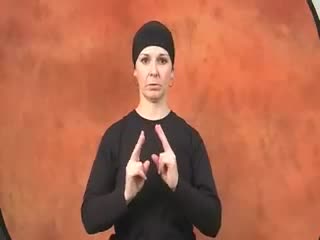
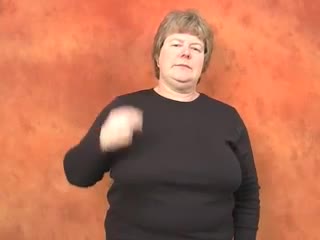
What Is the BSL Sign for "trench"?
Welcome to SignDeaf.com, your friendly guide to mastering British Sign Language! Today, we're diving deep into the fascinating world of BSL to explore the sign for "trench". This important sign allows you to communicate about excavated channels, whether they're for construction, military purposes, or even historical contexts. Understanding the BSL sign for trench is a vital step in broadening your vocabulary and connecting more effectively with the Deaf community. Whether you're Deaf yourself, a hearing learner, or just curious, we're here to help you learn trench BSL with clarity and confidence!
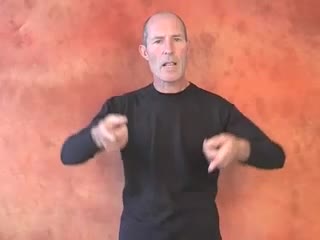
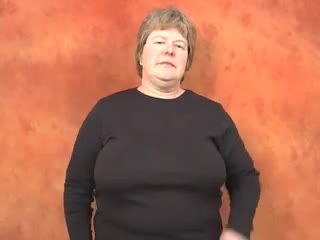
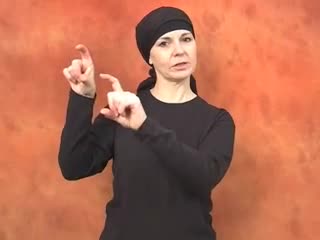
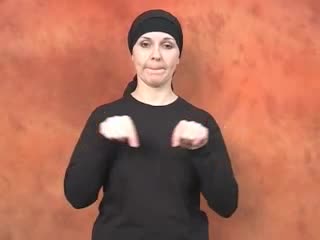
How to Sign "trench" in British Sign Language - Step-by-Step Guide
Let's break down the sign for "trench" into easy-to-follow steps, ensuring you grasp every detail of this British Sign Language trench.
Step 1: Handshape
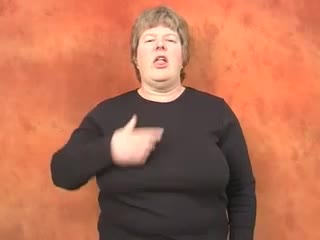
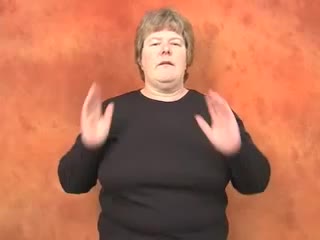
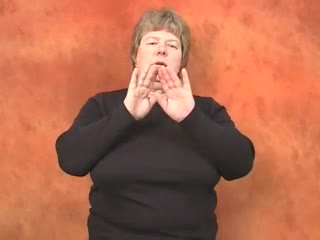
To begin forming the BSL sign for trench, you will use both of your hands. Shape both hands into a 'C' handshape. Imagine you are gently cupping something, or that your hands are forming the curved walls of a narrow channel. Your fingers should be slightly bent and together, with your thumb also bent and resting near your fingertips, creating that distinct 'C' shape. This handshape is foundational, representing the excavated form of a trench.
Step 2: Hand Position and Location
Once your hands are in the 'C' handshape, position them in front of your body. Your dominant hand and non-dominant hand should be placed side-by-side, relatively close to each other, with a small gap in between. Start with your hands positioned around your lower chest or upper abdomen area. They should be at a comfortable distance, neither too close to your body nor too far out, allowing for the subsequent movement to be natural and clear. The palms should initially be facing downwards, preparing for the iconic representation of digging.
Step 3: Movement
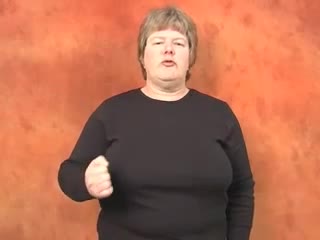
The movement for the BSL trench sign is crucial for conveying its meaning. From the initial position with 'C' hands side-by-side and palms down, you will move both hands simultaneously. First, move your hands downwards in a smooth, controlled motion, as if you are indicating depth or excavation into the ground. As your hands move downwards, they should also move slightly apart from each other, expanding the perceived width of the trench. This downward and outward movement mimics the act of digging or defining the space of a trench. The movement is typically performed once, with a clear, deliberate action, emphasizing the creation of a channel. Think of it as carving out a space from the ground beneath you.
Step 4: Non-Manual Features (Facial Expression & Mouthing)
Non-manual features (NMFs) are an essential part of BSL grammar and meaning, and they add critical context to the trench sign language. For "trench," a neutral or slightly serious facial expression is often appropriate, reflecting the practical or sometimes solemn nature of a trench. You might also subtly mouth the word "trench" as you sign. This mouthing helps clarify the English word being represented, especially for hearing learners or in ambiguous contexts. Avoid overly exaggerated expressions unless the context demands it (e.g., a "massive trench"). Your head position should generally remain neutral, looking towards the person you are signing to.
Step 5: Palm Orientation
The palm orientation for the British Sign Language trench sign changes slightly during the movement. You start with both palms facing downwards, indicating the top surface of the ground or the beginning of the excavation. As your hands move downwards and slightly apart, your palms will maintain their downward orientation but might angle very slightly towards each other initially, then flatten out or angle slightly outwards as they complete the downward sweep. The primary orientation remains downwards throughout the movement, reinforcing the idea of cutting or digging into the earth to create a channel.
Quick Reference: "trench" BSL Sign at a Glance
- Handshape: Both hands in a 'C' shape.
- Location: In front of the lower chest/upper abdomen.
- Movement: Hands move simultaneously downwards and slightly apart, mimicking excavation.
- Facial Expression: Neutral to slightly serious; mouthing "trench" is common.
- Dominant Hand: Both hands are used equally in a symmetrical movement.
5 Tips to Learn the BSL Sign for "trench" Quickly
- Visualise the Action: Connect the sign directly to its meaning. Imagine your hands literally digging into the earth to create a long, narrow ditch. This iconic representation makes the BSL sign for trench much easier to remember, as it directly portrays the physical act of forming a trench.
- Practice the 'C' Handshape: Ensure your 'C' handshape is precise on both hands. Many signs use variations of this shape, so mastering it will aid in learning other signs too. Consistent practice of this fundamental handshape will make the overall trench sign language movement feel more natural and accurate.
- Emphasise the Downward Motion: The downward movement is key to showing depth. When you practice, make sure your hands clearly move from a higher point to a lower point in front of your body. This distinct vertical trajectory is what truly communicates the concept of a dug-out area when you learn trench BSL.
- Use Non-Manual Features: Don't forget to practice your facial expression and mouthing! These elements are not just optional extras; they are integral to BSL. Consistently adding the correct NMFs will make your British Sign Language trench sign much clearer and more grammatically correct.
- Contextualise Your Practice: Try to incorporate the sign into imaginary sentences or scenarios. For instance, "The soldiers hid in the trench" or "They dug a drainage trench." Using the sign in context will help solidify its meaning and natural usage in British Sign Language.
When and How to Use the BSL Sign for "trench"
The BSL sign for trench is versatile and can be used in various contexts to discuss excavated channels. Here are a few common scenarios and grammatical considerations:
- Historical and Military Discussions: When talking about historical events like World War I or military fortifications, the sign is essential. For example, "Soldiers lived in the trenches during the war."
- Construction and Engineering: In construction contexts, you might use it to refer to ditches dug for pipes, cables, or foundations. "The builders dug a trench for the new drainage system."
- Geology and Archaeology: When discussing geological features or archaeological digs, the sign can describe natural or excavated channels. "Archaeologists found ancient pottery in the trench."
- General Description of a Ditch: Any time you need to describe a long, narrow, dug-out channel, this sign is appropriate. "Be careful not to fall into that deep trench."
- Grammatical Considerations: In BSL, the sign itself doesn't change for plural (e.g., "trenches"). Plurality is often conveyed through repetition of the sign, context, or numerical indicators. Spatial grammar can also be used; for instance, you might sign "trench" and then indicate its length or direction using spatial referencing.
Common Mistakes When Signing "trench" in BSL - And How to Fix Them
Learning any new sign can come with its challenges, and the BSL sign for trench is no exception. Here are three common errors beginners make and how to correct them, so you can master the British Sign Language trench sign with ease.
- Incorrect Handshape:
The Error: Using flat hands, closed fists, or splayed fingers instead of the precise 'C' handshape for the BSL trench sign. This can lead to confusion with signs like "dig" or "hole."
Why it Happens: Beginners might not fully grasp the specific curvature required, or they might rush the setup of their hands.
The Fix: Focus on forming a clear, symmetrical 'C' with both hands. Practice just the handshape in front of a mirror until it feels natural. Remember, the 'C' represents the curved sides of the trench, making it distinct.
- Insufficient Downward Movement:
The Error: Moving the hands only slightly downwards or primarily outwards, failing to convey the depth aspect of a trench.
Why it Happens: Learners might overemphasise the "long and narrow" aspect and forget the "dug out" or "deep" component, or they might be signing in a cramped space.
The Fix: Ensure a clear, deliberate downward motion. Imagine you are pushing earth downwards to create the excavation. The movement should be noticeable and convey a sense of 'digging down'. Practice exaggerating the downward sweep initially to embed the correct muscle memory for how to sign trench in BSL.
- Ignoring Non-Manual Features:
The Error: Signing with a blank face or without mouthing, making the sign less clear or grammatically incomplete.
Why it Happens: New learners often focus solely on the hand movements, overlooking the crucial role of facial expressions and mouthing in BSL.
The Fix: Consciously practice mouthing "trench" and maintaining a neutral to slightly serious expression while performing the sign. Integrate NMFs from the very beginning of your practice. Remember, NMFs are not optional – they are vital for clear and effective trench sign language.
"trench" in BSL - Fun Facts and History
- Iconic Representation: The BSL sign for trench is highly iconic, meaning it visually represents the concept it describes. The 'C' handshapes and the downward-outward movement directly mimic the act of digging a long, narrow depression in the ground, making it relatively intuitive to grasp.
- Evolution of the Sign: While the exact historical origin of this specific sign isn't widely documented, many iconic signs in BSL have evolved from natural gestures or depictions of actions. This sign likely developed from the practical act of illustrating "digging a ditch" or "creating a channel."
- Regional Variations: While the core concept of the British Sign Language trench sign tends to be consistent across the UK due to its iconic nature, subtle regional variations might exist in the exact speed, size, or hand separation during the movement. For instance, a sign in London might be slightly different in emphasis compared to one in Glasgow, though the meaning remains clear.
- Connection to Related Concepts: This sign shares conceptual links with other BSL signs related to digging, holes, or channels. Learning the BSL trench sign can provide a foundation for understanding how BSL uses spatial and iconic representation for similar concepts, building your overall fluency.
- Linguistic Features: The use of symmetrical two-handed signs like "trench" is common in BSL. This symmetry often indicates a concept that involves two sides or an action performed by both hands, reinforcing the idea of a formed structure rather than a single point.
"trench" in Deaf Culture and BSL Community
The concept of a "trench" might not appear immediately central to everyday Deaf culture, but understanding and using the BSL sign for trench is nonetheless a valuable part of effective communication within the BSL community. As with any descriptive sign, it allows for rich, detailed conversations about history, construction, environment, and even abstract concepts. Deaf people, like hearing people, engage in discussions about current events, historical contexts, and practical matters where a trench might be mentioned. Learning the correct trench sign language demonstrates respect for BSL as a complete language and an eagerness to participate fully in conversations. It shows that you are committed to understanding and expressing a wide range of vocabulary, thereby strengthening your connection to Deaf individuals and their experiences.
Example Sentences Using "trench" in BSL
Here are five practical example sentences demonstrating how to use the BSL sign for trench in context:
English sentence: The soldiers dug a deep trench for protection. - BSL structure: SOLDIER, TRENCH, DEEP, DIG, PROTECT.
English sentence: We need to dig a trench for the new water pipe. - BSL structure: