Speed
0
Practice reps times watched

Create a free account to keep your watch history and review plan.

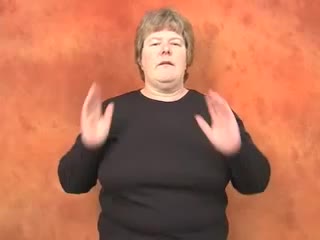
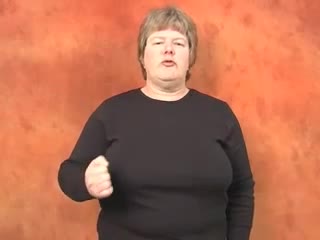
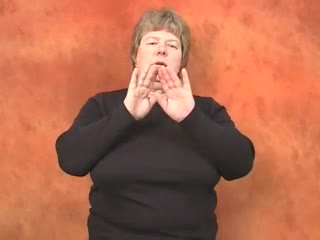
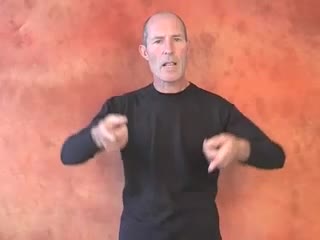
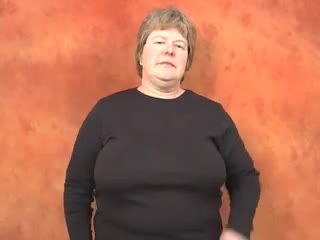
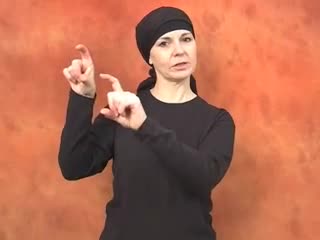
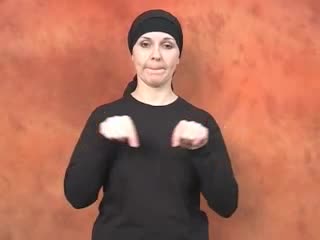
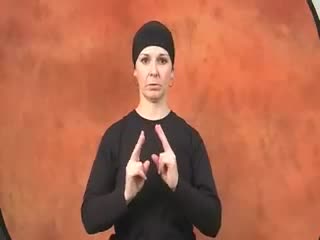
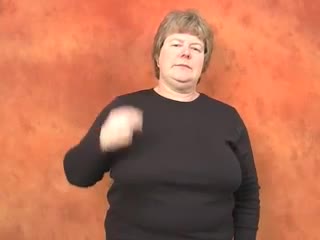
Best practice Use mirror mode, then watch the frame breakdown below to catch the start, movement, and finish cleanly.
Video via SpreadTheSign  - Free educational resource BSL
Updated April 23, 2026
British Sign Language (BSL) 🟢 Beginner 📊 A1 ⚡ Common Noun

town

A populated area, smaller than a city, larger than a village

Source-linked video Step-by-step guide Context and safety notes
Synonyms
Settlement community urban area
Antonyms
Countryside rural area
Difficulty
Not rated yet

Create a free account to save this sign, keep your watch history, and unlock a one-note journal preview.

How to sign it
Handshape
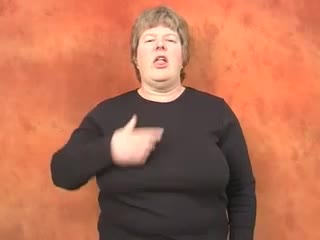
Dominant hand forms a 'T' handshape (thumb tucked between index and middle fingers, other fingers curled). Non-dominant hand is a flat B-hand, palm up
Location
Neutral space, in front of body, around chest/waist height
Movement
Dominant 'T' hand taps the non-dominant palm repeatedly
Palm Orientation
Dominant: forward/down; Non-dominant: up
Facial Expression
Mouth 'town' often
🔁 Spaced Review Try it free

How well do you know this sign?

TOWN
Your Progress Live
🌱
Level 1 · BSL Beginner +0 XP today
This sign Not learned yet
0 watches
Mastery 0%
Confidence
How well do you know this sign?
0 🔥 Streak
0 Signs seen
0 Learned
0 Watches
📖 Vocabulary health 🔒 Log in to see score
0 Mastered
0 Confident
0 Practicing
0 Just seen

Create a free account to keep your vocabulary score between sessions

7-day activity 0 of 7 active

Register free to sync activity across devices

Watch signs to see your history here

Tracking locally for now. Create a free account to save your progress and sync across devices.
Free gets you started. Paid adds the repeat-learning layer: review queues, deeper notes, compare mode, and better comeback tools.
My Sign Journal
Personal notes, saved to your account forever
Locked

Write memory tricks, usage examples, and cultural reminders beside each sign. Create a free account to unlock your first saved note preview on this page.

Create free account Already have an account? Log in

What This Sign Means in BSL

The BSL sign for town is a foundational piece of vocabulary, representing a populated area that’s generally larger than a village but smaller than a city. It’s a very direct and unambiguous sign, making it easy to recognise and use once you understand its structure. You’ll find yourself using this sign frequently when discussing places of residence, travel, or geographical descriptions within the United Kingdom. This sign is a great example of an initialised sign in BSL, meaning it incorporates the first letter of the English word it represents. The dominant hand forms a clear ‘T’ handshape, which immediately gives a strong clue to its meaning. This isn't the case for all BSL signs, but when it occurs, it can be a helpful memory aid. The movement itself is simple yet distinct: a single, firm tap. This direct action on the non-dominant palm conveys a sense of a defined, established place. There’s no ambiguity in its execution, reinforcing the idea of a specific location or settlement. It's a neutral sign, taking on emotional nuance only when paired with facial expressions or other descriptive signs.

When This Sign Feels Natural

You'll find the BSL sign for town feels most natural in everyday conversations about locations. For instance, when someone asks where you live, you might sign "MY TOWN IS [NAME OF TOWN]" or "I LIVE IN [NAME OF TOWN]". It’s perfect for describing your local area, discussing travel plans, or giving directions. Its versatile nature means it fits well into both casual chats and more formal discussions about geography or community. Consider using this sign when you're specifically referring to a settlement that isn't quite sprawling enough to be called a city, nor as small and rural as a village. If you’re recounting a journey, you might talk about "driving through many small towns" to differentiate them from larger urban centres or sparse countryside. It serves as a clear, mid-range descriptor for populated places. However, be mindful of context. If you’re referring to a major metropolis like London or Manchester, you would almost certainly use the BSL sign for CITY, which is distinct. Similarly, for a smaller, often rural community, the BSL sign for VILLAGE would be more appropriate. Choosing the correct sign for the scale of the settlement ensures your communication is precise and natural to a native BSL user.

What Learners Usually Miss

One common subtlety learners sometimes miss with the BSL sign for town is the precision of the dominant hand's 'T' handshape. It's not just a general fist; the thumb should be tucked clearly between your index and middle fingers, with the other fingers curled. A vague or incorrect 'T' can make the sign less clear, potentially confusing it with other signs that might involve a similar tapping motion but a different handshape. Practice forming this specific 'T' handshape until it feels natural. Another area that can be overlooked is the quality of the tap. It’s a single, distinct, and firm tap, not a gentle brush or multiple taps. Imagine the decisive placement of a pin on a map, marking a specific spot. Some learners might make the tap too light, too soft, or even accidentally perform a double tap, which could alter the sign's perceived meaning or make it harder to understand. Focus on a clear, singular impact. Finally, while the sign itself is quite neutral, BSL relies heavily on non-manual features like facial expression. For "town," a neutral expression is typical, but you can adapt it to convey more meaning. If you're signing about a "boring town," your facial expression would reflect that. Conversely, for a "vibrant town," your face would light up. Forgetting to incorporate appropriate (or neutral) facial expressions can make your signing feel flat or less engaging, even for a straightforward sign like this.

A Simple Way to Remember It

Remembering the BSL sign for town can be straightforward by focusing on its distinctive features and connecting them to the concept of a populated place. The sign is quite iconic in its form, offering several hooks for your memory.
  • The 'T' for Town: This is arguably the easiest and most direct memory aid. The dominant hand explicitly forms a 'T' handshape, directly linking to the first letter of the English word "town." Think of it as literally spelling out the beginning of the word in your hand.
  • Building Block of Community: Imagine your non-dominant flat palm as the foundational ground or map, and the 'T' hand as a solid, identifiable structure being placed upon it. This represents a town as a settled, established place, built on a foundation, a core component of a community.
  • A Distinct Point on the Map: The clear, single tap of the 'T' hand on your palm can symbolise pinpointing a specific location on a map. When you think of a town, you often think of a distinct, named place that you can point to or find. The tap gives it that sense of precision and individuality.

Short Practice Situations

  • "My home town is quite small, but it has everything I need."
  • "Are you planning to visit any interesting towns during your holiday in Scotland?"
  • "The new coffee shop opened in the town centre last week and it’s always busy."
  • "We drove through many beautiful towns and villages on our road trip through Wales."
  • "What’s your favourite thing about your local town, perhaps the market or a park?"

Signs to Learn Next

  • CITY: This is a crucial distinction. Learning the sign for CITY immediately after TOWN helps you understand the scale difference between settlements in BSL and how to accurately describe larger urban areas.
  • VILLAGE: Just like CITY, learning VILLAGE provides the full spectrum of settlement sizes. It reinforces the comparative aspect of TOWN and helps you choose the most precise sign for your context.
  • HOME / HOUSE: People live in towns, so these signs are naturally connected. Learning HOME and HOUSE will allow you to talk about where people reside within a town, adding depth to your conversations about places.
  • WHERE: If you're talking about towns, you'll often want to ask or indicate "where" a town is located or "where" someone comes from. This question word is highly practical and frequently used alongside place names.
  • LIVE / DWELL: This sign refers to the act of residing somewhere. Combining "LIVE" with "TOWN" allows you to express "I live in a town" or "Do you live in this town?", making your communication more comprehensive.

🤖 AI Learning Guide for "town"

Uses dominant 'T' hand tapping non-dominant palm, reflecting English 'town' initial letter

🎯 Practice Challenge

Practice correct 'T' handshape and repeated tapping motion

⚠️ Most Common Mistake

Ensure dominant hand forms clear 'T'; non-dominant hand flat, palm up

👐 How to Sign "town" in British Sign Language (BSL) (Quick Answer)

Follow these steps to sign town correctly in British Sign Language (BSL):

  1. 1 Form 'T' handshape with dominant hand
  2. 2 Form flat B-hand with non-dominant, palm up
  3. 3 Place non-dominant hand in front of body
  4. 4 Tap 'T' hand onto non-dominant palm
  5. 5 Repeat tap once or twice

Tip: Watch the video above while following these steps for best results.

🤚 Sign Profile

🤚
Handshape
Dominant hand forms a 'T' handshape (thumb tucked between index and middle fingers, other fingers curled). Non-dominant hand is a flat B-hand, palm up
🔣
Handshape Code
DH T, NDH B
Dominant Hand
Either
🙌
Hand Count
Two-handed
📍
Location
Neutral space, in front of body, around chest/waist height
↗️
Movement
Dominant 'T' hand taps the non-dominant palm repeatedly
🔄
Movement Type
Repeated
👆
Contact
Tap
👋
Palm Orientation
Dominant: forward/down; Non-dominant: up
⚖️
Symmetry
Asymmetric

😊 Non-Manual Features

Facial expressions and body language are grammatically essential in British Sign Language (BSL) - not optional!

😊
Facial Expression
Mouth 'town' often
🙆
Eyebrows
Neutral
👁️
Eye Gaze
Forward
🙂
Head Movement
None
👄
Mouth Morpheme
Mouth 'town'
🕴️
Body Shift
None

📖 Grammar & Linguistics

Part of Speech Noun
Inflection No
Classifier Usage N/A
Role Shift No

🎓 Learning Context

📌 When to Use: Referring to a specific town or the general concept of a town
⚠️ Common Mistake: Incorrect 'T' handshape; signing with only one hand
🚫 When NOT to Use: When specifically referring to a city or a village
Context Tags
Geography location settlement place

🧪 Practice Lab

Use these tiny checks right after watching the video. Fast feedback is what turns recognition into recall.

Meaning check

Which word matches the sign you just watched?

Usage check

Where would this sign fit most naturally?

Confidence check

How do you feel about town right now?

Pick one so SignDeaf can shape the rest of your session around how this sign actually feels.

🧭 Scenario Drill

One sign gets remembered faster when you attach it to real situations. Try these quick scene prompts.

Work

Stretch practice

Use this sign in a short workplace sentence or meeting exchange.

Family

Stretch practice

Try signing this while talking about family life or something at home.

School

Stretch practice

Imagine teaching this sign to a classmate or using it in a lesson.

Doctor

Stretch practice

Practise it in a healthcare conversation where clarity matters.

Travel

Stretch practice

Use it in a travel scenario like asking for help or directions.

💬 Example Usage

1.[en] I live in a small town. / BSL:[MY TOWN SMALL] | 2.[en] What town are you from? / BSL:[YOUR TOWN WHICH] | 3.[en] Let's go to town. / BSL:[GO TOWN]

1.[en] I live in a small town. / BSL:[MY TOWN SMALL] | 2.[en] What town are you from? / BSL:[YOUR TOWN WHICH] | 3.[en] Let's go to town. / BSL:[GO TOWN]

When to use it

Referring to a specific town or the general concept of a town

When not to use it

When specifically referring to a city or a village

Register

Neutral

🌍 Cultural Context

Reflects the initial letter 'T' from the English word 'town'

🗺️ Regional Variations

Minor variations in tapping, but the core 'T' handshape is consistent

⚖️ Similar Signs - What's the Difference?

This sign town
VS
Similar signs Look closely
The sign for 'town' uses a 'T' handshape tapping the non-dominant palm. 'City' uses a 'C' handshape, and 'village' uses a 'V' handshape. All three signs follow the pattern of an initial letter handshape tapping the passive hand to denote a type of settlement, distinguishing them primarily by scale and initial letter

📝 Usage Notes

Often accompanied by mouthing the English word 'town'

Frequently Asked Questions

Common questions about the British Sign Language (BSL) sign for "town".

🏷️ Tags

Handshape

Keywords

💡
Did you know?
BSL is a full, natural language with its own grammar - not just English signed word by word.

📚 Explore More British Sign Language (BSL) Signs

Keep building your British Sign Language (BSL) vocabulary - explore signs by category or browse the full dictionary.