Speed
0
Practice reps times watched

Create a free account to keep your watch history and review plan.

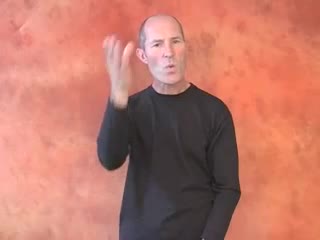
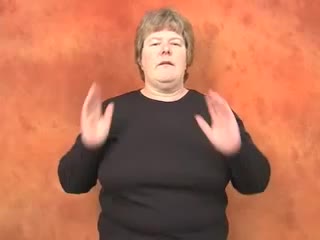
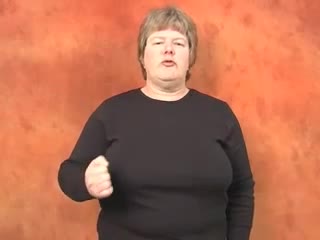
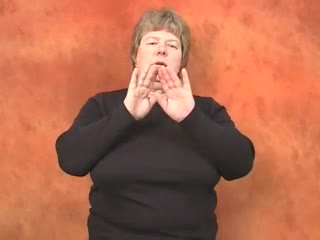
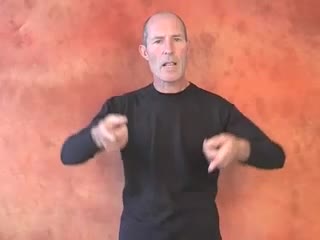
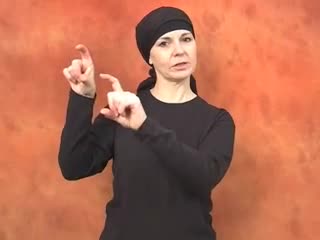
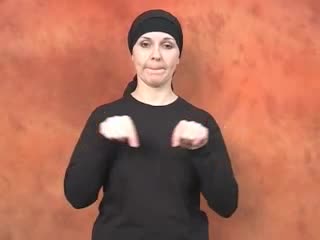
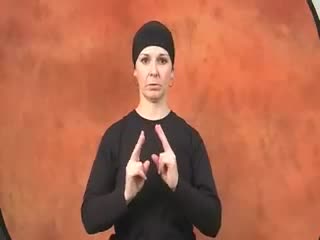
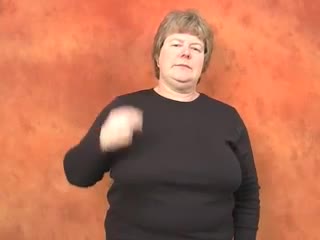
Best practice Use mirror mode, then watch the frame breakdown below to catch the start, movement, and finish cleanly.
Video via SpreadTheSign  - Free educational resource BSL
Updated April 23, 2026
British Sign Language (BSL) 🟢 Beginner 📊 A1 ⚡ Very Common Noun

boy

A young male human

Source-linked video Step-by-step guide Context and safety notes
Synonyms
Lad young man (in context)
Antonyms
Girl man
Difficulty
Not rated yet

Create a free account to save this sign, keep your watch history, and unlock a one-note journal preview.

How to sign it
Handshape
Index finger extended, other fingers curled, thumb alongside
Location
Side of head, near temple or ear
Movement
Touches temple, moves slightly forward and down
Palm Orientation
Palm faces inward/backwards slightly
Facial Expression
Neutral facial expression, mouthing
🔁 Spaced Review Try it free

How well do you know this sign?

BOY
Your Progress Live
🌱
Level 1 · BSL Beginner +0 XP today
This sign Not learned yet
0 watches
Mastery 0%
Confidence
How well do you know this sign?
0 🔥 Streak
0 Signs seen
0 Learned
0 Watches
📖 Vocabulary health 🔒 Log in to see score
0 Mastered
0 Confident
0 Practicing
0 Just seen

Create a free account to keep your vocabulary score between sessions

7-day activity 0 of 7 active

Register free to sync activity across devices

Watch signs to see your history here

Tracking locally for now. Create a free account to save your progress and sync across devices.
Free gets you started. Paid adds the repeat-learning layer: review queues, deeper notes, compare mode, and better comeback tools.
My Sign Journal
Personal notes, saved to your account forever
Locked

Write memory tricks, usage examples, and cultural reminders beside each sign. Create a free account to unlock your first saved note preview on this page.

Create free account Already have an account? Log in

What This Sign Means in BSL

The BSL sign for boy is a wonderfully direct and foundational piece of BSL vocabulary. It clearly signifies a young male person, typically a child or adolescent. When you use this sign, you’re not just conveying gender, but also a sense of youth and often, a particular stage of life. It’s a sign that you’ll encounter very early in your BSL journey because it’s essential for everyday conversations about family, people, and describing the world around us.

Unlike some signs that might carry multiple layers of meaning depending on context, "boy" is refreshingly unambiguous. Its primary function is to identify a male child, distinguishing them from a girl, a man, or a general child. This clarity makes it a strong building block for more complex sentences and narratives in BSL, allowing you to quickly establish who you’re talking about.

When This Sign Feels Natural

This sign feels most natural when you're specifically referring to a young male. Think about situations where you might say "my boy," "that boy over there," or "the boy in the story." It's perfect for introducing family members, describing characters, or simply pointing out a child in a group. You'll use it extensively when talking about children's activities, school, or any context involving youth.

It fits seamlessly into both casual chats and more formal discussions, given its fundamental nature. For instance, you could sign "My boy is five years old" to a friend, or "The boy performed admirably" in a more formal setting. The sign itself doesn't carry a specific register, but the surrounding signs and your facial expression will dictate the overall tone of your communication.

While "boy" specifies a young male, it's worth noting when you might choose a different sign. If you mean a general "child" of unknown gender, or a group of mixed-gender children, you'd likely opt for the sign for "child" or "children." Similarly, if the individual is an adult male, even a young one, the sign for "man" would be more appropriate, recognising their stage in life.

What Learners Usually Miss

New learners often focus on the main action but can sometimes miss the subtle yet crucial details that make the sign truly fluent. For "boy," pay close attention to the handshape: it's not just any single finger pointing. Your index finger should be extended precisely, with the other fingers curled securely into your palm and your thumb resting alongside. A common mistake is a loose handshape where the other fingers are slightly splayed, which can look less confident or slightly ambiguous.

Another area where learners sometimes falter is the movement and location. The sign touches the side of the head, near the temple or just above the ear, before moving slightly forward and down. The "touch" should be gentle and precise, not a heavy tap. Crucially, the movement isn't a big, sweeping gesture; it's a subtle, controlled forward and downward arc. Some might make the movement too large or too small, or simply touch the head without the defining forward-and-down motion, which can make the sign less clear. Ensure the movement is definite but economical.

Finally, consider the rhythm and facial expression. "Boy" is a noun, often a simple statement. Your face should generally be neutral unless you're asking a question ("Is that a boy?") or conveying an emotion ("That naughty boy!"). Avoid an overly inquisitive look by default. The sign should integrate smoothly into your sentence flow, not stand out as a separate, clunky action. Practice making it flow with the signs around it, ensuring the slight forward and down movement feels natural and not rushed or hesitant.

A Simple Way to Remember It

To help this sign stick in your memory, try to connect its form to a vivid image or concept. The sign for "boy" has a distinctive shape and movement that can be easily linked to ideas of youth and identity.

  • Pointing to the "Thinking" Part: Imagine you're pointing to the part of the head where ideas, dreams, and early learning happen – fitting for a young boy. The location near the temple can evoke this sense of a developing mind.
  • The Single Finger's Significance: The extended index finger can represent a singular young person, or perhaps the idea of being "number one" in a parent's eyes. It’s a direct, uncomplicated gesture for a direct concept.
  • The "Growing" Motion: The slight forward and downward movement could be visualised as a subtle representation of growth, or perhaps moving from childhood into life, indicating the stage of a young person.

Short Practice Situations

  • "My boy is starting school next week, so he's very excited."
  • "Do you remember that funny boy who used to live next door?"
  • "The teacher asked the boy to help tidy up the classroom."
  • "It was a story about a brave boy who found a lost treasure."
  • "She brought her little boy to the park to play on the swings."

Signs to Learn Next

  • GIRL: This is a natural counterpart to "boy," as both are fundamental gender identifiers for children and are often learned in tandem. You'll frequently need to differentiate between the two.
  • MAN: Understanding "man" helps you appreciate the progression from "boy" to adult male, and when to use the appropriate term as someone grows older. It highlights the lifecycle.
  • CHILD: While "boy" is specific, "child" is a broader term for a young person regardless of gender. Learning this helps you speak more generally or when the gender isn't relevant.
  • BROTHER: This sign often incorporates elements of gender or is frequently used in conjunction with "boy" when discussing family relationships. It's a common family noun.
  • YOUNG: As "boy" implies youth, learning the adjective "young" will allow you to describe someone as young more generally, or to qualify other nouns.

🤖 AI Learning Guide for "boy"

The BSL sign 'boy' describes a young male person using a specific handshape at the temple

🎯 Practice Challenge

Sign 'boy' in a sentence about a family member

⚠️ Most Common Mistake

Ensure the index finger touches the temple and moves slightly forward/down, maintaining the G-handshape

👐 How to Sign "boy" in British Sign Language (BSL) (Quick Answer)

Follow these steps to sign boy correctly in British Sign Language (BSL):

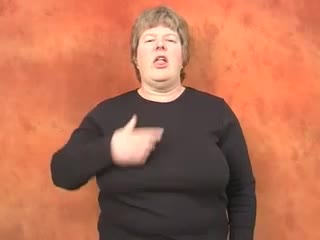
  1. 1 Form G-hand (index extended, others curled, thumb alongside)
  2. 2 Palm faces slightly inward/backward
  3. 3 Touch index fingertip lightly to your temple
  4. 4 Move hand slightly forward and down

Tip: Watch the video above while following these steps for best results.

🤚 Sign Profile

🤚
Handshape
Index finger extended, other fingers curled, thumb alongside
🔣
Handshape Code
G-hand
Dominant Hand
Right
🙌
Hand Count
One-handed
📍
Location
Side of head, near temple or ear
↗️
Movement
Touches temple, moves slightly forward and down
🔄
Movement Type
Linear
👆
Contact
Touch
👋
Palm Orientation
Palm faces inward/backwards slightly

😊 Non-Manual Features

Facial expressions and body language are grammatically essential in British Sign Language (BSL) - not optional!

😊
Facial Expression
Neutral facial expression, mouthing
🙆
Eyebrows
Neutral
👁️
Eye Gaze
Forward
🙂
Head Movement
None
👄
Mouth Morpheme
'Boy' (mouthing)
🕴️
Body Shift
None

📖 Grammar & Linguistics

Part of Speech Noun
Inflection No
Classifier Usage N/A
Role Shift No

🎓 Learning Context

📌 When to Use: Everyday conversation about children or young males
⚠️ Common Mistake: Confusing with 'man' or 'girl'; incorrect handshape or location
🚫 When NOT to Use: Referring to an adult male
Context Tags
Family people children

🧪 Practice Lab

Use these tiny checks right after watching the video. Fast feedback is what turns recognition into recall.

Meaning check

Which word matches the sign you just watched?

Usage check

Where would this sign fit most naturally?

Confidence check

How do you feel about boy right now?

Pick one so SignDeaf can shape the rest of your session around how this sign actually feels.

🧭 Scenario Drill

One sign gets remembered faster when you attach it to real situations. Try these quick scene prompts.

Work

Stretch practice

Use this sign in a short workplace sentence or meeting exchange.

Family

Strong fit

Try signing this while talking about family life or something at home.

School

Stretch practice

Imagine teaching this sign to a classmate or using it in a lesson.

Doctor

Stretch practice

Practise it in a healthcare conversation where clarity matters.

Travel

Stretch practice

Use it in a travel scenario like asking for help or directions.

💬 Example Usage

1.[en] Where is the boy? / BSL:[point, sign BOY] | 2.[en] My son is a boy. / BSL:[MY SON BOY] | 3.[en] He's a good boy. / BSL:[HE GOOD BOY]

1.[en] Where is the boy? / BSL:[point, sign BOY] | 2.[en] My son is a boy. / BSL:[MY SON BOY] | 3.[en] He's a good boy. / BSL:[HE GOOD BOY]

When to use it

Everyday conversation about children or young males

When not to use it

Referring to an adult male

Register

Neutral

🌍 Cultural Context

Part of core vocabulary for describing people and family

🗺️ Regional Variations

Slight variations in exact contact point or movement extent

⚖️ Similar Signs - What's the Difference?

This sign boy
VS
Similar signs Look closely
The sign for BOY (G-hand at temple) is often confused with GIRL (A-hand or open 5-hand near chin) due to similar 'person' category. MAN typically uses an open 5-hand or C-hand at the temple, rather than the G-hand for BOY, and implies an adult. The clearest differences for learners are the specific handshape and contact location for each

📝 Usage Notes

Often accompanied by mouthing 'boy'

Frequently Asked Questions

Common questions about the British Sign Language (BSL) sign for "boy".

🏷️ Tags

Handshape

Keywords

💡
Did you know?
BSL uses a two-handed manual alphabet - different from ASL which is one-handed.

📚 Explore More British Sign Language (BSL) Signs

Keep building your British Sign Language (BSL) vocabulary - explore signs by category or browse the full dictionary.