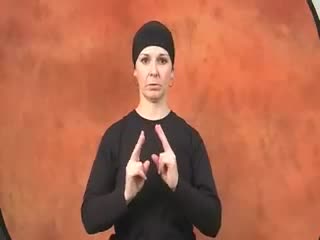
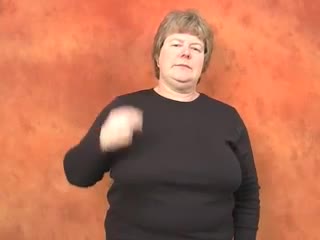
What This Sign Means in BSL
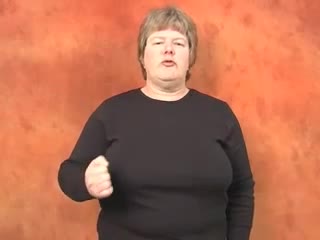
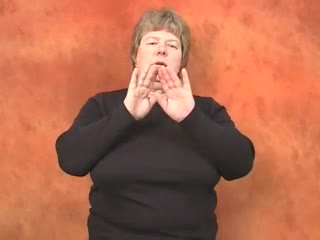
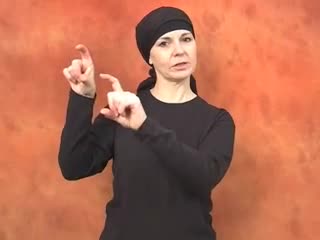
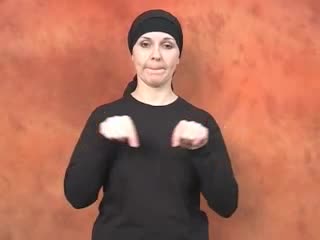
The BSL sign for boy is a wonderfully direct and foundational piece of BSL vocabulary. It clearly signifies a young male person, typically a child or adolescent. When you use this sign, you’re not just conveying gender, but also a sense of youth and often, a particular stage of life. It’s a sign that you’ll encounter very early in your BSL journey because it’s essential for everyday conversations about family, people, and describing the world around us.
Unlike some signs that might carry multiple layers of meaning depending on context, "boy" is refreshingly unambiguous. Its primary function is to identify a male child, distinguishing them from a girl, a man, or a general child. This clarity makes it a strong building block for more complex sentences and narratives in BSL, allowing you to quickly establish who you’re talking about.
When This Sign Feels Natural
This sign feels most natural when you're specifically referring to a young male. Think about situations where you might say "my boy," "that boy over there," or "the boy in the story." It's perfect for introducing family members, describing characters, or simply pointing out a child in a group. You'll use it extensively when talking about children's activities, school, or any context involving youth.
It fits seamlessly into both casual chats and more formal discussions, given its fundamental nature. For instance, you could sign "My boy is five years old" to a friend, or "The boy performed admirably" in a more formal setting. The sign itself doesn't carry a specific register, but the surrounding signs and your facial expression will dictate the overall tone of your communication.
While "boy" specifies a young male, it's worth noting when you might choose a different sign. If you mean a general "child" of unknown gender, or a group of mixed-gender children, you'd likely opt for the sign for "child" or "children." Similarly, if the individual is an adult male, even a young one, the sign for "man" would be more appropriate, recognising their stage in life.
What Learners Usually Miss
New learners often focus on the main action but can sometimes miss the subtle yet crucial details that make the sign truly fluent. For "boy," pay close attention to the handshape: it's not just any single finger pointing. Your index finger should be extended precisely, with the other fingers curled securely into your palm and your thumb resting alongside. A common mistake is a loose handshape where the other fingers are slightly splayed, which can look less confident or slightly ambiguous.
Another area where learners sometimes falter is the movement and location. The sign touches the side of the head, near the temple or just above the ear, before moving slightly forward and down. The "touch" should be gentle and precise, not a heavy tap. Crucially, the movement isn't a big, sweeping gesture; it's a subtle, controlled forward and downward arc. Some might make the movement too large or too small, or simply touch the head without the defining forward-and-down motion, which can make the sign less clear. Ensure the movement is definite but economical.
Finally, consider the rhythm and facial expression. "Boy" is a noun, often a simple statement. Your face should generally be neutral unless you're asking a question ("Is that a boy?") or conveying an emotion ("That naughty boy!"). Avoid an overly inquisitive look by default. The sign should integrate smoothly into your sentence flow, not stand out as a separate, clunky action. Practice making it flow with the signs around it, ensuring the slight forward and down movement feels natural and not rushed or hesitant.
A Simple Way to Remember It
To help this sign stick in your memory, try to connect its form to a vivid image or concept. The sign for "boy" has a distinctive shape and movement that can be easily linked to ideas of youth and identity.
-
Pointing to the "Thinking" Part: Imagine you're pointing to the part of the head where ideas, dreams, and early learning happen – fitting for a young boy. The location near the temple can evoke this sense of a developing mind.
-
The Single Finger's Significance: The extended index finger can represent a singular young person, or perhaps the idea of being "number one" in a parent's eyes. It’s a direct, uncomplicated gesture for a direct concept.
-
The "Growing" Motion: The slight forward and downward movement could be visualised as a subtle representation of growth, or perhaps moving from childhood into life, indicating the stage of a young person.
Short Practice Situations
- "My boy is starting school next week, so he's very excited."
- "Do you remember that funny boy who used to live next door?"
- "The teacher asked the boy to help tidy up the classroom."
- "It was a story about a brave boy who found a lost treasure."
- "She brought her little boy to the park to play on the swings."
Signs to Learn Next
-
GIRL: This is a natural counterpart to "boy," as both are fundamental gender identifiers for children and are often learned in tandem. You'll frequently need to differentiate between the two.
-
MAN: Understanding "man" helps you appreciate the progression from "boy" to adult male, and when to use the appropriate term as someone grows older. It highlights the lifecycle.
-
CHILD: While "boy" is specific, "child" is a broader term for a young person regardless of gender. Learning this helps you speak more generally or when the gender isn't relevant.
-
BROTHER: This sign often incorporates elements of gender or is frequently used in conjunction with "boy" when discussing family relationships. It's a common family noun.
-
YOUNG: As "boy" implies youth, learning the adjective "young" will allow you to describe someone as young more generally, or to qualify other nouns.