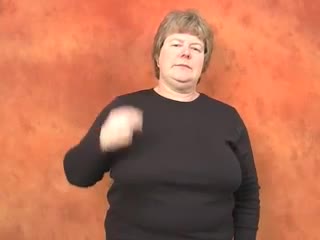
What Is the BSL Sign for "force"?
Imagine a moment where something needs a real push, an exertion of power, or an undeniable impact; that's precisely the concept captured by the BSL sign for force. This particular hand movement isn't just a physical action; it communicates the idea of strength, compulsion, or an external influence driving an outcome. When you learn force BSL, you’re not just memorising a gesture; you're gaining a crucial piece of British Sign Language force, essential for expressing everything from physical effort to metaphorical pressure. It's a sign that truly helps you convey a sense of power or influence within your conversations.
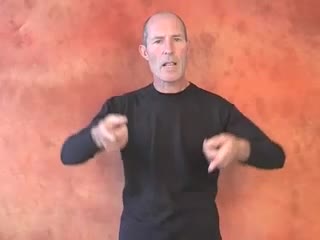
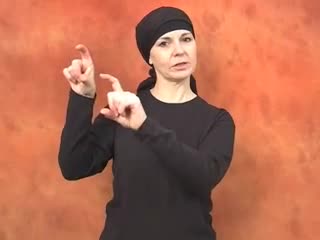
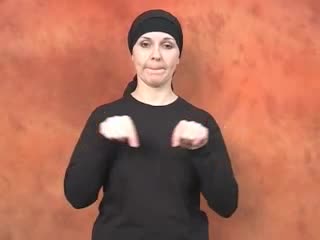
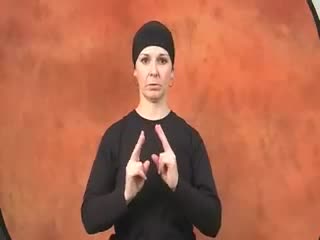
How to Sign "force" in British Sign Language - Step-by-Step
Mastering this sign involves a precise coordination of handshape, placement, and movement, all contributing to its clear meaning.
Step 1: Handshape
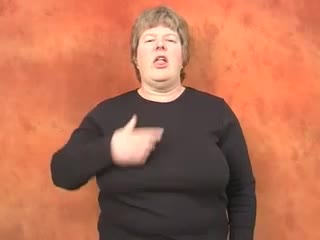
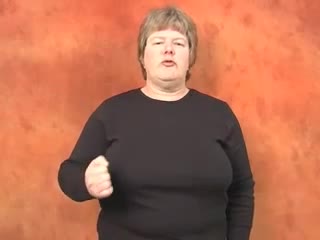
Begin by forming a strong, closed fist with your dominant hand. Your fingers should be curled tightly into your palm, and your thumb should rest across the front of your curled index and middle fingers, as if you're gripping something firmly. This solid handshape represents the concentrated power you're about to express.
Step 2: Hand Placement and Location
Now, bring your dominant hand, still in that tight fist, to rest against your chest, specifically over your sternum area. Your knuckles should face slightly forward and upward, creating a sense of readiness and stored energy. This starting position grounds the sign in your own body, implying the force originates from within.
Step 3: Movement
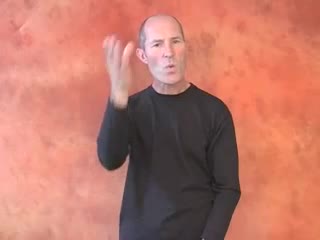
From that chest position, push your dominant hand powerfully forward and slightly outward in a single, decisive movement. The movement should be direct, sharp, and confident, as if you're pushing against an invisible barrier or exerting pressure. There's no repetition here; one strong, clear push is all it takes to convey the meaning.
Step 4: Facial Expression and Mouthing
A crucial element often overlooked by new learners, your facial expression, should reflect the intensity of the force you're signing. Often, you'll see a slight tightening of the lips, a focused gaze, or even a subtle furrow of the brow. Simultaneously, you should mouth the English word "force" silently or with a very slight exhalation, which helps distinguish the sign and provides a visual cue for clarity.
Step 5: Palm Orientation
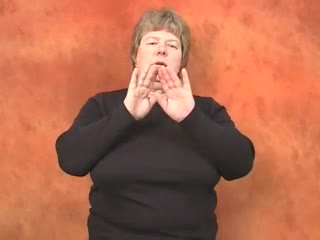
Throughout the sign, particularly during the outward movement, your palm will generally face downwards or slightly forward. This orientation naturally occurs as you push your fist away from your body, reinforcing the direction of the exerted power. This downward-forward palm position is inherent to the pushing action and helps maintain the sign's iconic representation.
"force" in BSL - Quick Reference Snapshot
- Handshape: Dominant closed fist (S-handshape).
- Location: Against the chest (sternum area).
- Movement: Strong, single outward push from the chest.
- Facial Expression: Focused, possibly with slightly tensed lips.
- Dominant Hand: Used for the action.
- Palm Orientation: Downward or slightly forward during the push.
5 Memorisation Tricks for the BSL Sign "force"
- Visual Mnemonic: The "Push-Out" Power: Picture yourself physically pushing something heavy away from your chest with all your might. The sign's strong, singular outward movement from the chest perfectly mirrors this action, making it easy to remember how to sign force in BSL.
- Muscle-Memory Drill: The Resisting Wall: Stand in front of a wall and physically push against it with your dominant fist for a few seconds. Feel the resistance, then replicate that same outward motion and tension without the wall. This muscle memory will deeply embed the sensation of "force" into your signing.
- Meaning Connection: The Power Behind the Push: Think about the word "force" itself – it implies strength, impact, and a concentrated push. The closed fist represents that concentrated power, and the sharp outward movement is the release of that power, directly linking the sign to its meaning.
- Common-Confusion Tip: Not a Punch! A lot of people initially confuse this with a punching motion. Remember, the BSL force sign is a *push*, a sustained exertion, not a quick jab. The movement is controlled, deliberate, and originates from the chest, not a winding up from the shoulder.
- Daily-Life Practice Idea: "Forced" Situations: Whenever you encounter something in daily life that requires effort or pressure – like closing a stiff door, pushing a heavy shopping trolley, or even the "force" of a strong wind – silently sign "force" to yourself. This constant mental and physical reinforcement helps you learn force BSL effortlessly.
Real-Life Situations to Use the BSL Sign for "force"
- Imagine you're discussing a door that won't open easily; you might sign, "DOOR, OPEN, MUST FORCE" to explain the situation, using the sign to convey the effort required.
- If you're talking about a strong wind, you could say, "WIND, STRONG, FORCE ME," incorporating the sign to show how the wind's power affected your movement or balance.
- When explaining that a decision was made under duress, you might sign, "DECISION, MAKE, FORCE," using the sign to indicate compulsion rather than willing choice.
- Perhaps you're recounting an incident where someone pushed past you; you'd sign, "PERSON, PUSH, FORCE PAST ME," demonstrating the physical imposition with the British Sign Language force sign.
Top 3 Mistakes Learners Make Signing "force" in BSL
- Incorrect Handshape: Many beginners use an open hand or a different finger configuration instead of the precise closed fist. This often dilutes the intensity of the sign; the correction is to ensure all fingers are tightly curled into a solid 'S' handshape, conveying concentrated power.
- Weak or Indecisive Movement: Learners sometimes sign with a hesitant or too-gentle push, which doesn't convey the meaning of "force" effectively. The crucial correction involves making the outward movement from the chest sharp, strong, and definitive, reflecting the word's inherent power.
- Missing Facial Expression: Forgetting the non-manual features means the sign loses much of its grammatical and emotional weight. The remedy is to consciously add a focused, slightly tensed facial expression and silent mouthing of "force" as you sign, completing the communication of the what is the sign for force.
Fascinating Facts About the BSL Sign for "force"
- The iconic nature of the BSL sign for force is quite strong; it visually represents the physical act of pushing or exerting pressure, making it relatively intuitive for new learners to grasp.
- Unlike some signs with complex historical lineages, the direct, powerful motion of this sign suggests an origin rooted in depicting physical effort, connecting directly to the concept of exerted power.
- Interestingly, regional variations within the BSL-using community might slightly alter the exact starting point on the chest or the precise angle of the outward push, though the core handshape and movement remain consistent.
- This sign does not have a direct relationship to the manual alphabet (fingerspelling), as its form is derived from an action rather than a letter representation.
- The linguistic feature that makes this sign distinctive is its single, strong, ballistic movement, which contrasts with signs that might involve repetition or a more fluid, sustained motion, perfectly capturing the concentrated nature of force.
"force" in Deaf Culture - Community and Identity
Within Deaf culture, the concept of "force" can carry nuanced meanings, extending beyond mere physical power. It might subtly refer to the societal pressures or systemic "forces" that Deaf individuals sometimes encounter, whether in communication barriers or navigating hearing-centric environments. The sign itself, when used in these contexts, can evoke a shared understanding of resilience and the strength needed to overcome obstacles. It’s a powerful visual cue that reinforces the community's collective experience and identity, highlighting the inherent strength within the Deaf community to push forward and advocate for their rights and visibility.
Example Conversations Using "force" in BSL
English: We had to force the door open. - BSL structure: DOOR OPEN, WE FORCE (topic-comment, verb modified by action)
English: The wind had a lot of force today. - BSL structure: TODAY WIND, STRONG, FORCE (topic-comment, adjective then noun use of force)
English: Did someone force you to do that? - BSL structure: YOU DO THAT, SOMEONE FORCE? (question, object then subject, incorporating the BSL force sign)
English: She felt a strong force pushing her. - BSL structure: SHE FEEL, STRONG FORCE PUSH HER (subject-verb-object, spatial grammar for push direction)
English: They applied force to break the lock. - BSL structure: LOCK BREAK, THEY APPLY FORCE (topic-comment, action then the means)
Frequently Asked Questions: The BSL Sign for "force"
Are there regional variations for the BSL sign for "force"?
While the core elements of the BSL sign for force generally remain consistent across the United Kingdom, you might observe minor regional nuances. Some signers might slightly vary the starting placement on the chest or the exact trajectory of the outward push, but the fundamental closed-fist handshape and strong, direct movement are widely understood.
What are some similar signs I should avoid confusing with "force" in BSL?
A common confusion for beginners is mistaking 'force' for signs like 'punch' or even 'push' when used in a less intense context. Remember, the force sign language motion is a powerful, singular thrust from the chest, distinct from a quick 'punch' that might involve a winding up, or a gentler 'push' that implies less exertion.
Is the BSL force sign suitable for beginners to learn early on?
Absolutely, the BSL force sign is an excellent one for beginners to tackle early in their learning journey. Its iconic nature, directly representing a physical action, makes it relatively straightforward to grasp, and it's a versatile sign that appears in many everyday conversations.
Can children use the British Sign Language force sign, and how might it be taught?
Yes, children can certainly use this sign, and it's quite engaging for them. To teach it, you might use playful scenarios like "forcing" a toy car up a ramp or pretending to push against a pretend heavy box, helping them connect the physical action to the sign's meaning.
How does the BSL sign for "force" compare to the equivalent sign in another sign language?
The BSL sign for "force" is quite distinct in its specific handshape and movement compared to signs in other international sign languages. For instance, some other sign languages might use different handshapes or a more rotational movement to convey a similar concept, highlighting the unique linguistic characteristics of British Sign Language.
Signs That Pair Naturally with "force" in BSL
- PUSH: This sign is a natural companion because 'force' often implies pushing. Learning them together helps differentiate the intensity; 'force' is a stronger, more determined push.
- STRONG: The concept of strength is intrinsically linked to force. Practising 'strong' alongside 'force' helps build a vocabulary around power and capability in BSL.
- POWER: Understanding 'power' adds another dimension to 'force', allowing you to express the underlying energy or authority behind an exerted effort.
- HARD/DIFFICULT: When something requires 'force', it's often 'hard' or 'difficult'. Grouping these signs together expands your ability to describe challenging situations.
- PULL: As the opposite of push, 'pull' provides important contextual contrast. Learning 'pull' and 'force' as a pair helps reinforce directional concepts in signing.
- RESIST: The act of 'resisting' often involves encountering or exerting force. Pairing these signs helps express dynamic interactions involving pressure and opposition.
Building Fluency: How to Practise "force" in BSL
To truly embed the BSL sign for force into your muscle memory, start by standing in front of a mirror and watching your handshape and movement carefully; focus on making that initial fist tight and the push sharp and deliberate. Try integrating the sign into your daily BSL conversation practice, perhaps by describing everyday situations where you might encounter or apply pressure. Filming yourself signing "force" and then reviewing the video can highlight subtle areas for improvement, like ensuring your facial expression matches the intensity of the sign. Don't forget the invaluable experience of practising with a Deaf conversation partner; they can offer real-time feedback and contextual usage. Finally, spread your practice sessions out over several days rather than cramming, allowing your brain and hands to solidify the movement and meaning of what is the sign for force.