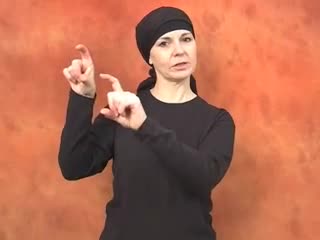
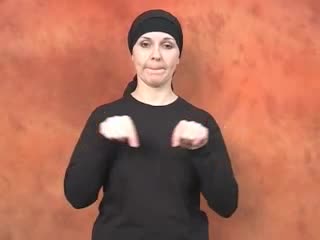
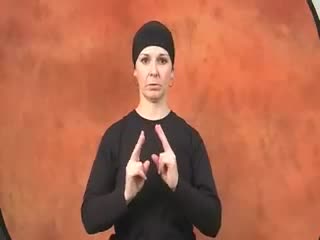
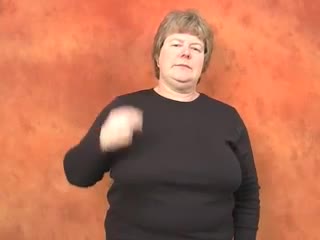
What Is the BSL Sign for "actual value"?
Welcome to SignDeaf.com, your premier destination for mastering British Sign Language! Today, we're diving into the essential BSL sign for "actual value." This sign is crucial for expressing concepts of true worth, genuine cost, or the intrinsic estimation of something, whether you're discussing finances, quality, or authenticity. Understanding how to sign "actual value" in BSL allows you to communicate with precision and clarity within the Deaf community, enriching your conversations and ensuring your message about real worth is understood. Whether you're a Deaf individual looking for a clear explanation or a hearing learner eager to expand your BSL vocabulary, you'll find this guide to the British Sign Language actual value sign both comprehensive and incredibly helpful.
How to Sign "actual value" in British Sign Language - Step-by-Step Guide
Let's break down the sign for "actual value" into easy-to-follow steps, ensuring you grasp every detail for accurate communication.
Step 1: Handshape
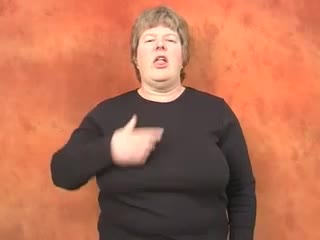
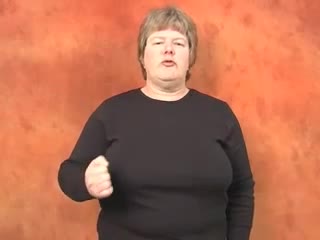
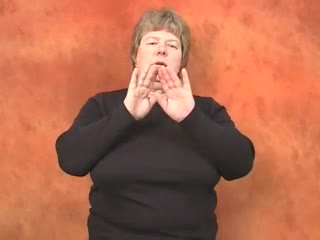
For the BSL sign for "actual value," you will primarily use your dominant hand, while your non-dominant hand provides a stable base. Begin by forming a '1' handshape with your dominant hand: extend your index finger straight upwards, keeping it firm and pointed, while curling your thumb and remaining fingers into your palm. This handshape represents precision and pointing towards truth or reality, setting the stage for the concept of "actual." Simultaneously, position your non-dominant hand as a flat 'B' handshape: extend all fingers straight and together, keeping them flat and firm, with your thumb tucked alongside your palm. This flat hand will serve as the surface upon which the 'actual' component of the sign interacts.
Step 2: Hand Position and Location
To begin the sign for "actual value," hold your non-dominant hand steady, palm facing upwards, positioned comfortably in front of your chest or lower abdomen. This creates a neutral and accessible signing space. Your dominant hand, in the '1' handshape, should be positioned directly above the palm of your non-dominant hand, with the tip of your index finger pointing downwards towards the center of the non-dominant palm. Ensure there's a small, clear space between your dominant index finger and the non-dominant palm, preparing for the initial movement of "actual."
Step 3: Movement
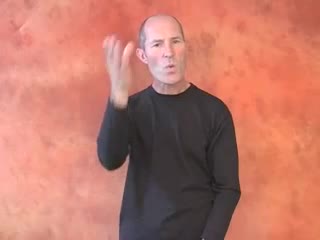
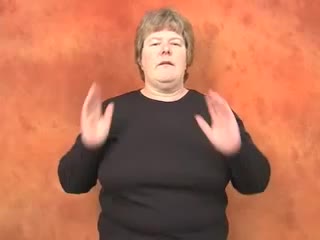
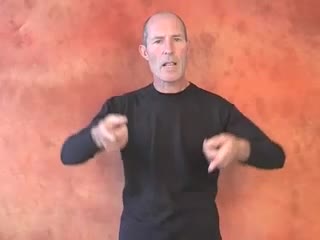
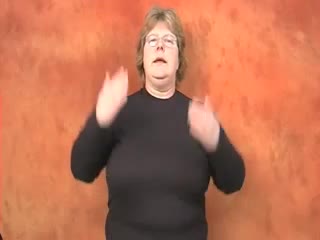
The movement for the BSL actual value sign is distinct and comprises two parts. First, with your dominant hand in the '1' handshape, tap the tip of your index finger firmly onto the center of your non-dominant palm, then lift it slightly, and tap again. This double-tap motion conveys the idea of "true" or "real." Immediately after the second tap, without pausing, smoothly transition your dominant hand into a 'V' handshape: extend your index and middle fingers, spreading them apart, while curling your thumb and remaining fingers into your palm. From this 'V' handshape, sweep your dominant hand upwards and slightly outwards from the non-dominant palm, ending with your 'V' hand positioned slightly above and to the side of where it started. This upward sweep with the 'V' hand represents the concept of "value" or assessment, indicating worth or rising importance. The entire movement should flow naturally, connecting the 'actual' component with the 'value' component.
Step 4: Non-Manual Features (Facial Expression & Mouthing)
Non-manual features (NMFs) are absolutely vital in British Sign Language, providing grammatical information, emotional context, and clarifying meaning. For the BSL sign for "actual value," your facial expression should convey thoughtfulness, seriousness, or a slight hint of affirmation. A subtle, firm nod of the head can accompany the initial taps to emphasize "actual" or "truth." Mouthing the English words "actual value" clearly, but without voice, is also essential. This mouth pattern helps distinguish the sign from potentially similar movements and reinforces the specific meaning. Remember, NMFs are not optional embellishments; they are an integral part of BSL grammar and meaning, ensuring that your communication is fully understood when you learn actual value BSL.
Step 5: Palm Orientation
The palm orientation for the BSL sign for "actual value" changes throughout the sign. Initially, your non-dominant hand remains steady with its palm facing directly upwards. For your dominant hand in the '1' handshape, your palm will be facing downwards or angled slightly towards the non-dominant palm during the tapping motion. As your dominant hand transitions to the 'V' handshape and sweeps upwards, its palm orientation will subtly shift to face forward or slightly upwards, reflecting the assessing and elevating aspect of "value." Maintaining these precise palm orientations is key to correctly forming the actual value sign language.
Quick Reference: "actual value" BSL Sign at a Glance
- Handshape: Dominant '1' handshape tapping non-dominant flat 'B' hand, then dominant 'V' handshape.
- Location: In neutral space, dominant hand interacting with non-dominant palm in front of the chest/abdomen.
- Movement: Dominant '1' taps non-dominant palm twice, then transitions to 'V' hand and sweeps upwards and outwards.
- Facial Expression: Thoughtful, serious, or affirming expression; subtle nod.
- Dominant Hand: Used for the tapping and sweeping motion; non-dominant hand serves as a base.
5 Tips to Learn the BSL Sign for "actual value" Quickly
- Connect to Meaning Iconically: Visualize the sign's components. The dominant '1' handshape tapping firmly on the non-dominant palm can be seen as "pointing to the *truth* or *reality* of something." The subsequent 'V' hand sweeping upwards can represent "assessing its *worth* or *value*." This visual and conceptual link will help solidify the BSL actual value sign in your memory.
- Focus on the Two-Part Flow: Break the sign into its "actual" (tapping) and "value" (sweeping 'V') components. Practice each part separately until it feels natural, then smoothly link them together. The transition from the '1' handshape to the 'V' handshape must be fluid, as this is a single, compound sign rather than two separate ones.
- Emphasize Non-Manual Features: Consciously practice the thoughtful facial expression and the mouthing of "actual value" from the very beginning. NMFs are not an afterthought in BSL; they are integral. Practicing them alongside the hand movements will help you incorporate them naturally and ensure your British Sign Language actual value sign is grammatically correct and clearly understood.
- Mirror Practice and Self-Correction: Stand in front of a mirror and sign "actual value" repeatedly. Pay close attention to your handshapes, location, movement, and especially your facial expression. Compare your movements to the detailed description here. Filming yourself can also be incredibly useful for identifying subtle errors and refining your technique.
- Contextualize with Related Words: Learn related concepts alongside "actual value" to build a stronger semantic network. Think about signs for "true," "worth," "price," "genuine," or "cost." Practicing this sign within a cluster of related vocabulary will deepen your understanding and recall, making it easier to remember the BSL sign for actual value in various conversational contexts.
When and How to Use the BSL Sign for "actual value"
The BSL sign for "actual value" is highly versatile and used in various everyday contexts where precision regarding worth or truth is required. Understanding its application helps you use the actual value sign language appropriately.
- Financial Discussions: When discussing economics, purchases, or sales, you might use it to emphasize the genuine market price versus an inflated or discounted price.
Example: "The house's actual value is much higher than the asking price."
- Quality and Authenticity: It's perfect for situations where you want to highlight the true quality or authenticity of an item, contrasting it with a counterfeit or inferior imitation.
Example: "This antique vase has immense actual value due to its rarity and craftsmanship."
- Personal Assessment: You can use it when evaluating a situation, a person's contribution, or the true impact of an event, moving beyond superficial appearances.
Example: "We need to consider the actual value of their effort, not just the outcome."
- Grammatical Considerations: In BSL, the sign itself doesn't change based on question structure or negation, but surrounding non-manual features and other signs would. For a question, your eyebrows would typically raise. For negation, you might add the sign for "NOT" or shake your head. The BSL actual value sign will maintain its core form.
Common Mistakes When Signing "actual value" in BSL - And How to Fix Them
Learning any new sign can present challenges, and the BSL sign for "actual value" is no exception. Here are