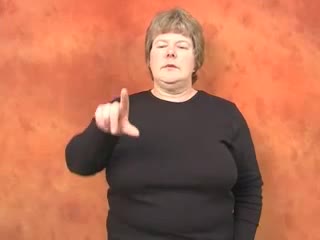
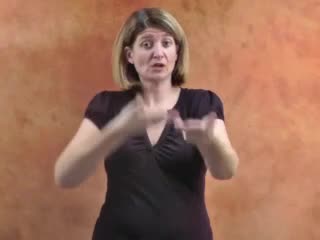
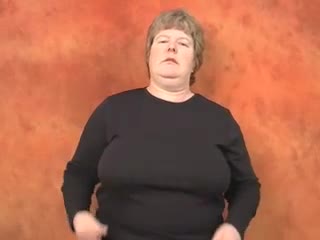
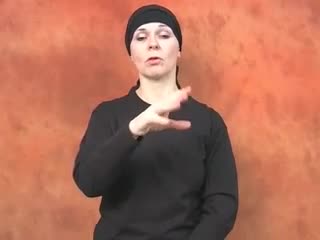
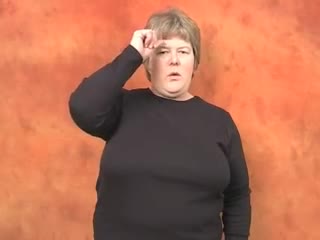
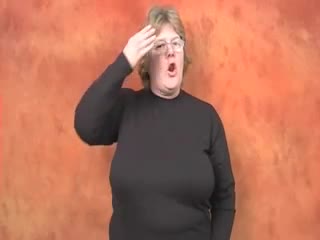
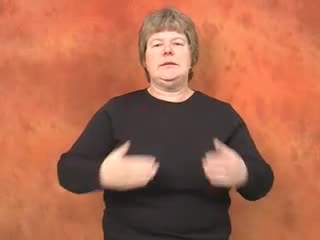
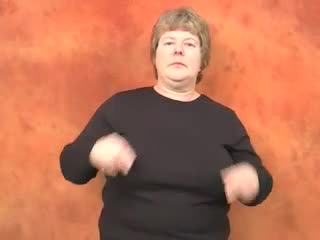
1.[en] Wait for me. / BSL:[WAIT ME] | 2.[en] Please wait. / BSL:[PLEASE WAIT] | 3.[en] Wait here. / BSL:[WAIT HERE]
1.[en] Wait for me. / BSL:[WAIT ME] | 2.[en] Please wait. / BSL:[PLEASE WAIT] | 3.[en] Wait here. / BSL:[WAIT HERE]
Create a free account to keep your watch history and review plan.
To stay until someone arrives or something happens
Save this sign
Build your personal BSL dictionary - free account lets you save signs, track progress, and earn XP.
Create free account Already have an account? Log in →Create a free account to save this sign, keep your watch history, and write unlimited journal notes - everything on SignDeaf is free.
How well do you know this sign?
Keep your streak going
Create a free account for unlimited reviews and to save your progress. Everything on SignDeaf is free.
Create free account Already have an account? Log in →Write memory tricks, usage examples, and cultural reminders beside each sign. Create a free account to keep unlimited notes on every sign - completely free.
Create free account Already have an account? Log inThe BSL sign for wait is one of those foundational signs you’ll use constantly in everyday conversation. At its heart, it’s a direct request or statement about pausing or holding on. It tells someone, or indicates for yourself, that there’s a temporary halt before continuing. While it translates to the English word "wait," its BSL usage carries a broader spectrum of intention, from a gentle request for patience to a firm instruction to stop an action momentarily.
What makes this sign particularly expressive is its versatility. It doesn't just convey the action of waiting; it often sets a tone for the interaction. You might use it to signal a moment of thought, to indicate you're anticipating something, or to simply ask for a brief pause. Its simplicity belies its power to manage conversational flow, giving you a clear way to control the pace of communication without needing many words.
Think of it as a conversational traffic controller. It’s an invitation to pause, to observe, or to hold a thought while you or someone else catches up. It’s a very human sign that acknowledges the ebb and flow of real-time communication, making space for reflection or practical delays within a signed conversation.
You'll find the BSL sign for wait feels incredibly natural in a variety of real-life situations. Imagine you're with a friend and they're about to leave, but you just need a second to grab your keys. A quick, clear sign for wait, perhaps with an accompanying facial expression indicating a brief delay, works perfectly. It’s ideal for those moments when you need to interject a polite hold in a fast-moving exchange, preventing misunderstanding or missed information.
It's also the go-to sign when you're communicating about an external event. For instance, if you're discussing travel plans and need to mention that "we'll wait for the train," or "I have to wait for an appointment," this sign slots in seamlessly. Its neutral yet direct nature makes it appropriate across different registers, from casual chats with friends to more formal discussions. It conveys clarity without being overly demanding, making it a respectful way to manage expectations regarding time.
However, be mindful of situations where a different sign might convey a more specific nuance. If you mean "hold on" in a more informal, almost reassuring sense, other signs might be preferable. Similarly, if you want to convey "later" or "postpone," there are distinct signs for those concepts that focus more on the future aspect rather than the immediate pause. The sign for wait is about the present moment of pausing, or anticipating an imminent future event, rather than a general deferral.
One common area where learners sometimes miss the mark with the sign for wait is in the subtle but crucial role of facial expression. A neutral "wait" might be a simple request, but a slightly furrowed brow can add a sense of urgency or impatience. Conversely, a relaxed expression with a gentle smile can convey "wait, I'm enjoying this moment" or "just a moment, I'm thinking." Without the appropriate facial grammar, the sign can come across as flat or even misinterpreted as a blunt command rather than a nuanced request or statement.
Another point of confusion can be the handshape and movement precision. While the description mentions an "open flat hand, fingers together, thumb extended upwards," some learners might flatten the thumb too much or let the fingers splay. The slight upward extension of the thumb is key – it gives the hand a specific, almost symbolic "W" or "holding" quality. The movement, "slightly forward and back or in small circles," should be controlled and repetitive, not a single, large sweep. Over-exaggerating the movement can make the sign look frantic rather than measured and intentional.
Finally, timing and direction are often overlooked. The sign should be directed towards the person you're asking to wait, or generally in front of you if you're stating that *you* will wait or that something else needs to wait. Some learners might sign it aimlessly or too quickly, diminishing its impact. Remember, the sign gives a moment for processing, so a clear, well-timed execution, allowing the receiver to register the message, is much more effective than a rushed or imprecise delivery. Don't be afraid to hold the sign for a beat if the situation truly calls for a longer pause.
Imagine your dominant hand as a gentle barrier or a "pause" button for time. The open, flat hand with the thumb extended slightly upwards is like holding back a flow or indicating a momentary stop. The subtle movement back and forth or in small circles reinforces the idea of holding steady, like a pendulum gently marking time until movement resumes.
The BSL sign for "wait" uses a dominant hand with an open flat shape, fingers together, and thumb extended upwards. It moves slightly forward and back or in small circles near the chest, expressing a pause or delay
Practice signing "wait" while thinking about a delay
Ensure handshape is clear, thumb extended, and movement is gentle
Follow these steps to sign wait correctly in British Sign Language (BSL):
Tip: Watch the video above while following these steps for best results.
Facial expressions and body language are grammatically essential in British Sign Language (BSL) - not optional!
Use these tiny checks right after watching the video. Fast feedback is what turns recognition into recall.
Pick one so SignDeaf can shape the rest of your session around how this sign actually feels.
One sign gets remembered faster when you attach it to real situations. Try these quick scene prompts.
Use this sign in a short workplace sentence or meeting exchange.
Try signing this while talking about family life or something at home.
Imagine teaching this sign to a classmate or using it in a lesson.
Practise it in a healthcare conversation where clarity matters.
Use it in a travel scenario like asking for help or directions.
1.[en] Wait for me. / BSL:[WAIT ME] | 2.[en] Please wait. / BSL:[PLEASE WAIT] | 3.[en] Wait here. / BSL:[WAIT HERE]
Asking someone to pause, indicating a delay
When expressing "stand by" or "expect"
Neutral
Patience is valued; direct requests for waiting are common
Minor variations in specific movement or location
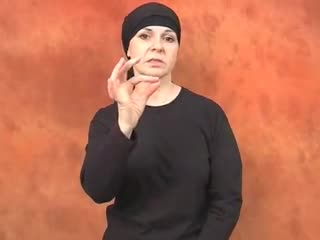
To request information, permission, or clarification
Compare with ask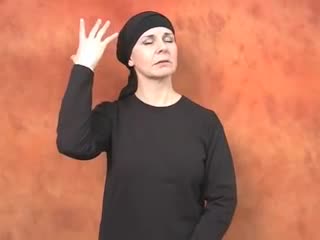
To lose memory of something; fail to recall
Compare with forget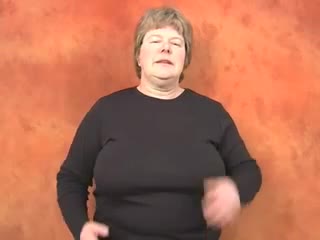
To attract or hold attention; to engage curiosity
Compare with interestCan be held longer for emphasis, or repeated for "waiting a long time."
Keep building your British Sign Language (BSL) vocabulary - explore signs by category or browse the full dictionary.