Speed
0
Practice reps times watched

Create a free account to keep your watch history and review plan.

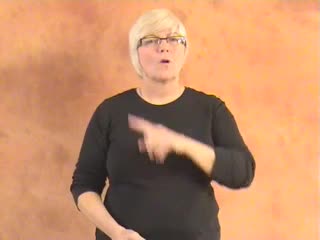
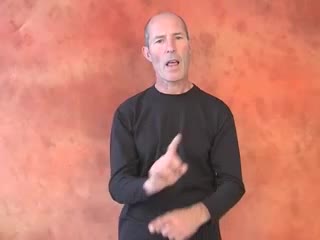
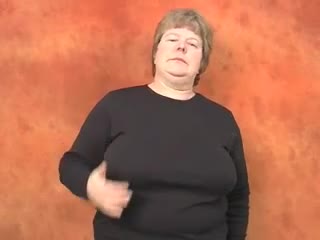
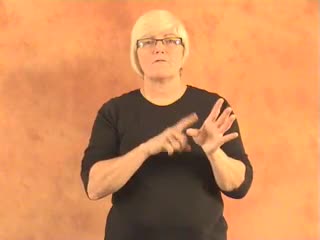
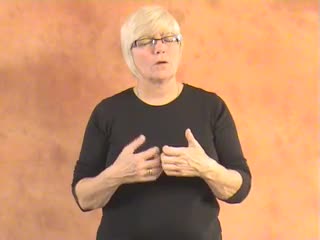
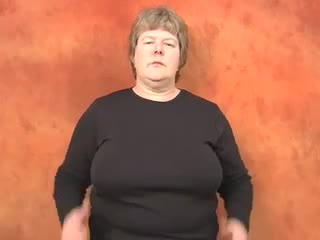
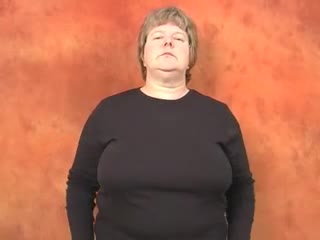
Best practice Use mirror mode, then watch the frame breakdown below to catch the start, movement, and finish cleanly.
Video via SpreadTheSign  - Free educational resource BSL
Updated April 24, 2026
British Sign Language (BSL) 🟢 Beginner 📊 A1 ⚡ Very Common Adverb

soon

In a short time from now; quickly

Source-linked video Step-by-step guide Context and safety notes
Synonyms
Shortly quickly anon
Antonyms
Later eventually
Difficulty
Not rated yet

Create a free account to save this sign, keep your watch history, and unlock a one-note journal preview.

How to sign it
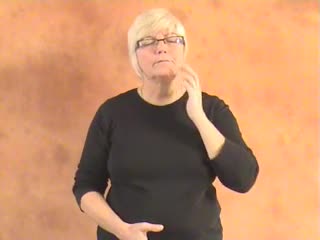
Handshape
Index finger extended, rest of fingers and thumb closed
Location
Chin area of the face
Movement
Repeated tapping or brushing movement at the chin
Palm Orientation
Palm faces inward/sideways
Facial Expression
Slight forward head tilt often accompanies
🔁 Spaced Review Try it free

How well do you know this sign?

SOON
Your Progress Live
🌱
Level 1 · BSL Beginner +0 XP today
This sign Not learned yet
0 watches
Mastery 0%
Confidence
How well do you know this sign?
0 🔥 Streak
0 Signs seen
0 Learned
0 Watches
📖 Vocabulary health 🔒 Log in to see score
0 Mastered
0 Confident
0 Practicing
0 Just seen

Create a free account to keep your vocabulary score between sessions

7-day activity 0 of 7 active

Register free to sync activity across devices

Watch signs to see your history here

Tracking locally for now. Create a free account to save your progress and sync across devices.
Free gets you started. Paid adds the repeat-learning layer: review queues, deeper notes, compare mode, and better comeback tools.
My Sign Journal
Personal notes, saved to your account forever
Locked

Write memory tricks, usage examples, and cultural reminders beside each sign. Create a free account to unlock your first saved note preview on this page.

Create free account Already have an account? Log in

What This Sign Means in BSL

The BSL sign for soon is a wonderfully immediate and versatile adverb, signaling that an event or action is expected to happen in the very near future. It’s a sign that carries a clear sense of anticipation, often implying "any minute now" or "in a short while." When you use it, you're not just stating a future event; you're often conveying a feeling of proximity, reassurance, or even mild urgency.

This sign is all about conveying a short, impending timeframe. Think of it as the BSL equivalent of someone saying, "It's just around the corner!" or "It won't be long now." It’s particularly effective for promises, plans, or simply describing something that's about to unfold. The sign itself, with its direct movement to the chin, embodies this immediacy, bringing the future literally closer to you.

You'll find yourself using "soon" in a wide array of contexts, from casual chat about meeting a friend to more structured discussions about project deadlines. Its core meaning remains consistent: a brief interval before something happens. It’s a sign that invites a sense of readiness and expectation, making it a foundational part of everyday BSL communication.

When This Sign Feels Natural

The sign for "soon" feels most natural in informal to semi-formal conversations, particularly when you're discussing plans, reassuring someone, or expressing mild impatience or excitement about something impending. Imagine telling a friend you'll be there "soon," or letting someone know their turn is coming "soon." It’s the perfect sign for those moments when precision isn't necessary, but a clear indication of a short wait is.

You’d naturally choose this sign when interacting with Deaf friends, family, or colleagues where a relaxed, direct communication style is appreciated. It’s excellent for situations like: "I'm going home soon," "The food will be ready soon," or "I'll see you soon." It fits well into the rhythm of daily life, providing a succinct way to manage expectations about time.

While "soon" is incredibly useful, you might choose a different sign if you need to be very specific about a future time (e.g., "in five minutes," or "next Tuesday"). Similarly, for highly formal announcements or very long-term plans, you might opt for broader future tense indicators or more detailed explanations. "Soon" thrives in those moments of immediate, friendly, and reassuring communication.

What Learners Usually Miss

One common oversight for learners is the subtlety of the movement and its repetition. The sign for "soon" isn't a single, definitive tap; it's a repeated, often gentle, brushing or tapping motion at the chin. Learners sometimes make the movement too forceful or perform it only once, which can make the sign less clear or even imply a different meaning. The repetition is key to conveying the continuous approach of the "soon" moment.

Another aspect often missed is the appropriate facial expression. While the handshape and movement are correct, a neutral face can strip the sign of its full meaning. For "soon," a slight raising of the eyebrows, a gentle forward lean of the head, or an expectant look can greatly enhance the sign, showing anticipation or reassurance. Without this non-manual element, the sign can feel flat, lacking the very immediacy and feeling it's meant to convey.

Finally, learners sometimes struggle with the precise location on the body. The sign is specifically at the chin area. Drifting too high towards the mouth or too low towards the neck can make the sign less clear or even resemble other signs. Maintaining the correct location, combined with the repeated, natural movement and an engaged facial expression, ensures your "soon" is perfectly understood as the impending, close-at-hand moment you intend.

A Simple Way to Remember It

Think of the sign for "soon" as an immediate reminder, bringing the future right up to your face. The repeated movement at your chin represents time ticking down, getting closer and closer to you.

  • The Chin as Your Personal Timeline: Imagine your chin as the point where the immediate future touches you. The action there signifies something is so close, it's almost brushing against you.
  • The Index Finger Pointing Forward: Your extended index finger is like a tiny arrow pointing directly from the present moment towards that very near future, emphasising the quick approach.
  • Repeated Tapping = Impending Action: The gentle, repeated tapping or brushing isn't just one moment, but a continuous series of tiny moments getting closer and closer, building anticipation until the event arrives.

Short Practice Situations

  • I'll pop over to your place soon, just finishing up this email.
  • Don't worry, the film is starting soon, we just need to grab our snacks.
  • The bus will be here soon, let's wait by the stop.
  • We need to decide on our holiday plans soon before all the good flights are gone.
  • I'm going to get a new coffee machine soon; this one is on its last legs!

Signs to Learn Next

  • Later: This sign is a natural contrast to "soon," helping you distinguish between events happening in the immediate future versus those further off. Learning both helps you express varying timeframes clearly.
  • Now / Already: While "soon" looks to the immediate future, "now" and "already" anchor you firmly in the present or very recent past. Understanding these helps delineate between what's currently happening, what has just finished, and what's about to begin.
  • Wait: Often, if something is happening "soon," it implies a period of "wait." Learning "wait" alongside "soon" allows you to communicate the full scope of anticipation and patience in a conversation.
  • Future: "Future" is a broader concept, encompassing any time ahead. Learning "soon" in relation to "future" helps you understand how to specify a very close future versus a more distant, general one.
  • Arrive: This sign represents an event's conclusion – the moment something or someone gets to a destination. Learning "arrive" allows you to describe the completion of something that was pending "soon."

🤖 AI Learning Guide for "soon"

The sign for 'soon' uses an index finger tapping the chin to represent proximity in time

🎯 Practice Challenge

Practice signing 'soon' while looking at a clock. Try using it in sentences about future events

⚠️ Most Common Mistake

Ensure the index finger is extended and the movement is a clear, repeated tap at the chin, not a single touch

👐 How to Sign "soon" in British Sign Language (BSL) (Quick Answer)

Follow these steps to sign soon correctly in British Sign Language (BSL):

  1. 1 Form G-hand (index finger extended)
  2. 2 Place index finger at chin
  3. 3 Tap chin repeatedly (2-3 times)
  4. 4 Maintain G-hand shape

Tip: Watch the video above while following these steps for best results.

🤚 Sign Profile

🤚
Handshape
Index finger extended, rest of fingers and thumb closed
🔣
Handshape Code
G
Dominant Hand
Either
🙌
Hand Count
One-handed
📍
Location
Chin area of the face
↗️
Movement
Repeated tapping or brushing movement at the chin
🔄
Movement Type
Repeated
👆
Contact
Tap
👋
Palm Orientation
Palm faces inward/sideways
⚖️
Symmetry
Asymmetric

😊 Non-Manual Features

Facial expressions and body language are grammatically essential in British Sign Language (BSL) - not optional!

😊
Facial Expression
Slight forward head tilt often accompanies
🙆
Eyebrows
Neutral
👁️
Eye Gaze
Forward
🙂
Head Movement
None
👄
Mouth Morpheme
Pursing lips or 'pshh' mouth pattern can intensify
🕴️
Body Shift
None

📖 Grammar & Linguistics

Part of Speech Adverb
Inflection No
Classifier Usage N/A
Role Shift No

🎓 Learning Context

📌 When to Use: Used to indicate an event will happen in the near future
⚠️ Common Mistake: Confusing with 'later' or incorrect handshape/movement
🚫 When NOT to Use: When referring to events far in the future
Context Tags
Time Future Adverb

🧪 Practice Lab

Use these tiny checks right after watching the video. Fast feedback is what turns recognition into recall.

Meaning check

Which word matches the sign you just watched?

Usage check

Where would this sign fit most naturally?

Confidence check

How do you feel about soon right now?

Pick one so SignDeaf can shape the rest of your session around how this sign actually feels.

🧭 Scenario Drill

One sign gets remembered faster when you attach it to real situations. Try these quick scene prompts.

Work

Stretch practice

Use this sign in a short workplace sentence or meeting exchange.

Family

Stretch practice

Try signing this while talking about family life or something at home.

School

Stretch practice

Imagine teaching this sign to a classmate or using it in a lesson.

Doctor

Stretch practice

Practise it in a healthcare conversation where clarity matters.

Travel

Stretch practice

Use it in a travel scenario like asking for help or directions.

💬 Example Usage

1.[en] I'll be back soon. / BSL:[ME COME BACK SOON] | 2.[en] Hope to see you soon. / BSL:[HOPE SEE YOU SOON] | 3.[en] He finished soon. / BSL:[HE FINISH SOON]

1.[en] I'll be back soon. / BSL:[ME COME BACK SOON] | 2.[en] Hope to see you soon. / BSL:[HOPE SEE YOU SOON] | 3.[en] He finished soon. / BSL:[HE FINISH SOON]

When to use it

Used to indicate an event will happen in the near future

When not to use it

When referring to events far in the future

Register

Neutral

🌍 Cultural Context

Often accompanied by a slight forward lean

🗺️ Regional Variations

Minor variations in speed/contact, but core sign is consistent

⚖️ Similar Signs - What's the Difference?

This sign soon
VS
Similar signs Look closely
The sign for 'soon' (G-hand tapping chin) is often confused with 'later' (G-hand or L-hand moving forward from the chin/side of face, or an L-hand moving back over the shoulder). The key difference is 'soon's repeated tapping *at* the chin versus 'later's single forward or backward movement *from* the chin/face. It's also distinct from 'yesterday' (A-hand brushing back on cheek)

📝 Usage Notes

Can be repeated for emphasis or urgency

🏷️ Tags

Handshape

Keywords

💡
Did you know?
SpreadTheSign has 600,000+ sign language videos across 40+ sign languages - all free to view.

📚 Explore More British Sign Language (BSL) Signs

Keep building your British Sign Language (BSL) vocabulary - explore signs by category or browse the full dictionary.