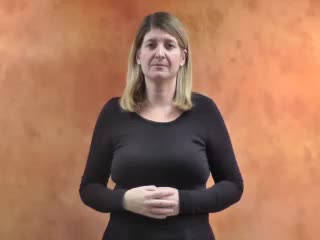
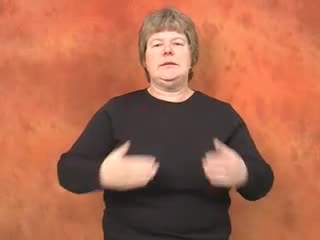
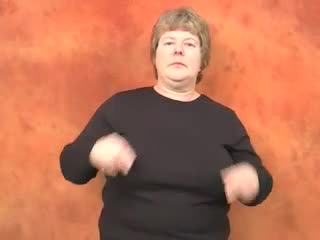
Speed
0
Practice reps times watched

Create a free account to keep your watch history and review plan.

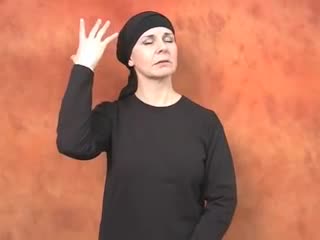
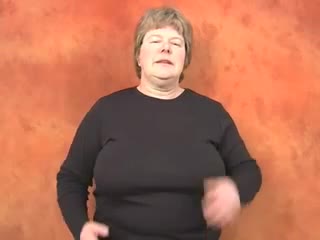
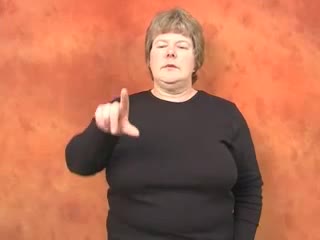
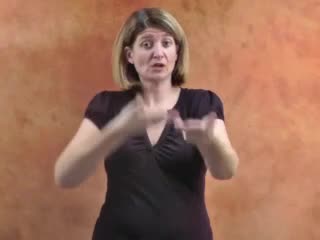
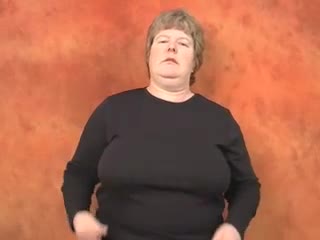
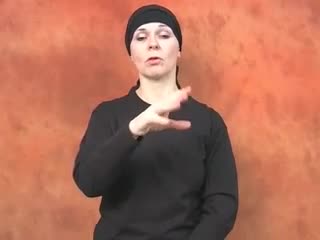
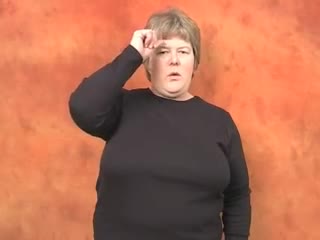
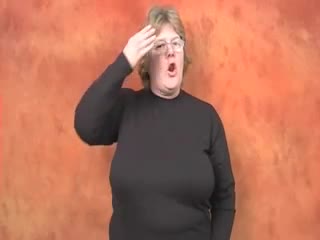
Best practice Use mirror mode, then watch the frame breakdown below to catch the start, movement, and finish cleanly.
Video via SpreadTheSign  - Free educational resource BSL
Updated April 23, 2026
British Sign Language (BSL) 🟢 Beginner 📊 A1 ⚡ Very Common Verb

speak

To communicate using spoken words

Source-linked video Step-by-step guide Context and safety notes
Synonyms
Talk say chat voice
Antonyms
Listen silence quiet
Difficulty
Not rated yet

Create a free account to save this sign, keep your watch history, and unlock a one-note journal preview.

How to sign it
Handshape
Index finger extended, thumb extended, other fingers curled
Location
From mouth/chin area
Movement
Hand moves forward from mouth, repeats
Palm Orientation
Palm usually faces forward or slightly down/out
Facial Expression
Slight mouth movement, sometimes 'pufferfish' cheeks
🔁 Spaced Review Try it free

How well do you know this sign?

SPEAK
Your Progress Live
🌱
Level 1 · BSL Beginner +0 XP today
This sign Not learned yet
0 watches
Mastery 0%
Confidence
How well do you know this sign?
0 🔥 Streak
0 Signs seen
0 Learned
0 Watches
📖 Vocabulary health 🔒 Log in to see score
0 Mastered
0 Confident
0 Practicing
0 Just seen

Create a free account to keep your vocabulary score between sessions

7-day activity 0 of 7 active

Register free to sync activity across devices

Watch signs to see your history here

Tracking locally for now. Create a free account to save your progress and sync across devices.
Free gets you started. Paid adds the repeat-learning layer: review queues, deeper notes, compare mode, and better comeback tools.
My Sign Journal
Personal notes, saved to your account forever
Locked

Write memory tricks, usage examples, and cultural reminders beside each sign. Create a free account to unlock your first saved note preview on this page.

Create free account Already have an account? Log in

What This Sign Means in BSL

The BSL sign for speak is one of the most fundamental and frequently used signs for communication. It directly represents the act of verbal utterance, making it instantly recognisable and highly versatile. At its core, it signifies that words are being produced, whether by an individual, a group, or even in a more abstract sense like a message being conveyed.

You'll notice its directness; the handshape and movement are a clear visual metaphor for sounds or words emanating from the mouth. This sign doesn't necessarily carry a specific emotional tone on its own; instead, it provides a neutral foundation upon which you can layer emotion and nuance through your facial expressions and body language. It's about the action of speaking itself, pure and simple.

This sign is a cornerstone for discussing any form of spoken communication. It’s what you’d use to describe someone giving a speech, two people having a conversation, or simply stating that a person is using their voice. Mastering this sign quickly opens up many possibilities for expressing ideas about dialogue and verbal interaction in BSL.

When This Sign Feels Natural

This sign feels most natural in a vast array of everyday scenarios where verbal communication is the topic. You'd use it when someone is actively talking, presenting information, or even just making noise with their voice. Think about moments like a friend telling a story, a news anchor delivering a report, or someone simply opening their mouth to share an opinion.

Its register is generally neutral, making it suitable for both casual chats and more formal discussions. You wouldn't typically use a different sign to convey a more "polite" or "blunt" form of speaking, as the sign itself focuses on the action. The politeness or bluntness would instead come from your accompanying facial expression, eye contact, and the overall context of your signing.

However, it's good to know when to opt for a different sign. If you're talking about a quick, single utterance, you might lean towards signs like SAY or TELL. If the context is about gossip or whispering, there are specific BSL signs for those nuances that capture the *manner* of speaking more accurately than the general sign for speak. This sign truly shines when the focus is squarely on the ongoing act of verbal communication.

What Learners Usually Miss

One common subtlety learners sometimes miss with the BSL sign for speak is the crucial element of repetition in its movement. While a single, sharp forward movement from the mouth might be understood as "say" or "tell" in some contexts, the sign for speak typically involves a repeated, gentle forward motion. This repetition signifies ongoing speech, a flow of words rather than a single utterance. If you only perform the movement once, you might inadvertently alter the meaning or make your signing feel less natural for continuous speaking.

Another area where learners can improve is integrating appropriate facial expressions. The sign itself is neutral, but people rarely speak without some underlying emotion or intention. For example, if someone is speaking excitedly, your face should reflect that excitement. If they’re speaking sadly, your expression should convey sorrow. Failing to use context-appropriate facial expressions can make your signing appear flat or disconnected from the message, even if the sign for speak is perfectly executed.

Finally, pay attention to the exact origin and direction. The movement should originate clearly from the mouth or chin area and project forward. Avoid letting the hand drift too far away from the face or move in an erratic direction. It’s a direct representation of speech coming out. Over-emphasising directionality towards a specific person can sometimes overcomplicate this general sign, which fundamentally describes the act of speaking rather than speaking *to* someone specific without further linguistic modification.

A Simple Way to Remember It

Think of the BSL sign for speak as physically showing words leaving your mouth. Your index finger acts like a stream of sound or ideas, projected forward from the source of speech. The repeated movement helps reinforce the idea of continuous flow, much like a steady stream of conversation.

  • The "Voice" Finger: Imagine your extended index finger as the words or voice literally exiting your mouth.
  • Repetitive Flow: The repeated forward movement represents the ongoing nature of speaking, a continuous stream of thoughts or conversation.
  • Direct from the Source: The sign starts right at your mouth, making it a highly intuitive and direct representation of verbal communication.

Short Practice Situations

  • I need to speak to my manager about my work schedule next week.
  • Can you ask the presenter to speak a little slower, please? It's hard to follow.
  • The children were all eager to speak about their holiday adventures.
  • It's important for everyone in the meeting to have a chance to speak their mind.

Signs to Learn Next

  • TALK: This sign is closely related and often used interchangeably with "speak," though sometimes "talk" can imply a more informal or conversational exchange.
  • SAY/TELL: These signs often involve a single, direct movement from the mouth, focusing on a specific utterance or conveying a piece of information, making them natural companions to "speak."
  • HEAR/LISTEN: Understanding communication involves both giving and receiving. Learning these signs helps complete the communication loop.
  • UNDERSTAND: The purpose of speaking is often to be understood, making this an essential follow-up sign to discuss comprehension.
  • COMMUNICATE: This sign offers a broader concept of sharing information, encompassing both spoken and signed communication, and provides a useful context for "speak."

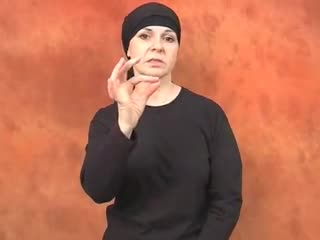
🤖 AI Learning Guide for "speak"

Sign for "speak" uses a G-hand moving forward from the mouth, repeating. It represents emitting sound or words

🎯 Practice Challenge

Try signing "speak" in different contexts. Focus on repetition for continuous action

⚠️ Most Common Mistake

Ensure handshape is correct G-hand. Movement should be clear, forward from the mouth, repeating

👐 How to Sign "speak" in British Sign Language (BSL) (Quick Answer)

Follow these steps to sign speak correctly in British Sign Language (BSL):

  1. 1 Form a G-hand (index and thumb extended)
  2. 2 Place fingertips of index finger near mouth
  3. 3 Move hand forward and slightly down from mouth
  4. 4 Repeat the forward movement once or twice

Tip: Watch the video above while following these steps for best results.

🤚 Sign Profile

🤚
Handshape
Index finger extended, thumb extended, other fingers curled
🔣
Handshape Code
G-hand
Dominant Hand
Right
🙌
Hand Count
One-handed
📍
Location
From mouth/chin area
↗️
Movement
Hand moves forward from mouth, repeats
🔄
Movement Type
Repeated, Linear
👆
Contact
Air
👋
Palm Orientation
Palm usually faces forward or slightly down/out

😊 Non-Manual Features

Facial expressions and body language are grammatically essential in British Sign Language (BSL) - not optional!

😊
Facial Expression
Slight mouth movement, sometimes 'pufferfish' cheeks
🙆
Eyebrows
Neutral
👁️
Eye Gaze
Forward
🙂
Head Movement
None
👄
Mouth Morpheme
'Pah' or 'bah' for emphasis
🕴️
Body Shift
None

📖 Grammar & Linguistics

Part of Speech Verb
Transitivity Both
Inflection Yes
Classifier Usage N/A
Role Shift No

🎓 Learning Context

📌 When to Use: General communication, expressing speech
⚠️ Common Mistake: Not repeating movement, incorrect handshape, wrong location
🚫 When NOT to Use: When referring to listening or writing
Context Tags
Communication verb basic

🧪 Practice Lab

Use these tiny checks right after watching the video. Fast feedback is what turns recognition into recall.

Meaning check

Which word matches the sign you just watched?

Usage check

Where would this sign fit most naturally?

Confidence check

How do you feel about speak right now?

Pick one so SignDeaf can shape the rest of your session around how this sign actually feels.

🧭 Scenario Drill

One sign gets remembered faster when you attach it to real situations. Try these quick scene prompts.

Work

Stretch practice

Use this sign in a short workplace sentence or meeting exchange.

Family

Stretch practice

Try signing this while talking about family life or something at home.

School

Stretch practice

Imagine teaching this sign to a classmate or using it in a lesson.

Doctor

Stretch practice

Practise it in a healthcare conversation where clarity matters.

Travel

Stretch practice

Use it in a travel scenario like asking for help or directions.

💬 Example Usage

1.[en] Can you speak louder? / BSL:[Sign SPEAK, then LOUD] | 2.[en] I need to speak. / BSL:[ME NEED SPEAK] | 3.[en] He is speaking. / BSL:[HE SPEAK (repeated)]

1.[en] Can you speak louder? / BSL:[Sign SPEAK, then LOUD] | 2.[en] I need to speak. / BSL:[ME NEED SPEAK] | 3.[en] He is speaking. / BSL:[HE SPEAK (repeated)]

When to use it

General communication, expressing speech

When not to use it

When referring to listening or writing

Register

Neutral

🌍 Cultural Context

Direct gaze is common when signing

🗺️ Regional Variations

Minor variations in hand path or repetition exist

⚖️ Similar Signs - What's the Difference?

This sign speak
VS
Similar signs Look closely
SPEAK (this sign): G-hand, moves forward from mouth, repeated. Focus on emitting words. | TALK (similar, often two-handed): Index fingers extended, moving alternately or together from mouth/chin area. Implies dialogue. | SAY: Similar G-hand from mouth, but often a single, more emphatic outward movement. Focus on a specific utterance. The key difference is the movement and the specific meaning nuances

📝 Usage Notes

Can indicate continuous speech by repeating the movement

Frequently Asked Questions

Common questions about the British Sign Language (BSL) sign for "speak".

🏷️ Tags

Handshape

Keywords

💡
Did you know?
BSL uses a two-handed manual alphabet - different from ASL which is one-handed.

📚 Explore More British Sign Language (BSL) Signs

Keep building your British Sign Language (BSL) vocabulary - explore signs by category or browse the full dictionary.