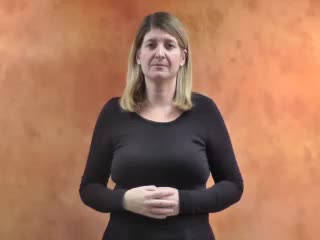
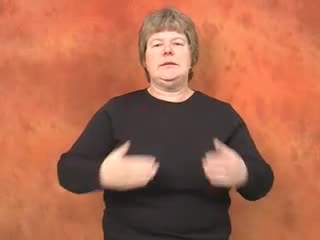
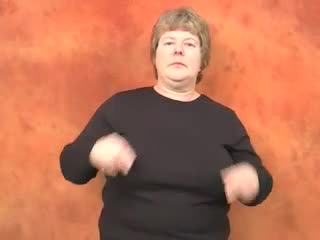
Speed
0
Practice reps times watched

Create a free account to keep your watch history and review plan.

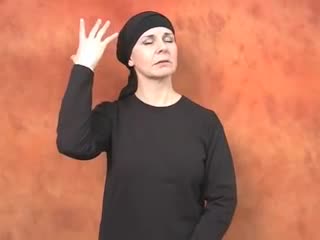
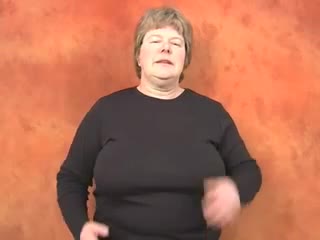
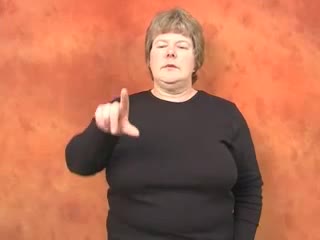
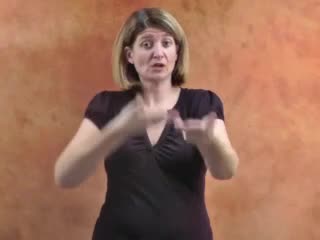
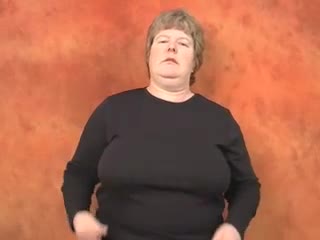
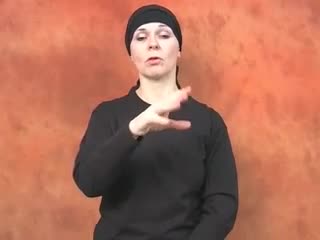
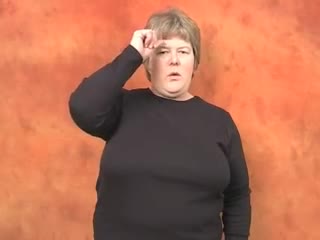
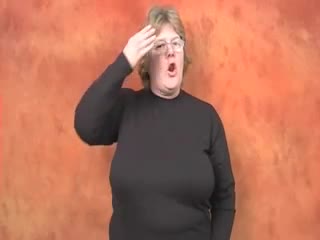
Best practice Use mirror mode, then watch the frame breakdown below to catch the start, movement, and finish cleanly.
Video via SpreadTheSign  - Free educational resource BSL
Updated April 22, 2026
British Sign Language (BSL) 🟢 Beginner 📊 A2 ⚡ Common Verb

scrape

To rub a surface with a hard or sharp object, often to remove something, or to injure by rubbing against something rough

Source-linked video Step-by-step guide Context and safety notes
Synonyms
graze abrade rub scratch grate
Antonyms
smooth polish fill mend
Difficulty
Not rated yet

Create a free account to save this sign, keep your watch history, and unlock a one-note journal preview.

How to sign it
Handshape
Dominant hand forms a bent 5-hand (fingers curled loosely like a claw). Non-dominant hand is a flat B-hand, palm up
Location
Non-dominant hand/forearm
Movement
Dominant hand (bent 5-hand) moves repeatedly across the non-dominant palm or forearm
Palm Orientation
Dominant palm typically faces down or towards non-dominant hand. Non-dominant palm faces up
Facial Expression
Neutral or slight furrowed brow depending on context
🔁 Spaced Review Try it free

How well do you know this sign?

SCRAPE
Your Progress Live
🌱
Level 1 · BSL Beginner +0 XP today
This sign Not learned yet
0 watches
Mastery 0%
Confidence
How well do you know this sign?
0 🔥 Streak
0 Signs seen
0 Learned
0 Watches
📖 Vocabulary health 🔒 Log in to see score
0 Mastered
0 Confident
0 Practicing
0 Just seen

Create a free account to keep your vocabulary score between sessions

7-day activity 0 of 7 active

Register free to sync activity across devices

Watch signs to see your history here

Tracking locally for now. Create a free account to save your progress and sync across devices.
Free gets you started. Paid adds the repeat-learning layer: review queues, deeper notes, compare mode, and better comeback tools.
My Sign Journal
Personal notes, saved to your account forever
Locked

Write memory tricks, usage examples, and cultural reminders beside each sign. Create a free account to unlock your first saved note preview on this page.

Create free account Already have an account? Log in

What This Sign Means in BSL

The BSL sign for scrape captures a very specific, physical action: the removal of material from a surface using an edge or tool, often involving friction or some degree of force. Think about common scenarios like scraping leftover food from a plate, removing stubborn mud from a boot, or taking old paint off a wall. It’s not simply about touching a surface; it explicitly conveys the act of getting something *off* it.

This sign is wonderfully iconic, meaning its form directly mimics the action it represents. Your dominant hand, shaped like a bent claw or scoop, acts as the tool or part of your hand doing the scraping. It moves repeatedly across your non-dominant hand or forearm, which serves as the surface being worked on. This visual representation makes the meaning immediately clear and intuitive for both the signer and the receiver.

The sign inherently carries a sense of purpose and thoroughness. You're not just idly brushing; you're actively trying to remove something. While the core sign is consistent, the intensity of the action can be subtly modulated. A faster, more forceful movement might suggest a vigorous scrape, while a gentler, slower repetition could imply a more careful or delicate action, all communicated non-manually through your facial expression and body language.

When This Sign Feels Natural

This sign feels most natural and is incredibly effective when you’re describing a direct, tactile scraping action. Imagine yourself in a kitchen, needing to "scrape the last bit of batter from the mixing bowl," or doing some DIY and describing how you "scraped the old plaster off the wall." It’s perfectly suited for these literal contexts where something is physically being dislodged or removed from a surface.

You’ll hear this sign often in everyday conversations, particularly when discussing household chores, cooking, gardening, or manual tasks. It’s a versatile sign that fits comfortably across various registers, from informal chats among friends to more structured instructions. Its strong visual connection to the action ensures it’s widely understood and rarely misunderstood in its primary context.

However, it’s worth considering when an alternative sign might be more appropriate. If you mean "scratch" – implying a superficial mark rather than removal of material – you’d use a different sign. Similarly, if you’re referring to "erasing" written text, there are specific signs for that. The key distinguishing feature for "scrape" is the physical act of detaching or clearing material from a surface, often with a slightly rough or resistant quality.

What Learners Usually Miss

A common mistake learners make is performing the sign too lightly or smoothly, failing to convey the natural resistance or effort often involved in scraping. Scraping usually isn’t a gentle glide; it implies some friction and engagement. Your dominant bent 5-hand isn’t just hovering; it should feel like it’s *connecting* with the non-dominant 'surface,' mimicking a tool that’s actually digging in or pushing against something. Practice varying the pressure slightly to internalize this feeling of resistance.

Another subtle but important detail is the dynamic use of the non-dominant hand. It’s not just a static platform; it’s the *object* being scraped. Sometimes learners let it droop or move too much, which can make the sign less clear. Keep your non-dominant hand steady and present it clearly as the surface. Also, think about the precise area you’re scraping; is it a concentrated spot or a wider area? Your dominant hand's path can subtly reflect this, moving across different parts of the non-dominant palm or forearm rather than just a single back-and-forth motion.

Finally, remember that the repetition of the movement isn't just for emphasis; it often signifies a continuous or thorough action. Don't just do one quick pass if you mean a sustained scraping effort. The rhythm and speed of your repetitions, combined with your facial expression, are crucial for conveying whether the scraping is quick and decisive, slow and careful, or laborious and persistent. These non-manual features add significant depth to the sign’s meaning.

A Simple Way to Remember It

The BSL sign for scrape is wonderfully iconic, meaning it looks very much like the action it describes. To cement it in your memory, focus on this direct visual representation. Imagine your dominant hand *is* the scraping tool – perhaps a spatula, a fingernail, or a blade – and your non-dominant hand *is* the surface you're cleaning or preparing. This direct, tangible connection makes the sign quite intuitive and easy to recall.

  • The Tool Hand: Your dominant hand forms a bent 5-hand, looking like a claw or a scoop, perfectly representing the tool or part of your hand you'd use to perform a scraping action.
  • The Surface: Your non-dominant hand, held flat and palm up, acts as the surface – whether it's a plate, a table, or even a piece of wood – from which something is being removed.
  • Repeated Action: The repeated movement of the dominant hand across the non-dominant palm vividly depicts the continuous, back-and-forth motion of scraping, reinforcing the idea of thorough removal.

Short Practice Situations

  • "Can you help me scrape the leftover food from the plates before we put them in the dishwasher?"
  • "My gardening boots are covered in thick mud; I need to scrape it off before I go inside the house."
  • "The recipe instructs us to gently scrape the tiny seeds out of the vanilla pod for extra flavour."
  • "We spent hours having to scrape all the old, peeling paint off the window frames before we could repaint them."
  • "Be careful when you’re walking on that rough path; you don’t want to accidentally scrape your knee."

Signs to Learn Next

  • CLEAN: Often, after you scrape something, the next logical step is to clean it. Learning the sign for 'CLEAN' will allow you to describe the complete process of tidying up or preparing a surface.
  • RUB: While similar in involving friction, the sign for 'RUB' typically implies polishing, soothing, or applying something, rather than the removal of material. Understanding both helps you differentiate between various hand-to-surface actions.
  • WASH: Similar to 'CLEAN', 'WASH' is another very common action that frequently follows or complements scraping, especially when dealing with food, dirty items, or personal hygiene.
  • SCRATCH: Although both involve friction on a surface, 'SCRATCH' usually denotes making a mark or a minor injury, rather than the removal of a substantial amount of material. Differentiating these is key for precision.
  • PEEL: If your scraping action specifically involves removing the skin or outer layer of something like a fruit or vegetable, 'PEEL' might be a more precise and contextually appropriate sign to use.

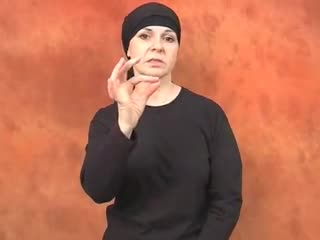
🤖 AI Learning Guide for "scrape"

The BSL sign for 'scrape' visually represents the action of rubbing a surface with a bent hand. It typically involves a repeated, brushing movement of the dominant hand across the non-dominant hand or arm

🎯 Practice Challenge

Practice signing 'scrape' on different parts of your non-dominant arm to convey different surfaces or contexts

⚠️ Most Common Mistake

Ensure your dominant hand's fingers are bent (like a claw) and the movement is a clear, repeated brush

👐 How to Sign "scrape" in British Sign Language (BSL) (Quick Answer)

Follow these steps to sign scrape correctly in British Sign Language (BSL):

  1. 1 Form dominant hand into a bent 5-hand (fingers loosely curled)
  2. 2 Form non-dominant hand into a flat B-hand, palm up
  3. 3 Place dominant bent hand on non-dominant palm or forearm
  4. 4 Move dominant hand repeatedly in a short, linear brushing motion across the surface

Tip: Watch the video above while following these steps for best results.

🤚 Sign Profile

🤚
Handshape
Dominant hand forms a bent 5-hand (fingers curled loosely like a claw). Non-dominant hand is a flat B-hand, palm up
🔣
Handshape Code
B5 (bent 5) on non-dominant, B (flat) on dominant
Dominant Hand
Right
🙌
Hand Count
Two-handed
📍
Location
Non-dominant hand/forearm
↗️
Movement
Dominant hand (bent 5-hand) moves repeatedly across the non-dominant palm or forearm
🔄
Movement Type
Repeated
👆
Contact
Brush
👋
Palm Orientation
Dominant palm typically faces down or towards non-dominant hand. Non-dominant palm faces up
⚖️
Symmetry
Asymmetric

😊 Non-Manual Features

Facial expressions and body language are grammatically essential in British Sign Language (BSL) - not optional!

😊
Facial Expression
Neutral or slight furrowed brow depending on context
🙆
Eyebrows
Neutral
👁️
Eye Gaze
Forward
🙂
Head Movement
None
👄
Mouth Morpheme
Often neutral, sometimes a slight 'mm' for effort or 'cha' for action
🕴️
Body Shift
None

📖 Grammar & Linguistics

Part of Speech Transitive verb
Transitivity Transitive
Inflection Partially
Classifier Usage No
Role Shift No

🎓 Learning Context

📌 When to Use: Used for physical acts like scraping a plate, scraping skin, or scraping by (figurative)
⚠️ Common Mistake: Confusing with 'clean' or 'scratch', not using the correct handshape or movement path
🚫 When NOT to Use: Not used for 'scraping' data (use COLLECT/GATHER information)
Context Tags
action injury cleaning effort

🧪 Practice Lab

Use these tiny checks right after watching the video. Fast feedback is what turns recognition into recall.

Meaning check

Which word matches the sign you just watched?

Usage check

Where would this sign fit most naturally?

Confidence check

How do you feel about scrape right now?

Pick one so SignDeaf can shape the rest of your session around how this sign actually feels.

🧭 Scenario Drill

One sign gets remembered faster when you attach it to real situations. Try these quick scene prompts.

Work

Stretch practice

Use this sign in a short workplace sentence or meeting exchange.

Family

Stretch practice

Try signing this while talking about family life or something at home.

School

Stretch practice

Imagine teaching this sign to a classmate or using it in a lesson.

Doctor

Stretch practice

Practise it in a healthcare conversation where clarity matters.

Travel

Stretch practice

Use it in a travel scenario like asking for help or directions.

💬 Example Usage

1.[en] My car scraped the wall. / BSL:[note] MY CAR WALL SCRAPE. | 2.[en] Please scrape the food off the plate. / BSL:[note] PLATE FOOD SCRAPE PLEASE. | 3.[en] He scraped by financially. / BSL:[note] HE MONEY SCRAPE (figurative, often with 'just' or 'hard')

1.[en] My car scraped the wall. / BSL:[note] MY CAR WALL SCRAPE. | 2.[en] Please scrape the food off the plate. / BSL:[note] PLATE FOOD SCRAPE PLEASE. | 3.[en] He scraped by financially. / BSL:[note] HE MONEY SCRAPE (figurative, often with 'just' or 'hard')

When to use it

Used for physical acts like scraping a plate, scraping skin, or scraping by (figurative)

When not to use it

Not used for 'scraping' data (use COLLECT/GATHER information)

Register

Neutral

🌍 Cultural Context

N/A

🗺️ Regional Variations

Minor variations in handshape or exact location may exist but the core movement is consistent

⚖️ Similar Signs - What's the Difference?

This sign scrape
VS
Similar signs Look closely
The sign for SCRAPE (bent 5-hand rubbing) differs from CLEAN (flat B-hand wiping, often broader) as SCRAPE implies more friction or removal of a layer. It differs from SCRATCH (G-hand or X-hand moving sharply across a surface) as SCRATCH is about making a mark, while SCRAPE is often about removal or injury. SCRAPE's movement is typically more sustained and repetitive than a single SCRATCH

📝 Usage Notes

The intensity and speed of the movement can indicate the force of the scraping action

Frequently Asked Questions

Common questions about the British Sign Language (BSL) sign for "scrape".

🏷️ Tags

Handshape

Keywords

💡
Did you know?
In BSL, non-manual features (facial expressions, mouthing) are as important as the hand movements.

📚 Explore More British Sign Language (BSL) Signs

Keep building your British Sign Language (BSL) vocabulary - explore signs by category or browse the full dictionary.