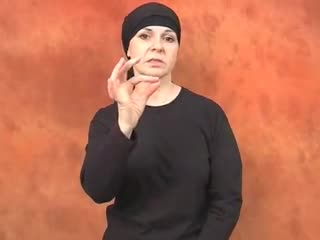
What This Sign Means in BSL
The BSL sign for hear is a foundational sign, directly linking to one of our primary senses: the ability to perceive sound. It’s a beautifully clear and intuitive gesture that visually represents sound registering with you. When you use this sign, you’re communicating the simple act of receiving auditory information, whether it’s a sudden noise, a conversation, or music in the background.
Unlike some signs that carry multiple layers of meaning or require nuanced facial expressions to shift their core message, "hear" is quite direct. It’s about the physiological process of sound waves reaching your eardrum and your brain processing that input. Think of it as the most basic statement of auditory perception, free from additional intentions like active attention or comprehension.
This sign is an essential building block for many everyday conversations. It establishes a baseline for discussing sensory experiences and is often used as a starting point before delving into more complex ideas about understanding, listening intently, or even deafness. Its clarity and directness make it one of the first sensory verbs many learners pick up, and for good reason-it’s universally applicable when talking about sound perception.
When This Sign Feels Natural
You’ll find yourself reaching for the BSL sign for hear in situations where you’re primarily reporting or inquiring about the simple reception of sound. For instance, if you’re at a noisy café and someone asks, “Did you hear what I just said?” this sign perfectly conveys the question about whether the sound reached their ears and was perceived. It's about the factual presence or absence of auditory input.
It’s also the go-to sign when discussing someone’s hearing ability or status. You might use it to say, “My friend can’t hear very well,” or “Can you hear the TV from here?” In these contexts, you’re focusing specifically on the physical capacity to hear, or the practical outcome of sound reaching a person. It’s a neutral and objective sign for this purpose.
Crucially, remember that "hear" is about passive perception. It’s distinct from actively listening. If you're engaging with a conversation, paying close attention, or making an an effort to comprehend, you'll likely use a different sign like "LISTEN." "Hear" is for when sound simply registers, perhaps without conscious effort, or when you’re just confirming if a sound was detected.
What Learners Usually Miss
One of the most common pitfalls for new learners of the BSL sign for hear isn't the handshape or location, but the subtle yet critical movement. It’s not just about touching your ear; the index finger begins at the ear and then moves distinctly outwards. This outward motion is key, signifying the sound being received and perhaps processed or acknowledged, rather than just pointing to the ear or indicating a problem with it.
Another area where learners often stumble is confusing "hear" with "listen." As we touched upon, "hear" is about perception, while "listen" implies active engagement and attention. Many learners over-rely on "hear" when they truly mean "listen carefully" or "pay attention." Always ask yourself: Am I just acknowledging sound, or am I actively trying to understand or absorb information? Your answer will guide you to the correct sign.
Finally, paying attention to your facial expression is important, even for a neutral sign like "hear." While a neutral face accompanies a simple statement like "I hear you," a slight furrow of the brow or a questioning look can transform the sign into "Did you hear that?" or "I can't hear you clearly." The sign itself is straightforward, but your facial grammar adds the emotional or interrogative layer, which beginners sometimes overlook in their focus on hand movements.
A Simple Way to Remember It
Think of the BSL sign for hear as a clear, literal representation of sound entering your ear and then registering in your mind. It’s a direct physical echo of the auditory experience, making it quite memorable once you connect the movement to its meaning.
- The index finger points directly to the ear, unmistakably indicating the body part responsible for sound reception.
- The outward movement from the ear is like sound travelling into your head and then being processed, or a thought "coming out" after having heard something.
- It’s a simple, concise gesture, reflecting the straightforward act of passively receiving sound, rather than actively seeking it out or interpreting it.
Short Practice Situations
- Try signing: “Did you hear the doorbell ring just now?” (Inquiring about a specific sound event.)
- Practice: “I can’t hear you over all this background noise.” (Explaining difficulty in perception.)
- Sign: “My grandmother doesn’t hear very well without her hearing aids.” (Describing someone's hearing ability.)
- Imagine telling someone: “I heard a fascinating fact on the radio this morning.” (Reporting something you perceived.)
- Ask a friend: “Can you hear the music playing softly?” (Checking their auditory awareness.)
Signs to Learn Next
- LISTEN: This is the most crucial contrast. While "hear" is about passive sound reception, "listen" implies active attention and engagement with what's being said or played.
- DEAF: Directly related to hearing ability, this sign is essential for discussions about individuals who are deaf or hard of hearing, and forms a natural complement to "hear."
- SOUND/NOISE: What do you hear? These signs describe the very things you perceive with your ears, providing context for the "hear" sign.
- UNDERSTAND: Often, hearing leads to understanding, but they are distinct concepts. "Understand" refers to comprehension, which isn't always a guaranteed outcome of simply hearing something.
- SEE: As another fundamental sensory verb, learning "see" alongside "hear" helps solidify your understanding of how BSL approaches direct sensory input.