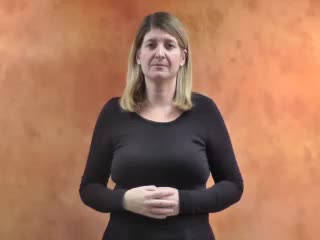
Speed
0
Practice reps times watched

Create a free account to keep your watch history and review plan.

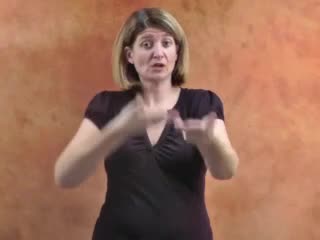
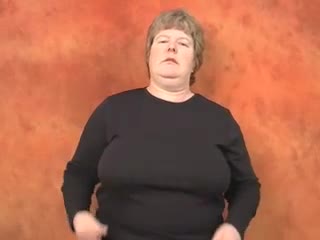
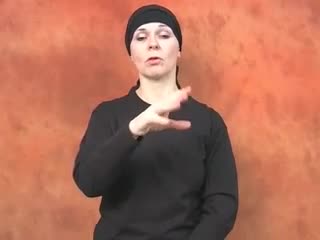
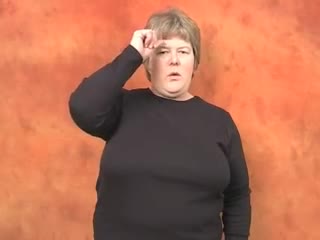
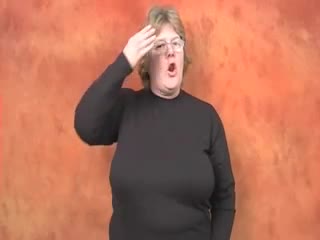
Best practice Use mirror mode, then watch the frame breakdown below to catch the start, movement, and finish cleanly.
Video via SpreadTheSign  - Free educational resource BSL
Updated April 24, 2026
British Sign Language (BSL) 🟢 Beginner 📊 A2 ⚡ Common Verb

argue

To express differing opinions vehemently or engage in a verbal dispute

Source-linked video Step-by-step guide Context and safety notes
Synonyms
Debate conflict quarrel dispute
Antonyms
Agree consent concur
Difficulty
Not rated yet

Create a free account to save this sign, keep your watch history, and unlock a one-note journal preview.

How to sign it
Handshape
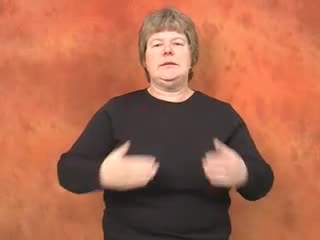
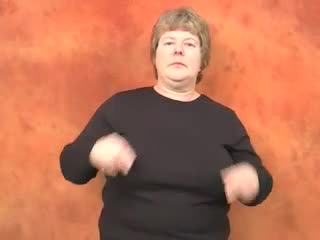
Both hands, flat, fingers together, thumb tucked or alongside palm
Location
Mid-chest to waist height in front of body
Movement
Both hands move alternately forward and back
Palm Orientation
Palms typically face each other, or slightly forward/down
Facial Expression
Intense facial expression, furrowed brows, tense mouth
🔁 Spaced Review Try it free

How well do you know this sign?

ARGUE
Your Progress Live
🌱
Level 1 · BSL Beginner +0 XP today
This sign Not learned yet
0 watches
Mastery 0%
Confidence
How well do you know this sign?
0 🔥 Streak
0 Signs seen
0 Learned
0 Watches
📖 Vocabulary health 🔒 Log in to see score
0 Mastered
0 Confident
0 Practicing
0 Just seen

Create a free account to keep your vocabulary score between sessions

7-day activity 0 of 7 active

Register free to sync activity across devices

Watch signs to see your history here

Tracking locally for now. Create a free account to save your progress and sync across devices.
Free gets you started. Paid adds the repeat-learning layer: review queues, deeper notes, compare mode, and better comeback tools.
My Sign Journal
Personal notes, saved to your account forever
Locked

Write memory tricks, usage examples, and cultural reminders beside each sign. Create a free account to unlock your first saved note preview on this page.

Create free account Already have an account? Log in

What This Sign Means in BSL

The BSL sign for argue is much more than just two people talking at each other with differing opinions. It vividly captures the essence of a heated dispute, a confrontation where ideas or wills clash. Imagine two forces pushing against each other, each trying to assert dominance or gain ground. The dynamic, alternating movement of the hands perfectly embodies this back-and-forth tension, suggesting a struggle to make one's point heard and accepted.

This sign inherently carries a sense of contention, often implying a degree of frustration or strong emotion. It’s not a gentle disagreement, nor is it a calm discussion. When you see or use this sign, you should feel the energy of a verbal skirmish, a passionate exchange where resolution might not be immediately in sight. It’s a core sign for expressing conflict and disagreement in a very direct, visually impactful way within the BSL community.

What makes this sign particularly potent is its ability to convey the *process* of arguing. It’s not just the outcome, but the act of sparring with words. The repetition of the movement suggests an ongoing, perhaps even prolonged, disagreement rather than a single instance of objection. It’s a foundational sign for discussing human interactions when opinions diverge forcefully.

When This Sign Feels Natural

You’ll find the BSL sign for argue feels most natural when describing situations where there’s genuine friction between individuals or groups. Think about those family gatherings where political views inevitably lead to raised voices, or when colleagues are passionately debating the best strategy for a project, each firm in their conviction. This sign fits perfectly when recounting a specific incident where an argument took place, or when generalising about people who tend to be argumentative.

It’s often used in everyday storytelling, whether you’re sharing gossip about neighbours, explaining a workplace issue, or simply describing a scene from a film. The sign carries an informal to semi-formal register, making it versatile for most conversational contexts among BSL users. It’s a go-to sign when you want to clearly communicate that a disagreement wasn't just a slight misunderstanding, but a full-blown verbal tussle.

However, it’s important to recognise when a different sign might be a better fit. If the conversation is calm, structured, and aimed at finding common ground, you'd likely opt for a sign like DISCUSS. If it’s merely a difference of opinion without much heat, DISAGREE might be more appropriate. Choose "argue" when the intensity and the push-pull dynamic of conflicting viewpoints are central to what you want to convey.

What Learners Usually Miss

One common oversight for new learners is mistaking the rhythm and intensity. The movement isn't a gentle back-and-forth; it often has a slightly sharper, more emphatic quality, reflecting the emotional tension. Each hand's forward thrust should feel like a point being made, a challenge or a counter-argument. If your movements are too soft or too smooth, the sign might lose its argumentative edge and could easily be misinterpreted as a calm discussion or even an explanation.

Another crucial element often missed is the vital role of facial expression. Without an appropriate, tense, or slightly frustrated facial expression, the sign can appear neutral, even robotic. Your eyebrows might be slightly furrowed, your lips perhaps pursed or subtly tightened. The face is where the emotion of the argument truly resides, bringing the sign to life and communicating the level of intensity. Remember, in BSL, the face is an integral part of the grammar and meaning, not just an accessory.

Learners also sometimes over-utilise this sign. Not every difference of opinion warrants the full "argue" sign. Consider the context: is it a minor squabble, a deep-seated dispute, or simply a polite disagreement? Using "argue" for every minor point of contention can make your signing seem overly dramatic. Practice modulating the intensity with your movement and facial expression, and be ready to choose less confrontational signs when the situation calls for it.

A Simple Way to Remember It

Imagine two people standing opposite each other, each trying to push their point forward, metaphorically using their flat hands to represent their strong opinions or arguments. The alternating forward and back motion is like each person taking their turn to advance their side of the story, meeting resistance from the other.

  • The Push and Pull: Think of the hands as physically 'pushing' your point and 'pulling' back to listen or prepare your next counter-argument.
  • Flat Hands, Firm Opinions: The modified B-handshape (flat hand) can be seen as a solid, unyielding surface, representing a firm stance or opinion being presented.
  • Mid-Chest Level: Arguing often feels deeply personal, as if it's coming from your core beliefs. Keeping the sign at mid-chest height connects it to this internal, heartfelt conviction.

Short Practice Situations

  • My neighbours always argue about where to park their cars on the street.
  • We used to argue about who had to do the washing up, but now we have a rota.
  • It's pointless to argue with them; they never listen to anyone else's perspective.
  • The children started to argue over who got to play with the new toy first.
  • I saw two strangers argue passionately on the bus about the football results.

Signs to Learn Next

  • DISCUSS: This sign is a great contrast to "argue." While "argue" implies contention, DISCUSS is about a calm, cooperative exchange of ideas, often with the goal of understanding or reaching a consensus.
  • DISAGREE: Less intense than "argue," DISAGREE simply expresses a difference of opinion without necessarily implying a heated confrontation. It’s a good sign to use when you just don't see eye-to-eye without escalating.
  • DEBATE: Often more formal and structured than a simple argument, DEBATE involves presenting arguments for and against a proposition. It connects as a more organised form of verbal contention.
  • CONFRONT: This sign implies a direct, often challenging, face-to-face encounter. While an argument can be a confrontation, CONFRONT focuses more on the act of directly addressing someone about an issue.
  • CONFLICT: This sign often refers to a broader state of disagreement or tension, which can be the underlying cause or outcome of an argument. Learning CONFLICT helps you describe the environment an argument might happen within.

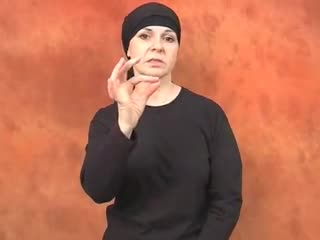
🤖 AI Learning Guide for "argue"

The BSL sign for 'argue' uses both flat hands moving alternately forward and back, typically at chest height, often accompanied by furrowed brows and a tense facial expression to convey disagreement

🎯 Practice Challenge

Sign 'argue' with varying intensity, focus on alternating hand movement and NMF for different contexts

⚠️ Most Common Mistake

Ensure both hands move alternately, not simultaneously. Add appropriate non-manual features for full meaning and intensity

👐 How to Sign "argue" in British Sign Language (BSL) (Quick Answer)

Follow these steps to sign argue correctly in British Sign Language (BSL):

  1. 1 Form flat B-hands, fingers together, thumb tucked
  2. 2 Position hands mid-chest, palms facing each other
  3. 3 Move one hand forward, then the other, alternately
  4. 4 Repeat action with a tense facial expression

Tip: Watch the video above while following these steps for best results.

🤚 Sign Profile

🤚
Handshape
Both hands, flat, fingers together, thumb tucked or alongside palm
🔣
Handshape Code
B-hand (modified)
Dominant Hand
Either
🙌
Hand Count
Two-handed
📍
Location
Mid-chest to waist height in front of body
↗️
Movement
Both hands move alternately forward and back
🔄
Movement Type
Repeated, Linear
👆
Contact
Air
👋
Palm Orientation
Palms typically face each other, or slightly forward/down
⚖️
Symmetry
Symmetric

😊 Non-Manual Features

Facial expressions and body language are grammatically essential in British Sign Language (BSL) - not optional!

😊
Facial Expression
Intense facial expression, furrowed brows, tense mouth
🙆
Eyebrows
Furrowed
👁️
Eye Gaze
Forward
🙂
Head Movement
None
👄
Mouth Morpheme
Pah, pow, or tsk for intensity
🕴️
Body Shift
Slight forward lean, tense shoulders

📖 Grammar & Linguistics

Part of Speech Verb
Transitivity Both
Inflection Yes
Classifier Usage N/A
Role Shift Common

🎓 Learning Context

📌 When to Use: Discussions, disagreements, debates, conflicts, verbal disputes
⚠️ Common Mistake: Using only one hand, simultaneous rather than alternate hand movement, weak or missing NMF
🚫 When NOT to Use: When discussing agreement, peaceful discussion, or general conversation
Context Tags
Conflict debate disagreement discussion dispute

🧪 Practice Lab

Use these tiny checks right after watching the video. Fast feedback is what turns recognition into recall.

Meaning check

Which word matches the sign you just watched?

Usage check

Where would this sign fit most naturally?

Confidence check

How do you feel about argue right now?

Pick one so SignDeaf can shape the rest of your session around how this sign actually feels.

🧭 Scenario Drill

One sign gets remembered faster when you attach it to real situations. Try these quick scene prompts.

Work

Stretch practice

Use this sign in a short workplace sentence or meeting exchange.

Family

Stretch practice

Try signing this while talking about family life or something at home.

School

Stretch practice

Imagine teaching this sign to a classmate or using it in a lesson.

Doctor

Stretch practice

Practise it in a healthcare conversation where clarity matters.

Travel

Stretch practice

Use it in a travel scenario like asking for help or directions.

💬 Example Usage

1.[en] They argued. / BSL:[Sign ARGUE with tense NMF] | 2.[en] Why are you arguing? / BSL:[WHY you ARGUE?] | 3.[en] We argue often. / BSL:[WE ARGUE OFTEN]

1.[en] They argued. / BSL:[Sign ARGUE with tense NMF] | 2.[en] Why are you arguing? / BSL:[WHY you ARGUE?] | 3.[en] We argue often. / BSL:[WE ARGUE OFTEN]

When to use it

Discussions, disagreements, debates, conflicts, verbal disputes

When not to use it

When discussing agreement, peaceful discussion, or general conversation

Register

Neutral

🌍 Cultural Context

Directness in BSL can be strong; NMF is key to conveying nuance of disagreement

🗺️ Regional Variations

Minor variations in speed/intensity, but core sign is stable

⚖️ Similar Signs - What's the Difference?

This sign argue
VS
Similar signs Look closely
The sign ARGUE (flat hands alternately forward/back) is distinct from DISCUSS (often circular motion with flat hands or '5' hands, less intense NMF). While both involve interaction, ARGUE conveys conflict or disagreement, whereas DISCUSS implies general conversation or deliberation. It also differs from TALK (G-hand or 5-hand tapping chin/mouth), which is a broader term for speaking without the specific confrontational aspect of arguing

📝 Usage Notes

Non-manual features (NMF) are crucial for conveying the tone and intensity of the argument

Frequently Asked Questions

Common questions about the British Sign Language (BSL) sign for "argue".

🏷️ Tags

Handshape

Keywords

💡
Did you know?
In BSL, non-manual features (facial expressions, mouthing) are as important as the hand movements.

📚 Explore More British Sign Language (BSL) Signs

Keep building your British Sign Language (BSL) vocabulary - explore signs by category or browse the full dictionary.