What This Sign Means in BSL
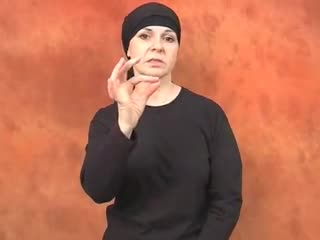
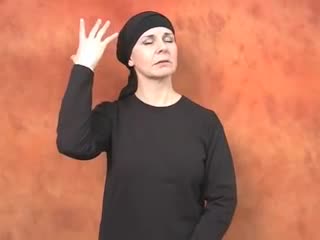
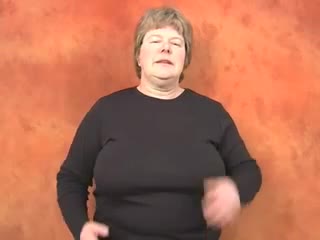
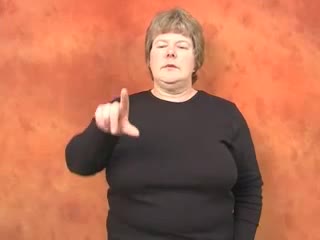
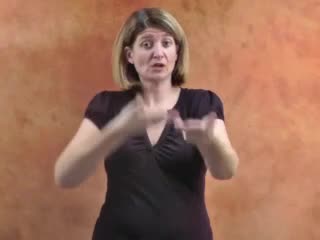
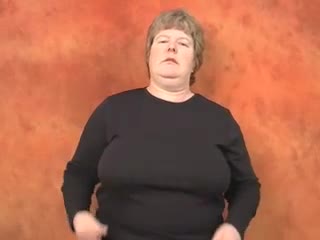
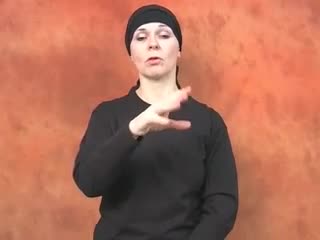
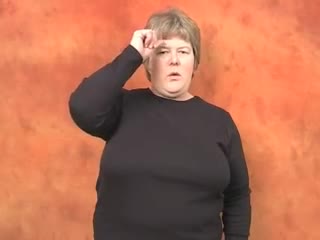
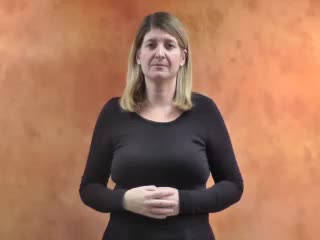
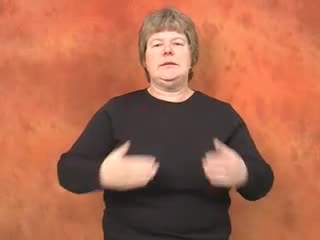
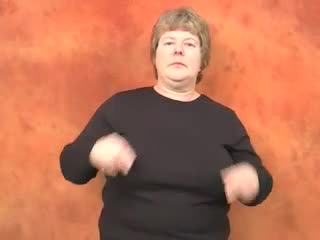
The BSL sign for talk is one of the most fundamental and widely used verbs you'll encounter. At its heart, it represents the general act of speaking, conversing, or communicating verbally. Imagine words flowing from a person's mouth; this sign beautifully captures that essence through its location and movement, making it instantly recognisable once you understand its components.
This sign is incredibly versatile, serving as your go-to for almost any situation where someone is engaged in verbal communication. It's neutral in tone by itself, acting as a blank canvas that can take on a myriad of meanings simply by pairing it with different facial expressions. A person can talk happily, talk angrily, or talk thoughtfully, all conveyed through the face, while the core hand movement remains consistent.
It's a foundational sign, often one of the first verbs people learn because it's so central to daily interaction. Understanding "talk" not only allows you to express the action of speaking but also opens the door to grasping more nuanced communication verbs, many of which build upon or contrast with this basic concept. Mastering this sign is a vital step in developing fluent BSL conversations.
When This Sign Feels Natural
You'll find yourself reaching for this sign in countless everyday scenarios. It feels most natural when you're simply describing that someone is speaking, has spoken, or will speak, without needing to specify the exact content or manner of their speech. For example, if you want to say, "I need to talk to my friend," or "They were talking for a long time," this sign fits perfectly.
It's also the natural choice for general statements about conversation or communication. Perhaps you're discussing the importance of open dialogue: "It's good to talk through problems." Or maybe you're observing others: "The children were talking excitedly after school." It describes the ongoing process of verbal exchange rather than a single utterance or directive.
While versatile, it's worth considering your audience and the register. This sign is generally appropriate across informal and semi-formal contexts. If the context demands a more specific nuance – like a formal discussion, a casual chat, or giving an instruction – you might choose a different, more precise sign. However, for the broad concept of "speaking," this sign remains your reliable default.
What Learners Usually Miss
A common subtlety learners often miss is the repeated nature of the movement. The index finger should bend and straighten multiple times from the knuckle, creating a continuous, rhythmic action. It’s not a single, sharp flick, which might imply a one-off "say" or "speak." The repetition is key to conveying the ongoing nature of talking, whether it's a long conversation or simply the general act of speaking.
Another crucial element frequently overlooked is the role of facial expression. Because the handshape and movement for "talk" are quite neutral, the meaning of *how* someone is talking is heavily reliant on your face. Without a corresponding facial expression – a smile for happy talk, a frown for serious discussion, or wide eyes for surprised speech – the sign can appear flat or emotionless, missing a huge part of the intended message.
Learners sometimes confuse "talk" with "say" or "tell." While related, they have distinct uses. "Talk" is about the act of speaking itself. "Say" often focuses on the utterance of specific words or a single statement. "Tell" usually implies a directional transfer of information *to* someone. For example, you might "talk to someone" (the action), but you would "tell someone something" (the information transfer). Pay attention to whether you're describing the process of speaking or the delivery of a message.
A Simple Way to Remember It
Visualise your hand as representing the mouth and tongue in action. The index finger, extending and then repeatedly bending, can be seen as the tongue moving within the mouth, generating speech. This simple, direct connection makes the sign highly intuitive and easy to recall once you've made the link.
- The "Tongue" Action: Imagine your index finger is a tongue, actively moving to form words as it bends and straightens.
- Flow of Conversation: The repeated movement signifies the continuous, flowing nature of conversation, not just a single word.
- Source of Sound: The location near the mouth directly grounds the sign to where speech originates, reinforcing its meaning.
Short Practice Situations
- "I need to talk to my manager about my schedule next week."
- "They were talking quietly for hours after everyone else had gone home."
- "It’s important for families to talk openly with each other about their feelings."
- "Could you please talk a little bit slower so I can understand you better?"
- "I'm too tired to talk right now; I just want to relax."
Signs to Learn Next
- SAY: This sign is often used for specific utterances or single statements, distinguishing it from the ongoing action of "talk." Learning "say" will help you differentiate between general conversation and reporting exact words.
- TELL: "Tell" usually implies conveying information directly to someone, often with a directional movement. Understanding "tell" helps clarify when information is being delivered versus simply engaging in speech.
- CHAT: A more informal and relaxed version of "talk," "chat" suggests light, friendly conversation. Learning it will add nuance to your ability to describe social interactions.
- DISCUSS: This sign indicates a more structured and often collaborative form of talking, involving an exchange of ideas or opinions. It's useful for situations requiring deeper communication.
- SPEECH/VOICE: While "talk" is the verb for the action, "speech" or "voice" often refers to the abstract concept or the physical sound produced. Learning this can help you refer to verbal communication as a noun.