Speed
0
Practice reps times watched

Create a free account to keep your watch history and review plan.

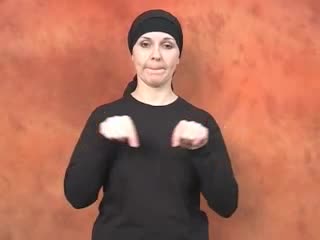
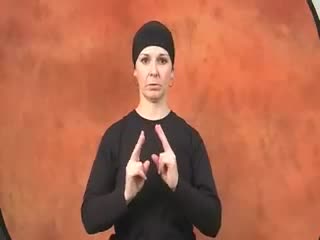
Best practice Use mirror mode, then watch the frame breakdown below to catch the start, movement, and finish cleanly.
Video via SpreadTheSign  - Free educational resource BSL
Updated April 21, 2026
British Sign Language (BSL) 🟢 Beginner 📊 B1 ⚡ Uncommon Noun

reinforcement bar

A metal bar used to strengthen concrete

Source-linked video Step-by-step guide Context and safety notes
Synonyms
Rebar reinforcing steel
Antonyms
N/A
Difficulty
Not rated yet

Create a free account to save this sign, keep your watch history, and unlock a one-note journal preview.

How to sign it
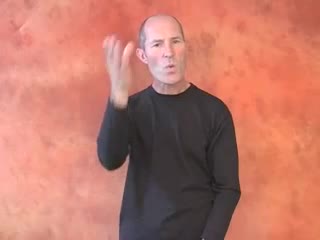
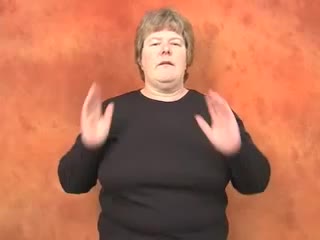
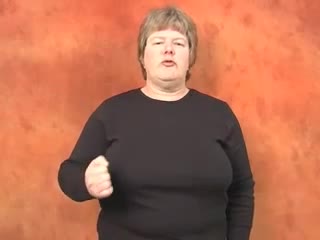
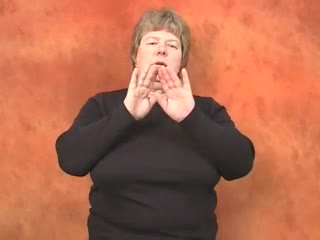
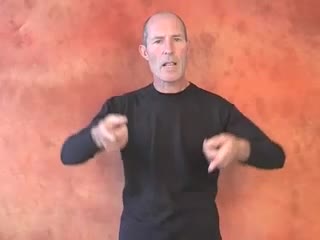
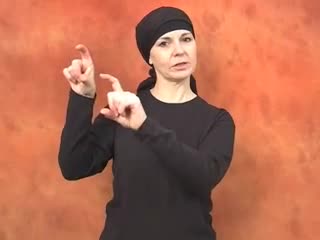
Handshape
Index finger extended, other fingers curled into palm
Location
Mid-chest to forward
Movement
Straight forward, extending
Palm Orientation
Palm down
Facial Expression
Neutral facial expression
🔁 Spaced Review Try it free

How well do you know this sign?

REINFORCEMENT BAR
Your Progress Live
🌱
Level 1 · BSL Beginner +0 XP today
This sign Not learned yet
0 watches
Mastery 0%
Confidence
How well do you know this sign?
0 🔥 Streak
0 Signs seen
0 Learned
0 Watches
📖 Vocabulary health 🔒 Log in to see score
0 Mastered
0 Confident
0 Practicing
0 Just seen

Create a free account to keep your vocabulary score between sessions

7-day activity 0 of 7 active

Register free to sync activity across devices

Watch signs to see your history here

Tracking locally for now. Create a free account to save your progress and sync across devices.
Free gets you started. Paid adds the repeat-learning layer: review queues, deeper notes, compare mode, and better comeback tools.
My Sign Journal
Personal notes, saved to your account forever
Locked

Write memory tricks, usage examples, and cultural reminders beside each sign. Create a free account to unlock your first saved note preview on this page.

Create free account Already have an account? Log in

What This Sign Means in BSL

The BSL sign for reinforcement bar is a wonderfully direct and functional sign. It specifically refers to the steel bar, often ribbed, that’s used to strengthen concrete structures. When you see this sign, you're immediately looking at the representation of a crucial building component. The handshape, with your index finger extended and the others curled into your palm, perfectly embodies the rigid, linear form of a single bar.

The sign isn't just about the shape; it's also about the action. Your index finger moves straight forward, extending from around your mid-chest area. This movement powerfully evokes the idea of a bar being inserted, embedded, or simply projecting forward as a structural element. It’s a very concrete (pun intended!) representation that leaves little room for ambiguity about the object in question.

What makes this sign particularly effective is its specificity. It doesn't mean just any 'bar' – it's clearly connected to its purpose: reinforcement. This visual clarity helps learners quickly grasp its meaning and distinguish it from other signs that might involve a similar handshape but different movements or contexts. It's a sign that demands precise execution to convey its precise meaning.

When This Sign Feels Natural

You’ll find the BSL sign for reinforcement bar feels most natural in conversations revolving around construction, engineering, architecture, or even DIY projects. Imagine discussing the integrity of a new building, explaining a structural repair, or describing the materials needed for a foundation – this sign slots in perfectly. It’s the go-to sign when the physical object of a rebar is central to the discussion.

This sign maintains a practical and informative register. It’s suitable for both professional discussions amongst builders or architects and more casual chats about home improvements or local developments. Its directness makes it universally understood within these contexts. You might use it when pointing out a visible rebar on a construction site, or when explaining the process of creating reinforced concrete.

However, it’s important to remember its specificity. If you're talking about 'reinforcement' in a more abstract sense – like reinforcing an argument, reinforcing a team, or reinforcing a habit – this isn't the sign you'd use. For those ideas, BSL has other signs that convey general strengthening or support. This particular sign is firmly rooted in the physical world of building and structure.

What Learners Usually Miss

One common mistake learners make with the BSL sign for reinforcement bar is neglecting the precise, straight-forward movement. Sometimes, the movement can become too casual, a little wavy, or not extend far enough. This can dilute the sign's meaning, making it look like a general 'line' or 'rod' rather than the strong, structural component it represents. Remember, the movement should be purposeful and direct, as if you're pushing a rigid bar into place.

Another subtle but crucial element often overlooked is the implied rigidity and strength. While there isn't a specific facial expression for 'strength' directly tied to this sign, your overall presentation should convey the solid, unyielding nature of the rebar. Avoid a limp or uncertain hand; instead, let your extended index finger feel firm and unwavering, mirroring the material it represents. It’s not just an outline; it’s a physical object with properties.

Finally, context is everything. Learners might sometimes use this sign for any 'bar' – like a bar of chocolate, a pub bar, or a monkey bar. The correction here is to constantly link the sign back to its primary function: reinforcement in construction. If you're not talking about strengthening concrete or a building, it’s highly likely you need a different sign. Always consider the surrounding words and the overall topic of conversation to ensure you’re using this sign appropriately.

A Simple Way to Remember It

To really cement the BSL sign for reinforcement bar in your memory, think of your index finger as the actual steel bar itself, strong and ready to be inserted into concrete. The movement then becomes the action of pushing that bar into position, providing the necessary strength. It’s a very literal and visual representation that's easy to recall.

  • Visualise the Bar: Imagine your extended index finger as a solid, unbending steel reinforcement bar, ready to provide structural integrity.
  • The Pushing Action: Connect the forward, extending movement to the act of pushing a rebar into fresh concrete, or seeing it project from a structure.
  • Strength in Simplicity: Remember that this simple, linear sign represents something incredibly strong and fundamental to construction.

Short Practice Situations

  • "They need to add more reinforcement bars before pouring the concrete for the second floor."
  • "The old bridge structure had rusted reinforcement bars, which made it unsafe."
  • "Make sure the reinforcement bars are properly spaced and tied together according to the architectural plans."
  • "During the renovation, we discovered that some of the original reinforcement bars were missing from the foundation."
  • "The engineer specified thicker reinforcement bars for the load-bearing walls in the new extension."

Signs to Learn Next

  • CONCRETE: This sign is a natural companion, as reinforcement bars are almost always used within concrete to create reinforced concrete. Learning it helps you describe the full composite material.
  • BUILDING/CONSTRUCTION: Often, when you're discussing reinforcement bars, you're talking about them in the context of creating or repairing a building or other structure. This sign provides that broader context.
  • STRONG/STRENGTH: The very purpose of a reinforcement bar is to add strength. Understanding the BSL sign for 'strong' or 'strength' helps you express the why behind using rebars.
  • METAL: Reinforcement bars are typically made of steel, which is a metal. Learning the sign for 'metal' can be useful for specifying the material properties or discussing different types of bars.
  • FOUNDATION: Rebards are critically important for creating a solid foundation for any structure. This sign helps you talk about where these bars are often first laid and how they support the entire structure.

🤖 AI Learning Guide for "reinforcement bar"

This sign uses a G-handshape to represent a long, straight object, moving forward to suggest insertion or extension, common for structural elements

🎯 Practice Challenge

Practice the G-handshape and linear forward movement

⚠️ Most Common Mistake

Ensure index finger is straight, movement is linear, not curved

👐 How to Sign "reinforcement bar" in British Sign Language (BSL) (Quick Answer)

Follow these steps to sign reinforcement bar correctly in British Sign Language (BSL):

  1. 1 Form a G-handshape (index finger extended)
  2. 2 Point palm down or slightly side
  3. 3 Place hand at mid-chest height
  4. 4 Move hand straight forward, extending it slightly

Tip: Watch the video above while following these steps for best results.

🤚 Sign Profile

🤚
Handshape
Index finger extended, other fingers curled into palm
🔣
Handshape Code
G-hand
Dominant Hand
Right
🙌
Hand Count
One-handed
📍
Location
Mid-chest to forward
↗️
Movement
Straight forward, extending
🔄
Movement Type
Linear
👆
Contact
Air
👋
Palm Orientation
Palm down

😊 Non-Manual Features

Facial expressions and body language are grammatically essential in British Sign Language (BSL) - not optional!

😊
Facial Expression
Neutral facial expression
🙆
Eyebrows
Neutral
👁️
Eye Gaze
Forward
🙂
Head Movement
None
👄
Mouth Morpheme
None
🕴️
Body Shift
None

📖 Grammar & Linguistics

Part of Speech Noun
Inflection No
Classifier Usage CL:1
Role Shift No

🎓 Learning Context

📌 When to Use: Construction, engineering, discussing building materials
⚠️ Common Mistake: Confusing with 'rod' or general 'bar'
🚫 When NOT to Use: When referring to a general bar or stick
Context Tags
Building materials engineering structure

🧪 Practice Lab

Use these tiny checks right after watching the video. Fast feedback is what turns recognition into recall.

Meaning check

Which word matches the sign you just watched?

Usage check

Where would this sign fit most naturally?

Confidence check

How do you feel about reinforcement bar right now?

Pick one so SignDeaf can shape the rest of your session around how this sign actually feels.

🧭 Scenario Drill

One sign gets remembered faster when you attach it to real situations. Try these quick scene prompts.

Work

Stretch practice

Use this sign in a short workplace sentence or meeting exchange.

Family

Stretch practice

Try signing this while talking about family life or something at home.

School

Stretch practice

Imagine teaching this sign to a classmate or using it in a lesson.

Doctor

Stretch practice

Practise it in a healthcare conversation where clarity matters.

Travel

Stretch practice

Use it in a travel scenario like asking for help or directions.

💬 Example Usage

1.[en] The rebar is long. / BSL:[G-hand moves forward] | 2.[en] We need more. / BSL:[Sign + MORE] | 3.[en] It strengthens concrete. / BSL:[Sign + CONCRETE + STRONG]

1.[en] The rebar is long. / BSL:[G-hand moves forward] | 2.[en] We need more. / BSL:[Sign + MORE] | 3.[en] It strengthens concrete. / BSL:[Sign + CONCRETE + STRONG]

When to use it

Construction, engineering, discussing building materials

When not to use it

When referring to a general bar or stick

Register

Technical

🌍 Cultural Context

Essential component in modern reinforced concrete construction

🗺️ Regional Variations

Minimal

⚖️ Similar Signs - What's the Difference?

This sign reinforcement bar
VS
Similar signs Look closely
BAR (general, e.g., metal bar): Often uses a B-hand (flat hand) moving across or pointing, less specific about function. REINFORCEMENT BAR uses a G-hand, emphasising its slender, rod-like form and implied structural function. ROD: Can also use a G-hand, but movement might be shorter or simply indicating. REINFORCEMENT BAR's movement implies extension or insertion into a structure. POLE: Might use a C-hand or S-hand (fist) to indicate thickness, or a G-hand with a different movement, like upwards. REINFORCEMENT BAR's linear forward motion is distinct
plywood sign thumbnail

plywood

Beginner

A type of strong wooden board made from thin layers of wood veneer glued together

Compare with plywood
kicking plate sign thumbnail

kicking plate

Beginner

A protective plate fixed to the lower part of a door or wall, typically to prevent damage from kicks

Compare with kicking plate

📝 Usage Notes

Often accompanied by context of building or concrete

🏷️ Tags

Handshape

Keywords

💡
Did you know?
BSL is a full, natural language with its own grammar - not just English signed word by word.

📚 Explore More British Sign Language (BSL) Signs

Keep building your British Sign Language (BSL) vocabulary - explore signs by category or browse the full dictionary.